WATERLOO'S AFTERMATH, PART TWO

DISPOSING OF NAPOLEON

Napoleon and the Garde

After the Battle on the 18th of June, Napoleon tried  unsuccessfully to re-group. Unable to sort out the demoralized and scattered sildiers, he turned over command of his armies to General Soult and fled to Paris. The armies had about 150,000 troops stationed around France, including General Grouchy’s 60,000, who returned to Laon by June 26. Another 175,000 (?) conscripts were in training. There were also General Rapp’s Armee of the Rhine and General Lamarque’s Armee of La Vendee, still in place waiting for the Austrians and Russians. Napoleon wanted to continue the war, but he needed political and financial support. 


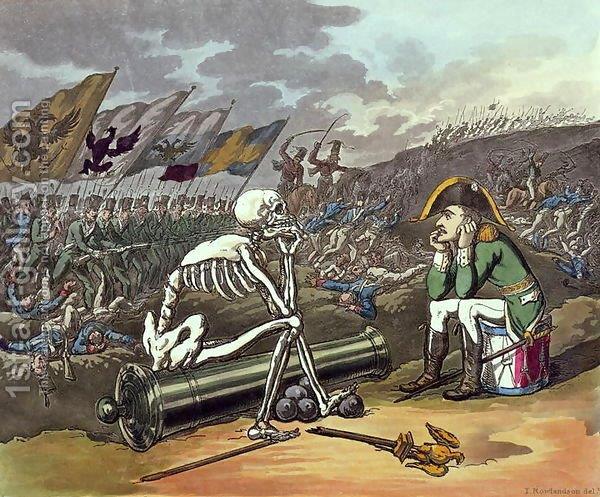
Rowlandson on Napoleon’s Legacy


Napoleon was unsuccessful in getting the Chamber of Deputies  — or anybody else except his closest confidantes — to agree to renew the war. 


Marquis de Lafayette, 1790
Lafayette, 1825


The hero of the American Revolution, the Marquis de Lafayette (1757-1834) spoke against Napoleon in the Chamber, in answer to pleas of the disgraced emperor by his brother Lucien Bonaparte.  Lafayette said:

“By what right do you dare accuse the nation of…want of perseverance in the emperor’s interest? The nation has followed him on the fields of Italy, across the sands of Egypt and the plains of Germany, across the frozen deserts of Russia. … The nation has followed him in fifty battles, in his defeats and his victories, and in doing so we have to mourn the blood of three million Frenchmen.”

Lafayette’s views prevailed and Napoleon was rejected.  His attempted abdication in favor of his four-year-old son on June 22 (and by some reports, a failed suicide) was ignored by the Allies.

Marie Louise had fled to Austria with her son.


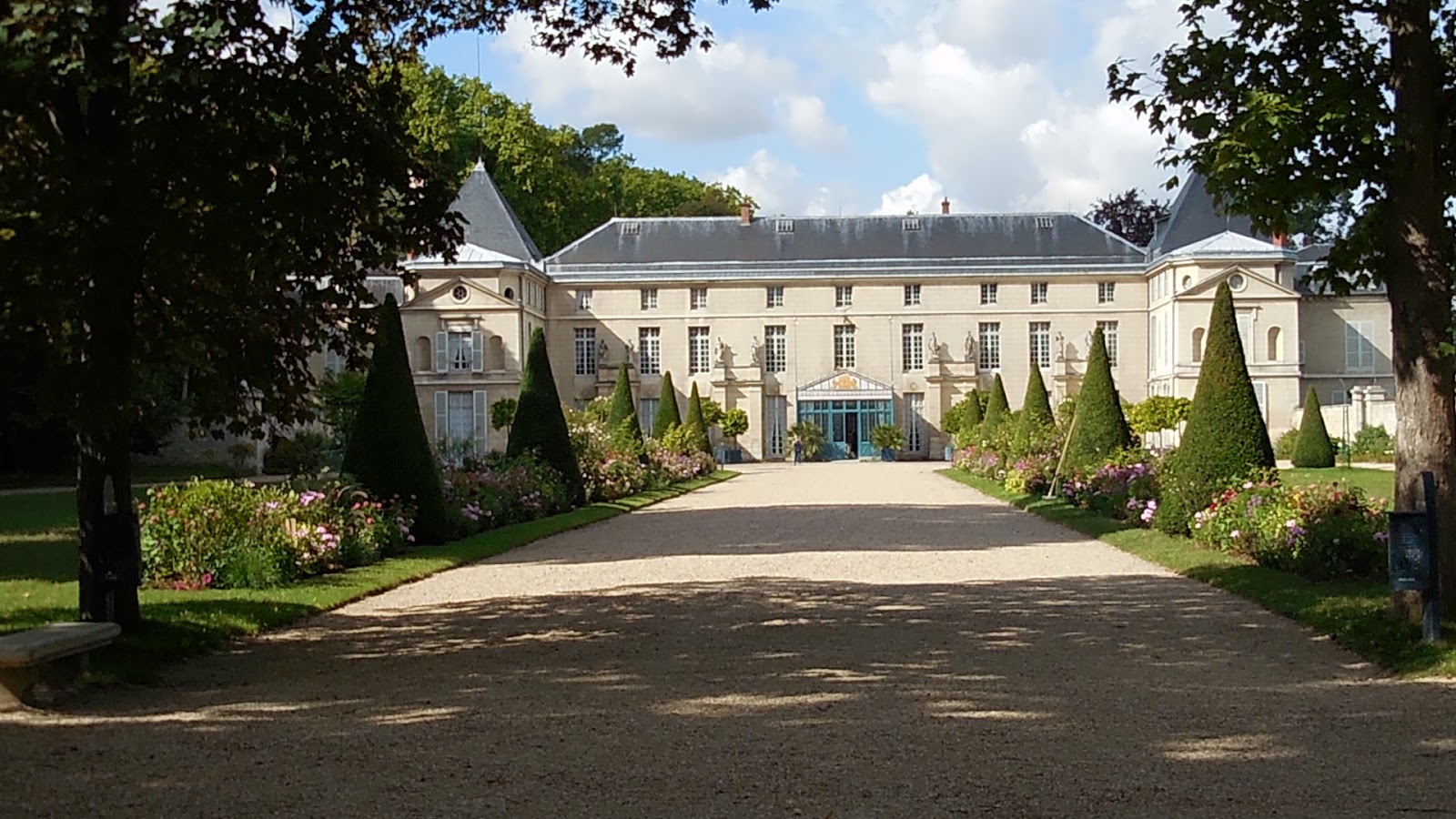
Fouché, president of the new provisional government, sent word Napoleon should leave Paris. Napoleon stayed for a few days at his late first wife’s chateau, Malmaison, just west of Paris. Here he and Josephine(who died in 1814) had enjoyed happiness and success. How he must have yearned for those days to return.


Malmaison, 2014


The Prussians were approaching by June 29, and he did not want to be captured. When he got word from the provisional government that he was not be issued any safe conduct by Blücher or Wellington, Napoleon decided to travel to the Atlantic coast and find a ship to take him to the United States, where he hoped to find refuge; he arrived in Rochefort on July 3. However, the British blockade, in effect again since his escape from Elba, made that impossible. Instead, he negotiated his surrender to Captain Frederick Maitland aboard the HMS Bellerophon on July 15.

An amusing aside:  Upon boarding the HMS Bellerophon, Napoleon took over the cabin of the Captain and invited him and others to breakfast with him.  Captain Humphrey Senhouse, captain of another ship in the fleet, later wrote to his wife: “I have just returned from dining with Napoleon Bonaparte. Can it be possible?”

Napoleon Aboard the Bellerophon, by Sir Charles Lock Eastlake

Napoleon appealed to the Prince Regent: “the most powerful, the most constant, and the most generous of my foes.” But the Government of Lord Liverpool was not inclined to make any allowances, and Prinny had enough troubles of his own.

Napoleon Aboard the Bellerophon 
by Sir William Quiller Orchardson (1832-1910)


In the meantime, the Allies had entered Paris on July 7, 1815, and successfully arranged for Louis XVIII to take the throne, which he did on July 8.

The Bellerophon sailed to Torbay arriving July 24 and on to Plymouth where Napoleon became a sort of tourist attraction as people hired boats to go out and see him aboard the Bellerophon where he was kept.

Tourists seeking Napoleon aboard the Bellerophon
painting by John James Chalon, 1817  

On August 7, he was transferred to the HMS Northumberland for the voyage to his imprisonment on the Island of St. Helena in the South Atlantic, arriving August 17.

Remoteness of St. Helena in the South Atlantic

St. Helena is more than 1,200 miles from the nearest landmass.  He lived there, until his death on May 5, 1821.

Napoleon on St Helena
The island was small, wind-blown and not particularly pleasant.  The ex-emperor was accompanied by a few companions. The British governor of the island, Sir Hudson Lowe, was determined there would be no second escape from captivity.
Longwood, Napoleon’s residence on St Helena
On St Helena, Napoleon composed his self-congratulatory memoirs. He found excuses in the mistakes of his generals and others for all his defeats and shortcomings. But however shallow these justifications, many of his observations are applauded by the devotees of the cult which has grown around his memory.  He never stopped complaining about the conditions of his captivity, but none of the far-fetched schemes for his rescue ever materialized in the face of the British navy and the remote position of St. Helena.

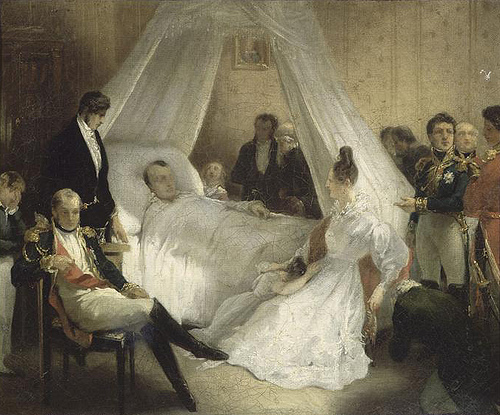
Death of Napoleon by Carl von Steuben


Napoleon died in 1821 of a stomach ailment, probably cancer.  He was 51 years of age. A similar disease had caused his father’s death at the early age of 40. Napoleon in middle age often complained of stomach problems. Many believe he was poisoned, as large amounts of arsenic were found in his remains. Nothing can be disproven about the poison as arsenic was often found in various ointments and lotions of the day, as well as in the formula for the green inks and dyes in the wallpaper of his living quarters.

He was buried on St. Helena until his remains were returned to France in 1840.
,


Number One London Tours selected by VisitBritain

We’re thrilled to be able to share the news that VisitBritain (The British Tourist Authority) has invited Number One London Tours to be one of the selected international travel buyers at the ExploreGB ConferenceVisitBritain’s flagship annual event, beginning on March 1 in Brighton. The event offers invitees an invaluable opportunity to meet and network with Great British and Irish tourism suppliers and destinations across the UK. VisitBritain is the Official Tourism Website for UK Travel and we are humbled by the recognition extended to Number One London Tours and look forward to networking with destination representatives and travel suppliers who will no doubt add immensely to our Tour itineraries through 2018 and beyond.

We are already working on our 2018 Tours

April 2018 – The Georgian Tour
Explore Georgian England on a truly immersive tour that begins with four days in London and includes a four night stay in a period townhouse in Bath.

May 2018 – The Upstairs, Downstairs Country House Tour
Visit magnificent stately homes offering authentic examples of how both halves of the social spectrum would have lived and worked within their walls. See the servants quarters and stables at Audley End, join us for a living history tour at Ickworth, while Petworth and Uppark House both offer period examples of kitchens, housekeepers rooms, dairies and various other domestic spaces.

September 2018 – The Western Scottish Tour
Spend ten days with your guide, author Sue Ellen Welfonder, on a tour through the wild and romantic Western Isles, including the Isle of Mull, Iona, Skye and the Isle of Lewis.

September 2018 – The Ireland Tour
An eight day tour that includes stops in Killarny, Bunratty, Connemara, the Cliffs of Moher, Inishmore in the Aran Islands and Galway. Highlights include castles, gardens, stately homes, prehistoric hill forts, Irish music and stunning scenic drives. Time for shopping, too!

Be sure to sign up for our newsletter to receive the latest news regarding future tours!

Number One London will be attending these upcoming events

  • Barbara Vey Reader Appreciation Luncheon – Milwaukee, April 28 – 30, 2017
  • The Romantic Times Booklovers Convention – Atlanta, May 3 – 8, 2017
  • The Beau Monde Conference – Orlando, July 26, 2017
  • The Romance Writers of America Conference – Orlando, July 26 – 30, 2017

A RETURN TO REGENCY ENGLAND

What, or who, epitomizes the Regency Period for you?

Is it the Prince Regent, afterwards King George IV?

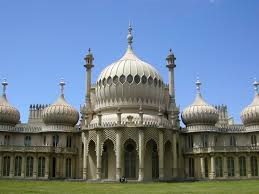
Brighton’s Royal Pavilion? 
Almack’s Assembly Rooms? 

Or perhaps Regency fashions?
Whatever it is that your mind’s eye conjures up when you think of “Regency England,” chances are that you’ll find it on the itinerary for Number One London’s Regency Tour in June. This immersive experience will bring you up close and personal with the people and places that define the Regency era.

Author Louise Allen

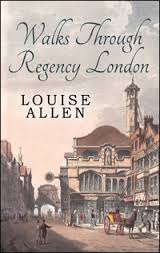
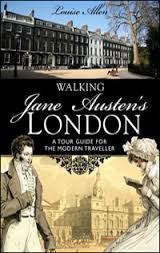
Beginning the Tour in London, we’ll walk the same streets that would have been familiar territory to the Prince Regent, Beau Brummell and Jane Austen.  Our guide for the day will be Louise Allen, author of Walks Through Regency London and Walking Jane Austen’s London.

Along the way, we’ll visit many of the sites associated with Regency London, whether they be well known buildings and locations or hidden gems, including White’s Club, Almack’s, the Burlington Arcade, St. James’s Square and the Red Lion pub.

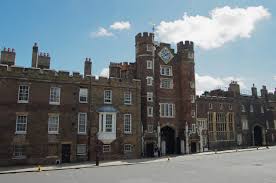
St. James’s Palace

Fortnum & Mason

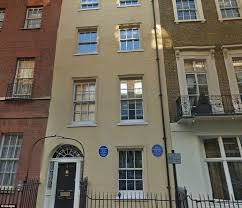
Beau Brummell’s London townhouse

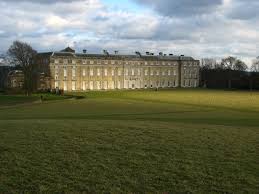
Also on our London itinerary is a trip to the V & A, the Victoria and Albert Museum, where our group will attend a Specialist Talk on the fashions, social life, royals and other aspects of the Regency period. After dinner, Louise Allen will provide us with background on Brighton’s role during the Regency before we head there ourselves the next day, stopping en route to visit Grade I listed Petworth House, complete with an extensive number of preserved servants quarters. 

,
Petworth House
In Brighton, we’ll be staying at The Old Ship, a Georgian seafront hotel that still retains the Regency Assembly Rooms where the Prince Regent himself opened many fashionable entertainments. While in Brighton, we’ll be given a private tou
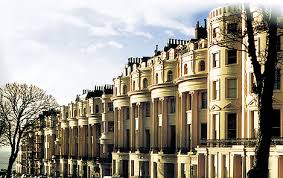
r of George IV’s “Marine Palace,” the Royal Pavilion, scene of so many events associated with 19th Century England. We’ll embark on a walking tour of Brighton with local guide Jackie Marsh Hobbs and we’ll tour the Regency Townhouse in Hove, where we shall also attend a Regency Soiree complete with our guests and servants in period costume. 
The Regency Townhouse, Brunswick Square
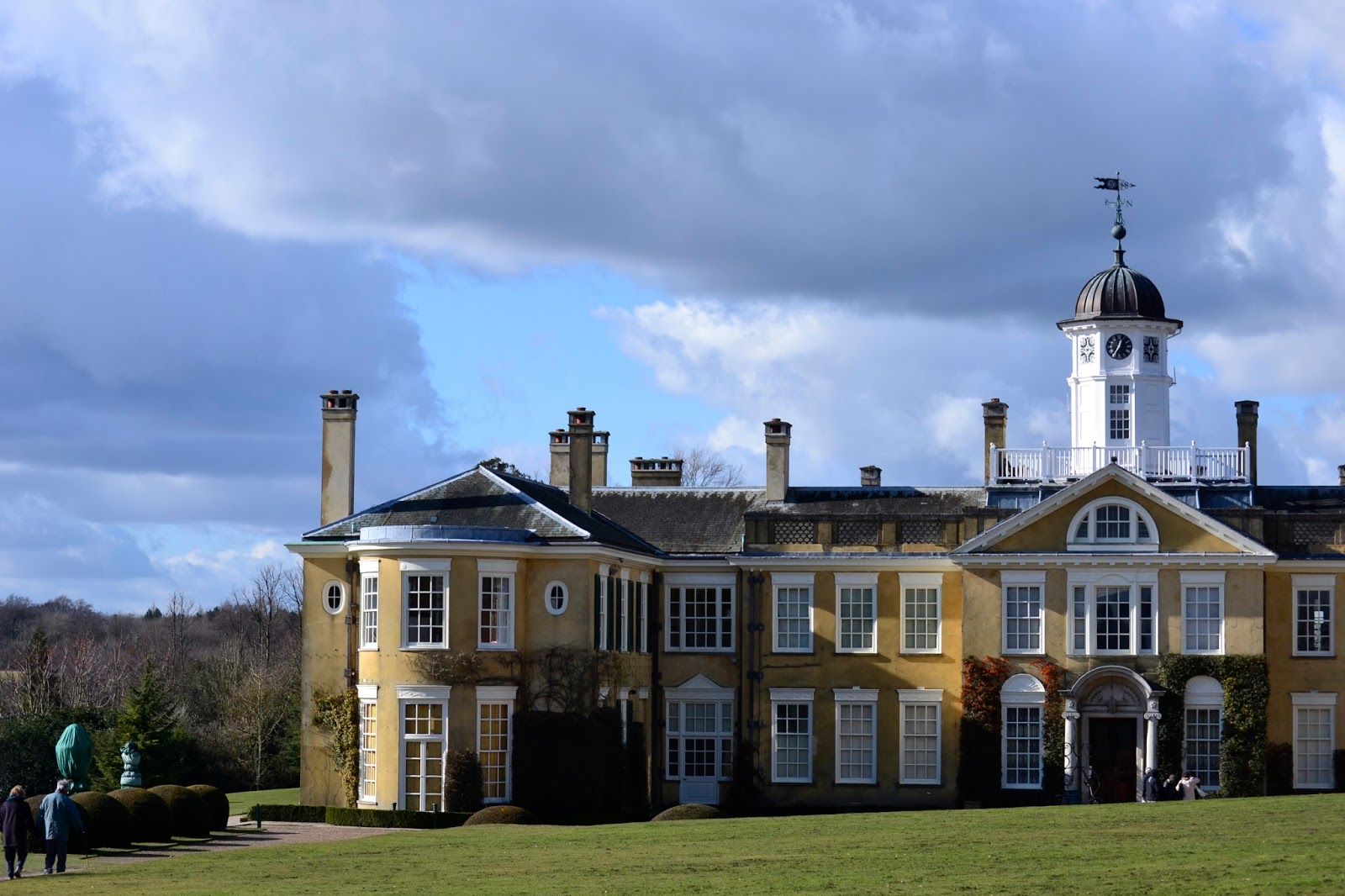
Our return journey to London includes a tour of Polesden Lacey, the Regency house purchased by million-heiress Margaret Greville, who famously said, “Most people leave their money to the poor. I intend to leave mine to the rich.” And she did, leaving her fabulous collection of diamonds to the Queen Mother and her house to the National Trust.

Polesden Lacey

Our final stop on the Tour is Buckingham Palace, where the majority of the rooms reflect the taste of George IV, who commissioned John Nash to transform Buckingham House into a palace. Many of the furnishings we’ll see were purchased or made specifically for Carlton House, George IV’s London home when still Prince of Wales. Our visit includes a guided tour of Her Majesty’s gardens, where we’ll find the Waterloo Vase commemorating the Duke of Wellington’s victory at Waterloo in 1815. 
    Perhaps the highlight of the Tour is that it will bring together a group of people with at least one thing in common – their love for the Regency period. Along the way, we’ll be discussing our particular subjects of interest and all of the social, political and royal aspects of early 19th century history, all while creating new memories and making new friends. 

      Complete itinerary and full details regarding

      WATERLOO'S AFTERMATH, PART ONE

      THE BATTLE OF WATERLOO’S AFTERMATH

      As evening approached on June 18, 1815, the Allied forces were repelling the attack of the French Imperial Garde in the center and the Prussian forces had arrived from the east.


      The Prussians attack Plancenoit by German painter Adolph Northen (1828-1876)


      The arrival of the Prussians was timely indeed.  The Prussians took the hamlet of Plancenoit and soon, the French forces were fleeing in disarray, leaving equipment and wounded behind in their haste. 

      Napoleon at Waterloo
      by Charles de Steuben, (1788-1856)


      Meeting of Wellington and Blücher
      detail of mural in Palace of Westminster (Houses of Parliament) 
      by Irish Artist Daniel Maclise (1806-1870), completed 1858


      Late in the evening after the battle, Blücher and Wellington met at the inn La Belle Alliance and shook hands. In a great ironic twist, the two victorious generals spoke in the language of their enemy – the only language they both knew was French, though Blücher supposedly only knew a few words:  “Mon Dieu, quelle affaire!”


      Royal Gallery, Palace of Westminster, London


      They decided Wellington’s troops should rest up, bury the dead, and then come toward France. The Prussians, relatively fresh, would pursue the French army.The two victorious generals met and agreed the Prussians woould continue to pursue the French troops south toward France. The Allied troops would bury the dead, treat the wounded, rest up and catch up soon. Neither man probably realized that for the most part, Napoleon was finished and they would be taking over Paris in weeks.

      Prussians Capture Napoleon’s Carriage

      In the evening of the 18th, Prussian troops captured Napoleon’s carriage which he had to abandon and flee on horseback. Later the carriage was displayed in London where it was a famous attraction; it later was part of Madame Tussaud’s wax museum, but was destroyed in a fire there in 1925.


      Thomas Rowlandson’s 1816 version of the display at Bullock’s Museum

      Though the battle had been won and the Prussian troops were chasing the remnants of Napoleon’s armies south toward France, more battles were expected in the coming days.
       
      Perhaps no one would have predicted it was, for all practical purposes, over – or would be in a couple of weeks. There was resistance and further fighting, but it was minimal, on a Napoleonic scale, that is.

      Wellington crosses the battlefield


      The Duke of Wellington rode through the carnage back to his headquarters in the village of Waterloo where he would write his despatch to Lord Bathurst in London declaring victory. Later the Duke of Wellington said,  “I hope to God I have fought my last battle…I am wretched even at the moment of victory, and I always say that next to a battle lost, the greatest misery is a battle gained.”

      Waterloo by Joseph Mallord William Turner (1775 – 1851)


      This painting by Turner was created after he toured the battlefield and sketched the scene. It emphasizes the tragedy of so many deaths, so many lost forever. It was the first battle in which Napoleon faced Wellington, and for both men, indeed their last military battle. The Battle of Waterloo left 9,500 dead; 32,000 wounded.


      Battle of Waterloo by Irish painter William Sadler II (1782-1839)


      The Morning After the Battle by John Heaviside Clark
      On the battlefield, there were tens of thousands of dead and dying men and horses. Thieves crept among the bodies, robbing them of anything valuable.  Parties of soldiers collected the wounded and took them to field hospitals. The dead were buried, sometimes in mass graves. The army surgeons were exhausted having spent the battle  and the night tending the injured.

      Fitzroy Somerset, later 1st Baron Raglan, by William Salter


      One of Wellington’s ADCs, Fitzroy Somerset (1788-1855), had his right arm amputated.  Before they carried off the arm, he demanded to have the ring his wife (one of the Duke’s nieces) had given him removed from the lost hand. He learned to write with his left hand and was a secretary to Wellington for many years. He was named 1st Baron Raglan in 1852 and led the British Army in the Crimean War. He died before the Allied victory at Sevastopol was complete, partly of depression over criticism of his conduct of the war.


      General Henry Paget, 1st Marquess of Anglesey, 1815
      by artist Peter Edward Stroehling (1768-1826)


      Another famous Waterloo amputation was Paget’s leg.  Henry Paget, Earl of Uxbridge (soon to be Marquess of Anglesey), commanded the cavalry at Waterloo. He was seated on his horse talking to Wellington near the conclusion of the battle when his leg was shattered by a cannon shot. He said, “By God, sir, I’ve lost my leg.  The Duke said, “By God, sir, so you have!” 


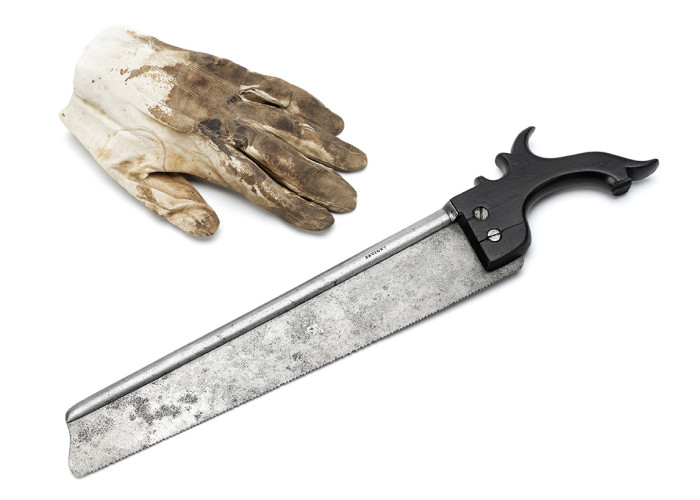
      Surgical Saw and bloodied glove from Waterloo

      Surgical Instruments

      Artificial leg of Marquess of Anglesey
      Waterloo Teeth 

      for more relics from Waterloo 200, click here

      One of the gruesome aspects was the collection of the teeth. It was done after every battle in those days, as the teeth were valuable and much better than most false teeth – for many years, dentists advertised Waterloo Teeth.

       Wounded arriving in Brussels; 
      Excerpt from Sir Walter Scott’s  Poem The Field of Waterloo
      The wounded shew’d their mangled plight
      In token of the unfinish’d fight,
      And from each anguish-laden wain
      The blood-drops laid the dust like rain!
      Many of the wounded were carried in carts (aka wains) into Brussels where thousands were nursed in makeshift hospitals and homes. Some of these men were luckier than those carried directly into field hospitals, as in the open air they were much less exposed to infection than in the crowded piles of dying in the hospitals.


      After meeting with Blücher, the Duke returned to the village of Waterloo and wrote his despatches to Lord Bathurst and the Prince Regent. When the despatches were ready, on June 19, Wellington asked Major Henry Percy, either (according to which account you believe) the only unwounded ADC or the least-wounded of the eight ADCs Wellington had on June 18, to take the despatches and the captured Eagle standards and flags to London. 


      Jacket worm by Henry Percy when on the battlefield and delivering the despatch to London


      Percy got a chaise to the port of Ostend and embarked on the brig HMS Peruvian.  Some accounts tell of the becalmed ship and the completion of the voyage by rowing – the Captain James White RN and Percy, with several other sailors, taking the oars themselves.  From their landing at Broadstairs, Kent, about 3 pm on June 21, Percy hurried to London, changing horses at Canterbury, Sittingbourne, and Rochester.  At first he could not find Lord Bathurst or Prime Minister Lord Liverpool.  But with the French Eagles of the 45th and 105th sticking out of the windows of the carriage, they soon attracted a crowd, following them and cheering.


      A French Eagle as on the top of the battle flags


      Eventually he found the officials  and together they carried the news and the Eagles to #14 (or #16 in some accounts)  St. James’s Square, the home of Mr. and Mrs. Boehm who were hosting a grand party for the Prince Regent and his brother the Duke of York, C-in-C of the Army.

      The Boehm residence, St. James Square, today the East India United Service Club 


      According to most accounts, the excited crowds following Percy’s mad dash around London were heard by those at the party. When the disheveled Percy, still in blood-stained uniform, came inside and laid the Eagles at the Regent’s feet, the Prince immediately promoted him to Colonel Percy. The Prince Regent withdrew to read the despatches and returned in tears at the carnage, but elated at the victory.

      An artist’s version of Presenting the Eagles; actually there were only two

      As the party dispersed without the planned dancing or supper, Mrs. Boehm was said to have observed that it would have been much better to have waited until after the party to present the despatches.  No one else agreed of course.  Mr. Boehm later died bankrupt.  Mrs. Boehm lived out her life in a Grace and Favor apartment at Hampton Court.

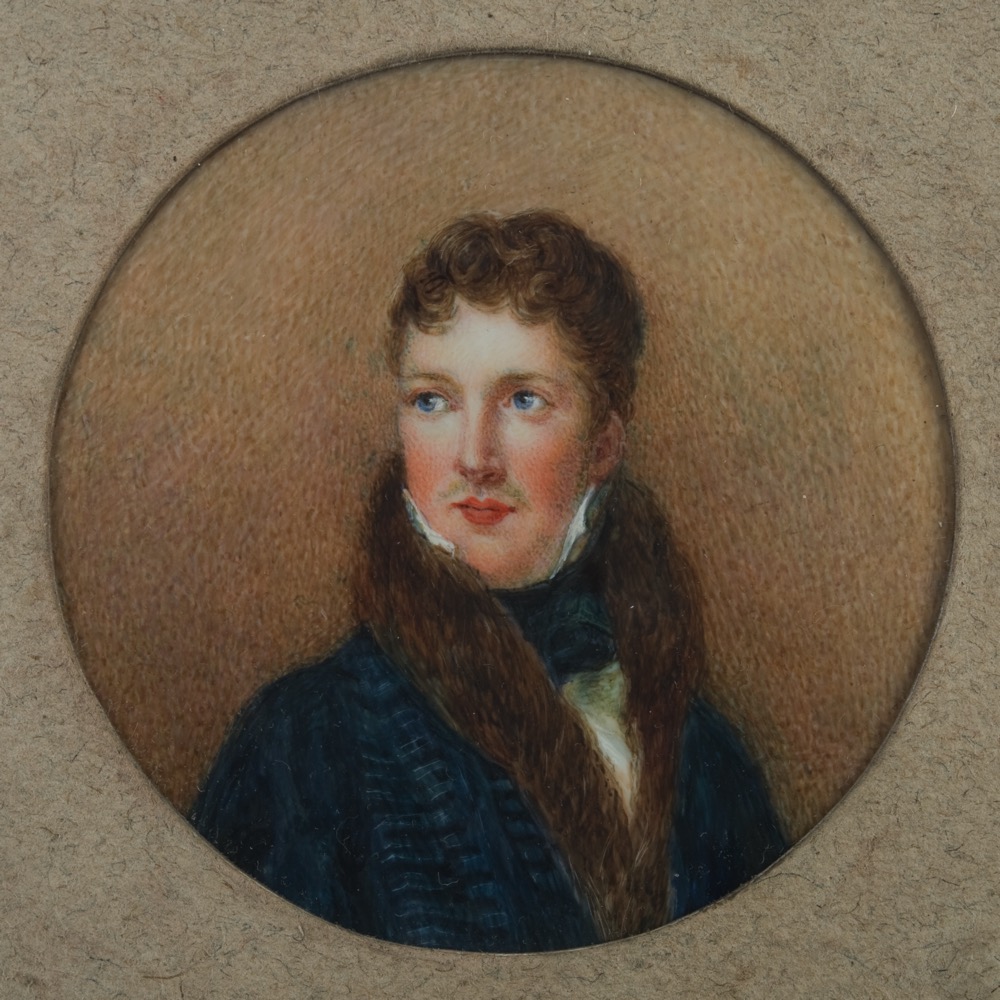
      Major Henry Percy (1785-1825)

      Major, now Colonel Percy, retired in 1821, and became a member of the House of Commons in 1823; however, he died only a year later, age 40.

      Nathan Rothschild (1777-1836)


      Among the many legends that have grown around the Battle of Waterloo, perhaps none is more controversial and even inflammatory than the story of the Rothschild fortune – or lack of it.  Some versions say that banker Nathan Rothschild, who had been providing gold to the British government through his network of relatives in banking houses on the continent, learned about the Waterloo victory before anyone else in London and made a killing in stocks and/or bonds by buying low when hopes were dim and selling high when victory had been secured.  Various versions of the story have him gaining the knowledge from his company spies at the exiled entourage of Louis XVIII, another that he communicated with the continent by carrier pigeon. Many other researchers claim all such stories are bunk, inspired by jealousy and anti-Semitism, even fueled by Nazi propaganda during WWII.  A careful study of the variable rates in British markets of the immediate period around Waterloo would prove no one made a killing in stocks, consols, or bonds of any kind, many conclude.

      Whatever the arguments, the Rothschild brothers had long proved their ability to handle financial matters on behalf of business, government and their own interests.  Perhaps no special circumstances are needed to account for their wealth.


      Chelsea Pensioners by Sir David Wilkie


      A happier story is the arrival of the Waterloo despatch at Chelsea Hospital where copies were read by retired soldiers. This famous painting, commissioned from artist David Wilkie by the Duke of Wellington, completed in 1822, hangs in Apsley House.

      An excerpt from the Waterloo Despatch in Wellington’s hand
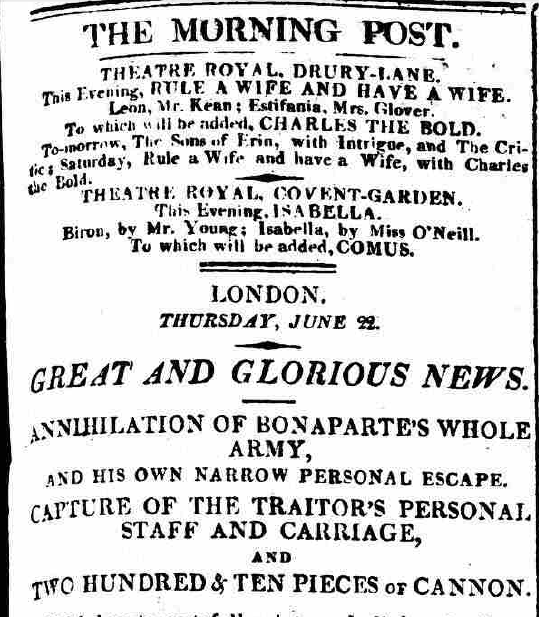
      From The Morning Post, 22 June, 1915


      To read the official publication of the Despatch in the London Gazette, click here.


      Re-enactment of despatch delivery. 2015
      For an account of the reenactment of the delivery of the Wellington despatch, click here.

      IN WATERLOO’S AFTERMATH, PART TWO, WE WILL DEAL WITH 
      THE DISPOSAL OF NAPOLEON, NEXT WEEK.

      ON THE SHELF: REVIEW OF EMMA HAMILTON: SEDUCTION & CELEBRITY

      By Guest Blogger Jo Manning

      This sumptuous accompaniment – replete with gorgeous full-color and some black and white images — to the exhibition currently showing at The National Maritime Museum in Greenwich (until April 17th) comprises essays by Quintin Colville; Vic Gatrell; Christine Riding; Jason M. Kelly; Gillian Russell; Margarette Lincoln; Hannah Greig; and Kate Williams on different aspects of the controversial Emma Hamilton’s life, legend, and times.

      I’ve been to two previous art shows that featured Emma Hamilton and other Georgian celebrities:  Joshua Reynolds And The Creation of Celebrity (at the Tate Britain in 2005), and the George Romney exhibit at the National Portrait Gallery in 2002. Both were exemplary, dedicated to these superb portraitists and their famous subjects. These sitters became instant celebrities owing to the prints of the portraits becoming widely disseminated. (These prints generated a bit of nice income for the painters, as well.) The caricaturist Gillray illustrated the popularity of these prints in his well-known “Very Slippy Weather,”showing Londoners entranced by the latest prints for sale at stationers’ shops.
      Emma Hamilton (born 1765-died 1815) was also variously known as Amy/Amey/Emy/Emily Lyon and Emma Hart until she married Sir William Hamilton, British envoy (ambassador) to the Court of Naples, thus becoming Lady Hamilton. She was one of the most controversial – and, yes, notorious — women of her time. Much has been written about her but there remains a good deal of speculation, as well. (Among the best-written biographies and novels of her, in my opinion, are these:  Williams, Kate, England’s Mistress: The Infamous Life of Emma Hamilton, 2006; Fraser, FloraBeloved Emma: The Life of Emma, Lady Hamilton, 2004; and Susan Sontag, The Volcano Lover: A Romance, 1992.)

      For starters, she was an unqualified beauty: a perfect oval of a face; thick, wavy, cascading auburn tresses; big-eyed; a rosebud mouth; and a complexion described by one besotted writer as a “velvet skin of lilies and roses”.  Surprisingly tall, with good, square shoulders and a substantial bosom, she defied the “pocket Venus” model prized by prevailing18th century aesthetic standards. A killer combination, this, that pouting baby face and a curvy, womanly figure. Who would not want to paint her? More to the point, who would not want to be her lover?

      Emma Hart as a Bacchante, circa 1785
      Biographies and other writings on Emma find more ample material in the second and last third of her life than in the first. Yes, she grew up poor; yes, she worked in menial positions as a young teen; yes, she moved to London at one point; yes, men began to notice her. What is uncertain is when and how she became a sex worker. Did her mother actually pimp her out at the age of fourteen? Did she work the streets or was she in a brothel? At any rate, we are on more solid ground when she is taken up by Sir Harry Fetherstonhaugh (this name is pronounced “Fanshawe”), a wealthy, dissolute rake who nonetheless has her take up the ladylike sport of horse-riding (“To hounds!”) and teaches her more genteel manners.  (She was said to have a vulgar speaking voice and bad diction; her spelling, from letters that remain, show her bad spelling, but many people then were bad spellers.)
      He dumps her, however, when she becomes pregnant. She is about sixteen when she is sent away – and the record is not clear whether or not this child was Fetherstonhaugh’s or Greville’s or another man in their set, Jack Payne — and gives birth to a girl, said to be named Emma Carew. (She was also known as Emma Hartley; after years as a teacher/governess she died alone in Florence and is buried in the English Cemetery. It appears she’d had a sad life.)
      After giving birth, she left the child to be raised by a relative in the country and took up with this man in Fetherstonhaugh’s set, Charles Greville, who refused to have another to do with the baby and further set about further “improving” Emma in manners, diction, et cetera. Greville,
      who was the nephew of the very wealthy Lord Hamilton, but not well-off himself, was a bit of a control freak, from all I have read about him and which these essays confirm. It was Greville who introduced her to the portrait painter George Romney….and thereby hangs quite a tale.  And here is Romney looking his moodiest, in an unfinished self-portrait (circa 1781/2):
      I myself have researched and written about Romney’s obsession with Emma, whom he painted at least sixty times and sketched many more times. At his death, notebooks were found filled with drawings – many unfinished — of his muse Emma Hart – as she was then known. Romney was a strange old cuss. Extremely talented – he became one of the most renowned portraitists in England – but he was prone to serious bouts of depression (it apparently ran in his family). He was a very moody man. Emma Hart enriched his life, and when she was gone from it, he went even more downhill mentally. 
      Emma Hart In A Straw Hat
      The only quibble I have with the uniformly excellent essays making up this book is in the Christine Riding piece. Emma Hart sat for George Romney some nine years. Nowhere in all the background reading and research I did for my guest blog for Number One London did I find any evidence that there was anyone else in that studio save Romney and Emma. I never saw mention of a “chaperone” nor of any friends/acquaintances of Greville or Emma dropping in. And this is telling, because sittings for artists were social occasions; observers sat and gossiped and were served tea, etc. This was the norm. One sitting could take up to an hour; these sittings were longer. Again, never, ever, did I find any of this normal way of conducting sittings followed by Romney with Emma. Greville, to my knowledge, simply would not allow this.
      Emma Hart as Circe, painted by George Romney c1782… Exquisite!
      Charles Greville was an extremely jealous and controlling man, possessive to a rather sickening degree, in my opinion. Emma Hart was his possession; he did not want to share her with anyone, even in the benign setting of sitting for a portrait. All I read led me to believe that those two, artist and subject, were alone…together. For NINE years! And I wondered, did they become lovers? It’s tantalizing to imagine this, but there is no solid proof. What seems to be evident, however, is that Emma opened up to Romney as she was posing and entertained him by singing and dancing and having fun. (I reckon she did not have much fun in her relationship with Greville, given his rigid personality.)
      And, although over the years people have made fun of Emma and her “Attitudes” – i.e., the dramatic poses she struck to entertain guests – there needs to be, I think, an objective re-examination of her talents, both with these poses and with her singing. (She did hang out with theatre people when she was younger and may even have appeared onstage.) Apparently she wasn’t as untalented as so many reported over the years. I found that re-appraisal fascinating…and it confirmed to me that so much of what was written at the time and subsequently thereafter – much of it simply repeating the same anecdotes — was not to be trusted. (I found this to be true when I was writing the biography of Grace Dalrymple Elliott, My Lady Scandalous. There is a lot of misinformation/misinterpretation out there and one has to be cautious.)
      Perhaps my favorite portrait of Emma Hart by George Romney
      When Emma Hart was given to Lord Hamilton by his nephew (yes, she was a gift, as she was, after all, his possession), she was eagerly received. Greville was reportedly tired of her and, assiduously searching for a wealthy woman to marry, Emma was in his way. By sending her to Naples on a ruse (oh, yeah, go on ahead, I’ll be joining you directly!), he accomplished his purpose. The much older, lonely man, besotted by her beauty, took her in and eventually proposed marriage to her. (She was 21 when Greville rid himself of her; Hamilton was about 56. They married when Hamilton was 61 years old; his first wife, an heiress, had died before Emma appeared on the scene and he’d been alone for some years.)
      Gillray caricature making fun of Lord Hamilton’s interest in Classical antiquities and volcanoes (he was a renowned amateur volcanologist), with images of Emma and Lord Nelson in the upper left corner, indicating he’d been made a cuckold
      Most of you may know the rest of this celebrated story. Emma – now Lady Hamilton and ensconced in luxury far beyond her imagination whe
      n she was walking the London streets and/or working in a brothel – met Lord Nelson, the famed British admiral and hero of Trafalgar, and Lord Hamilton – bless his heart – was toast.
      The details can be found in the essays, but a last word about Emma’s child(ren) with Nelson is perhaps appropriate here. She had Horatia, who lived to a ripe old age, the wife of a minister and the mother of a slew of children, whose maternity Emma never acknowledged publicly, and possibly one or two other children, one of whom was said to have died very young or at birth.  One or two sources I read in my research implied that there were twin girls, one of whom was sent to an orphanage, the other having died or disappeared. Sadly, it did not appear that Emma was much of a mother (though some sources said she was close to Emma Carew, her first daughter), but there is not much to go on to substantiate what happened to these later, mysterious twins…if they indeed ever existed at all, poor lost babes.
      Lord Nelson, Hero of the Battle of the Nile and of Trafalgar
      This is quite a wonderful compilation with superb illustrations, fast reading, and an excellent introduction to the life and loves of a singular woman. Enjoy the reading and perhaps shed a tear or two for Emma Hamilton’s last tawdry years. So many women like her wound up in France, dying there, forgotten. (My biography subject died there, as did the actress mistress of King William IV, Dorothy Jordan, along with other discarded women.) Nelson wanted Emma taken care of by the country he’d served so well; well, she wasn’t.
      And, if you can, visit the exhibit at the National Maritime Museum in Greenwich, London before it closes. As you can tell from the few sample images here, it is a feast for the eyes.
      Quinton Colville’s introductory essay, “Re-imagining Emma Hamilton,” gives an excellent overview of the mythology and reality surrounding this woman; he is the Curator of Naval History at the National Maritime Museum in London. There are six full and informative articles in this companion to the exhibition at the National Maritime Museum, starting with historian Vic Gattrell, who teaches at Gonville & Caius College, Cambridge; his essay is “Sexual Exploitation And The Lure Of London,” a subject on which he has written extensively. Christine Riding holds the position of Head of Arts and Curator of the Queen’s House at the National Maritime Museum; she was previously at the Tate Britain, where she curated 18th and 19thcentury British art; her essay is “Romney’s Muse: A Creative Partnership In Portraiture”.
      Jason M. Kelly takes us to the middle part of Emma Hamilton’s career, to Naples, where, as the wife of the British ambassador, she moves in very different circles and we take a look at “A Classical Education: Naples And The Heart of European Culture.” Kelly is an associate professor at Indiana University-Purdue and directs the Arts and Humanities Institute there. Gillian Russell penned “International Celebrity: An Artist On Her Own Terms”; Russell writes on fashionable women and on theatre in Georgian London.
      Rounding out these essays are Margarette Lincoln (“Emma And Nelson: Icon And Mistress Of The Nation’s Hero” and Hannah Grieg on Emma’s last sad years with “Decline And Fall: Social Insecurity And Financial Ruin.” ) Lincoln is a specialist in English naval history and served as Deputy Director of the National Maritime Museum for several years; she is now a visiting professor at the University of London. Grieg is an academic who is now at the University of York, lecturing on 18thcentury British social, cultural, and political history; much of her research centers on the lives of the elite class in that society.
      A special treat at the end of this fascinating book is biographer Kate Williams’ take on “Emma Hamilton In Fiction And Film.” Williams is a professor of history at the University of Reading and author of England’s Mistress.
      Poster for Vivien Leigh/Laurence Oliver biopic That Hamilton Woman!

      EMMA HAMILTON:  SEDUCTION & CELEBRITY, edited by Quintin Colville with Kate Williams, Thames & Hudson/Royal Museums Greenwich, 2016, 280 pages