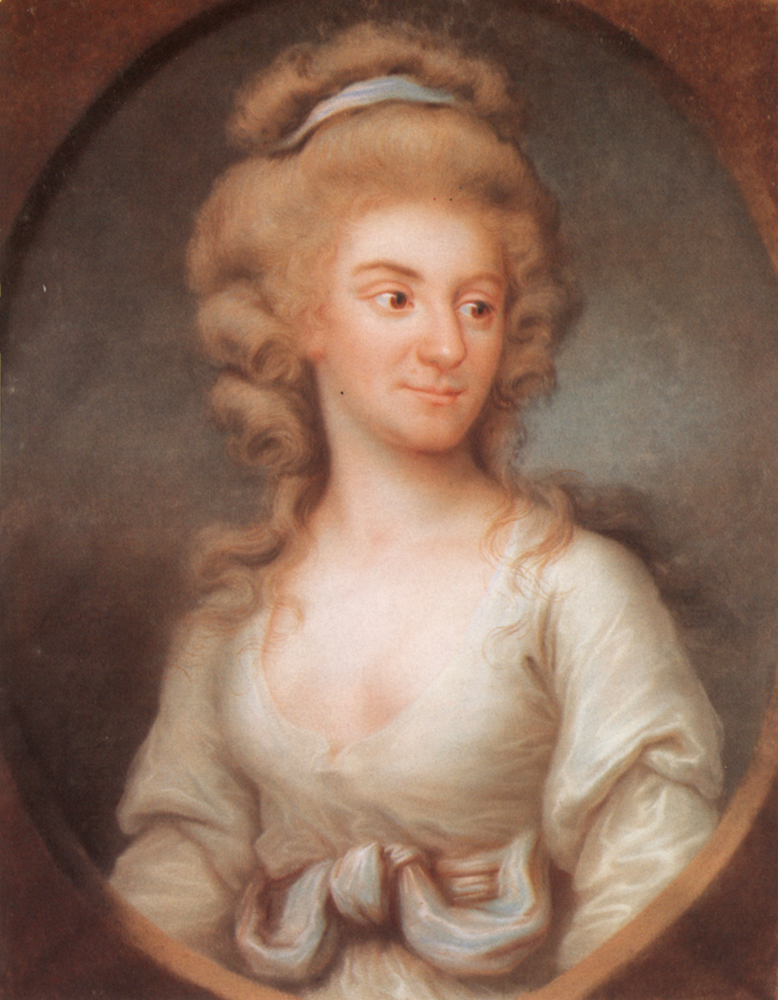
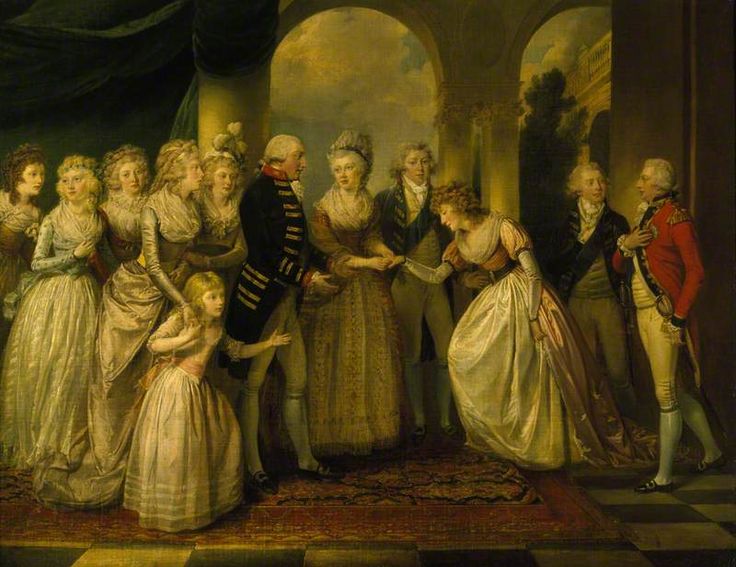
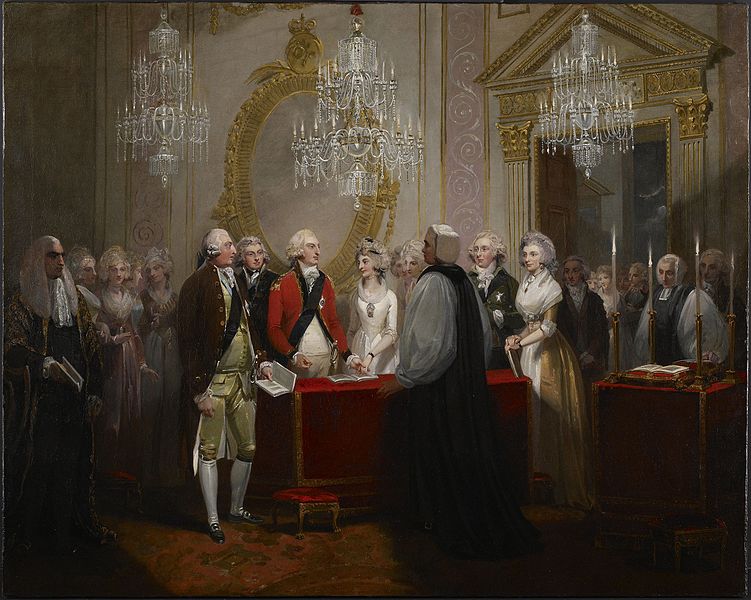
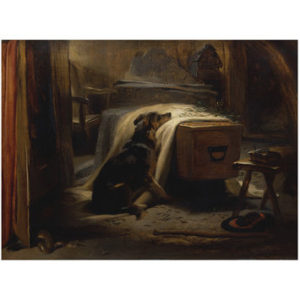
Though the Duke and Duchess of York agreed to separate about six years after their marriage, they continued to share the marital home, Oatlands, in Surrey, and apparently managed to live together in the house in various stages of harmony. Certainly, their friends were used to having both royalties present during house parties and other entertainments. A bit like the present Duke and Duchess of York, both preferred to live more or less in retirement and surrounded themselves with a select circle of friends. Let us take a look at the setting, courtesy of Highways and Byways in Surrey by Eric Parker, 1950 –
“Georgian days brought another being as a visitor. Oatlands came to the seventh Earl of Lincoln in 1716, and he built himself a house on the higher ground overlooking a fine stretch of water and many miles of Thameside country. From his son, who had inherited the dukedom of Newcastle, this house was bought by the Duke of York in 1794, but was burnt down the same year, and the royal Duke rebuilt it. He and his Duchess lived there until 1820, when she died. It must have been a curious household. George III brought Queen Charlotte there, and the Court with her; Georgian wits and beauties gathered in the duke’s dining-rooms and played cards in his grottoes. Charles Greville was often at Oatlands, and Sheridan and Beau Brummell and Horace Walpole; Mrs. Gwyn came there, and Mrs. Bunbury, Oliver Goldsmith’s “Jessamy bride” and “Little Comedy.” Both were buried in Weybridge old church. Samuel Rogers, in his Table-talk, gives a quaint picture of the household:
‘I have several times stayed at Oatlands with the Duke and Duchess of York—both of them most amiable and agreeable persons. We were generally a company of about fifteen; and our being invited to remain there ‘another day’ sometimes depended on the ability of our royal host and hostess to raise sufficient money for our entertainment. We used to have all sorts of ridiculous ‘fun ‘ as we roamed about the grounds. The Duchess kept (besides a number of dogs, for which there was a regular burial-place) a collection of monkeys, each of which had its own pole with a house at top. One of the visitors (whose name I forget) would single out a particular monkey, and play to it on the fiddle with such fury and perseverance that the poor animal, half distracted, would at last take refuge in the arms of Lord Alvanley.—Monk Lewis was a great favourite at Oatlands. One day after dinner, as the Duchess was leaving the room, she whispered something into Lewis’s ear. He was much affected, his eyes filling with tears. We asked what was the matter. ‘Oh,’ replied Lewis, ‘the Duchess spoke so very kindly to me !’—’ My dear fellow,’ said Colonel Armstrong, ‘pray don’t cry; I daresay she didn’t mean it.’
“The Duke of York died in 1827, and thirty years later Oatlands became a hotel. The building was greatly altered, but the grounds still keep some untouched memorials of the past. One is an extraordinary grotto, built by the Duke of Newcastle, and used by the Duke of York and his friends, according to local tradition, as a card-room, plentifully supplied with wine bottles. It is lined with a profusion of crystal spar and sea shells; it contains a deep bath, bashfully presided over by a statue of Venus, and the steps leading up to the door are paved with horses’ teeth picked up on the battle-field of Waterloo. How the Duke of Newcastle accomplished this feat it is difficult to imagine, for he died in 1794. Perhaps they belonged to other horses, or perhaps the gallant Duke of York made the addition. He was Commander-in-chief, and the grisly relics may have been sent him as a present.
“Another relic of the dead is the cemetery in which the Duchess of York used to bury her cats and dogs and monkeys. There may be, perhaps, thirty or forty little tombstones, each with a name.”
The diarist Charles Greville has left us a picture of his visits to Oatlands in his Memoirs. Here is an extract that mentions both the grotto and the Duchess’s love of animals:
“The week end parties were often large, and one of the principal amusements of the guests was to sit up playing whist till four o’clock in the morning. On Sundays,” he continues, ” we amused ourselves with eating fruit in the garden, and shooting at a mark with pistols, and playing with the monkeys. I bathed in the cold bath in the grotto, which is as clear as crystal and as cold as ice. Oatlands is the worst managed establishment in England: there are a great many servants, and nobody waits on you; a vast number of horses, and none to ride or drive.”
“The Duchess seldom goes to bed, or, if she does, only for an hour or two; she sleeps dressed upon a couch, sometimes in one room, sometimes in another. She frequently walks out very late at nights, or rather early in the morning, and she always sleeps with open windows. She dresses and breakfasts at three o’clock, afterwards walks out with all her dogs, and seldom appears before dinner-time. At night, when she cannot sleep, she has women to read to her. The Duchess of York is clever and well informed; she likes society, and dislikes all form and ceremony; but in the midst of the most familiar intercourse she always preserves a certain dignity of manner. Those who are in the habit of going to Oatlands are perfectly at their ease with her, and talk with as much freedom as they would to any other woman, but always with great respect. Her mind is not perhaps the most delicate; she shows no dislike to coarseness of sentiment or language, and I have often seen her very much amused with jokes, stories, and allusions which would shock a very nice person. But her own conversation is never polluted with anything the least indelicate or unbecoming. She is very sensible to little attentions, and is annoyed if anybody appears to keep aloof from her or to shun conversing with her. Her dogs are her greatest interest and amusement, and she has at least forty of various kinds. She is delighted when anybody gives her a dog, or a monkey, or a parrot, of all of which she has vast numbers; it is impossible to offend or annoy her more than by ill using any of her dogs, and if she were to see anybody beat or kick any one of them she would never forgive it.”
Author James Thorne give us more background on the house and about the plan and appearance of the famous Grotto in his Handbook to the Environs of London –
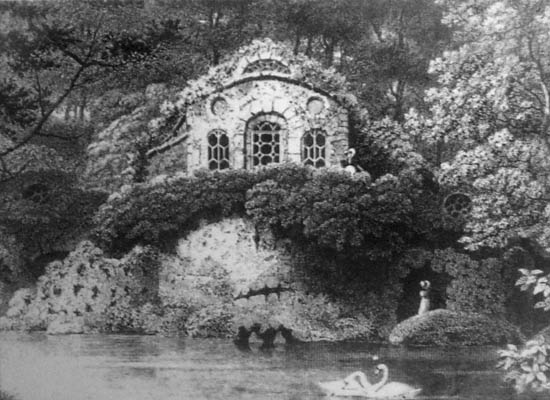
“(Oatlands) was constructed for the Duke of Newcastle by an Italian and his two sons, who were occupied over 20 years upon it. In the early accounts it is said to have cost £12,000 or £13,000, a sum since magnified to £40,000. The Grotto is a building of three or four chambers on the ground floor, connected by low dark passages, and a large room above. The exterior is formed of tufa curiously put together; the rooms and passages are a mosaic of minerals, marbles, spars of various kinds, and shells, worked into a multitude of quaint devices with infinite patience and skill. The ceilings are of stalactites and satin spars. In the bath-room is a copy of the Venus de’ Medici; painted glass obscures the light. The upper room, reached by an outer staircase, has an elaborate cupola of artificial stalactites of satin-spar; the walls a more complex repetition of the mosaic of the lower chambers. In this room George IV., when Prince of Wales, gave a splendid supper to the Emperor of Russia, the King of Prussia, and the princes and generals in their train, on their visit to England after the battle of Waterloo. The chamber for the occasion was lighted by cut-glass chandeliers; the chairs and sofas had satin cushions embroidered by the Duchess of York. In visiting the Grotto notice the many fine specimens of minerals still left, especially the various quartz crystals; also the ammonites and other fossil as well as recent shells.”
Unfortunately, the grotto was demolished in 1948, but these images give us some idea of what it looked like –

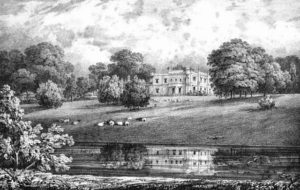
James Thorne continues: “Oatlands was purchased by the Duke of York, about 1790, for £45,000. The house was in great part destroyed by fire, June 6th, 1794, whilst the Duchess of York was residing in it. A new mansion was shortly after commenced on a grander scale, avowedly from the designs of Holland, the architect of Drury Lane Theatre (destroyed by fire in 1806), but John Carter (more favourably known by his etchings of Gothic buildings), who superintended its erection, claimed to be also its designer.* The house did little credit to the taste of either architect. It was a long, low, rambling structure ; the style a meagre variety of Strawberry Hill Gothic, battlemented throughout. It had, however, some noble rooms with ample.”
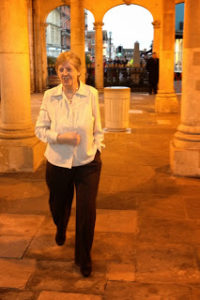
The celebrated Dandy, Edward “Golden Ball” Hughes purchased Oatlands from the Duke of York in 1824, in turn selling it on in 1846. Oatlands went on to become a school and is now a hotel. On a trip to Windsor, my dearly missed friend, author Hester Davenport, knowing my great affection for Frederica, offered to take me to Oatlands. Here I am sitting on a bench that is roughly situated to where the sheep are in the engraving.
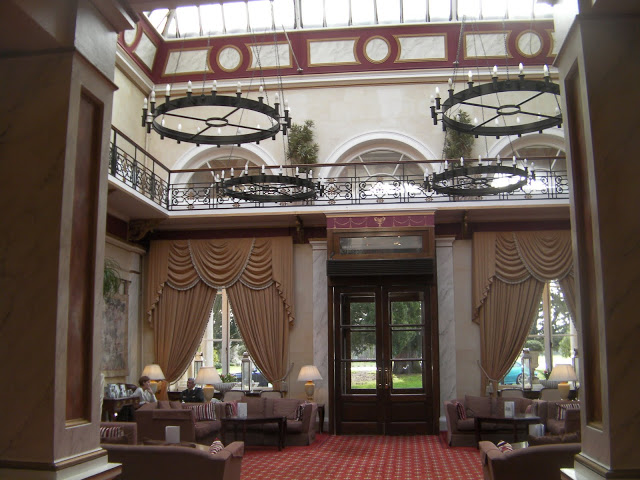
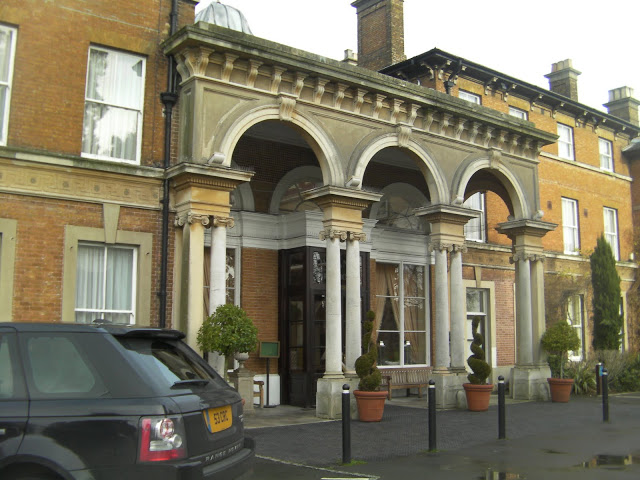 Hester and I had tea in the lobby of the hotel, poked our noses into various parts of the building and walked the grounds but, as she was well aware, the prime objective for my visit was to get a look at Frederica’s pet cemetery.
In his Handbook to the Environs of London, author James Thorne describes Frederica’s love of animals and gives us a glimpse of her pet cemetery at Oatlands:
“Fondness for animals was strongly developed in the Duchess. She protected the wild song birds, and would not allow a rook to be shot; the cows and pigs on the farm would run to her sure of a choice morsel; whilst for dogs her partiality was excessive, and to her visitors annoying; but doubtless she found, as she says in one of her shapeless rhymes, their “frolic play Enlivened oft the lonesome hours.’
“She did not neglect them even when dead. Around the margin of a circular basin for gold fish (now drained), she formed a cemetery for her pets, burying each in turn with care, strewing its grave with flowers, and placing over it a little stone “with the animal’s name, date of decease, and, if its merit was remarkable, a tribute in verse from her own pen.* Sixty or seventy of these stones still fringe the margin of the hollow; and when the Queen visited Oatlands in 1871, noticing that the tombstones were out of order, she, with her usual kindliness, gave orders for their restoration. They now look quite fresh, and four or five have been added for dogs recently deceased.”
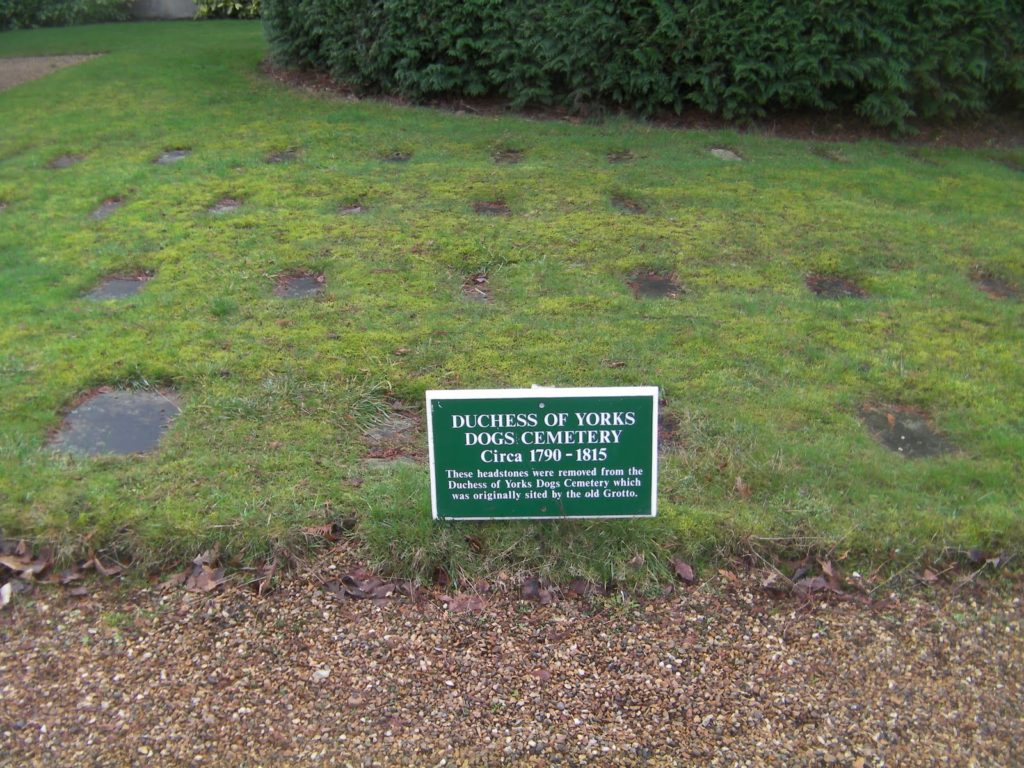
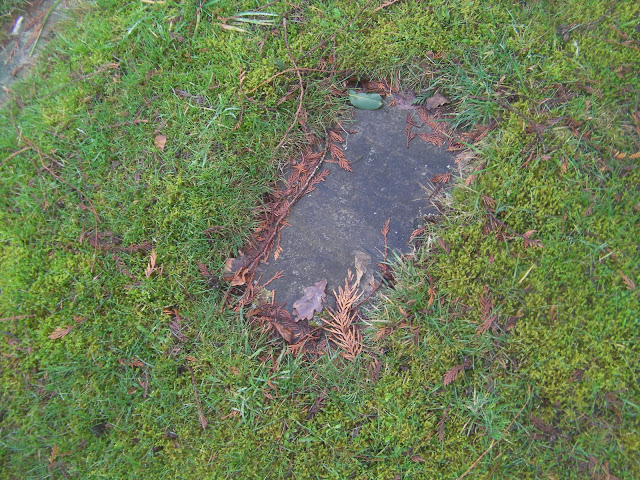
Unfortunately, Queen Victoria’s efforts were not maintained and this is all that’s left of Frederica’s cemetery, the stones now unreadable. Still, I will always thank Hester for ticking this particular item off my bucket list.
In Part 3 of this series, we’ll meet some of the people whom Frederica counted amongst her friends and get a bird’s eye view of the parties and entertainments she held at Oatlands.