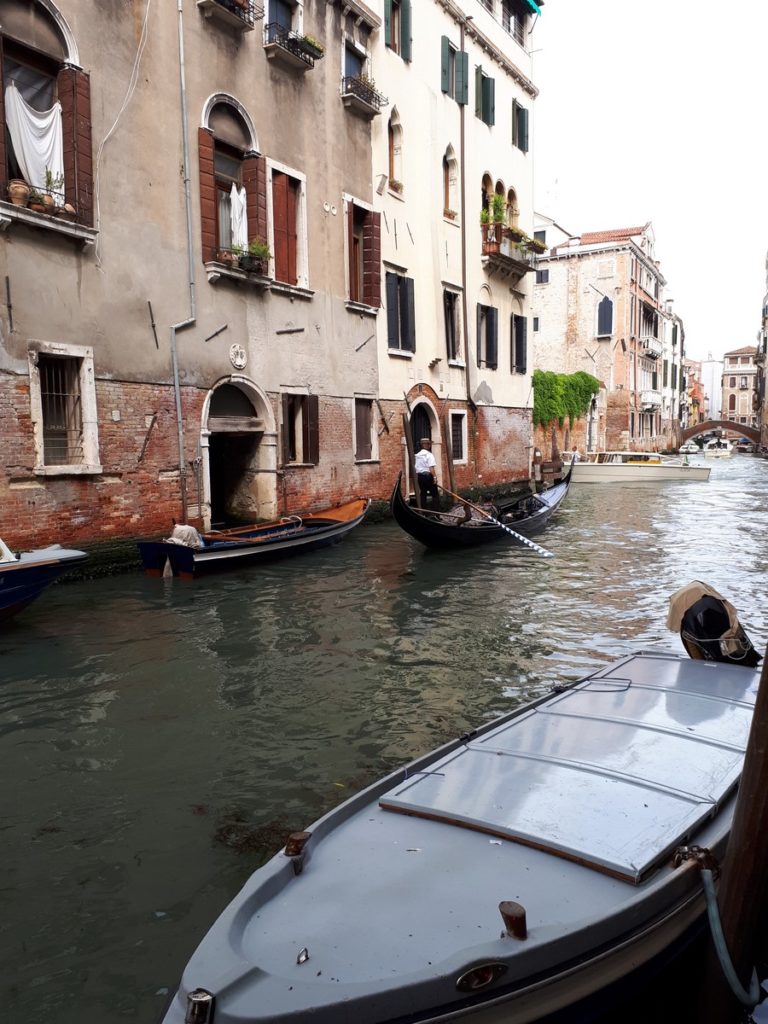
Is It Haunted? Of Course It Is – It’s England!

Generally, in England Halloween is not the celebrated holiday it is here in the United States. Of course, as happens all too frequently, it has crept Across the Pond and become more Americanized, but until recently there was simply no need to celebrate things that go bump in the night on one night of the year. Why? Because frankly when it comes to things that go bump in the night, Halloween is rather redundant in the UK. The entire island is a celebration of all things ghostly, ghoulish, and people who simply refuse to go into the light. One can hardly throw a rock without passing through the ghost of a Grey Lady, a White Lady, a Howling Banshee, or a Spectral Monk. However, even with all of this paranormal mayhem, there are certain rules which pertain to whom or what is more likely to be creeping about Mother England long after they might have gone on to the great tea room or pub in the sky.

Thus, we give you…

TEN RULES FOR HAUNTING IN THE UNITED KINGDOM

1. If one is any of Henry VIII’s six wives and one has been born in, died in, grew up in, lived in, slept in, visited, been executed in or near, or even driven or ridden by a building one must haunt said building. Choice of dress color is optional—grey or white is preferred.

Haunted Gallery – Hampton Court Palace. Katherine Howard is said to have escaped her guards and run down this gallery to catch Henry VIII in the chapel and beg for his mercy. Her ghost is said to repeat this last path over and over again.


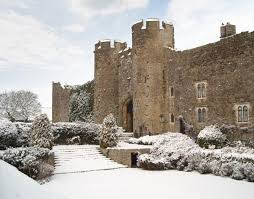
Amberley Castle. A servant girl named Emily was supposedly impregnated by a bishop and tossed aside. She, therefore, tossed herself off one of the towers to her death. She is sometimes seen roaming the halls. More often seen repeating her leap from the tower.

2. If one is a servant in a particular house and one dies of either lingering disease or preferably some sort of gruesome death over unrequited love, being unjustly accused of theft, or the master (or his son) has got you in a delicate condition one must haunt said house—hanging oneself over and over again is good. Throwing oneself off a tower only to disappear is better. If it is accompanied by a great deal of weeping and moaning it is better still.


3. If one is a highwayman or other notorious outlaw and one has died at the hands of either the hangman or the militia in a desperate chase and shootout one is condemned to haunt either the place of execution or, even better, one is condemned to ride up and down the stretch of road one frequented or upon which one finally met one’s end. One’s horse is apparently condemned as well. Shouting “Stand and Deliver!” is optional.

Dartford Heath – Said to be haunted by Dick Turpin and other highwaymen who can be heard riding through the mist of an evening.


4. If one met one’s end in a pub or tavern, especially in some sort of tavern brawl or affair of honor, one must stop by said pub periodically. Not for a pint, but to scare the bejeesus out of the current patrons. If one is a tavern maid who was murdered in said establishment, committed suicide in said establishment, got lost on the way home from said establishment, or went walking out with the wrong patron from said establishment then one is condemned to hang around and give the place character as well. One is not allowed to drink whilst haunting, which seems a bit unfair, but those are the rules.

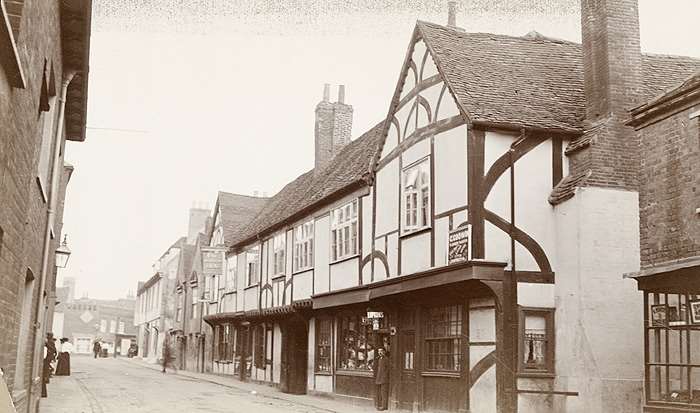
The Ostrich in Colnbrook Photograph taken 1905 © Crown Copyright.EH ref: OP14241
Over 900 years as a coaching inn and pub. Some 60 or more murders are attributed to a 17th century innkeeper and his wife. Is there any way The Ostrich isn’t haunted?


5. If one fought (and died, of course) on any of the numerous battlefields in the UK there is always the chance one might be condemned to haunt said battlefield. Loss of limb, or especially loss of one’s head is a certain bet one will be required to hang around said battlefield for eternity looking for one’s missing parts. Sending one’s horse to gallop about unseen in the mist is a possible out. Rattling one’s saber, firing cannons, and shouting “Charge!” are a safe bet.

The Battlefield at Culloden is said to be haunted by soldiers who died in battle there in 1746. It is said one can hear the sounds of pipes and drums and shouted battle cries at sunset.

6. If one was a monk or nun and died in the area of a monastery or abbey, the more gruesome one’s death the more likely one must haunt said monastery or abbey. Murdered by a king or at a king’s behest is guaranteed employment as a ghost for eternity. Especially if one’s death was particularly bloody and took place in said monastery or abbey. However, it is possible, if one was a monk or nun one is simply choosing to haunt said monastery or abbey. Apparently, monks and nuns have a great deal of trouble moving on.

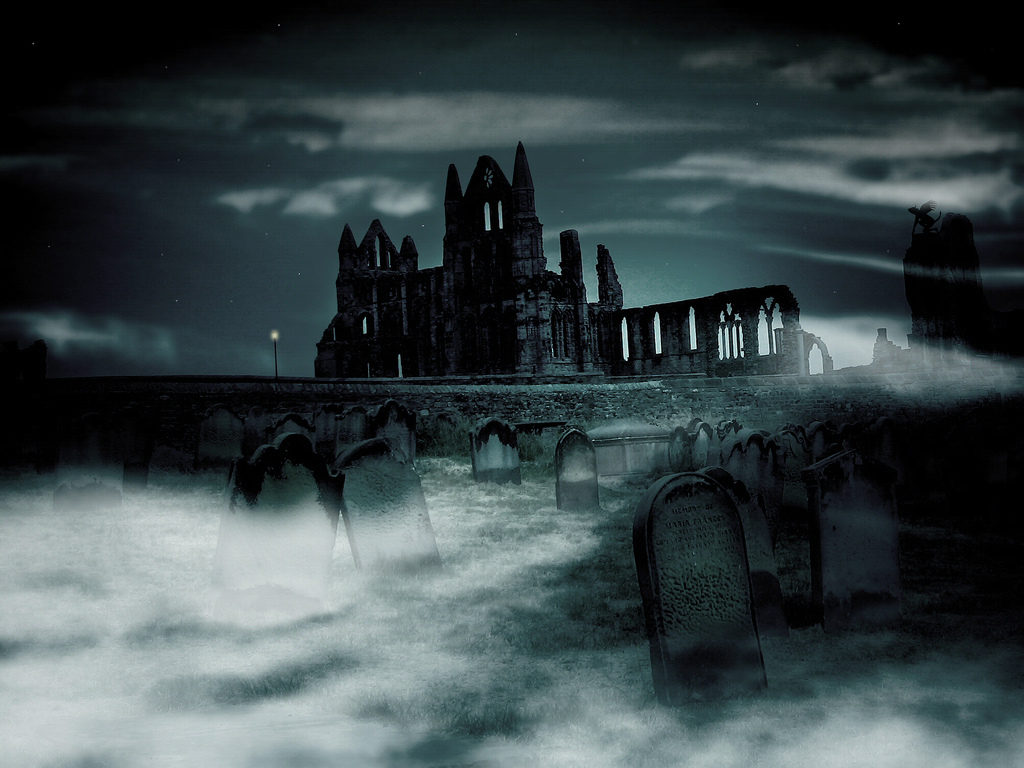
Whitby Abbey – site of a spectral monk and inspiration for one of the locations in Bram Stoker’s Dracula.

7. If one is the lady of the house, especially a castle or a stately home—the older the better, and one meets an unfortunate end, one might be required to haunt said castle or house. Murdered by a wicked husband, becoming ill after suffering a jilting or loss in love, being stood up at the altar and falling into a fatal decline, committing suicide by leaping from the tower, parapet or a particularly high window—any and all of these will do. Grey or white are the dress colors preferred, although red will do in a pinch. Oh, and if one had a dog of which one was particularly fond, said dog might be condemned to walk the parapets with one. On rare occasion said ghost dog might be heard howling in despair on the anniversary of his mistress’s death.

Samlesbury Hall – Haunted by the White Lady, Dorothy Southworth, whose Catholic family killed her Protestant lover the night they were to meet and elope. She is said to haunt the hall in search of her lover.

8. Moors in England are required, I do believe it is by law, to have at least one creature (known origins optional) to haunt said moor and frighten anyone unfortunate enough to venture out onto said moor, especially in the evening or at night. A moor might be haunted by a hound of unusual size and ferocity, a pack of hunting dogs lost by a careless master, a fiery horse (rider optional) lost in the bogs of the moor, Celtish or Roman warriors trapped in the bogs over the centuries, a howling creature of unknown origins or anyone ever lost or body-dumped on the moors by a savvy, but cold-hearted killer.

Dartmoor – The Moor – Home to Baskerville Hounds, witches burned or hanged or drowned and even a few Roman soldiers who never made it home.


9. Should one be a member of the royal family on one’s death, one is very nearly required to haunt various royal residences. This is especially true if one has suffered a horrible death or one has suffered the loss by terrible or premature death of one’s child or spouse. Should one be a royal murdered by yet another royal for reasons of royal coup or simply a family feud got out of hand, one is far more likely to be compelled to haunt. Crowns, and sometimes even heads, are optional. Oh, and if one is numbered amongst those bad kings or queens, one is simply doomed to haunt, just saying. Apparently dead royals are nearly as bad as monks and nuns about moving on.

Tower of London – White Chapel – The bodies of the Two Princes murdered by their Uncle Richard to obtain the crown were reportedly found here. The Princes are said to haunt the Tower, especially the chapel.

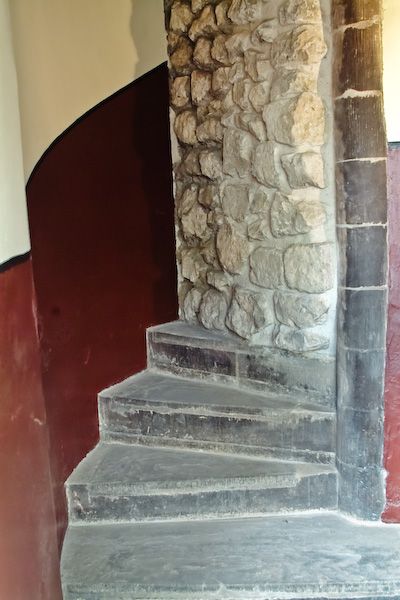
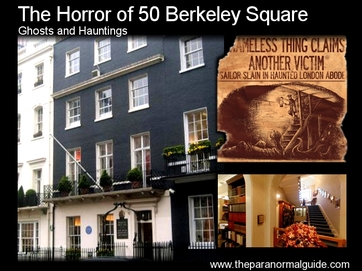
10. Dying at Number 50 Berkeley Square apparently guarantees one a spot on the haunting roster. Whether one’s death was horrible, frightening, or merely sad one has no choice but to linger around for eternity and wait one’s turn to disturb the peace of the house. There are so many spirits at this address there must be a ghostly social secretary to keep everyone in order. However, one is guaranteed a deal of privacy as hauntings are only allowed on the fourth floor and, apparently, the police, in typical British fashion have posted a sign in the house forbidding anyone to climb to the fourth floor.

“You say the rooms are haunted? Well, don’t go into those rooms!”

Number 50 is considered the most haunted house in London, but according to those who work at antiquarian booksellers Maggs Bros. Ltd., housed at this address for many years, nothing untoward has ever happened. Then again, they never venture onto the fourth floor. Ever. Would you?

Check out theparanormalguide.com for more information and great research on No. 50 Berkeley Square and other haunted places in Britain.

There you have it, a few rules for haunting in the UK. Even with the rules, those of us who love England might not find it too terrible a task to spend eternity there. Some of us would spend our years left with the living haunting England, if funds and time would allow!

HOW TO CREATE AUTHENTICITY IN REGENCY HISTORICAL ROMANCE? RESEARCH, RESEARCH, RESEARCH! – PART TWO

The Lives and Deaths of London’s Climbing Boys

Louisa Cornell

Andrea and I decided early on in writing our third series together that we wanted to bring the world of London’s darker side to life for our readers. To do so we had to delve into the very real and horrifying world of London’s East End where poverty, violence, and despair were the bread and butter of the residents of Seven Dials, St. Giles, and White Chapel – the most notorious of the slum areas known as The Rookeries.
The heroes of Bow Street’s Most Wanted – The Four Horsemen are hard men, made so by their cruel and desperate childhoods. As a result they tend to have neither sympathy nor soft spots for no one save perhaps children, children whose circumstances were as desperate as their own had once been. Some of the most used, abused, and desperate of children in this era were those who were apprenticed, sold, or sometimes kidnapped into the service of London’s chimney sweeps.

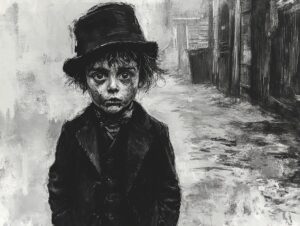
From the late 16th to the 19th century, chimney cleaning was a vital yet hazardous occupation in Britain. With the increased use of coal as a primary fuel source and the evolution of chimney design to include narrower, more intricate flues, adult sweeps were unable to access certain parts of the chimney for cleaning. Children, some as young as four, were employed to navigate the narrow, winding flues of chimneys, scraping away soot and creosote to prevent fires and maintain airflow.

Small boys, sometimes orphans or boys essentially sold by impoverished families, were employed as climbing boys to clean these inaccessible areas. If they were lucky they were apprenticed to master sweeps who were paid by the parish to teach them the trade. These apprentices tended to be treated better than the orphans or other boys. Climbing girls were also employed, although they were less common.

Very often those that had been sold by their parents had even signed papers securing the master sweeps status as their legal guardians, meaning these young children were tied to their master and their profession until adulthood with no route to escape, except death.

From “The Chimney Sweeper” by William Blake, from his work “Songs of Innocence and of Experience”, 1795

In addition to the dangers of cruel and uncaring masters, the job had a number of inherent risks that came with it. Climbing boys faced numerous perils, including getting stuck in narrow flues, suffocating on soot, suffering burns from hot or even burning chimneys, and falling. Some would have to buff it or climb naked to fit into the tight spaces. Exposure to soot and the physically demanding nature of the job led to a range of health issues, including respiratory problems, eye inflammation, skin sores, deformities, and stunted growth, not to mention burns.

A particularly deadly consequence was chimney sweeps’ carcinoma, or “soot wart,” an aggressive form of scrotal cancer caused by irritation from the carcinogenic substances in coal soot. This was the first occupational cancer ever to be identified, according to The Institute of Cancer Research.

There were variations between buildings, but a standard flue would narrow to around 9 by 9 inches. With such a small amount of movement afforded in such a small space, many of the climbing boys would have to inch their way up using only knees and elbows to force themselves forward.

Many of the chimneys would still be very hot from a fire and some might still be on fire. The skin of the boys would be left stripped and raw from the friction whilst a less dexterous child could possibly have found themselves completely stuck.

The position of a child jammed in a chimney would have often resulted in their knees being locked under their chins with no room to unlock themselves from this contorted position. Some would find themselves stranded for hours whilst the lucky ones could be helped out with a rope. Those less fortunate would simply suffocate and die in the chimney forcing others to remove the bricks in order to dislodge the body. The verdict given by the coroner after the loss of a young life in this fashion was accidental death.

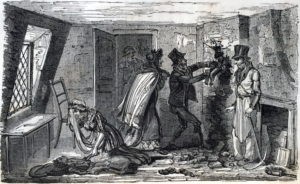
The death of two climbing boys in the flue of a chimney. Frontispiece to ‘England’s Climbing Boys’ by DR. George Phillips.

Several acts of Parliament were passed to regulate the trade and restrict child labor in chimney sweeping, starting with the Chimney Sweepers Act of 1788.

In 1788, the Chimney Sweepers Act was enacted to regulate the trade by setting a minimum apprenticeship age of eight and limiting the number of apprentices per master. However, due to inadequate enforcement, these regulations had little impact. Further legislative attempts, including acts in 1834 and 1840, also failed to bring significant change.

The practice was finally outlawed in England in 1875 with the passage of the Chimney Sweepers Act, which was a result of sustained efforts by reformers and sparked by the tragic death of 11-year-old George Brewster, the last recorded fatality of a climbing boy. Brewster became trapped while cleaning a flue at the County Pauper Lunatic Asylum in Fulbourn near Cambridge and did not survive the ordeal. His death spurred renewed public outcry, prompting Lord Shaftesbury to champion the cause. This advocacy culminated in the Chimney Sweepers Act of 1875, which mandated the registration of chimney sweeps and effectively prohibited the employment of children in chimney cleaning. This legislation marked a significant advancement in child labor laws in Britain.

In recognition of the sacrifices made by these young workers, a blue plaque was unveiled on 11 February 2025, commemorating George Brewster’s life and his role in ending the use of child chimney sweeps in England. He is the youngest British person honored with an official blue plaque.

EXCERPT FROM: FAM – LORD OF HUNGER

Their horses began to tire after a few miles. Fam guided Bess into a slow trot as they crossed into the far edges of Mayfair. He continued to check on the child whose breaths had grown shallow and less frequent. The smell of coal and the filthy face led him to believe this limp bag of bones and rags had been used as a climbing boy by some soon-to-be-dead chimney sweep. His blood heated at the thought of what he’d do to the fiend who had used this boy and dumped him like an old stray dog.

https://www.amazon.com/dp/B0DWZ2JKX6/

https://www.amazon.com/dp/B0DZV4QBLF/


HOW TO CREATE AUTHENTICITY IN REGENCY HISTORICAL ROMANCE? RESEARCH, RESEARCH, RESEARCH!

The Horrors of Baby Farming in Nineteenth Century England

Louisa Cornell

One question with which I am certain all authors are familiar is “How do you come up with story ideas?” Those of us who write receive this question from both readers and fellow writers. I will confess I never know when or where a story idea is going to leap out at me. Ideas can come from all sorts of places and some of those places are those I stumble across when I least expect it.

However, when one writes historical romance set in a specific era, like the Regency and early Victorian eras, research is certain to yield some fascinating and sometimes horrifying places from which to derive the basis of a story or even an entire series. Such was the case when Andrea K. Stein and I began to consider ideas for our third series together set in our own version of the Regency world.

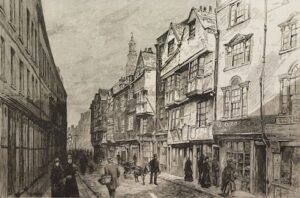
Holywell Street London – Where pornographers plied their trade.

Our first series – Steam, Lies, and Forbidden Desires came from the very real practice of pornographers in the era splitting a novel into four sections and selling each section as a separate novel.


Our second series – Five Pearls for the Earl came from a trip we took with Number One London Tours during which we visited Harewood House and a docent made a casual remark about why an earl’s coronet has five pearls.

Harewood House


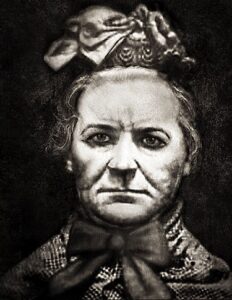
Amelia Dyer

Our current series – Bow Street’s Most Wanted – The Four Horsemen derived its root premise from a book I read in researching a class I taught on mental illness in the nineteenth century. Amelia Dyer Angel Maker: The Woman Who Murdered Babies for Money by Allison Rattle and Allison Vale. A fascinating read, but not for the faint of heart. Andrea and I considered what sort of children might survive such a horrific upbringing and what sort of men might they become. Thus, The Four Horsemen was born.

So what precisely was a baby farm?

In England in the 19th century unwed mothers and their infants were considered an affront to morality. They were spurned and ostracized both by the public and by relief and charitable institutions. For example in 1836 Muller’s Orphan Asylum in Bristol refused illegitimate children; they accepted only lawfully begotten orphans. The thought was that children conceived in sin would inherit their parents’ lack of moral character and would be a bad influence on legitimate children. Some orphanages accepted children no matter the circumstances of their birth. Others did not.

Young women who became pregnant out of wedlock were forced to leave home in disgrace and move somewhere they were not known. They were often scorned and abandoned by family and left with no resources. If they named the father of their child the parish would demand he pay for the support of the child, but those laws were difficult to enforce and little effort was made to do so.

There were few employment opportunities for single women in this era and the moment their pregnancy became noticeable they were dismissed. Once they gave birth their position became even less tenable as they had no one to tend their child whilst they worked. Thus, they resorted to baby farmers.

Baby farmers, the majority of whom were women, placed ads in newspapers that catered to working class women.

The ads look innocent enough. However, you will notice names are often not listed. Nor are actual specific addresses. No references are given nor offered. One ad suggested a fee of 15 shillings a week to keep an infant or a flat fee of 12 pounds to adopt. The weekly fee was not enough to keep a child, especially a sickly child, and for 12 pounds it was expected the mother would neither see her child again nor ask any questions. Infants under two months were the least likely to survive and the cheapest to bury.

Baby farmers were interested in only one thing. How much money could they squeeze out of the mother and/or father and for how long. A child’s life might hang on how long a mother might be strung along to keep paying. A single woman might not have 12 pounds, but she might be able to secure that amount from the father if he thought the child would disappear forever.

The majority of baby farmers solicited as many infants under the age of two months as they could. These children were the ones whose deaths would appear to be more natural. They would adopt many of these infants for the one time set fee and get rid of them at once. Those they kept were kept drugged on laudanum, paregoric, and other poisons. They were often given milk mixed with lime. The costs of burial was avoided by wrapping the infants’ naked bodies in newspapers and dumping them in dung heaps, deserted areas, or in the Thames.


Older children whose mothers did their best to pay the weekly fee and demanded to visit their children died longer, more torturous deaths. They died from slow starvation, being fed the bare minimum to keep them alive and lingering. Mothers worked day and night to support these children only to watch them waste away in the care of these supposed nurturing women.

Until 1872 there were no laws to govern baby farmers.

There were even some women who handed their children over to these baby farmers knowing full well that their child’s fate would be death. Unable to murder their own child they allowed the baby farmer to do so. A Mrs. Winsor was eventually arrested for the murder of a four month old infant whose body was found wrapped in newspaper on the side of the road in Torquay and traced back to her. She ran a lucrative business boarding infants for a few shillings a week or putting them away for a flat fee of 3 to 5 pounds. She was sent to prison for the crime.

A Society for the Prevention of Cruelty to Children was not founded until 1889. The Royal Society for the Prevention of Cruelty to Animals was founded in 1824, 65 years before this.

The premise for our series is the age old author’s question, What if? What if four boys managed to survive the horrors of being raised on a baby farm? What sort of men would they become and what sort of lives would they lead?

Bow Street’s Most Wanted: The Four Horsemen 

We’re expanding our diverse Regency world into the darker side of London’s infamous rookeries and waterfront gangs with four heroes who stretch the boundaries of redeemability. If you want stories of dark deeds done in secret, look no further.

The story of villains is much more entertaining than the story of heroes, because monsters are not born, they are made…The monsters, in their tragedy, show us what could happen to us all, if the world turned its back on us.           Mary Shelley


https://www.amazon.com/dp/B0DWZ2JKX6/


 https://www.amazon.com/dp/B0DZV4QBLF/