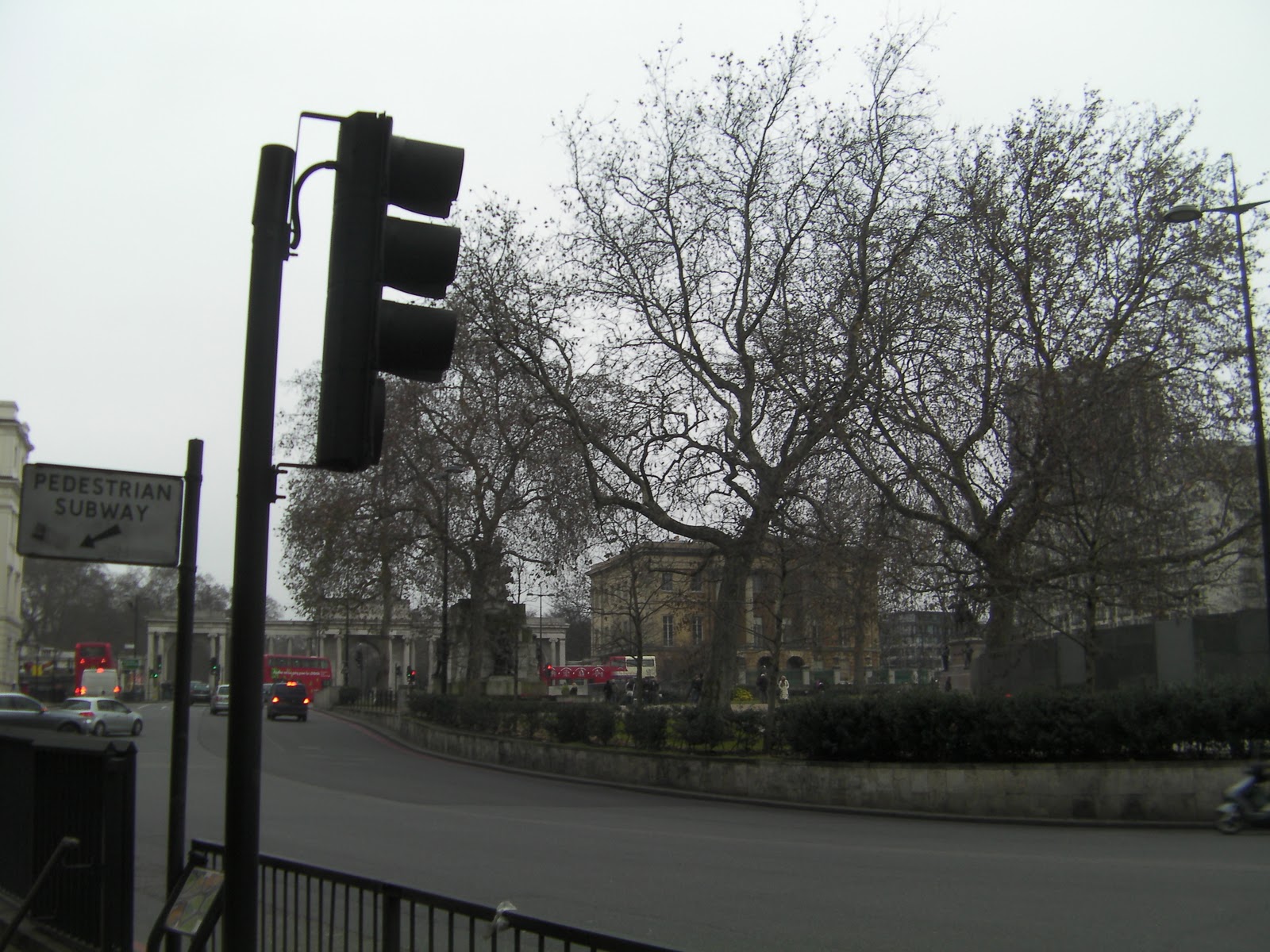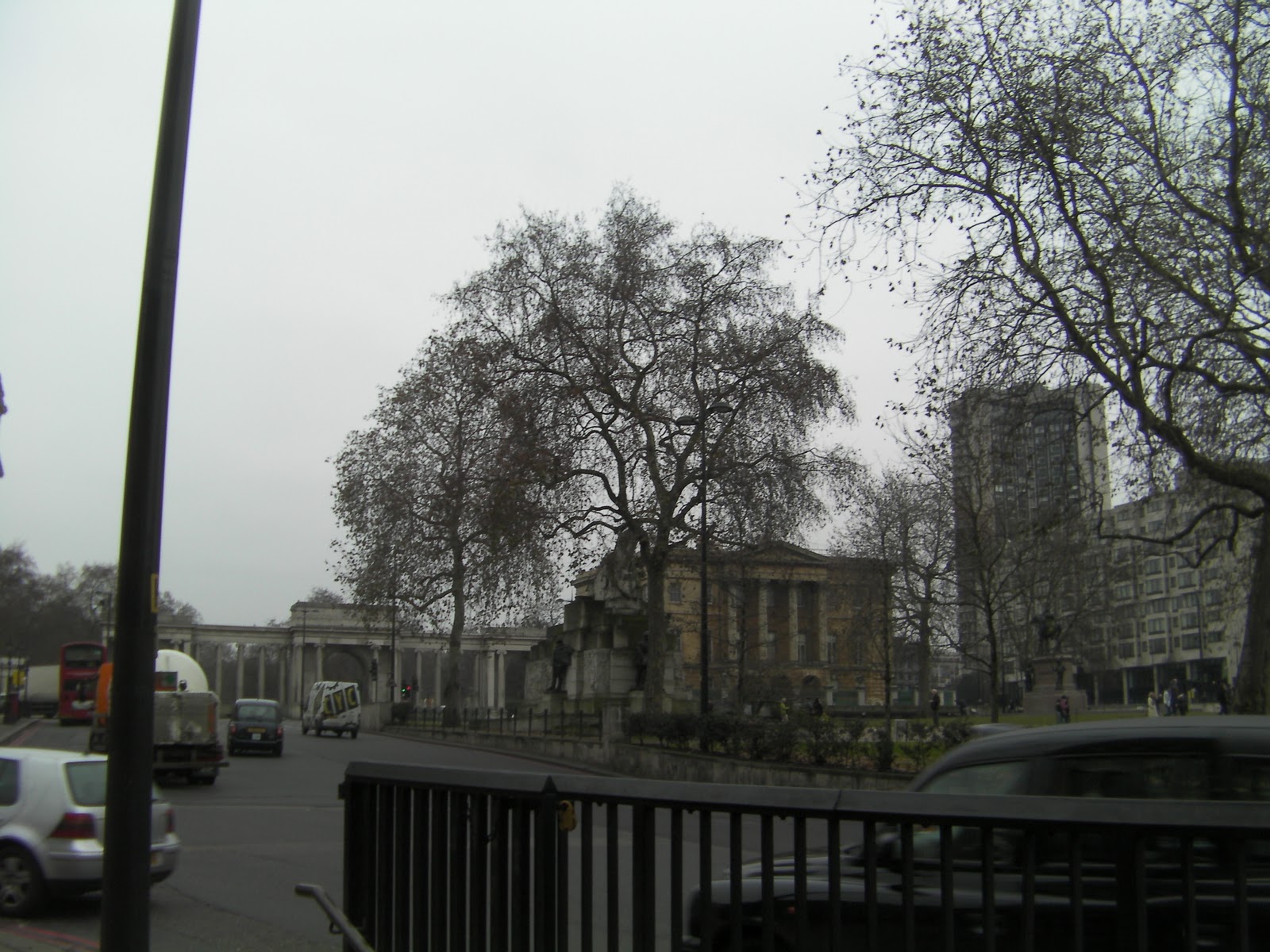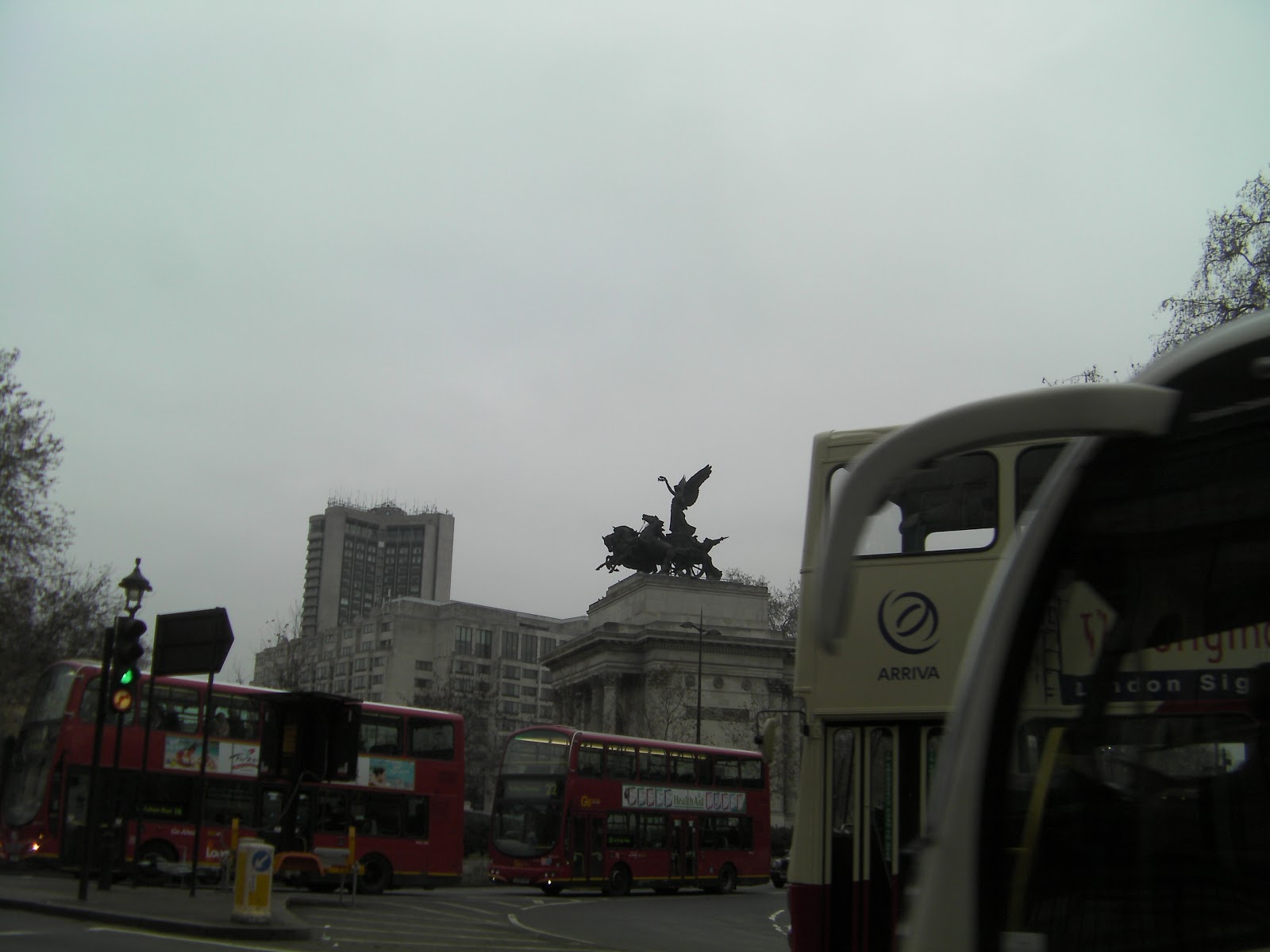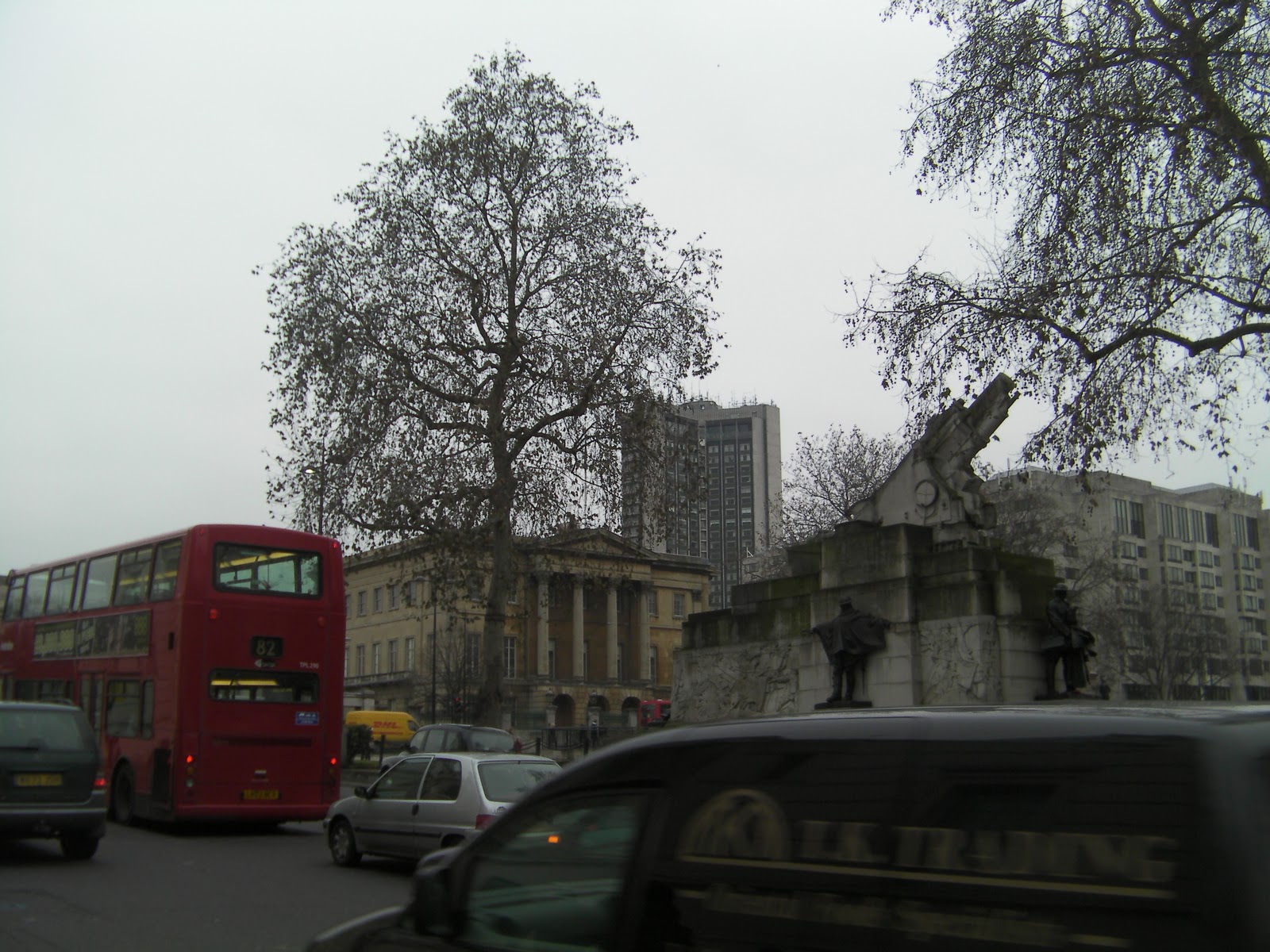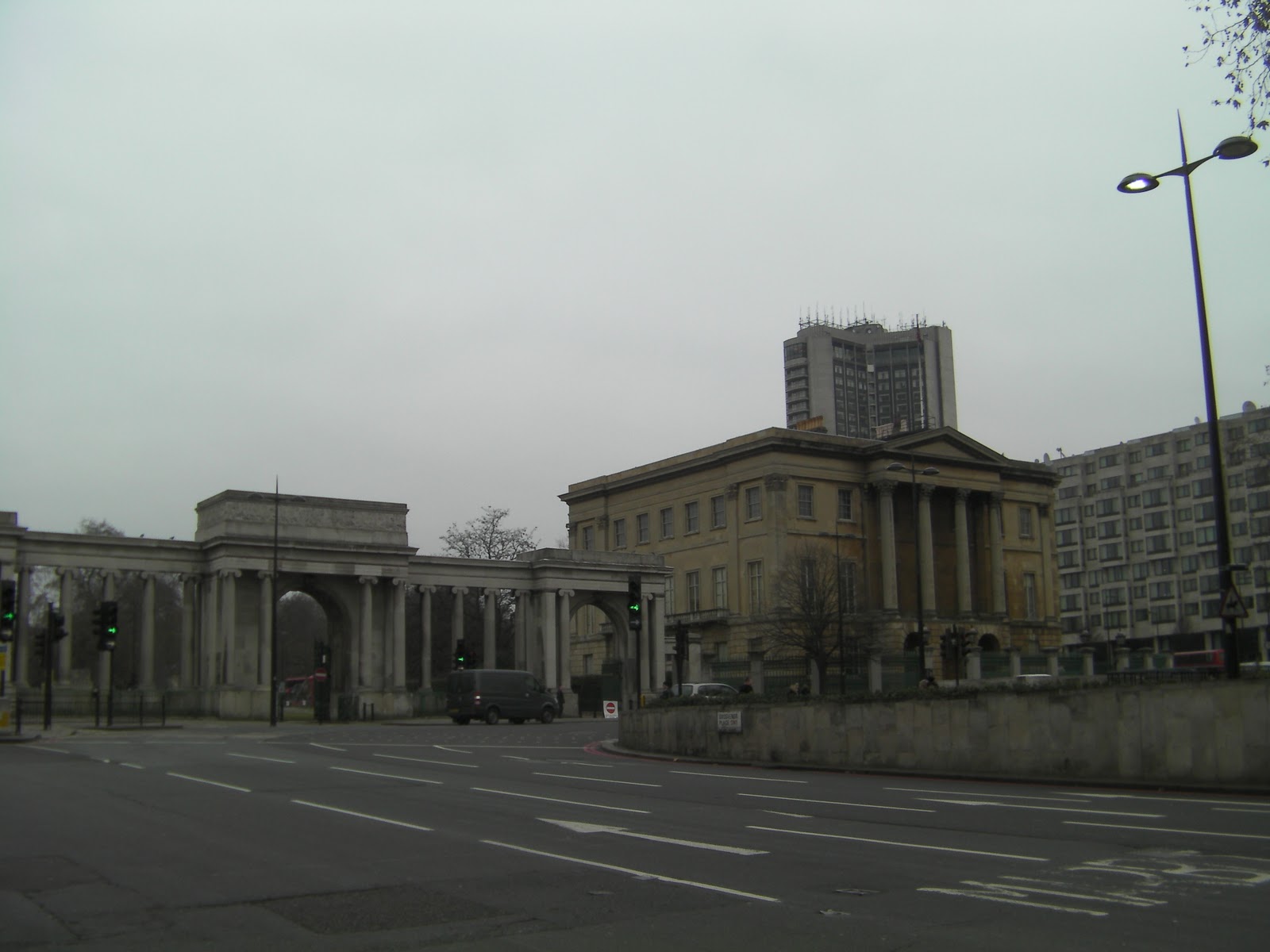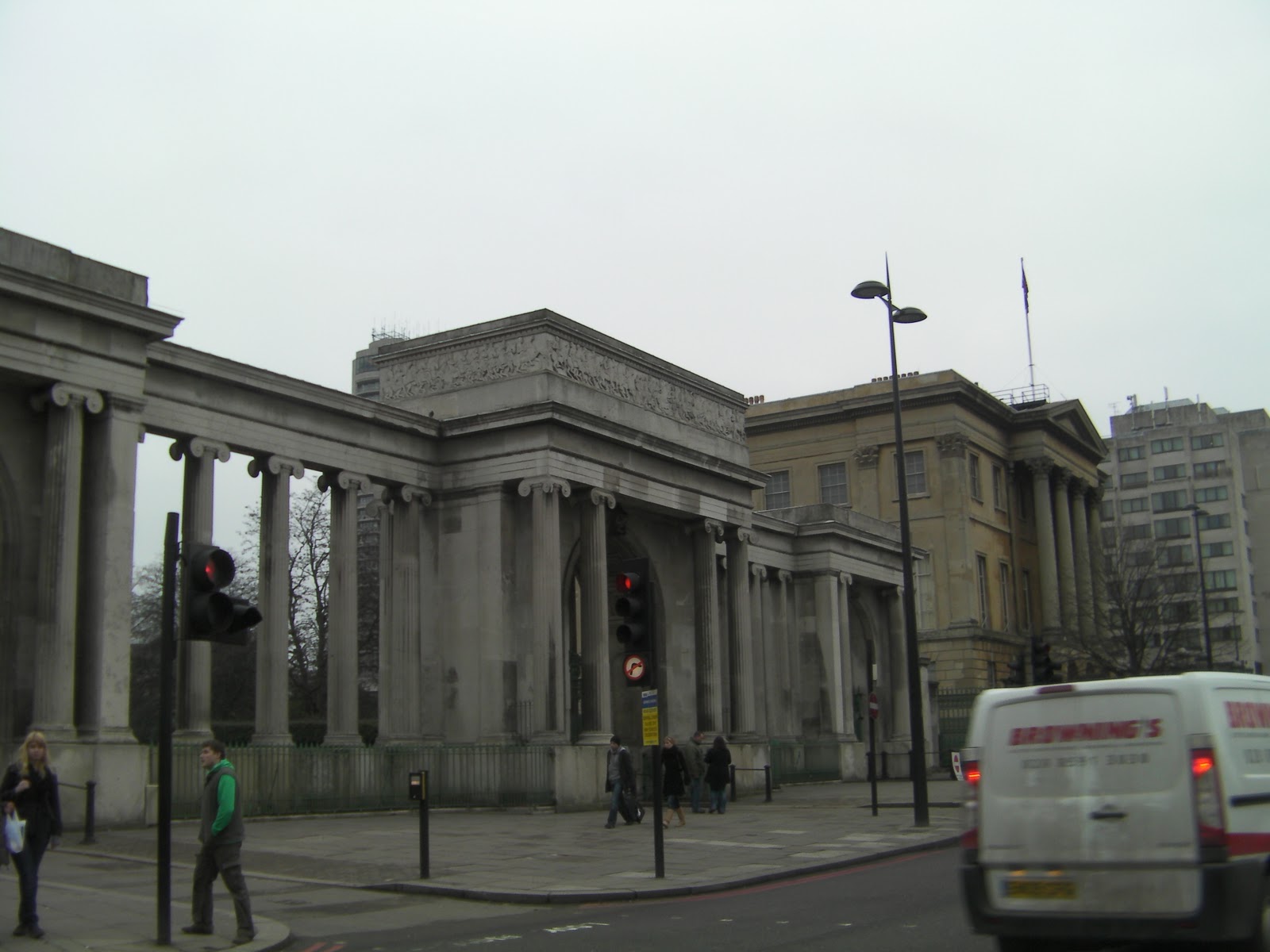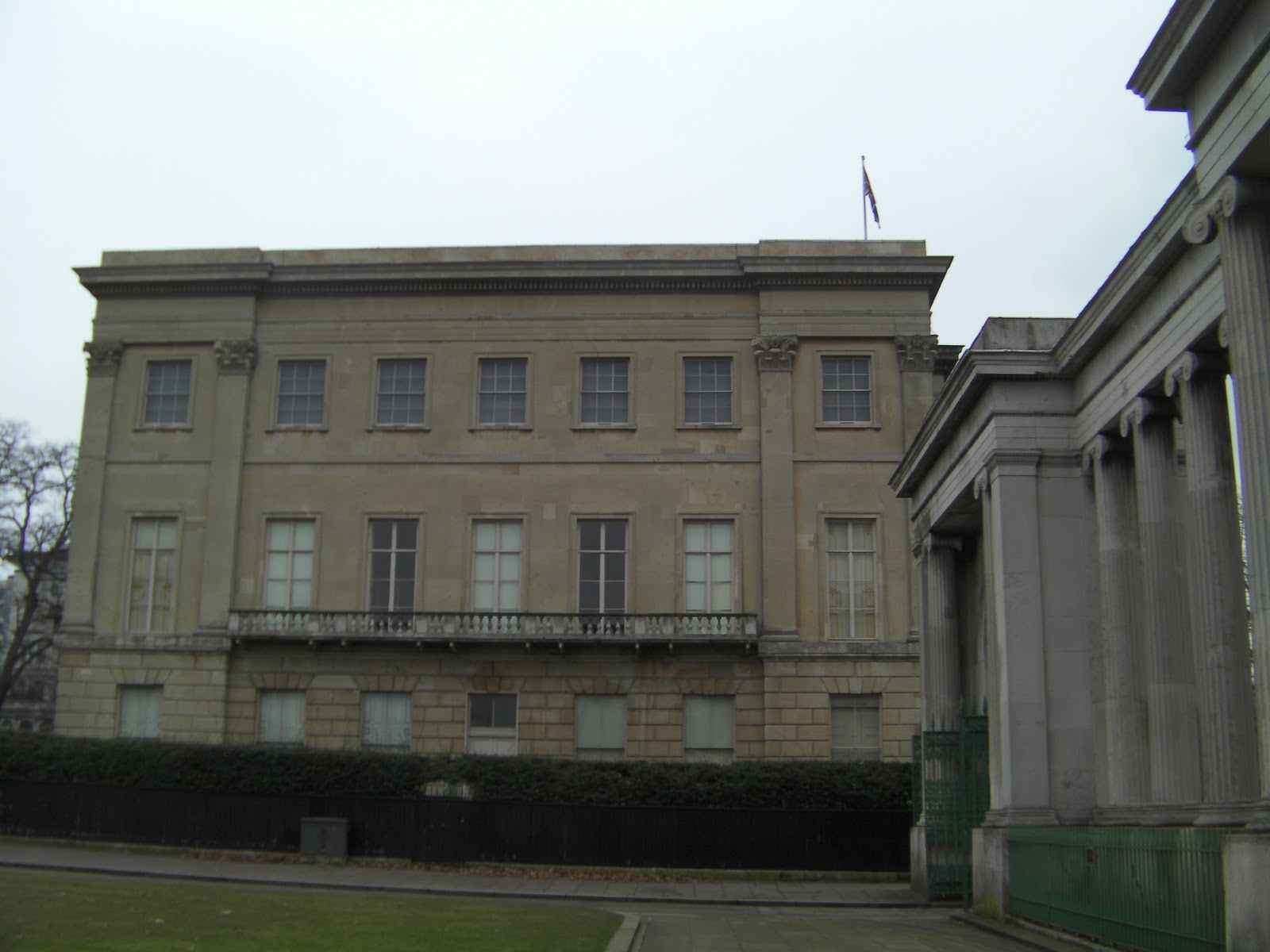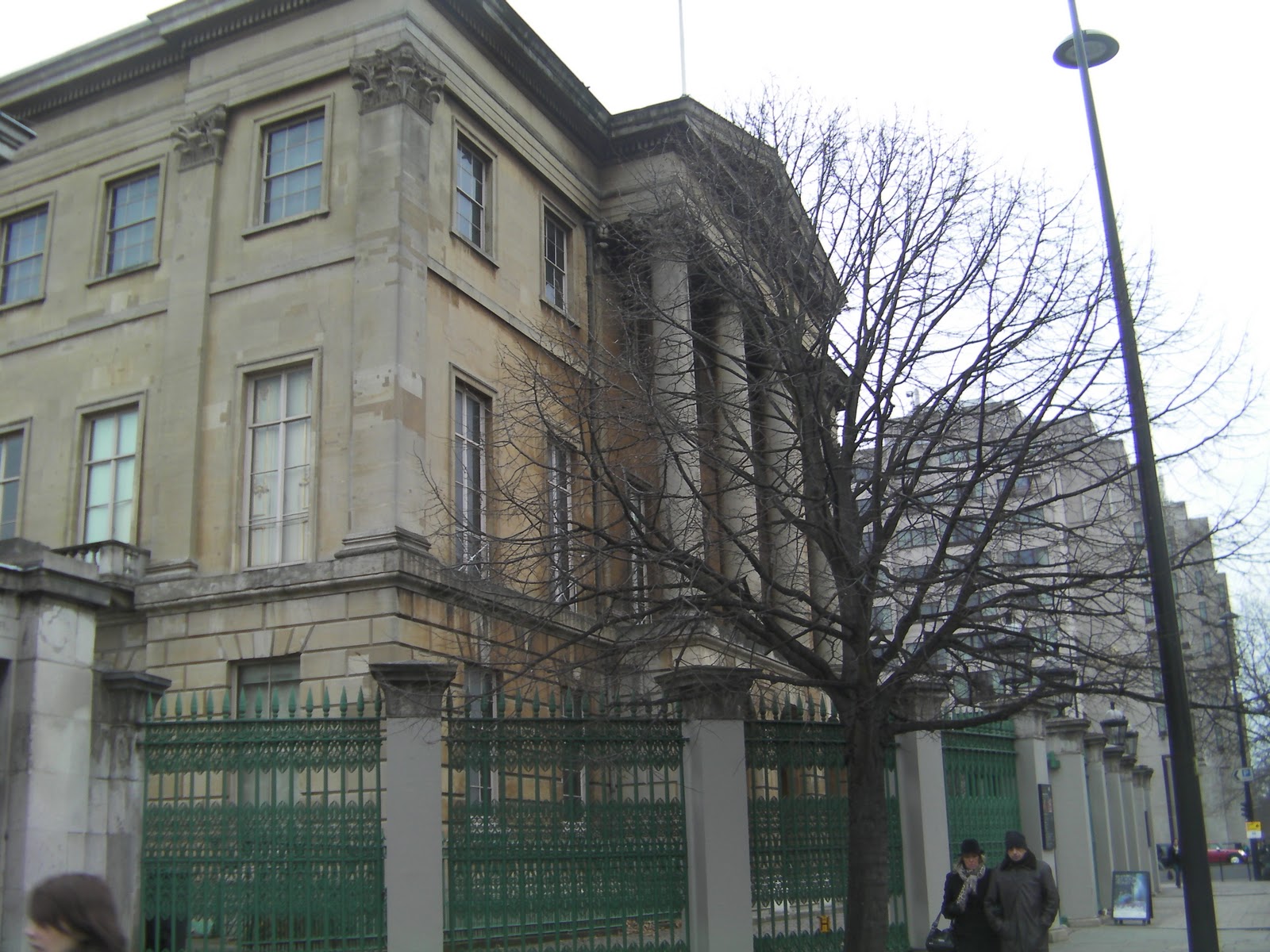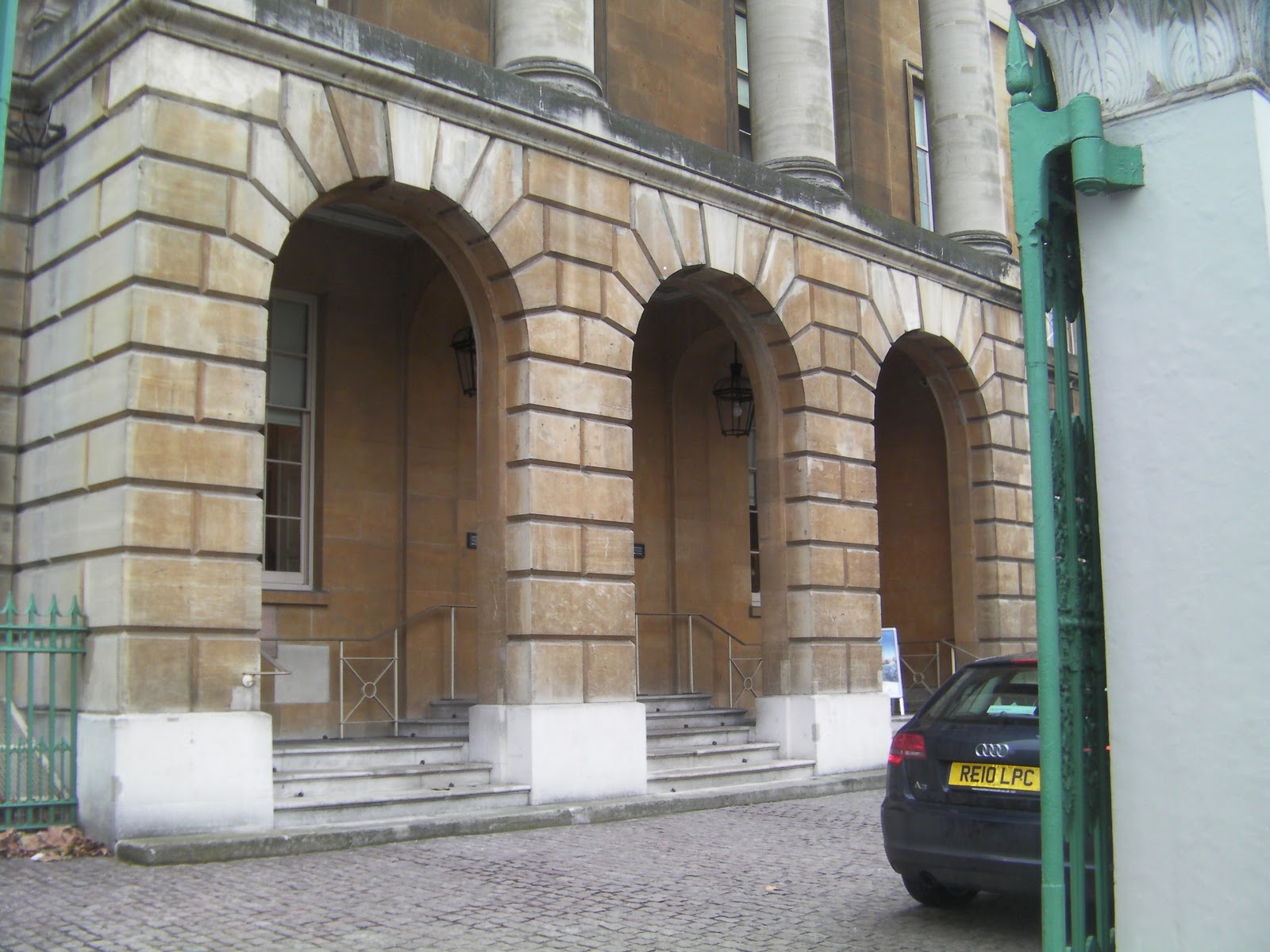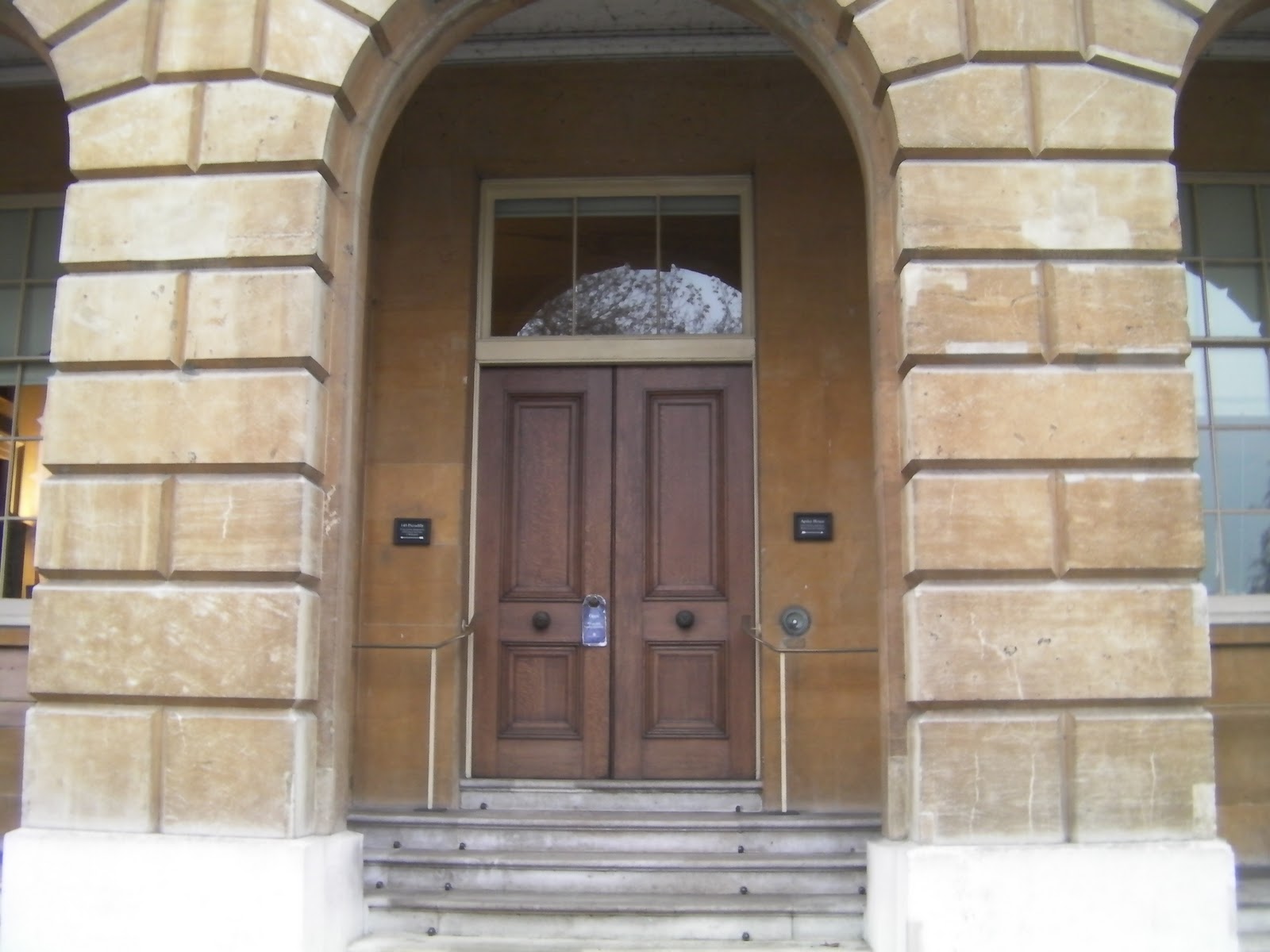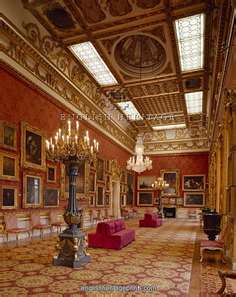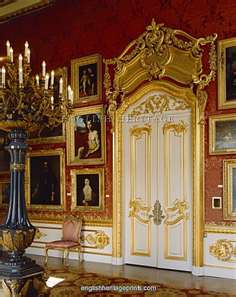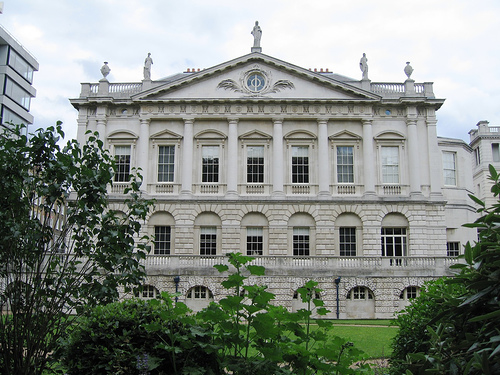
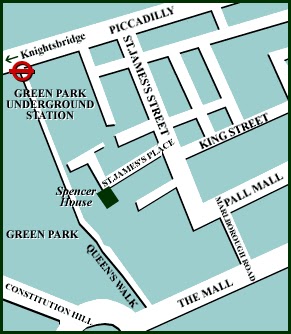
It isn’t always easy to find the entrance. Though the west facade faces Green Park (above), you must wander around in the cluster of streets west of St. James’s Street. There are several little twists or turns to take, but don’t despair if you don’t find it right away. The scenery is delicious — and though there are few pedestrians or autos, the people watching CAN be excellent. Watch for top hats– these will be the doormen at the hotel!
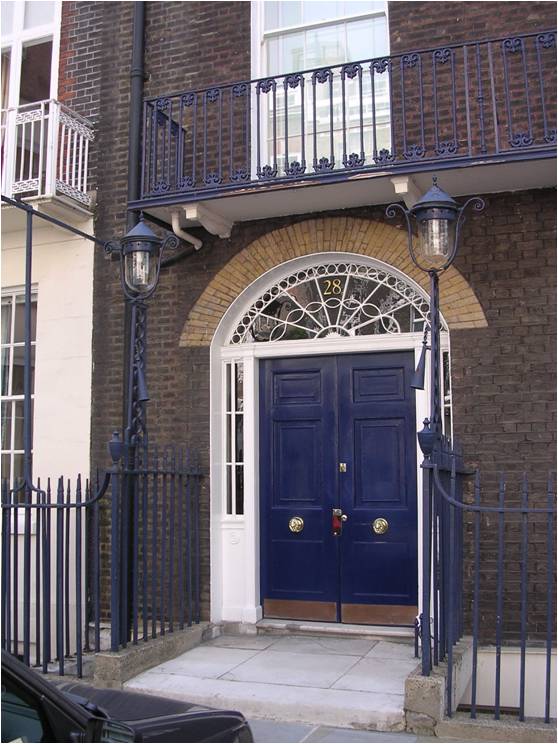
One day, on my way to Spencer House, I took this picture of a perfect
house in a row of 18th century buildings. It shows the torch snuffers on the lamp poles, for the footmen to extinguish their guiding torches after travel at night. Also, the fan light above the door would serve as an address before there were numbers on the houses. The picture of the unique fan light would be shown on your invitation to identify the proper venue!
 |
| Also nearby, The Stafford Hotel |
Someday, I want to stay at the Stafford, a truly elegant establishment now part of the international Kempinski chain. I admit to entering its portals once to have a drink in the bar. Delicious.

Here’s a floor plan of the house. According to the guidebook, the house retains its essential Georgian neo-classical bones though it has been remodeled, renovated, updated and conserved many times over its many years. The basic layout was the design of John Vardy(1718-1765), a pupil of William Kent (1685-1748). The west façade facing into Green Park is almost entirely his work (as restored), and as such, it is one of the finest, most authentic examples of Imperial Roman architecture and one of the first built in 18th century England. 
The ground floor contains the Entrance Hall, a morning room, library, and the principle dining room. The entrance hall is described as austere, in muted colors, with classical decorations based on Greek or Roman foundations. The relief over the fireplace portrays Antonius, a favorite of the emperor Hadrian, and one of the first pieces the 1st Earl Spencer purchased. Vardy is suppposed to have been responsible for most of the ground floor, with James “Athenian” Stuart taking over for the design and decoration of the first floor.
The ante room, left. Many of the furnishings and architectural details of Spencer House, such as fireplace surrounds, were removed to the Spencer country estate of Althorp during times of war or when the family leased out all or part of the building. Thus, some of the present furnishings are original, others exact copies of the originals, others similar to the originals, some purchased for the renovation, completed in 1989, and many more pieces on loan from the royal collection, the National Trust, the VandA, or other sources.
 The Palm Room with its gilded columns and palm fronds is thought to be much as Vardy designed it, although many others have worked on the house. The chairs and benches are exact copies of Vardy’s; the originals are now in the Museum of Fine Arts, Boston. The Medici Venus, in the central apse, was a very popular sculpture in the 18th and 19th centuries, one of the most graceful and beautiful statues copied or based on the Greek original, thought to be by 4th century B.C. master sculptor Praxiteles. Replicas can be found in stately homes, palaces, gardens, and museums worldwide. This copy was made by in white marble by Francis Harwood in 1765.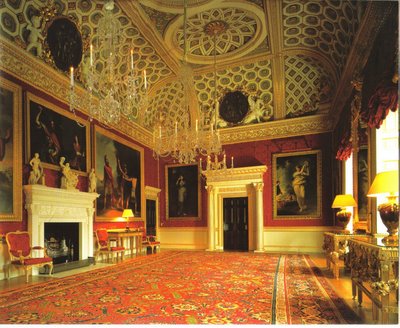

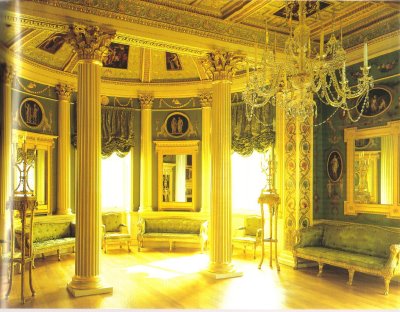
The Painted Room is the piece de resistance of the entire structure, executed by Athenian Stuart and fully restored to his designs. One of the most celebrated 18th C. interiors in Europe, the Painted Room actually changes according to variations in the light, both natural and artificial. The work took Stuart six years to complete; the designs celebrate the triumph of love, in honor of the happy marriage of the 1st Earl Spencer and his wife, Georgiana, nee Poyntz (parents of Georgiana, Duchess of Devonshire). On one panel, Venus is supposedly a portrait of the 1st Countess.
 Here is another view of the Painted Room with different lighting and an angle which shows the ceiling, one of its most attractive features. Many of the paintings and sculptural features of the room are based on themes related to love and marriage from ancient Greece and Rome. Intertwining circles and vines are related to wedding rings, for example. Roses, wreathes and flower garlands relate to the same premises.

Another view of a detail of the Painted Room, showing the figures of loving couples from mythology and the elaborate decoration which covers the walls and ceilings.
Needless to say, this would be the perfect setting for a wedding, and the current owners would be delighted to arrange one. Just be sure the groom is a billionaire.

Now all you have to do, to prove your excellent Georgian taste, is to plan your special event, such as a grand ball, at Spencer House. Please don’t forget to invite Kristine and Victoria. We’ll be sure to attend!
And put the pictures right here.