A Couple In England – Day 10 – Part Two

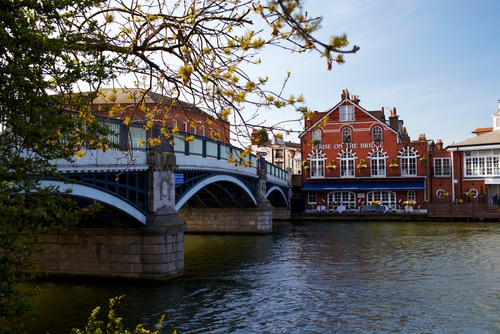
After leaving the Guildhall, Hester and I took a leisurely stroll down to the Thames and stood on the bridge.

“One day I’m going to come back and take the boat ride,” I sighed.

“You’ve never done the boat?” Hester asked.

“No. I never have the time. There’s always somewhere to rush off to see.”

“Speaking of which,” Hester said, looking at her watch, “we’d better get ourselves some lunch before it’s time for the kitchen tour at the Castle.”

So off we went and found ourselves a nearby restaurant, where we ordered tomato basil soup accompanied by warm bread with lashings of butter and two lattes. I can’t recall exactly what Hester and I discussed over the meal, though it had something to do with conducting research at the Royal Archives, the families (ours, rather than Royal) and other odds and ends. Afterwards, we made our way to the Castle.

“Tell me the truth,” I said to Hester as we made our way to the entrance, “are you heartily sick of my dragging you to the Castle? It seems like I make you do it every time I visit.”

“But I’ve never seen the kitchens,” she said. “I’m really looking forward to it.”

We arrived early enough for us to visit the gift shop.


I was on the hunt for a Golden Jubilee item to add to my collection and there wasn’t a shortage of items on offer. Which should I choose?  Hhhmmmm. Before I could decide, it was time for the Kitchen Tour, so Hester and I made our way over to the meeting point.


Above is a rendering of the vast Windsor Castle kitchen in late Georgian days. The present day kitchen tour “takes you behind the scenes to the oldest working kitchen in the country, in constant use for nearly 750 years. Today, staff of the Royal Household use the Great Kitchen to prepare food for both grand ceremonial occasions, such as State Banquets, and more informal events in the royal diary. Your guide will tell you about the devastating fire of 1992 and how restoration work uncovered the Great Kitchen’s original medieval structure. You will hear about royal dining, past and present, and have a fascinating insight into Windsor Castle as a working royal palace.” In addition, the tour includes the State Entrance and the medieval Undercroft, areas not normally open to the public.


 The copper cookware you see in the photo above all bear the cypher of King George IV and the cast iron stoves installed by Prince Albert are still in place, though now rarely used. The kitchens were deserted when we tour them, the photo below being one I swiped off the internet, as photography was not allowed.


As stated above, the tour also included halls and passages that are rarely on show, so that we found ourselves walking through stone corridors that appeared untouched since at least the Georgian era. It was a rare insight into this magnificent building.   


After the tour, we returned to the gift shop, where I finally made up my mind and purchased the Jubilee beaker above. It now holds pride of place on my living room mantle.

The Final Installment In This Series Coming Soon!

England's First Pedestrian Automobile Fatality

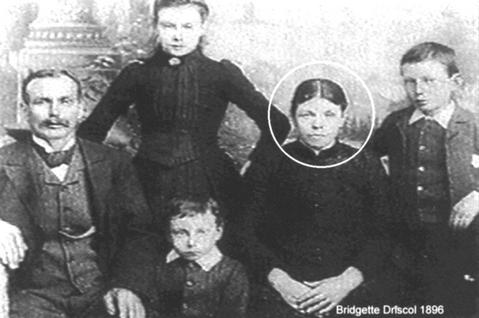
The first person world-wide who died as a result of being hit by a car (not in a car crash) was Mrs. Bridget Driscoll, a 44 year old pedestrian of Croydon, Surrey. As she and her daughter May crossed the road on the grounds of the Crystal Palace on 17 August 1896, a car being driven by Arthur James Edsall of Upper Norwood approached. According to witnesses, the car hit Mrs Driscoll “at tremendous speed,”of about 6 kilometres per hour. The inquest into Mrs Driscoll’s death lasted for about 6 hours, after which the jury returned a verdict of “accidental death.” No prosecution was made. It is rather ironic that the coroner at the inquest, Percy Morrison, stated, “This must never happen again.” You can read the full story at the BBC News Magazine website.

*The first pedestrian killed by a motor car in the United States was Henry Hale Bliss, who was hit by a car in New York City on 14 September 1899.

A Second Aside: Travels in Germany

Victoria here.  Before I go into raptures about my recent visit to England, I will wrap up our preceding couple of weeks on the continent.

My first awareness of the city of  Dresden was by reading Kurt Vonnegut’s 1969 novel Slaughterhouse-Five about the firebombing of Dresden near the end of WWII.  Vonnegut was an American prisoner of war and present for the bombing.


Little was left of the city after the attack.  Here is a picture I found, also available in many places as a postcard, showing the ruins. 


It is hard to believe today that once the city had little left intact, as it has been beautifully reconstructed mostly in the original styles. As in Berlin, the guides made sure our group of American and British tourists knew the story and that the US and UK  carried out the bombing, but they always added the attacks were in retribution for the bombing of Britain by the Germans and other war atrocities.

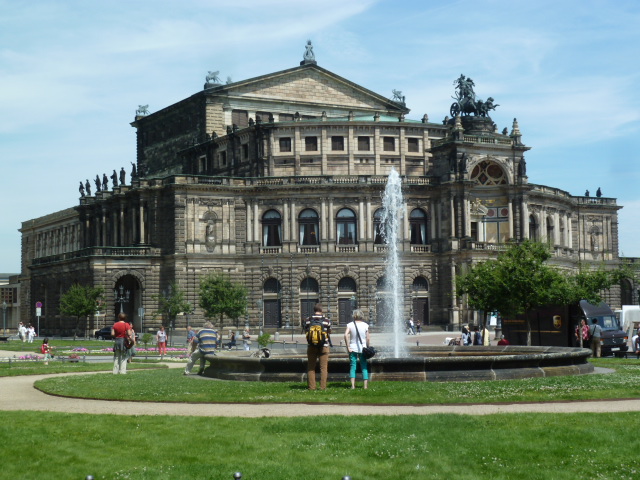
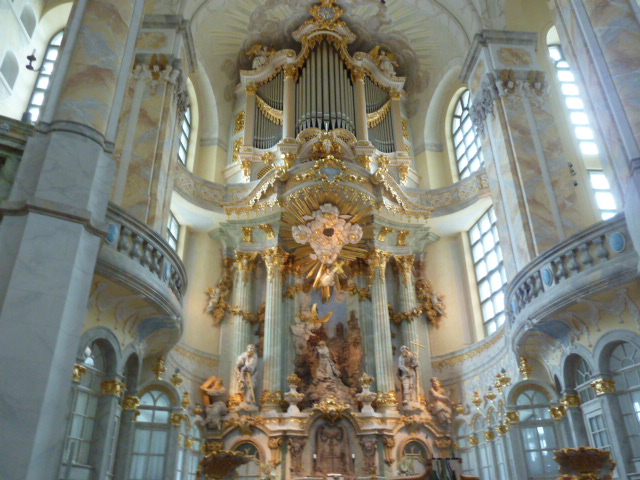
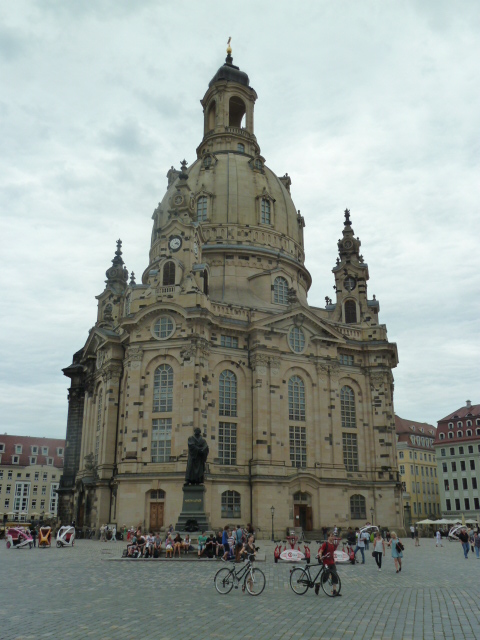
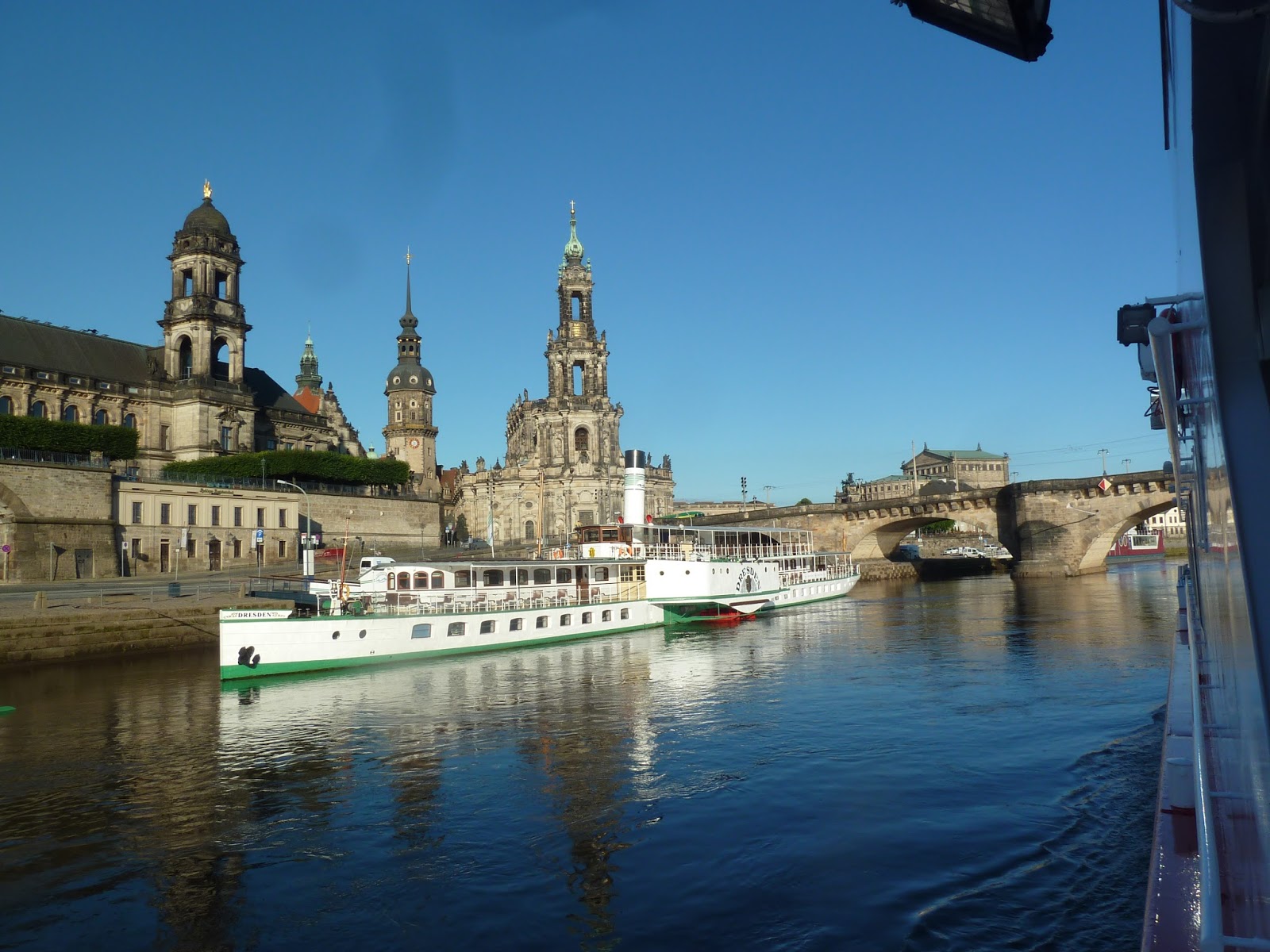
Below are a few views of the city which I found lively and prosperous today, full of fascinating art.

Residenzschloss

Semperopera

interior, Frauenkirche

Frauenkirche

from the Elbe

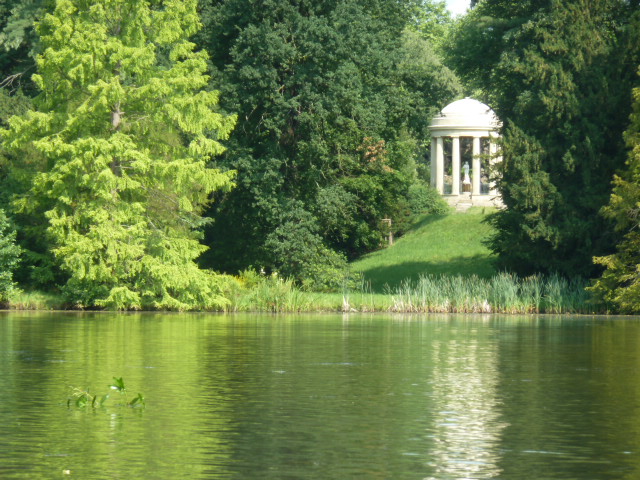
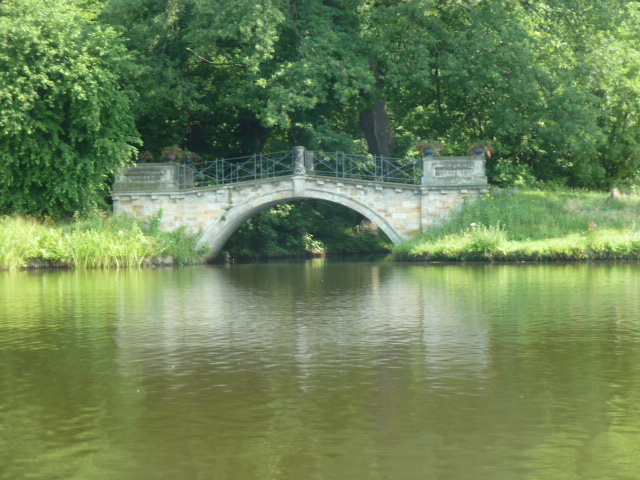
A bit farther down the river, we visited the Worlitz Garden near Dessau. Prince Leopold Friedrich Franz of Anhalt-Dessau (1740-1817) traveled through Holland and England when he was hardly more than a teen.  He loved the architecture and gardens he saw and created his own Landscape Garden and mansion in the Georgian style, completed in 1783.  It is now a UNESCO World Heritage site, a little bit of Capability Brown and his cohorts in Germany.  For more information, click here.

To the delight of Ed’s suffering foot, we took a boat ride around the lakes and canals, which looked like many gardens we’ve visited in Britain.

Venustemple
 

Gotisches Haus 


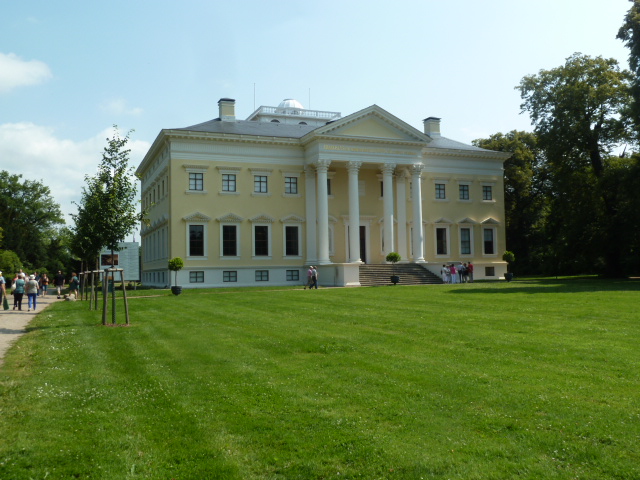
Landhaus
 

The guides pointed out the resemblance of the Landhaus to another famous house built about the same time in Washington, D.C., but I could find no specific information that the architects of either one consulted the other, just chose the currently fashionable neo-classic style for their buildings. The Landhaus was the work of Friedrich Wilhelm von Erdmannsdorff (1736-1800); the White House was built by architect Benjamin H. B. Latrobe (1764 – 1820).


The White House

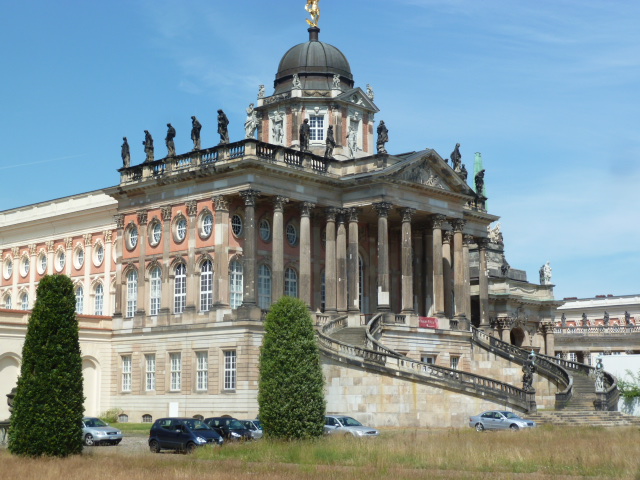
A few days later, we left the River Elbe and the MV Clara Schumann and bussed to Potsdam, on the outskirts of Berlin, where we toured the Neues Palais, vast structures in acres of parks,
worthy of several more days browsing. 

 
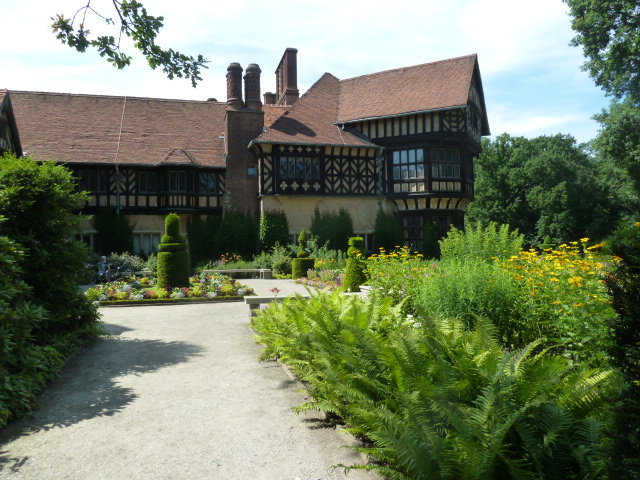
We made a stop at the palace where the Potsdam Agreement was drawn up in 1945, making plans for the governance of Germany.  To my utter surprise, it looked like a slice of Shakespeare’s England.


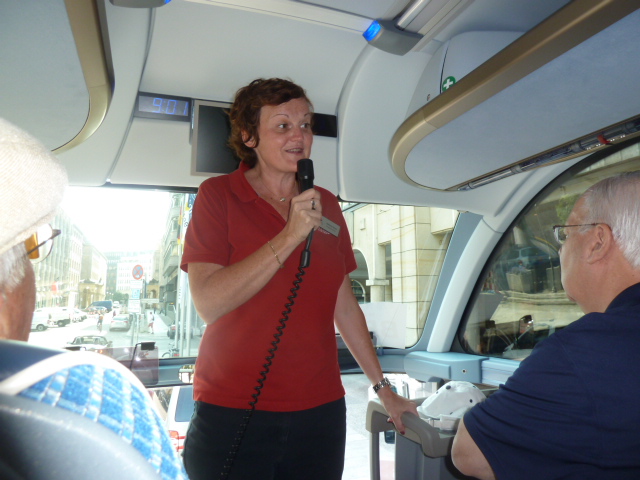
When we arrived in Berlin, we had to say farewell to our Cruise Director Stefanie who had so capably guided us all the way from Prague.  She is charming and witty and we thank her very much!


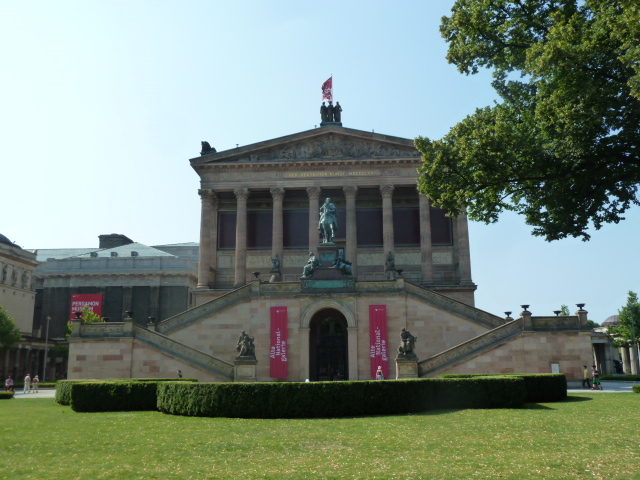
Here are a few views of our trips through Berlin…only a little truncated by Ed’s malady.  We did manage to see quite a lot as he soldiered on despite his pain. 

Berlin is in the midst of another great boom in building….crowded with every teenager in Europe and  from Japan, at least those who weren’t in London!


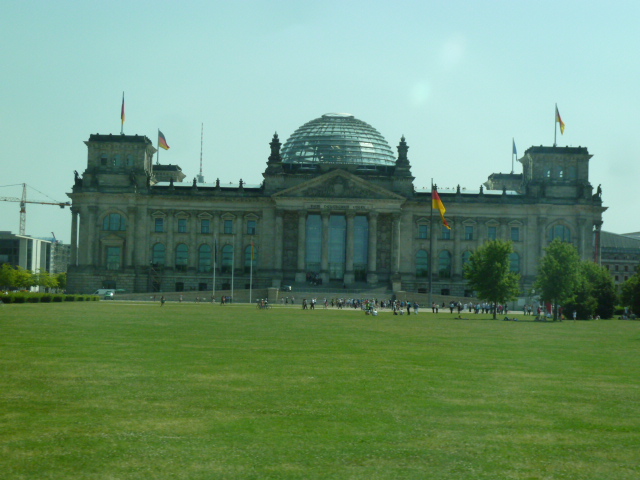
Reichstag
 

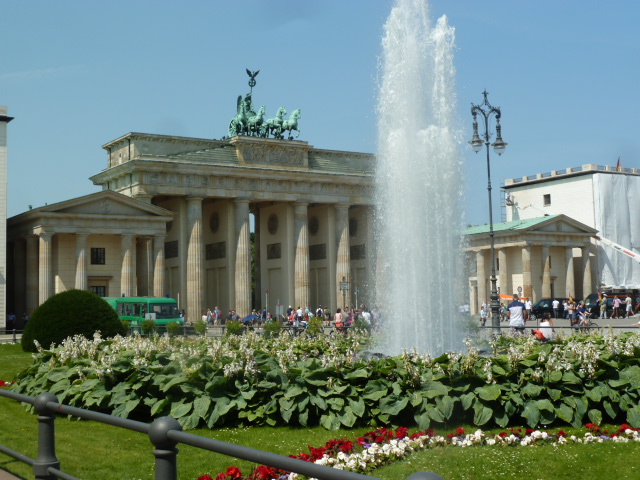
Brandenburger Tor
 

Neues Museum
 
 
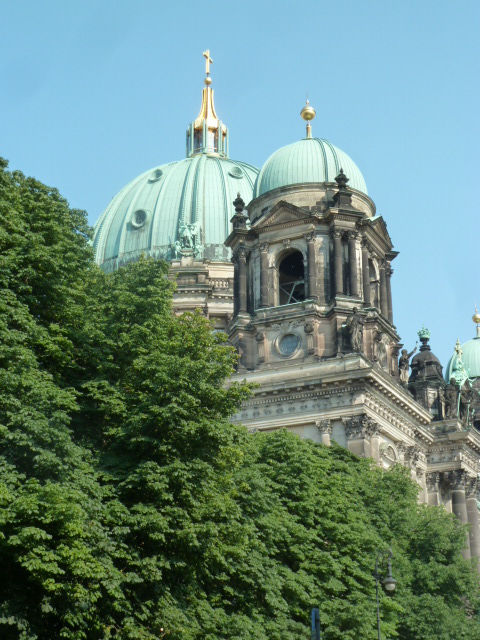
Berliner Dom

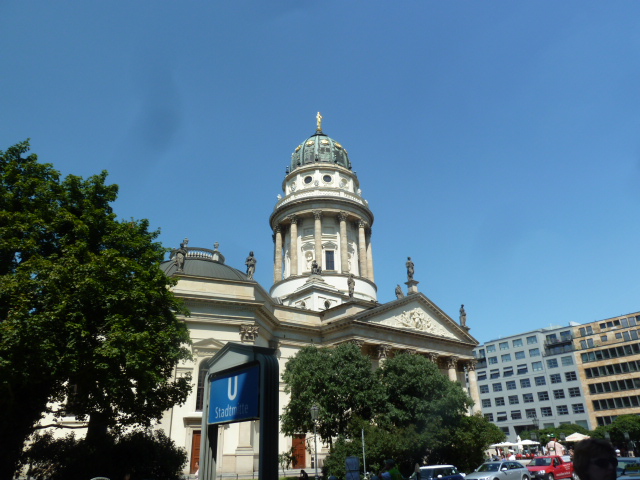
Deutscher Dom, now a museum of German history, on the Gendarmenmarkt
 
 
By the time we flew from Berlin to Heathrow to whirl through our seven days in London, Ed’s toe blisters were excruciating and even with many layers of bandages and padding, always hurting.  As I e-mailed to Kristine, at least we had avoided the cholera! 
 
Coming next: London, Cambridge, Houghton Hall, Holkham Hall, and more London
A Couple In England – Day 10

After Hampton Court Palace, Hubby and I went back to the Castle Hotel and rested for a while before venturing out again for dinner. This time, we ventured a whole two blocks away, just down the High Street to the Duchess of Cambridge pub.
Soon after we’d sat down, I realized that the three blokes at the next table were ardently discussing Downton Abbey. I tried to eavesdrop, naturally, but it was hard to decipher every word and, besides, I was distracted by the Duchess of Cambridge. The Duchess of Cambridge who? I wracked my brain for an historical Duchess of Cambridge who’d rank pub name status. In Windsor, no less. Which Duchess of Cambridge had ties to Windsor? Princess Augusta, who’d married Prinny’s brother, the Duke of Cambridge? Hadn’t they spent a good portion of their time in Hanover, rather than England? And his son, George, had married an actress, whose existence was ignored by the entire Royal Family and she’d been denied the title HRH, anyway. And upon George’s death, the title became extinct until it was bestowed upon the present Prince William. Hhhmmmm . . . .

“Hon?”

“Huh?”

“You were off in a cloud. What are you thinking about?” Hubby asked.

I opened my mouth to answer, realized what I’d been thinking about, and said instead, “Nothing.”

Our waiter approached to take our orders. “Can you tell me which Duchess of Cambridge the pub is named for?” I asked.

“Er, Kate Middleton?” he answered.

This brought me up short. “But the pub’s been here for years. I’ve been here before, long before Kate was the Duchess of Cambridge.”

“Oh, yeah, it’s been here for centuries, but it wasn’t named the Duchess of Cambridge then. We just changed the name last year.”

Ah, now I felt better, although slightly tricked.

After dinner, we made an early night of it and the next day I met Hester at the Guildhall for a private, guided tour of the Museum – where Hester got to meet the Queen.


The present Guildhall replaced an older cornmarket and was built in the late 17th century and is often associated with Christopher Wren, although there’s no evidence of this. The Museum itself is housed in a 19th century extension and serves to display items of local history.


Upstairs, royal portraits adorn the walls, including one of himself given by Prinny which was so large the council had to take a window out to fit it in. Also upstairs is the room where Prince Charles married Camilla – dubbed by myself as “the scene of the crime.” The room contains several stained glass windows and more portraits, including a grim one of Queen Victoria and a rather nice one of the present Queen when young.


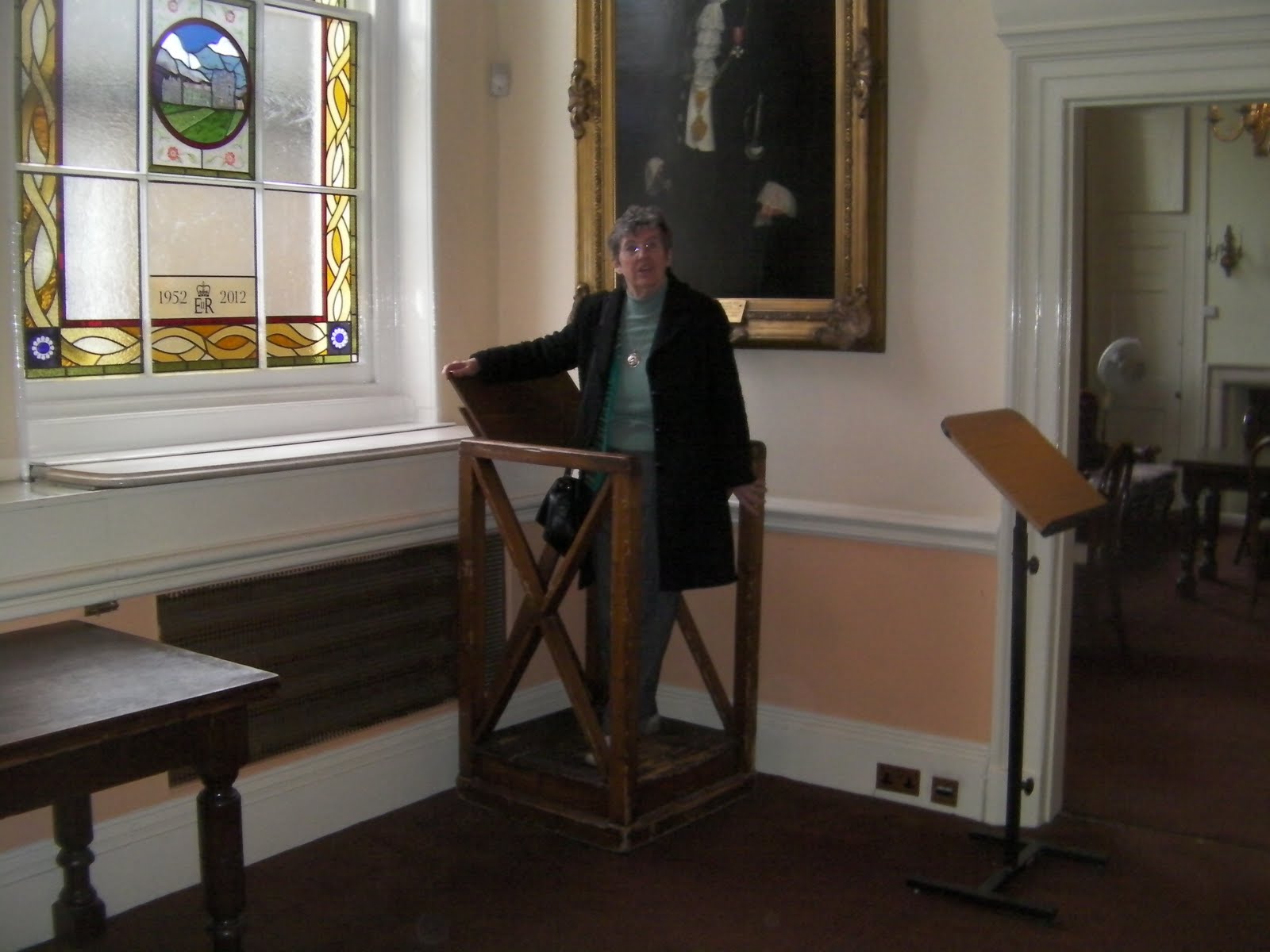
Here’s Hester standing in the very room where, by the way, Elton John was also married. To the left in the picture above can be seen one of the new Diamond Jubilee windows, showing Balmoral Castle.
Here’s the story of the dock, or pulpit, Hester is standing upon in Hester’s own words: “In 1882 a Scotsman, Roderick McLean, attempted to shoot Queen Victoria at the railway station. He missed, but was arrested and was to be brought before the magistrates in the Guildhall next day, for formal proceedings to send him for full trial in Reading (county town). But there wasn’t a dock. So overnight a carpenter knocked up the piece of furniture you see. McLean was duly arraigned and despatched for a full trial at Reading. There he was found ‘Not guilty but insane.’ The Queen was furious, there was a big fuss and the result was that today in such cases the verdict is recorded ‘Guilty but insane.’ McLean spent the rest of his life in a mental asylum. Why did he want to shoot the Queen? He had sent her some poetry he’d written, and she hadn’t said thank you! (I always draw the moral when children are present.) Nowadays this dock is used by witnesses giving evidence at Coroners’ Courts.”

Part Two Coming Soon!

An Aside: Traveling in Germany

Victoria here.  My husband and I had a fabulous vacation in Europe this summer, and though I can’t pretend to duplicate Kristine’s hilarious adventures in England, I will attempt to interest you in a few of my own explorations. 

Vicky and Ed in Potsdam, at the Palace (one of many)


Like Kristine’s hubby, mine is tolerant of my obsessions with all things English, and equally long-suffering when it comes to being dragged around to historic sites, stately homes, and even pet cemeteries.  And a little like Kristine’s Greg, my Ed suffered a bit of a malady, if only some burst blisters.  It was tough going for him by the end of our journey.

I will not go into detail on the entire trip, but to begin with, we had our first trip to Prague in the Czech Republic.  The city is lovely and has a fascinating history.  Perhaps my favorite spot was the Klementinum, part of a large complex once a monastery and church, now mostly a study center and concert venue.

The Mirror Chapel
 
I have to lift the photo below from the web, as they did not allow cameras near the library.  It is a breath-taking sight and it made me yearn to study there.  The guide said it is open to researchers…but I didn’t see a soul.


Klementinum Baroque Library Hall


After a few days in Prague, we cruised the Elbe River on the MV Clara Schumann, part of the Viking Cruise Lines.  A fabulous trip, with perfect weather, though we did see the traces of and some damage from the Central European floods of early June.

Clara Schumann
 
 
We were surprised when one of our stops was to visit the beautiful scenic area of the Bohemian Mountains which straddle the Czech Republic/German border, called variously Bohemian Switzerland and Saxon Switzerland. I was completely taken by surprise at the two adjoining national parks. This dramatic scenery was much beloved by the early Romantics, including writers, poets, composers and artists from all over.  Among the English visitors was Mary Godwin Shelley (1797-1851), of Frankenstein fame. 


Mary Shelley by Richard Rothwell (1800-1868), NPG


She wrote of the area in Rambles in Germany and Italy (1844):

“Immediately on quitting the village the portals of the mountains opened before us, and we plunged into their recesses.  It is difficult to describe the peculiarity of this region; it differs so much from every other…In Saxony, the impression is as if the tops of the hills were the outer circumference of the globe, strangely fissured and worn away by the action of water…The mystic imagination of the Germans has indeed peopled this region with gnome and kobold, who watch over hidden treasure…”


                “…The precipices are broken into a thousand fantastic shapes and forced into rough columns, pillars, and peaks numberless; with huge caverns, mighty portals, and towering archways; the whole clothed with pines, verdant with a luxuriant growth of various shrubs; and but that for the most part the long drought has silenced them, resonant with waterfalls.”


 Another famous Romantic who visited the area was the English painter J. M. W. Turner.  He sketched the scenery and his work is in the Tate Britain.  Here is one example, viewing the river Elbe from above:.


Below, two of my photos, from a similar vantage point.
 

The well-known German artist of the sublime Casper David Friedrich (1774-1840) left us this atmospheric painting which also expresses the Romantic mood of the region.

Wanderer Above the Sea of Fog, Kunsthalle Hamburg


We next visited Dresden and had a few more British-related stops while in Germany.  More about those to come soon.  And also coming up, my busy (frantic?) week in England.  Below, I wait for a break in the traffic to photograph Apsley House in London.