ROGER EBERT'S LONDON

Recently, Victoria sent me the link to an article written by film critic Roger Ebert about the London he had known in the 1960’s. Like us, Ebert had loved London, spent much time there and was fortunate enough to have uncovered many of the City’s treasures – hotels lost in time, shops that sold bespoke goods, restaurants that were known for their specialty food and a host of the sort of characters who define London. What a treat this article is and now I’m sharing it with you. The only drawback to the piece is that most of the places and people Ebert wrote about are long gone. How I wish I’d been able to book a room at No. 22 Jermyn Street for our upcoming visit. Sigh.

Here’s the link to the article. Enjoy.

QUEEN VICTORIA'S PET ELEPHANT

Exotic animals owned by members of royalty are nothing new. In centuries past, foreign dignitaries and heads of state often gifted British royals and other diplomats with the rarest animals to be found in their parts of the world. In fact, the Tower of London was for over a century home to many of the specimens that found their way to England in this way until the Duke of Wellington declared that enough was enough and sent them all off to the London Zoo.

What is unusual is that Queen Victoria was once given an elephant – and kept it at Osborne House. From the Osborne House page at English Heritage:

Few members of the royal family have been quite as enthusiastic about their garden as Queen Victoria and Prince Albert. At Osborne they were able to indulge their desire for a fashionable garden, drawing inspiration from the gardens of Europe. Osborne offers an intimate glimpse into royal family life, where you can see the vegetable plots tended by the royal children, and the beach where Queen Victoria would go for a dip in the sea. But it wasn’t just the queen who went for dip on the royal estate – upon receiving a gift of a elephant from the King of Abyssinia in 1884, the queen needed a place for the animal to bathe for a few days. It was decided that the existing cattle pond would do, and ever since the pond has been named the ‘elephant bath’!

You can still see the Elephant Baths at Osborne today, in fact, it’s purported to be the only one in Europe and it stands as a hazard on the the 7th hole at the Osborne Golf Club. It should be noted that the elephant wasn’t the only one who enjoyed bathing at Osborne House. In fact, the entire Royal family enjoyed having a private beach of their own and often took advantage of the opportunity for sea bathing. You can read all about it in this Daily Mail article from 2012 about the re-opening of the private beach to the public and the return of Queen Victoria’s bathing machine to the property.


.

AND FROM ELSEWHERE ON THE WEB . . . . . .

Spitalfields Life – Beekeeping on the Isle of Dogs
Historical Hussies – Childbirth in Regency England
Grace Elliot – Henry VIII’s Bedtime Habits
Downton Abbey Cooks – Mrs. Patmore’s Apple Charlotte
Carolyn Harris: Royal Historian – A review of Queen Anne: Patroness of Arts
Two Nerdy History Girls – The truth about big hair of the 1770’s: How they did it.
The Duchess of Devonshire’s Gossip Guide – Tart of the Week: Eglantine, Lady Wallace

THE DUKE OF WELLINGTON TOUR: MORE LONDON FOOD

Victoria here, following up on Kristine’s take on London food…Bangers and Mash?  I think not! For Pub Food, I love Steak and Kidney Pie. Or Shepherd’s Pie. Or a Ploughman’s Lunch of cheddar cheese, bread and pickles…

A fancy Ploughman’s Lunch
Just in time for our tour, British Heritage Magazine, the current issue, has a list of Ten Classic London Restaurants.  Yum.  Number One on their list would be Number One on mine too.
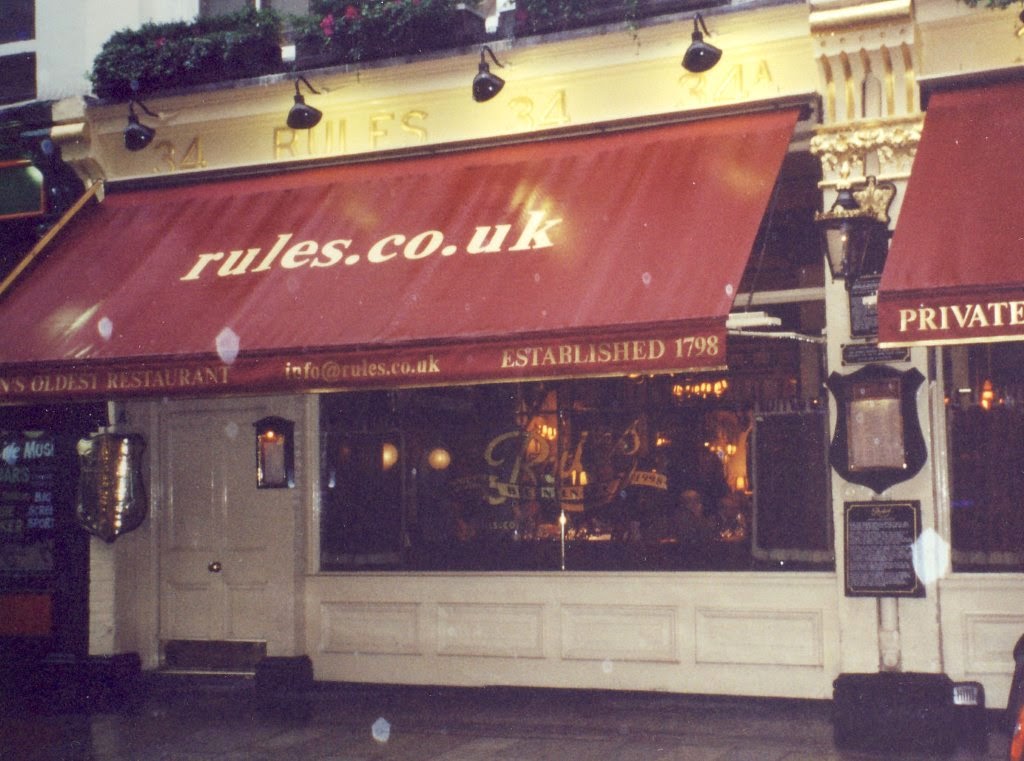
A rainy night at Rules, Maiden Lane
Rules is London’s oldest restaurant and is one of those very special places to save for a splurge. The menu has many kinds of game fresh from  the country, as well as the traditional lamb and beef dishes.  The décor is definitely Olde English, and the service has been impeccable when I have had the privilege of eating there.
A glimpse of Rules interior
from their website, here
The article also mentions Simpsons-in-the-Strand, The Punjab, Rowley’s, Porters, and The Criterion, below.

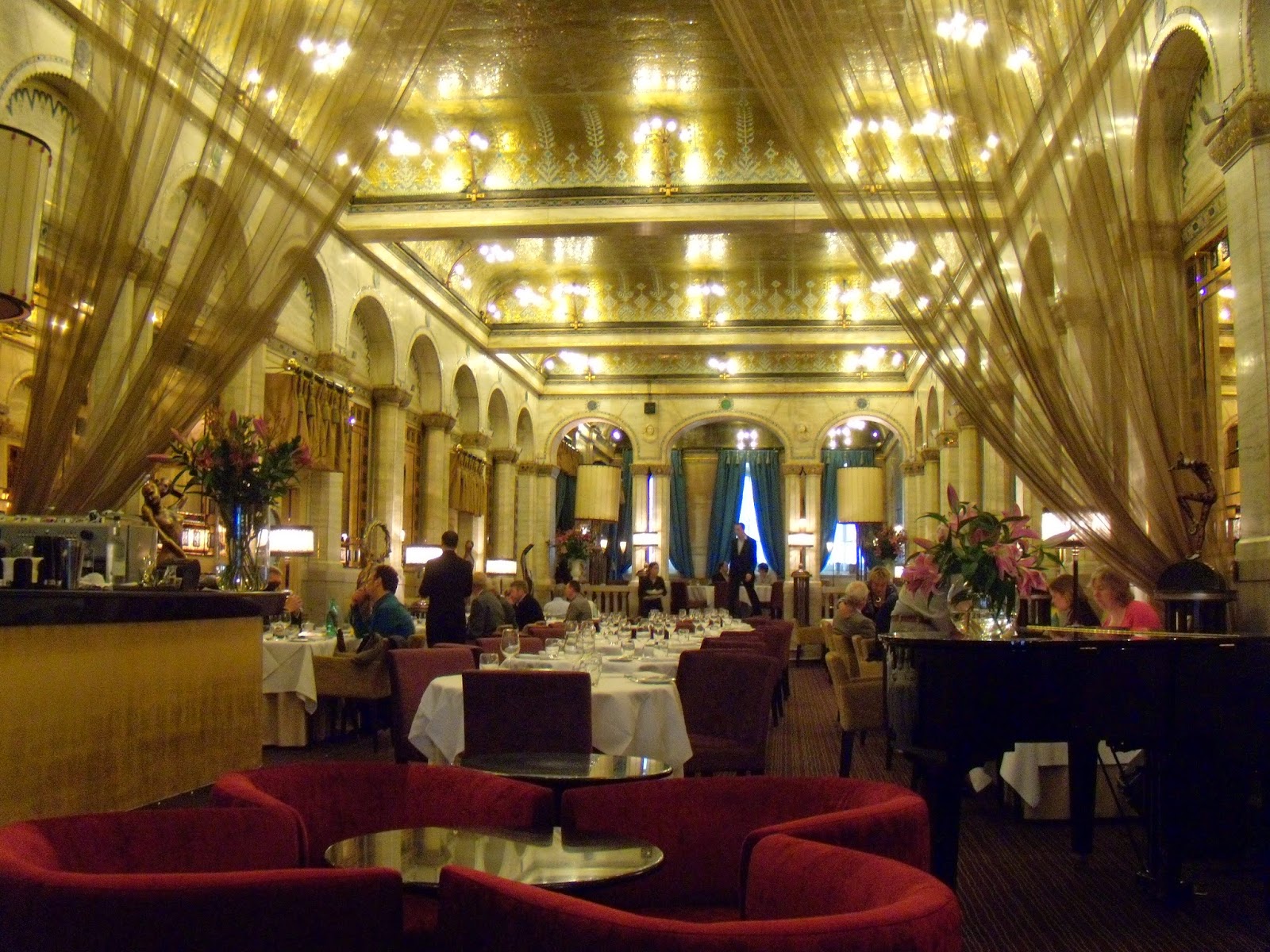
The Criterion
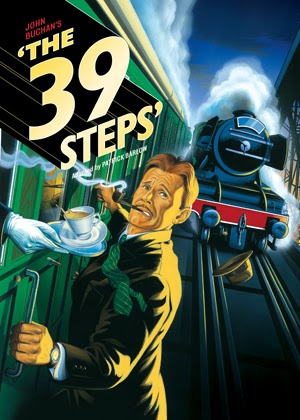
You might recognize it from one of the episodes of Downton Abbey last season.  It’s been its opulent self since 1874, and certainly was one of the places the “bright young things” went, back in the day.  It’s right on Piccadilly Circus, next to the Criterion Theater.  Ed and I dropped in for a drink before going to see a very funny play, The 39 Steps; the theatre, dating from the 1870’s, is way below ground and was used by the BBC during World War II as a bomb-safe broadcasting venue. 
My photos only partially convey the sparkle and shimmer of the walls, ceiling, and furnishings.
For more information on the Criterion restaurant, click here and enjoy a gallery of photos too.
For more on the Criterion Theatre, click here. The 39 Steps is based on a 1935 Alfred Hitchcock movie, a thriller based on a John Buchan novel published in 1915.  However, this is a farcical version, based on split-second timing and very funny lines, and four brilliant actors,  as well as the excitement of the chase. 

As of this writing the play is still running.

The British Heritage article on classic London Restaurants (vol. 35, #4) also lists Rock and Sole Plaice, Langham’s Brasserie, and the great seafood restaurant, Wiltons.  And one more that I love: The Albert in Victoria Street (as well it should be).

The Albert
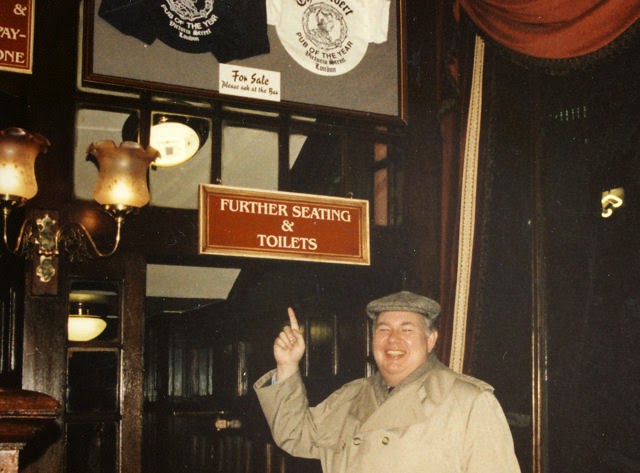
It is a classic Victorian Pub (again, as it should be) and serves food in the Carvery and upstairs. The two pictures below are from a few years ago and show the interior before a recent re-do which highlights the 1860’s look of the original, before it survived the Blitz and lots of neighborhood development plans.
We got a good laugh from the sign to which my buddy Richard points.  Indeed more seats!
We loved every minute and every morsel at The Albert.
I am eager to see the new furnishings, soon, I hope.  And while we are on the subject of restaurants, one of the funn
iest signs I saw was the one below, when we were exploring Windsor with our late great friend Hester Davenport. 
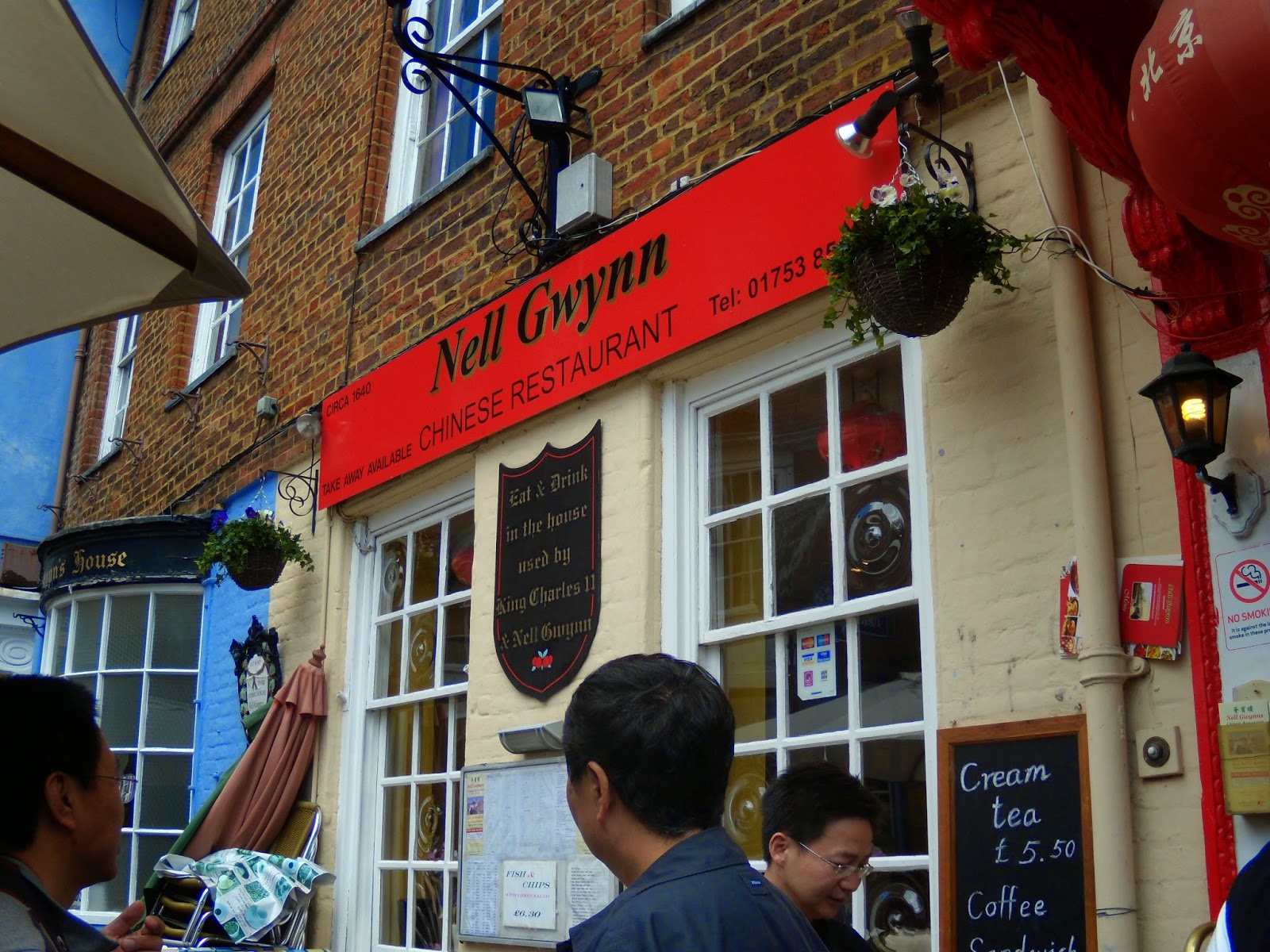
The Nell Gwynn Chinese Restaurant, Windsor
Kristine and I fell apart laughing at this. Wonder what the famous actress, courtesan, and special mistress of Charles II would think of this sign! At least they got the orange color right!!
Watch for more on food and restaurants, coming up when we tour England in September.
  

THE WELLINGTON CONNECTION: THE BRITISH EMBASSY IN PARIS

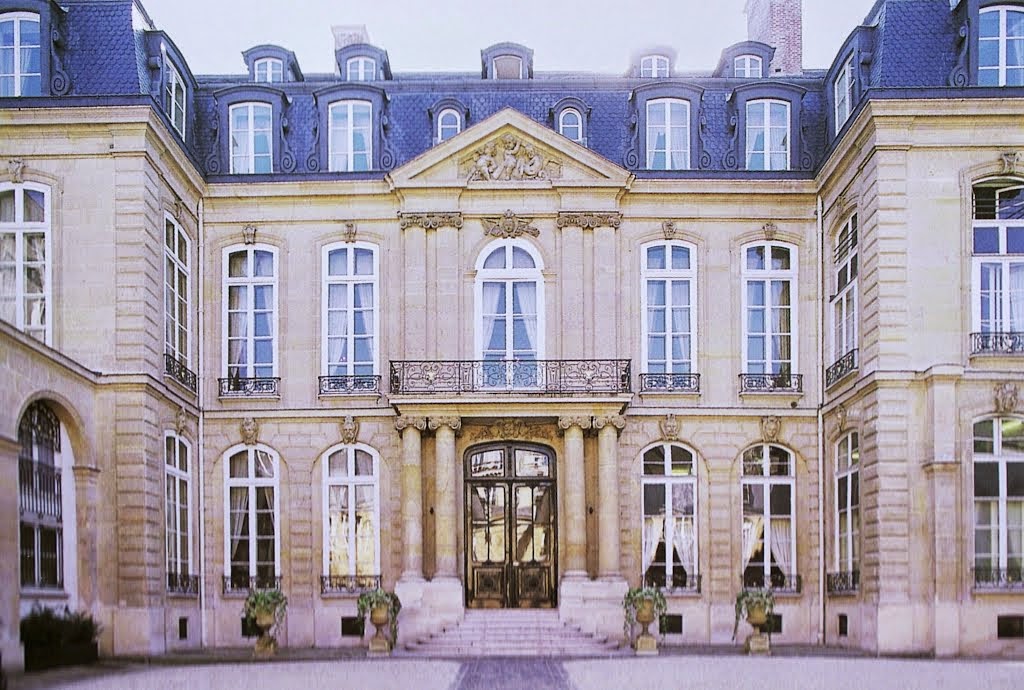
L’hôtel de Charost, the British Embassy in Paris, 
39  rue du Faubourg Saint-Honoré
In August, 1814, after the first defeat of Napoleon and his exile to Elba, the Duke of Wellington purchased l’hôtel de Charost to be the British Embassy in Paris. Before that, representatives of the British crown had used various rented facilities.  This year, the Embassy celebrates 200 years at the site, scene of numerous receptions, dinners, and other official events through the years of peace and friendship between France and Great Britain.
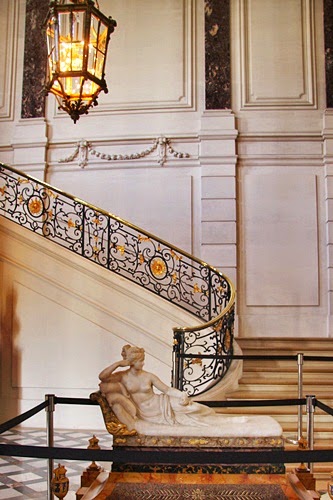
Canova: Pauline Borghese, the Borghese Palace, Rome
The building was purchased from Napoleon’s sister, Pauline Buonaparte Borghese, wife of Camillo Borghese, 6th Prince of Sulmona. A replica of the renowned sculpture stands in the British Embassy.  Pauline (1780-1825) was beautiful, charming, and unscrupulous.  She was first married to one of Napoleon’s generals, and after his death, to Prince Borghese.  For more about Pauline, go to Elizabeth Kerri Mahon’s blog here.
The Replica
Mr. Quintin Crawford, a British resident in Paris, assisted in the purchase, according to the 1983 book by Raymond A. Jones, The British Diplomatic Service 1815-1914. Crawford (1748-1814) was born in Scotland; he was a businessman, collector, author and translator.

This year the British Embassy in Paris is celebrating its purchase by the newly appointed Ambassador in 1814, the 1st Duke of Wellington.

Like so many Paris buildings, inside the rather forbidding street entrance (top picture) there is a lovely courtyard and the handsome formal entrance.
The Queen arrives on her recent State Visit to France
Interior Façade

The building was erected in 1722-25, designed by architect Antoine Mazin, (c1679-1725). The first owner was the duc de Charost.  In 1803, Pauline, the sister of Napoleon and later Princess Borghese, purchased the house.  She was known to hold popular salons, almost subsidiary courts, there.

Entrance Hall

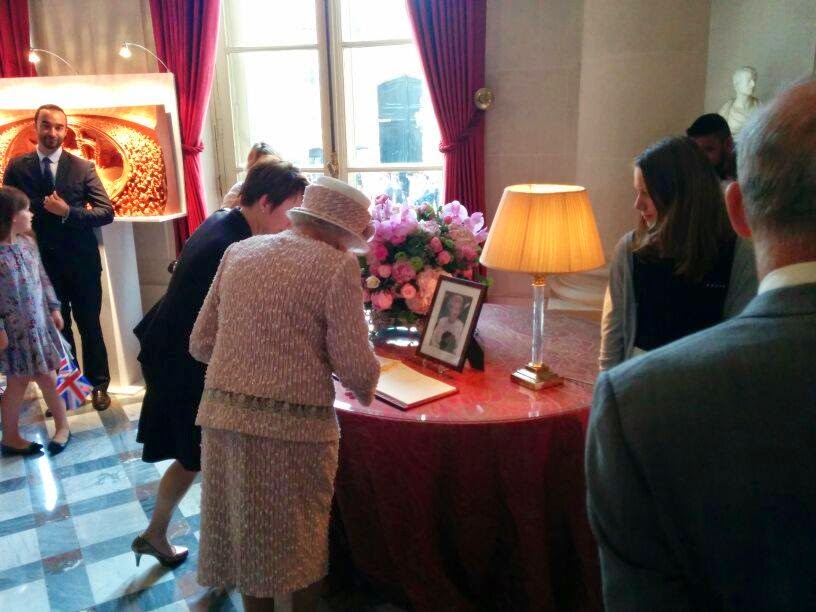
The Queen signs in, 2014!

She is well guarded
The Bleu Salon
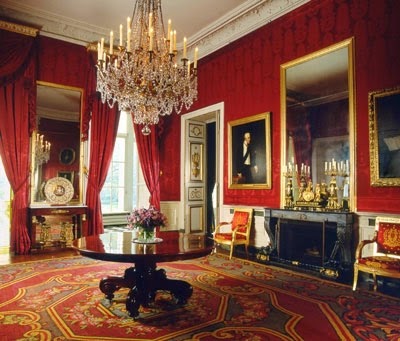
The Red Room
Note the portrait of the aged Duke of Wellington on the wall
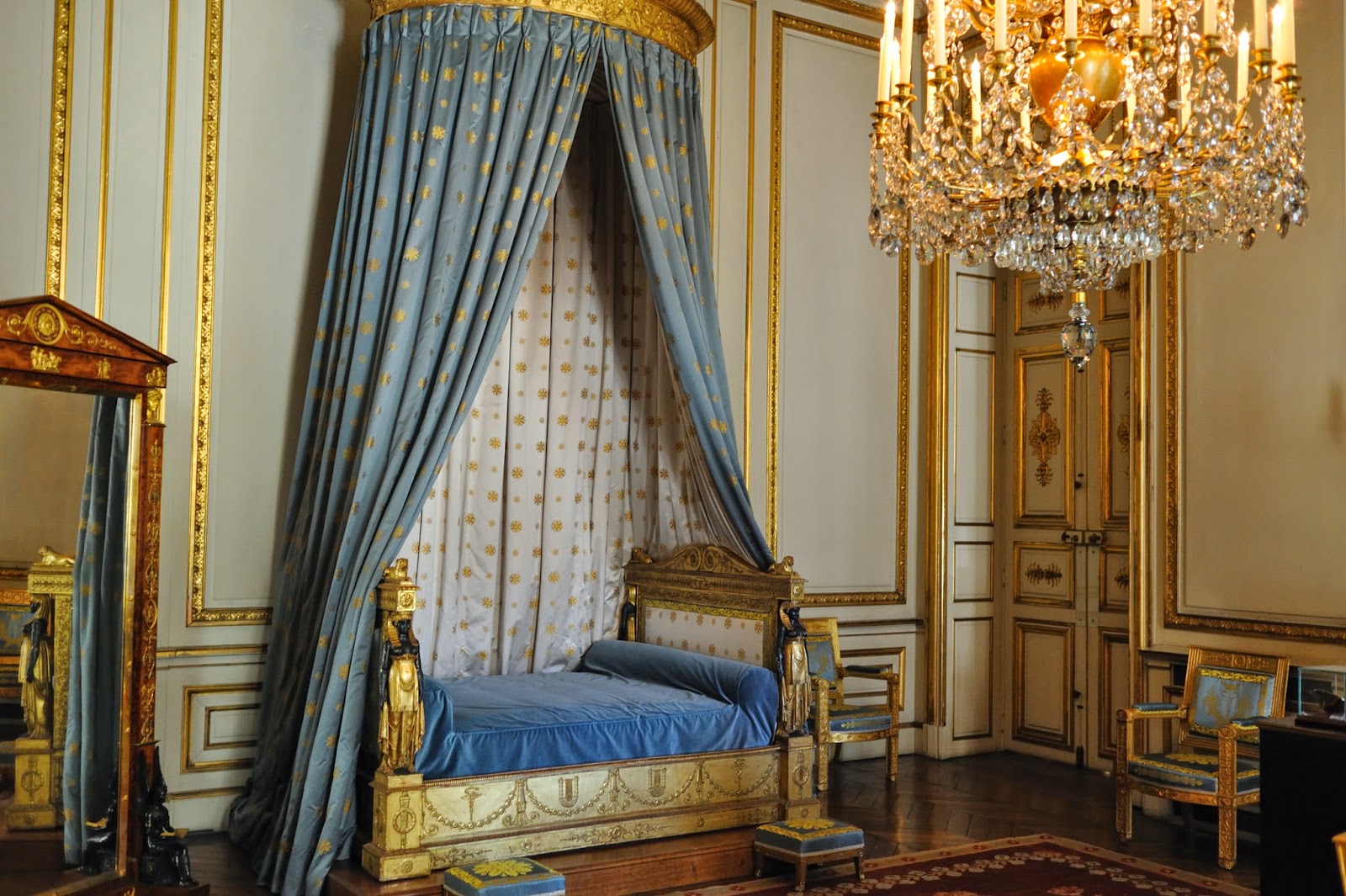
Salon Pauline
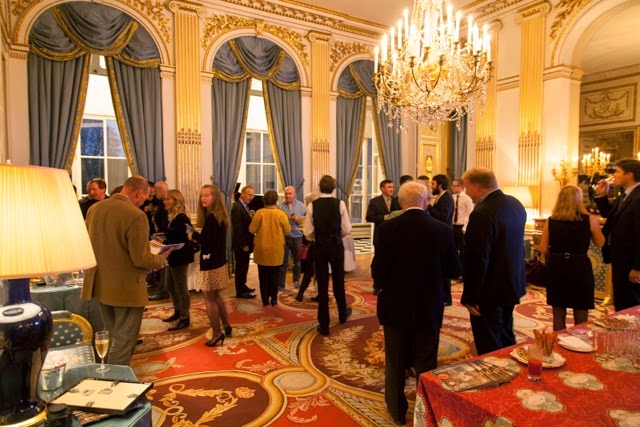
A 2012 Reception at the Embassy
The Garden reaches almost to the Champs Élysées;
it is often the scene of receptions
The Queen among the roses
Two views of the Dining Salon, above and below.

Impressive chandeliers, above and below.
Happy 200th Birthday, British Embassy in Paris!
Well done, Ambassador Wellington.