TRAVELS WITH VICTORIA: THE BAYEUX TAPESTRY

On my recent trip to France, I fulfilled a lifelong desire to see the Bayeux Tapestry, that iconic portrayal of the Norman version of William I’s invasion and conquest of Britain in 1066.

Home of the Bayeux Tapestry
 
We were on a Viking River cruise on the Seine, starting and finishing in Paris.  One day was devoted to a bus trip from the river to the D-Day Normandy Landing Beaches.  On the way, we stopped in the charming town of Bayeux to see the tapestry.
 
An old mill, on the path from the car park to the museum
 
The tapestry is really woolen embroidery on linen, not a woven piece.  Just who made it and when is a mystery, though the tale it tells — the Norman side of the story — indicates it was created by the women of the Norman court in England a few years after the Conquest. The controversy about its origins and the validity of its version of the Conquest remain contentious even today.
   
Odo, Bishop of Bayeux, in the Battle of Hastings
(pic from Wikipedia)
 
To see the entire tapestry, click here


Two-hundred thirty feet in length, the Bayeux Tapestry was created to be shown in cathedrals and large churches to tell the story and justify the Norman Conquest.  In fifty scenes, the story of King Edward’s (the Confessor, c.1003-1066) succession, the relationship of Harold, King of Wessex, and William Duke of Normandy. According to this version of the story, Harold is sent by the ailing Edward to France in order to deliver news of the King’s choice of successor to William, who will become King of England upon Edward’s death. 
 
Edward gives Harold a message for William
 
Even the guides at the museum in Bayeux agree this version is “propaganda” from the Norman side of the historical record. The actual wishes of Edward the Confessor might have been less important than the vote of the Witenagamot, an assembly of powerful nobles.  The Witenagamot actually voted for Harold after the Confessor’s death. But it is not necessary to view the Tapestry as the REAL story to admire it for its beauty and historical significance.
 
Harold’s Coronation as King of England
 
The tapestry was listed in the inventory of the Bayeux Cathedral in 1476; it was shown every year on the Feast of St. John the Baptist for centuries. Since being displayed in the Louvre, Paris, in 1797, it has been regarded as a national treasure.
 
scenes reproduced and for sale in the museum gift shop
 
Numerous replicas exist and the scenes from the narrative had been studied as excellent sources of information about life in the 11th Century.  The particular excellence of the stitching is praised and the colors are today quite brilliant for such an old creation.
 
stitching details
 
In horizontal sections at the top and bottom of the tapestry, scenes of everyday life are portrayed, events of the day told, and animals depicted.
 
a comet
 
The Bayeux Tapestry has survived many wars and  planned confiscation by Napoleon and the Nazis, among others. One hand-stitched replica was used in the filming of the recent movie The Monuments Men (2014).  The original is now shown beautifully in its own Musée de la Tapisserie de Bayeux.
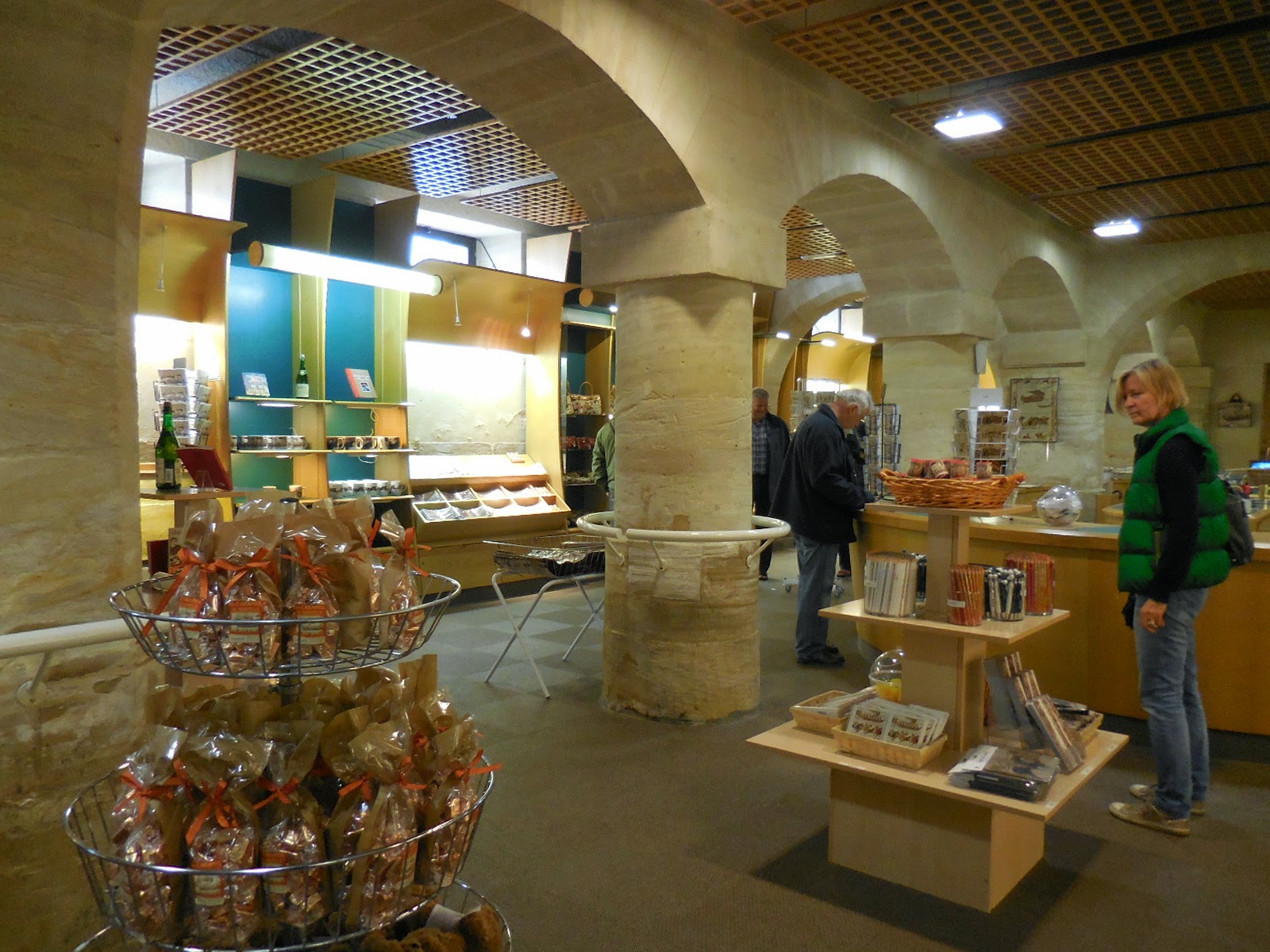
 
Museum Giftshop
 
A few years ago, I visited the site of the Battle of Hastings in Sussex where an audio tour leads one around the grounds, told in the voices of the women who were attached to the two leaders, Harold and William.
 
Site of the Battle of Hastings, 1066
 
Here, on the site of the death of Harold, William erected an Abbey, now partly in ruins and partly  school.
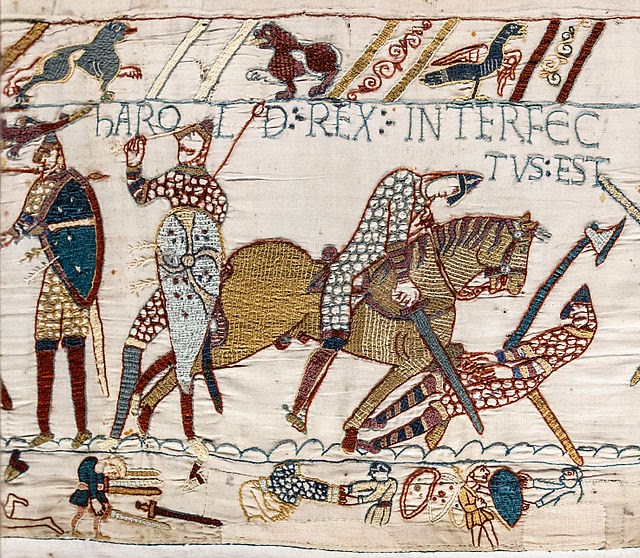
 
Death of Harold, Bayeux Tapestry
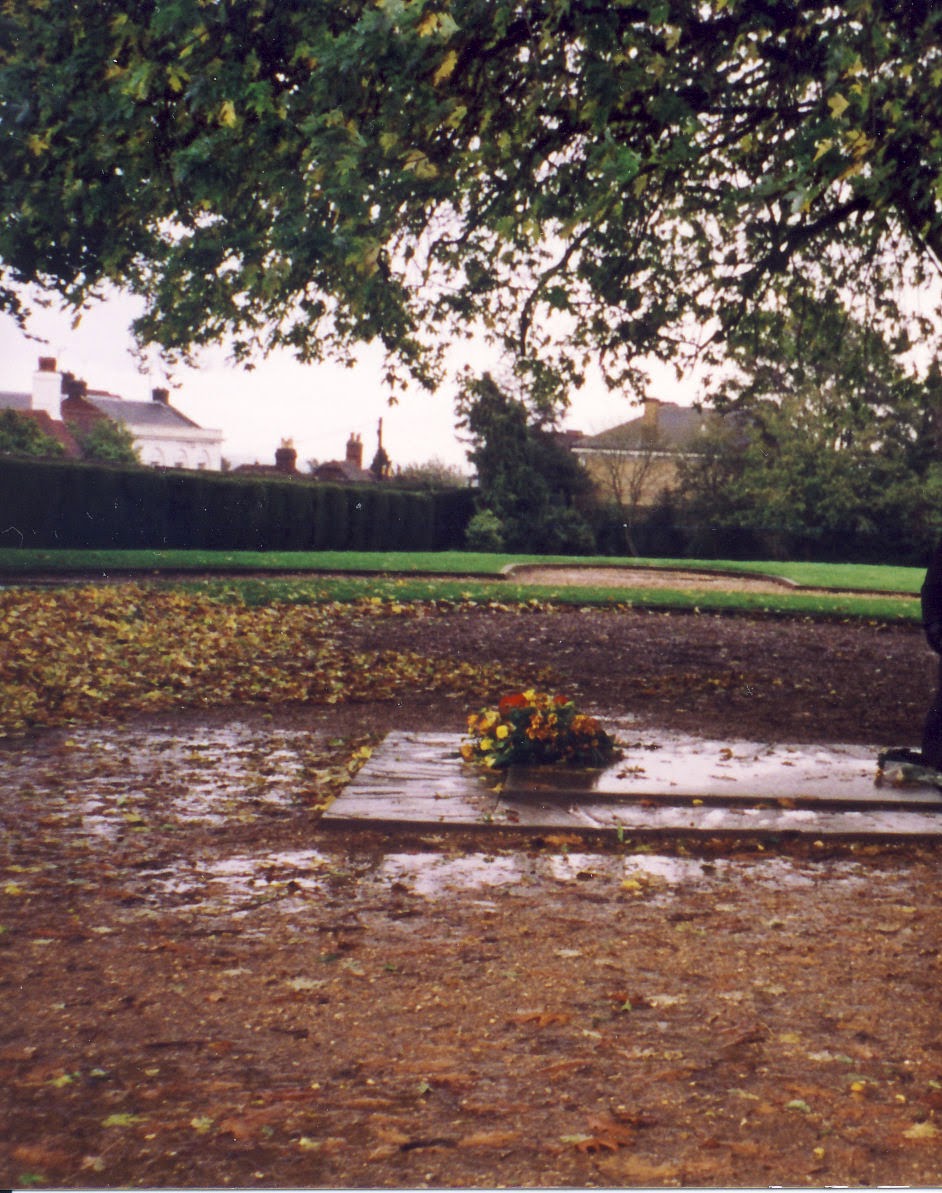
 
Site of the High Altar, said to be where Harold fell
 
As we walked around the ruins on that October day, we noticed flowers on the site of the High Altar.  We when looked closely, we got chills!  Here was a tribute, almost thousand years later.
 
It reads: “King Harold: Unconquerable Except by Death, 14 Oct, 1066” 
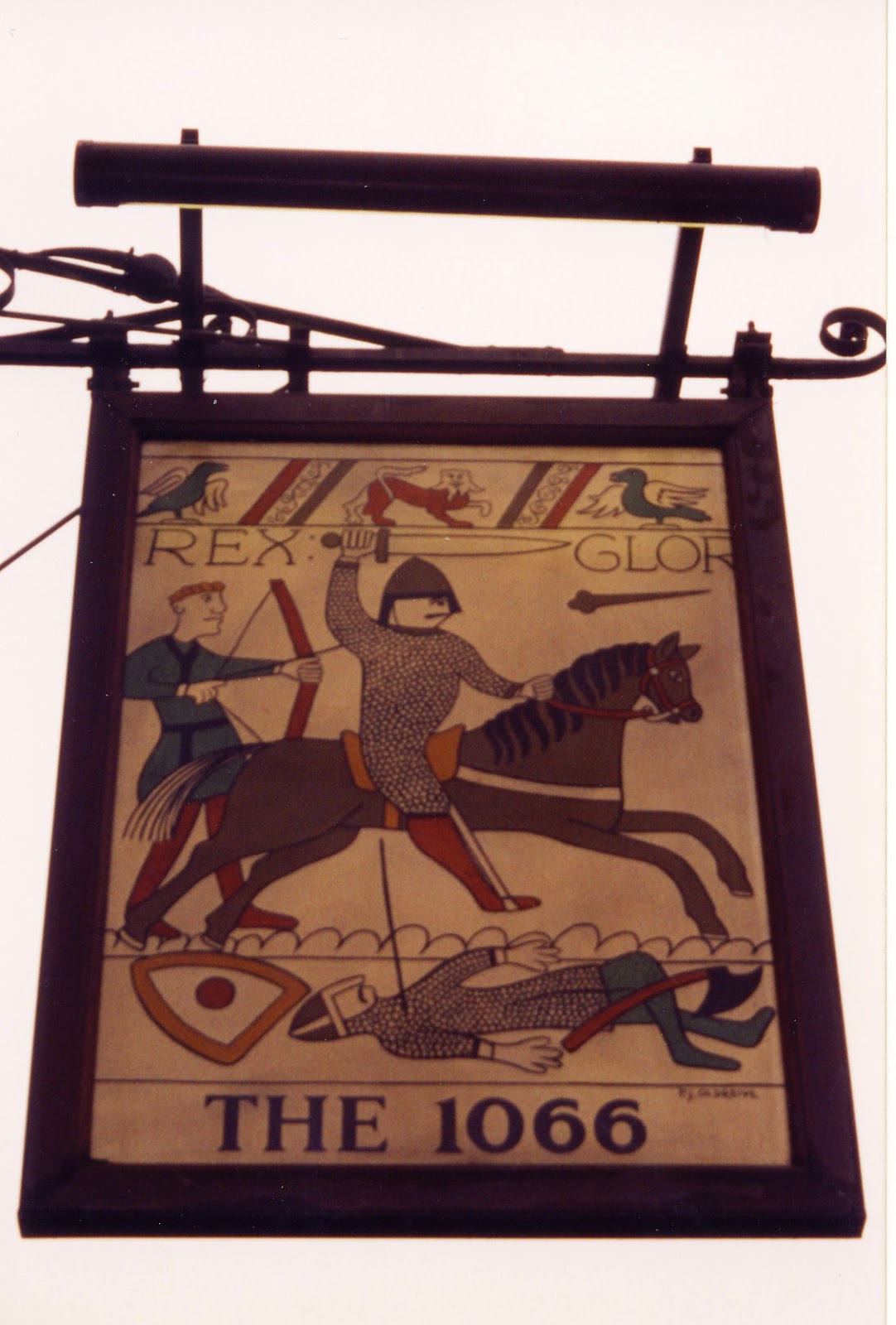
 
Pub Sign in Battle, Sussex
 
Of course, the pub owner could not resist!!  We settled in, actually for a pot of tea, after our encounter with the Abbey, the battle and the flowers left by admirer from centuries after the fighting.  Battle, the spot where the conflict took place and the town named so cleverly, is a few miles inland from Hastings, where the Norman fleet landed on the coast.
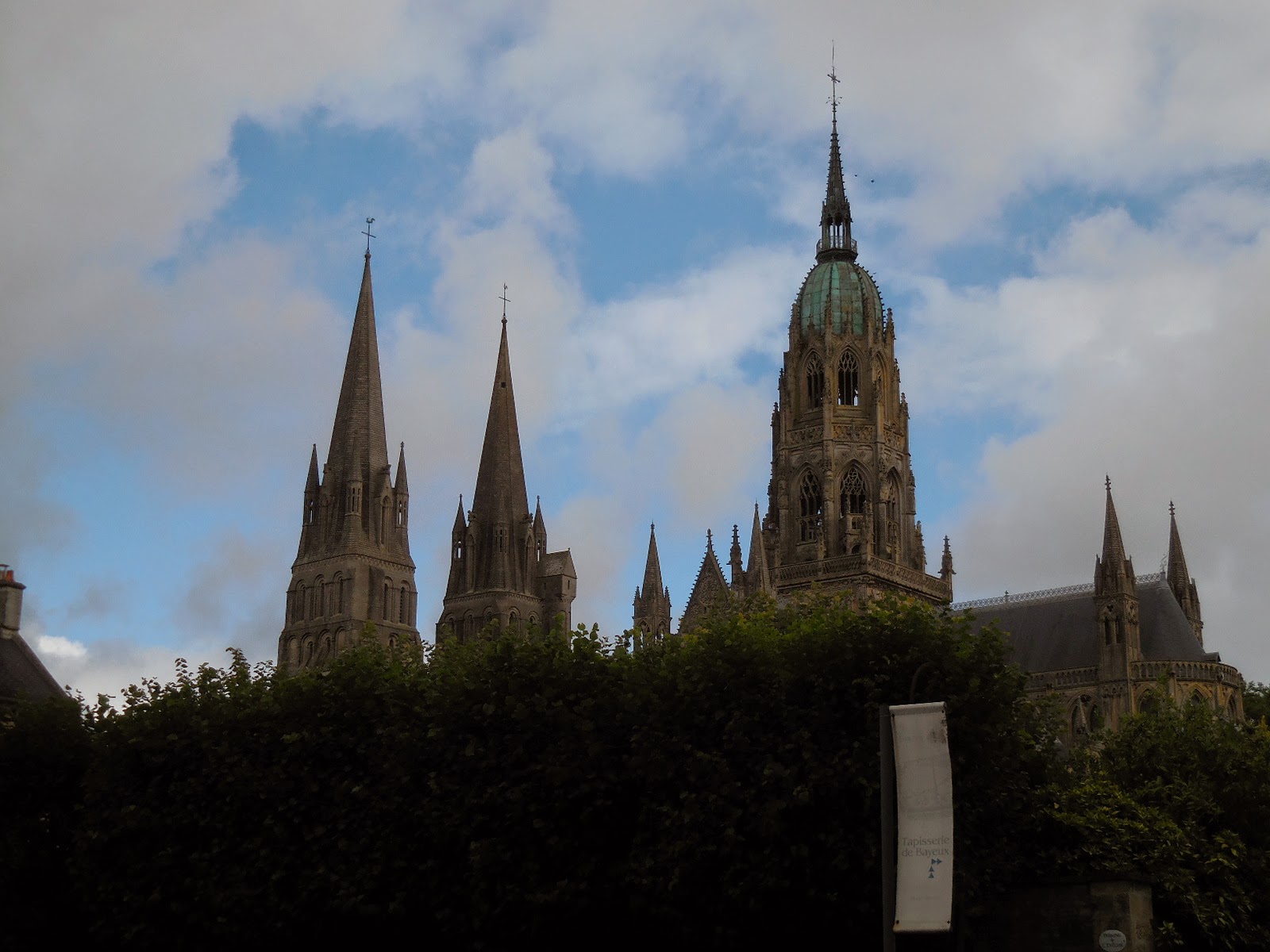
 
Bayeux Cathedral
 
Returning to my trip of 2014, we left the Tapestry to go to the Bayeux Commonwealth War Graves Commission Cemetery, where more than 4,600 are buried.  A marble memorial stands at the entrance.
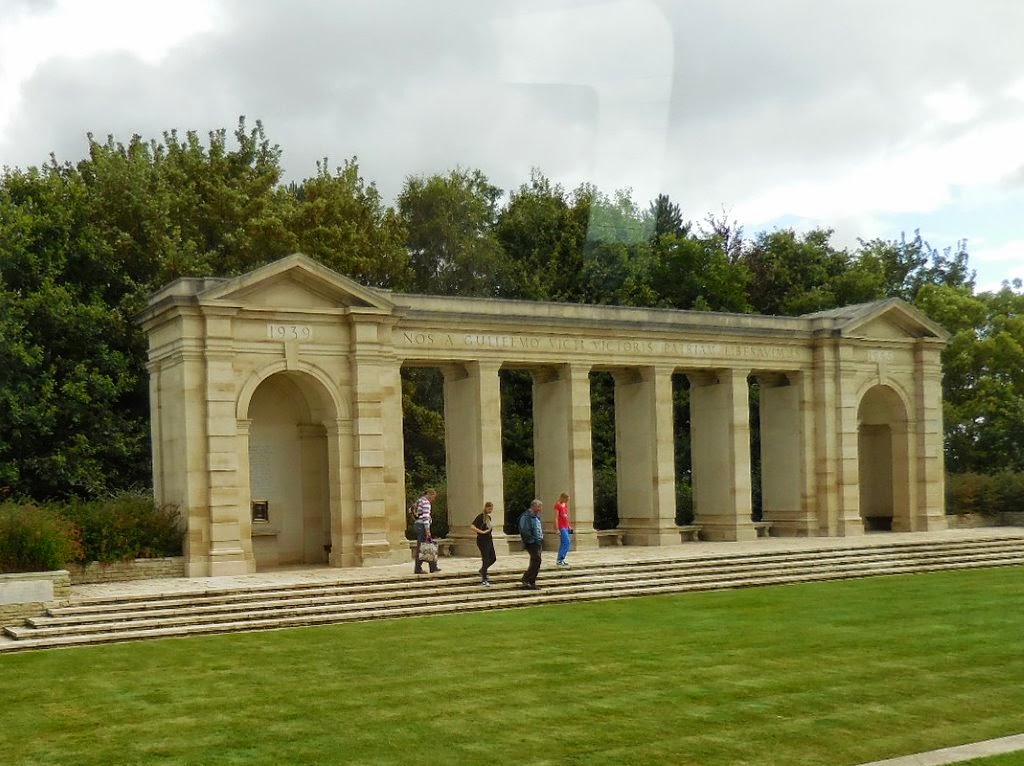
 
The Inscription reads (in Latin) “We, once conquered by William,
have now set free the Conqueror’s native land.”
 
Chills once more!!
 
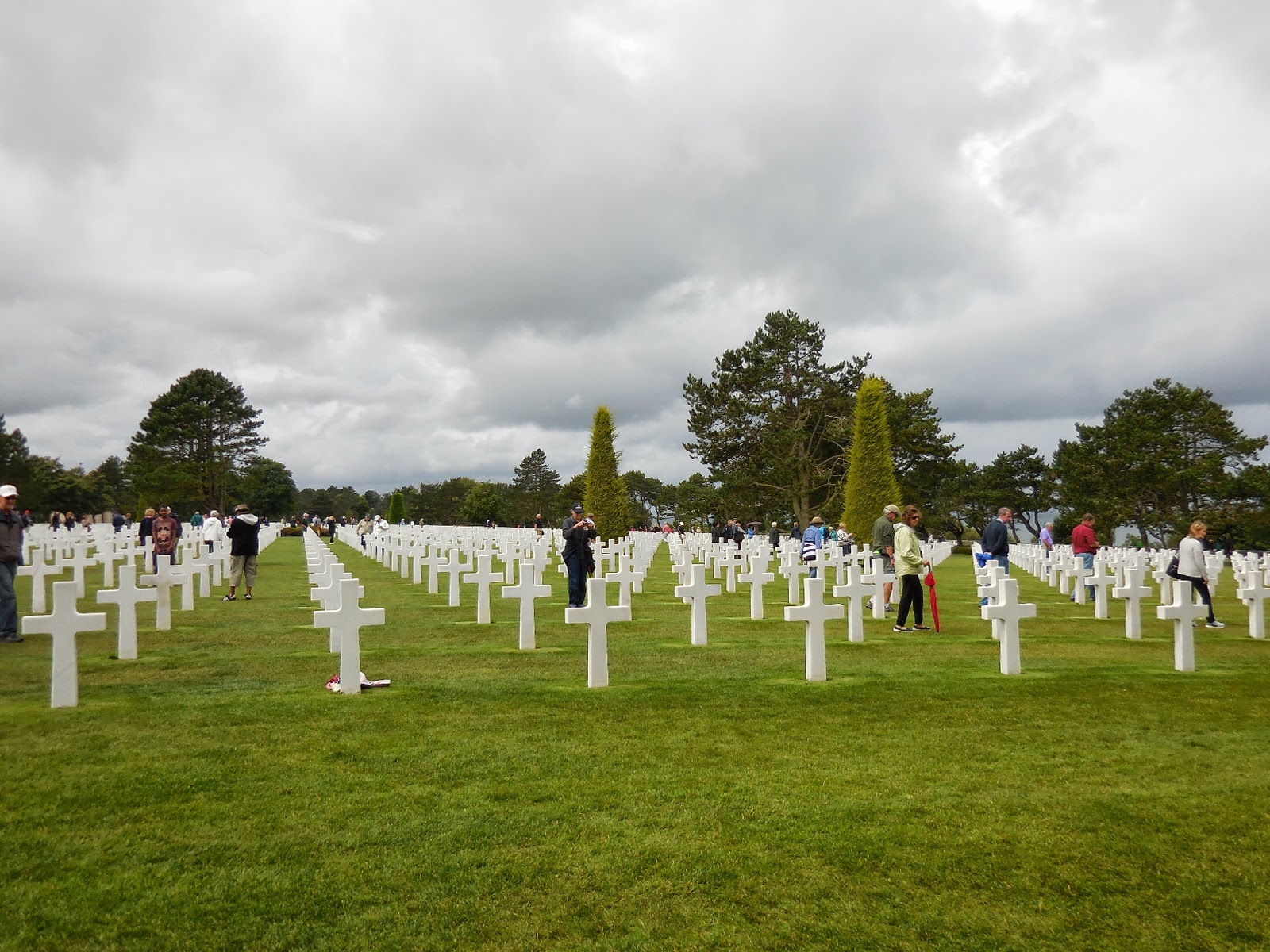
To conclude the day, we toured the Normandy American Cemetery and Omaha Beach, accompanied by many more chills of appreciation.
 
The Memorial at the American Cemetery
Among the 9,400 graves
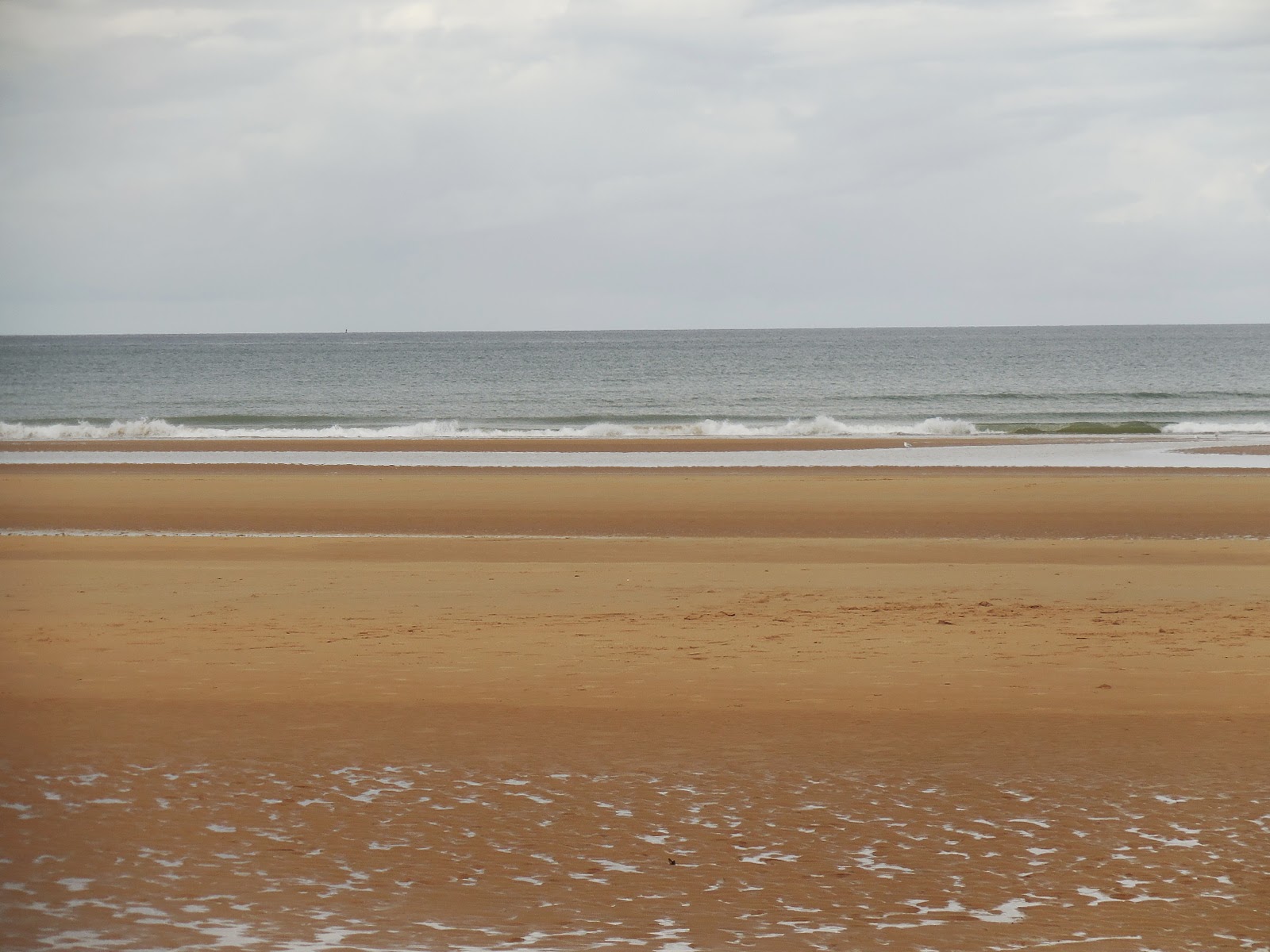
Omaha Beach
 
 
Les Braves, memorial sculpture by Anilore Banon
in honor of the 60th anniversary of D-Day, 2004



VIDEO WEDNESDAY: TOUR OF THE OLD CORONATION STREET SET

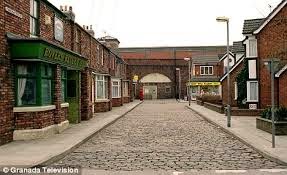
As some of you may recall, when Victoria and I were first planning the Duke of Wellington Tour, I was anxious to schedule a side trip to the old Granada Studios in Manchester to see the set of Coronation Street. The entire production has since moved to a new set at a larger facility, where every house, every cobble and every shop has been faithfully recreated. The old set is now open for daily tours and I so wanted to get there in order to see it all before it was dismantled. Unfortunately, a side trip to the north of England was not in the cards this trip over. However, I did find an amateur video that a fan (stunninglad1) kindly recorded during their trip to the cobbles and you can watch it here. The video includes an overview of the street, a look at the individual houses, all the shops, Rosamund Street, the bus stop and even the ginnel! Night falls towards the end of the half hour video and you can see the lights come on as night falls over this beloved section of Weatherfield. A true trip down memory lane that we hope you’ll enjoy. 


LOOSE IN LONDON: KRISTINE LEAVES FOR HEATHROW – PART THREE

I turned away from the United desk and began the journey up the escalator to the security checkpoint whilst carrying the incredibly heavy black bag, with the incredibly heavy purse now slung like a cross-body around my torso. My little toes screamed with every step and I silently screamed back.

“Just a bit longer,” I told myself, “and you’ll be in England for nearly a month. A month. You can do this!” Of course, there were many more passengers waiting to go through security than there were security check points to deal with them efficiently. The line crawled along and I inched my way towards the scanners one painful step at a time. Who knew that my most comfortable sandals would turn into devices of torture simply because I’d been forced to carry an extra forty pounds or so?

Finally, I made it through security and retrieved my belongings from the conveyor belt before I scanned the signs overhead to see where my gate was. The sign read “Gates 1 to 2,034 to the Right.”
I wanted to cry. My gate was literally the last one. The absolute furthest from where I now stood.

I longed to remove my shoes, but thought better of that – no telling what was embedded in the floors after millions of passengers had trod on them. I thought about having a drink, but didn’t see any bars. Finally, I thought about the men who had comprised Wellington’s armies and how far they’d been asked to walk on a daily basis. Surely 19th century boots had to have been more uncomfortable than my sandals after walking miles in them whilst carrying heavy packs on their backs, along with weapons and ammunition. And canteens. All whilst wearing red woolen coats. In the heat of the Peninsula. Or in India. At least at the end of my journey I’d be at the plane that would be flying me to England. A much better destination than a battle at Waterloo, surely.

“Just a bit longer,” I told myself, “and you’ll be in England for nearly a month. A month. You can do this!”

The longer I walked, the more painful each step became. Before long, I was limping along like an old lady. A really old lady. And I still hadn’t passed a single bar. Finally, I spotted a maintenance worker by a trash can and asked him, “Where’s the nearest place I can get a drink?”

“Huh?”

“A drink. Liquor. A cocktail. You know, a bar?”

“Oh, right. Well, there’s an Irish pub down that way, right across the way from Gate 2,034.”

Thinking that there may just be a God after all, I slowly completed the last painful mile that separated me from the nearest bottle of Bacardi.

Arriving at last at Mecca, I sat down at the bar and ordered a double rum and coke and a tall glass of water, which I finished half of in a few gulps as soon as it arrived. The water, not the rum and coke. Then I called Hubby to let him know I’d arrived in Newark and allowed him a couple of I told you so’s in regards to my present problem regarding overweight luggage. When we’d hung up, I spotted a redhead climbing onto the stool beside mine. The bartender came over and she ordered herself a white wine. We both sat sipping at our drinks for a few minutes before she asked me if I were going to Dusseldorf.

“No. London,” I said curtly, not being in the mood for casual chit chat. I picked up my glass of water and finished it off in another few gulps.

“You shouldn’t drink water, you know. It’ll poison you. Our kidneys can’t process all the poisons in water. My kidneys haven’t worked for fourteen years.”

Oh, great. A health nut.

“I only drink wine. White wine. The red stuff has too many chemicals in it. It’ll kill you.”

Sigh.

“I always drink wine, whether I’m at home or traveling. I’m going to Dusseldorf for the weekend,”

Against my better judgement, I said, “You’re flying all the way to Dusseldorf just for the weekend?”

“Yeah. I fly to Europe for the weekend once or twice a month. I’ve been everywhere. I’ve been doing it for years.”

“How do you manage that, I mean with the dialysis and that.”

“What dialysis?”

“You said that your kidneys hadn’t worked in fourteen years,”

“Oh, that. No, I’m not dialysis. I still have my kidneys, they just don’t work. They haven’t worked since I fell into a canal in Venice.”

I finished off my rum and coke and ordered another.

“See, the water in the canals is filthy, just filthy. And when I fell in, I was attacked by this type of parasite that lives in the water there. The parasites invaded my body and attacked my organs and my kidneys and they shut down and haven’t worked right since. Water will kill you, believe me.”

Oh, great. Not a health nut. Just your average, garden variety nutter. No way was I going to ask her how she’d managed to fall into a canal in the first place.

“I believe you. That’s why I only drink rum,” I said instead as I slid my credit card across the bar towards the bartender. While I was waiting for my receipt, I fished around in my purse for my sleeping pills, shook a couple out into my hand and downed them with a swallow of rum and coke. I had an hour until my flight boarded and, with any luck, I’d be nice and drowsy by the time we lifted off.

Limping my way across to my departure gate I told myself, “Just a bit longer and you’ll be in England for nearly a month. A month. You can do this!”

MONTREAL'S MEETING OF THE JANE AUSTEN SOCIETY OF NORTH AMERICA

Victoria here, just back from the excellent Annual General Meeting of the Jane Austen Society of North America in Montreal, Quebec, Canada.  The days were packed with all sorts of events — many presentations on Mansfield Park’s characters, events, and background, plus workshops, dancing lessons, teas and banquets, tours, performances, and of course, shopping.

Elaine Bander, chair of the 2014 Steering Committee, opens the AGM
 
2014 is the 200th anniversary of the publication of Mansfield Park, Jane Austen’s first novel begun and completed after she came to live at Chawton Cottage.  Also published in 2014 was Frances Burney’s fourth novel, The Wanderer.
 
 
Juliet McMaster
 

Before the AGM began, Juliet McMaster addressed a joint tea for members of the Frances Burney Society and JASNA on “Female Difficulties: Austen’s Fanny (of Mansfield Park) and Burney’s Juliet (of The Wanderer).” (I apologize for the slightly blurry pics sometimes). I will report further on the meeting of the Burney Society in a future post.

Montreal’s Autumn Tints
 
Montreal was sunny and ranged from chilly to warm most days.  Since it was my first visit, I tried to see as much as I could, but found myself in almost every JASNA session I could manage.
 
The plenary speakers were all excellent, and I attended many outstanding Break-Out Sessions.
 
Chicago’s Russell Clark on “Plays Passed Over in MP”
 
Sarah Parry of Chawton House Library spoke on the houses in MP
and what they tell us about their inhabitants.
 
Goucher College is planning to digitize a rare copy of the first American edition of Jane Austen’s Emma printed in Philadephia in 1816.
 
Looking for contributions to the Emma Campaign
 
Tim Bullamore (r), publisher of Jane Austen’s Regency World Magazine
 
Jane Austen Books doing a brisk business
 
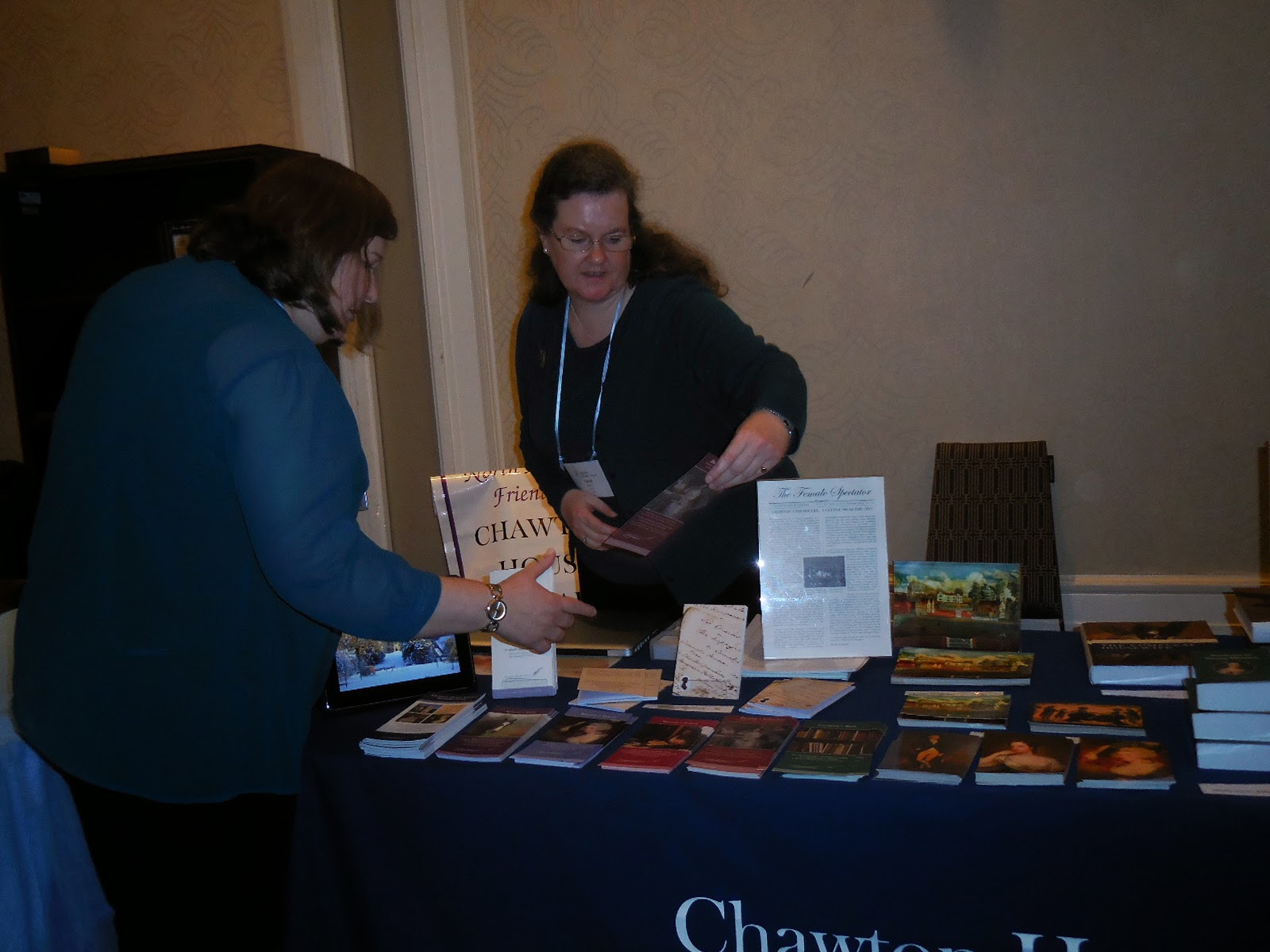
Sarah Parry at the Chawton House Library table
 
Among the other speakers I enjoyed were Robert Clark on “Jane Austen and the Moral British Empire,” Kathryn Davis on “Charles Pasley’s Essays” (known to be favorites of Austen), Janine Barchas on “Reading Mansfield Park with Nabokov,” and Jocelyn Harris on “Fanny Burney and Fanny Price.”  No pictures, even blurry ones, turned out. And of course there were dozens of talks I could not attend but which I long to hear in the future — or read in Persuasions in print or on-line. I also failed to get pictures of the clever version of Lover’s Vows, written and produced by Diana Birchall and Syrie James, entitled “A Dangerous Intimacy: Behind the Scenes at Mansfield Park.”
 
Ladies at the Ball
 
Ken and Elaine Weeks of Seattle
 
More ball participants
 
Jerry Vetowich and Nili Olay
 
Kim Wilson and Sue Forgue
 
During the Ball, Kim and I provided the comic relief with our talk on “Gilpin, the Picturesque, and Dr. Syntax.”  I’ll report more on our talk at a later date.
 
Kim Wilson, whose latest book is Jane Austen At Home, and Victoria Hinshaw
 
Authors and pals: Kim, Vicky and Carrie Bebris, who writes the Mr. and Mrs. Darcy Mystery Series
 
Sunday morning, the AGM closed with a wonderful brunch and a terrific speaker, Patrick Stokes,  chair of the Jane Austen Society (UK) from 2004-2009.  His topic, “Rears and Vices: The Georgian Royal Navy in Mansfield Park,” was full of enlightening information and many laughs. He wore the uniform of a rear admiral in 1814.
 
Patrick Stokes, gggrandson of Admiral Charles Austen (1779-1852),
Jane Austen’s youngest brother
 
Patrick Stokes and Victoria Hinshaw
 
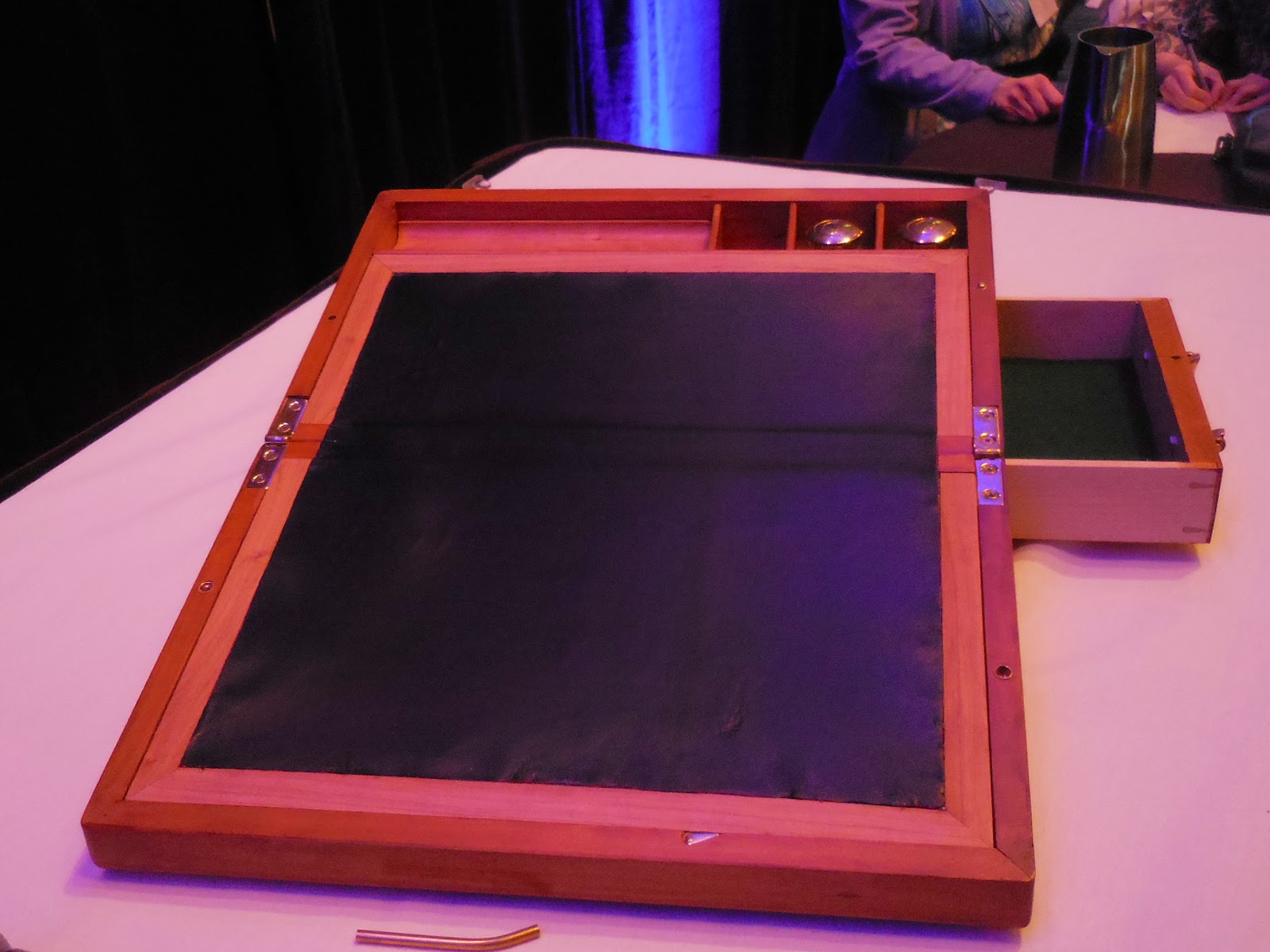
After the brunch conclude Mr. Stokes was kind enough to pose for many pictures with audience members, as he exhibited the replica he made of Jane Austen’s writing desk.
 
Replica of Jane Austen’s writing desk
 
Presidents of JASNA: Joan Ray, Marsha Huff,
 Iris Lutz, and incoming president Claire Bellanti
 
 
Joan Ray, Iris Lutz, Lorraine Hanaway, and Clair Bellanti
 
Thanks to Elaine Bander, the Steering Committee, and all the volunteers for a wonderful AGM.
  Next year, JASNA will meet in Louisville, KY, October 9-11, 2015,  
“Living in Jane Austen’s  World.”


REMEMBERING AUTHOR DIANA NORMAN

By Guest Blogger Jo Manning

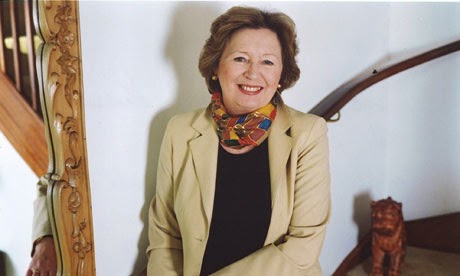
“I stagger towards the last line of a book like a drunk navigating furniture,” said Diana Norman. Photograph: Mary Jane Russell

The historical fiction author Diana Norman was a veritable giant of the genre.  Arguably, the best amongst many. Her history was impeccable, and she never shortchanged those readers, letting them know when she had to make things up for the purpose her plots. Her characters are remarkable, fully-fleshed-out human beings who are sympathetic and memorable, and her stories are romantic and compelling. She wrote books that were extremely difficult to put aside.
Although I first came to know her work upon the publication of her last series of books – Mistress Of The Art Of Death was the first one — those featuring the 12th-century Sicilian pathologist/medical examiner Adelia Aguilar, which the obituary in The Guardian opens with, I must disagree with the reporter’s assertion that Norman “was best known” for these books.  Those of us who love novels set during the English Restoration and Regency periods would beg to differ. (And I have my colleague Margaret Evans Porter to thank for introducing those to me.)
The Vizard Mask, set during the Restoration, when the son of the murdered King Charles I, Charles II, was put on the throne, restoring the Stuart monarchy interrupted by the Cromwell interregnum, is a masterpiece.  And it is a hefty piece of work, indeed; I thought it, however, too short, because the writing was so brilliant. Norman explored Restoration theatre – and the growing role of women on the stage – the harrowing Plague and its deadly consequences – the byzantine world of 17th century politics – and the Puritan/Roman Catholic conflict that was to continue on for many years after the death of Charles II.

Norman enriches her stories by mixing in many historic and literary personages along with her fictional characters. The Shores Of Darkness has a wonderfully funny profile of the always-in-debt/always-in-trouble-with-the-authorities pamphleteer and author Daniel De Foe (a recurring joke being those who are constantly corrected by the self-important Mr Foe to insert the “De” before what others think is his full surname). The Vizard Mask introduced me to an important and complex historical personage and military man, Prince Rupert of the Rhine, nephew of Charles I and brother of the Electress Sophia of Hanover, whom I’d not previously encountered.
Her women are wonderful!  Makepeace, the New England Puritan spinster/tavern owner (yes!) protagonist of A Catch Of Consequence is funny, good-hearted, and feisty. She captures the heart of an English aristocrat in this first book of her trilogy (the “catch” of the title), suffers mightily, wins, loses terribly, and finally triumphs to become a wealthy and fulfilled businesswoman, happy in her achievements and family and not brought down by widowhood and penury. The last of the trilogy is really her daughter’s story (the daughter she had with the handsome “catch”) who winds up in Paris during the Reign of Terror and is caught up in its ugliness and deaths.  That book is called The Sparks Fly Upward; the second of the trilogy – referred to as the Makepeace Hedley series – is Taking Liberties.
I did a good deal of research for the part of my biography of Grace Dalrymple Elliott, My Lady Scandalous, that had to do with the French Revolution and can attest to her good and careful research here. It is truly mesmerizing storytelling – and what intricate plotting! – both combined with meticulous factual information; Norman was a rare mistress of these arts that go into writing splendid historical fiction, much as her 12th-century character Adelia is a “mistress of the art of death”.
In all, she wrote some sixteen historical novels (four of them in the Adelia Aguilar series – and please note that titles were changed for publication in the United States) —  and three works of non-fiction, of which The Stately Ghosts Of England, a very short book published in 1963, is a fun read on her adventures in haunted houses.
Mary Diana Narracott, London-born, was taken to Devon to escape the Blitz. Hard to believe that she left school at the age of fifteen and went on to become such a fabulous writer. (But her father had been a journalist, so she came by her talent naturally!) She started out her career as a journalist, becoming probably the youngest reporter on Fleet Street. She married Barry Norman, a fellow journalist (he always said she was the better writer) – she wrote for the Daily Herald and he for the Daily Sketch — and they had two daughters.  Leaving Fleet Street for motherhood, she managed to squeeze in another career, that of local magistrate, whilst undertaking her newer challenge, the writing of fiction.
Barry Norman wrote a moving, loving tribute to Diana on her death that has been widely reprinted. You can read it here.   Keep a tissue handy during your reading of it.

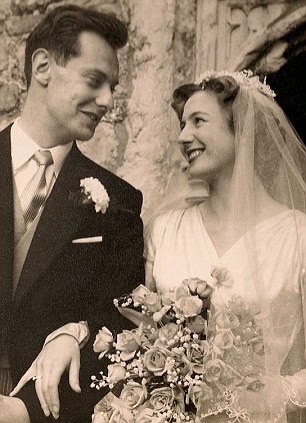
Diana and Barry on their wedding day in 1957
 
Barry Norman wrote: 

          She was beautiful, witty, highly intelligent, quirky, stubborn and always immense     fun to be with. She was a devoted wife, mother and grandmother and she was also — this is not just my opinion — one of the most gifted historical novelists around. I loved her to death and beyond.

She appeared on the New York Times and other bestseller lists and received awards from the Crime Writers’ Association for titles in the last of her series, which were genuinely more historical crime thrillers than her historical novels – though a soupcon of mystery was always a delicious part of those novels as well.

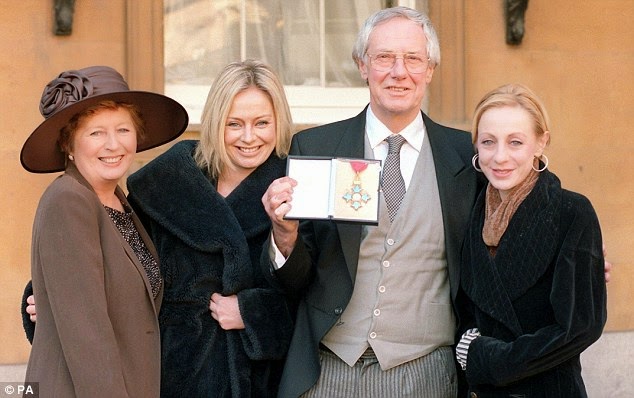
“Proud: Both Barry and Diana achieved acclaim in their chosen field, with Barry earning a CBE. They are pictured with daughters Samantha (left) and Emma (right)”

I love what she says about her writing her crime thrillers here and must end with this quote:
                “The lovely thing about the 12th century is that you don’t have to go too far to find wonderful plots. I always plot first. If you’re writing thrillers which, of all the genres, have to be well-constructed and not streams of consciousness, you’ve got to know where you’re going. I have the last line of the book in my head before I sit down to write and I stagger towards it like a drunk navigating furniture to get to the far side of the room.”
She once cited some of her literary influences:  Tolstoy; Dickens; Austen; Raymond Chandler; and John Le Carre. An eclectic mix…but, all, wonderful writers, as Diana Norman was. Do read her…you run the chance of becoming addicted, but I can hardly imagine a lovelier addiction than the novels of the brilliant Diana Norman.