I arrived at our hotel early from the airport – before 9 a.m., and so our room wasn’t ready. In fact, I was told that it wouldn’t be ready till closer to 2 p.m. I left Big Red and my carry-on bags with the hotel and crossed Sloane Square to
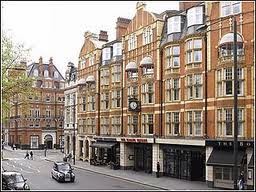
Duke of York Square, which was deserted save for one or two coffee places that were already open – not, alas, a Café Nero in sight. So I bought a coffee and sauntered around the Square as well as a limping person with sore feet can saunter. Being that I was unable to affect a careless Bertie Wooster type of saunter, I had no choice but to settle for more of a Boris Karloff as the Mummy sort of gait. I would have been happy to walk the entire length of the King’s Road and back again in order to kill time, as there’s nothing I love more than strolling the streets of
London, whether I have a firm destination or no. However, my feet weren’t going to cooperate so I sat for a while on a bench and watched the passing parade of people. Note to self and you: almost every woman who walked past me, regardless of age or profession, was wearing ballet flats and a short, black leather jacket. Ergo, buy short, black leather jacket as it will no doubt be the next big thing this season.
Whenever I travel to Englandwith my daughter, Brooke, we spend the first few hours after our arrival marveling at the fact that we’re in England. “Look!” we’ll cry, “an English dog!” “Look, an English postbox!” “Look, an English Starbucks!” “Look, a black cab!” I soon found this exercise was much less fun when played by oneself and so gave it up fairly quickly. Finishing my coffee, I summoned my determination, defied the pain and began the walk from King’s Road down to the Royal Chelsea Hospital. Despite knowing well its Wellington connections, I’d never visited before and so had planned to rectify this gap on this day, prior to Victoria’s arrival. No time like the present.
I slow walked my way down to Royal Hospital Road, in reality just a quick jaunt away from the Square, but the state of my feet made the walk that much longer. And more painful. By this time, my feet had blisters on both little toes, there was a raw spot across the top of one foot where a strap had rubbed and my feet had apparently swelled during the flight, making my comfortable sandals feel two sizes too small. At long last I arrived at the gates of the Hospital, only to be told that the Museum wouldn’t open for another hour. Sob.
The walk back to Sloane Square was horrendous, but I finally made it back up to the King’s Road, where I spotted an open Boot’s Pharmacy. Inside, I made my way to the bandage section, selected some cushioned band-aids and then walked back to the hotel. I asked for Big Red to be brought out and divested myself of sandals before papering my poor feet with bandages. Then, I put on a pair of ballet flats and gingerly took a few steps in order to test them out. No pain, so I was good to go.
Back to the Royal Chelsea HospitalI went, which was by this time open. Going through the gates, I spotted a small graveyard off to the left and decided to stroll through the headstones, finding many Regency era dates. Some of the stones marked military graves, whilst others remembered those who had administered to the running of the Hospital through the centuries, along with their family members.
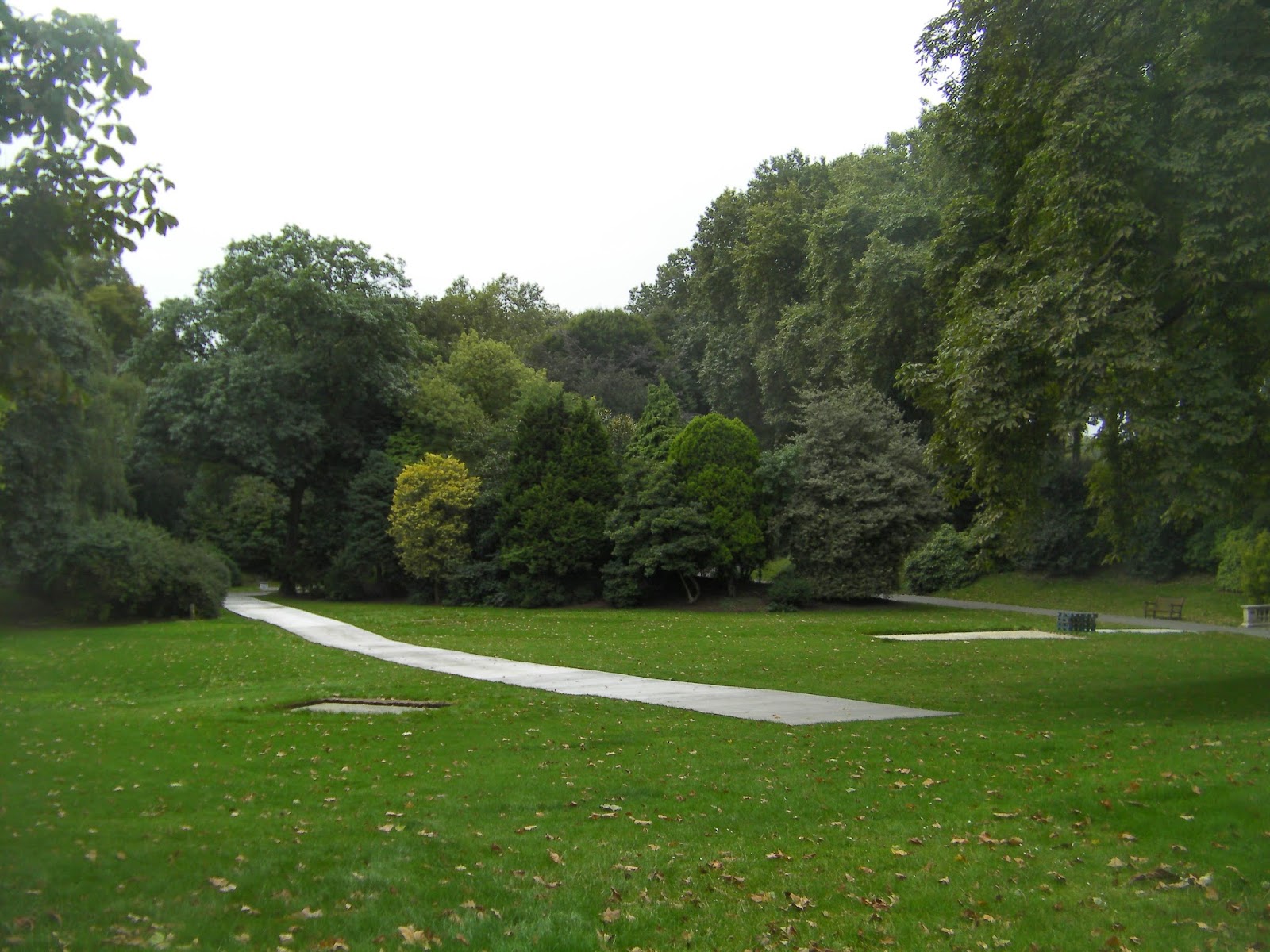
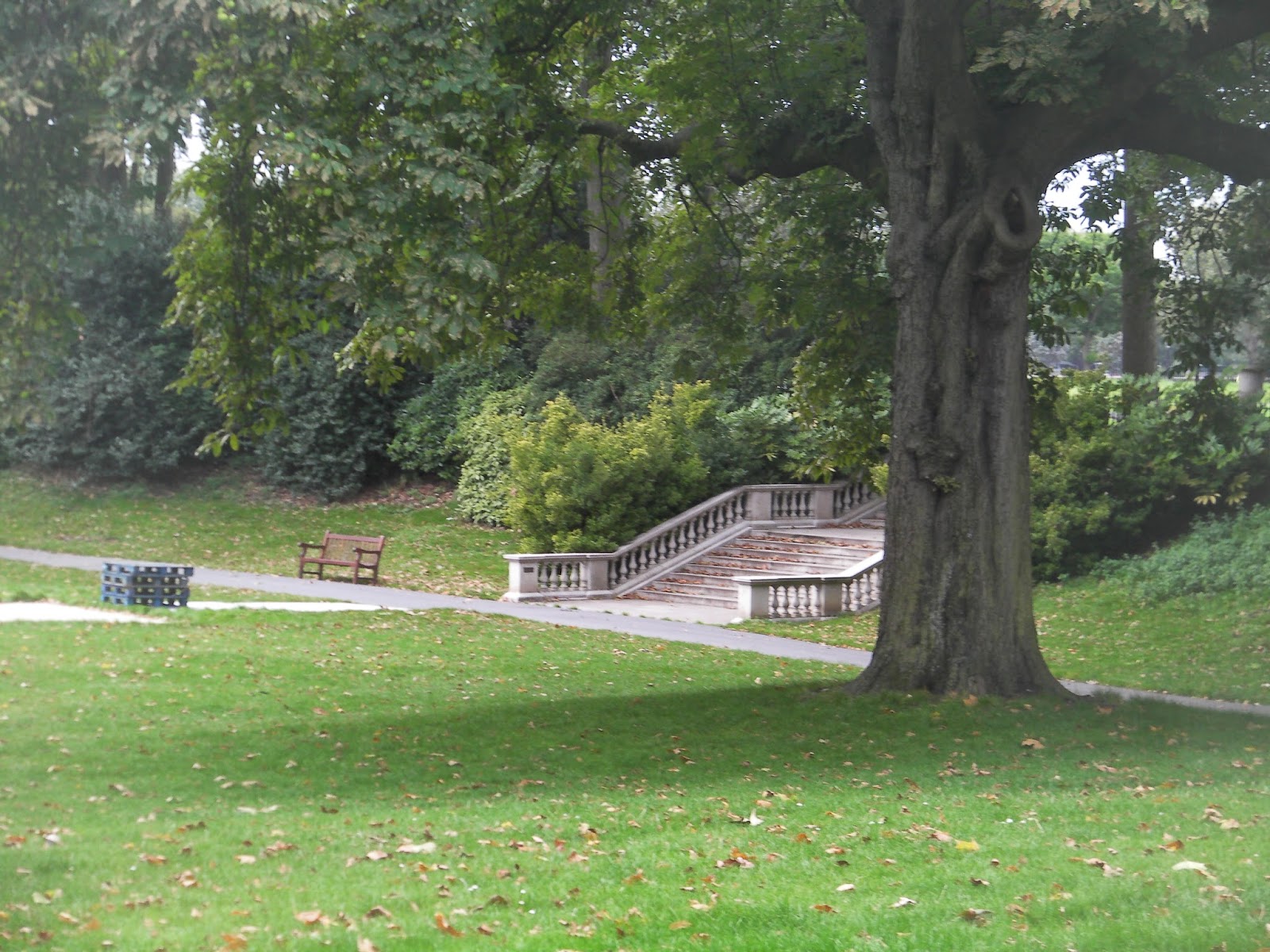
Afterwards, I was headed towards the Museum when I spotted a sign that read “Ranelagh Gardens.” If you’re a regular reader of this blog, you’ll know that one of the things I’d been longing to do was to visit the site of the old Gardens, so of course I made a bee line in the direction indicated on the sign. Along the way, I passed the allotments where the current Chelsea Pensioners grow absolutely stunning flowers. Everything appeared to be blooming and the variety of flowers was amazing. I passed a few people along the way, nodded to Pensioners and a handful of young mothers who were pushing prams along the paths, but otherwise I was alone. Finally, the path brought me to the boundary of Ranelagh Gardens, where I strolled in historic contemplation for a few minutes before telling myself, “Look, you’re in Ranelagh Gardens!” Sigh.
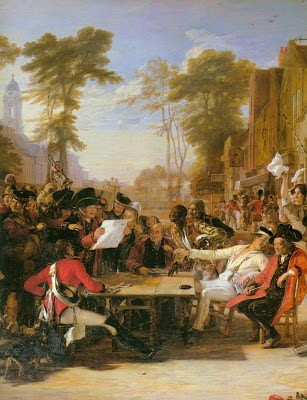
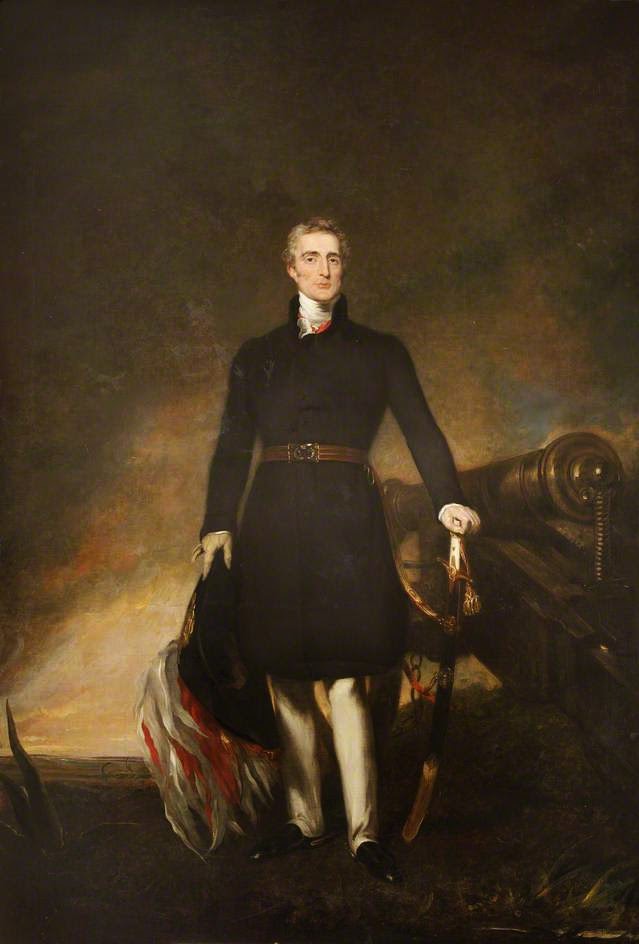
And then I did make my way to the Museum, where I was met with several oversized paintings of the Duke of Wellington. Welcome, indeed! No Chelsea Pensioners Reading the Waterloo Despatch to be seen, however. They must have it hanging in the Museum, I thought, but failed to find it as I made my through the exhibits.
In the gift shop, I bought a Christmas ornament to add to my collection and then I asked how to find the Great Hall, where Wellington’s body had lay in state. Surely the painting of the Chelsea Pensioners had to be there. Following the directions I’d been given, I was making my way over to the Great Hall when I began to feel great discomfort at the top of each heel. You know, where your Achilles tendon is? I sat on a bench and took off one ballet flat – the back of the shoes were rubbing at the top of each heel and taking some skin off with each step. Believe me, I packed these flats because they’ve always been extremely comfortable. As were the sandals I’d worn on the way over. Until this particular trip.
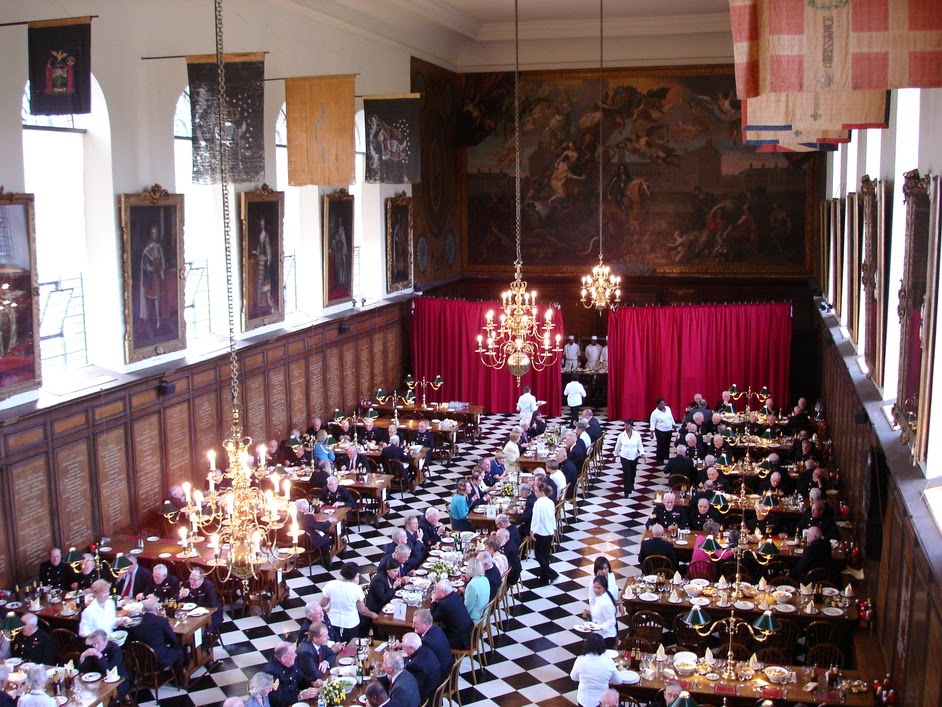
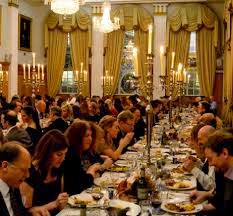
I finally found the Great Hall, only to discover that it was being used as a dining hall, set up with rows of long tables and chairs. It seemed much smaller than I’d imagined and try as I might, I couldn’t summon up the atmosphere that must have existed when thousands of people had streamed through to pay their final respects to the Duke of Wellington.
So back I limped to the gift shop, where I asked the nice old soldier behind the counter, “Do you know where The Chelsea Pensioner’s Reading the Waterloo Despatch is?”
“Pardon?”
“The painting, The Chelsea Pensioner’s Reading the Waterloo Despatch?”
“Pardon?”
“It’s a painting that was commissioned by the Duke of Wellington. Of ChelseaPensioners. Reading the Despatch. From Waterloo. About the victory? At Waterloo?”
“Never heard of it. Hey, Bert, have you ever heard of a painting called the Pensioners Reading . . . . what was it they were reading?”
“The Waterloo Despatch,” I told him.
“The Waterloo Despatch,” he told Bert.
“No,” said Bert, “Never heard of it. Maybe it’s in the Museum.”
“No, I’ve looked in the Museum and in the Great Hall,” I told them.
“Maybe it’s hanging in that little hallway out back,” Bert suggested.
“I’d think it would be hanging in the lobby,” I said, “Along with the other Wellingtonportraits. It would be closer to that size. It’s not a small thing.”
“Nope, don’t know anything about it,” said the first Pensioner. “I’ll take you along to the Administrator’s office. Mebbe they know where it’s at.” I followed him through a warren of hallways until we arrived at the Administrator’s Office.
“This lady’s looking fer a painting by the Duke of Wellington.”
I popped my head around the Pensioner and saw an assistant sitting behind her desk. “It was commissioned by the Duke of Wellington. The Chelsea Pensioner’s Reading the Waterloo Despatch?”
“I’m sorry?”
“It’s a painting depicting the red coated Pensioners sitting round a table reading the news of the victory at the Battle of Waterloo.”
“I’m not familiar with it, but all of our Wellington portraits are in the entrance hall. Have you looked there?”
“I have. It’s not there.”
“Well, I’ll tell you what, I’ll ask our curator when he comes in this week and I’ll try to find out where it is. Can you come back next week? Hopefully I’ll have an answer for you then.”
Well, there was nothing for it. I thanked her, and the Pensioner, and said I’d check back in a few weeks time, when I was due to return to London. Then I began the painful trek back to Sloane Square, for the second time. Whilst wearing a second pair of painful shoes that made every step I took sheer torture. Sigh.
Returning at last, again, in the hotel lobby, I again asked for Big Red to be brought out of the luggage holding area. I again applied bandages to my feet, this time to the backs of my heels and then I pulled on a pair of socks followed by a pair of flat boots with the fur trim. Yeah, I was aware that the temperatures were in the 70’s, but I was getting desperate. I was quickly running out of shoe options and my day was flying by. I still wanted to make my way over to Piccadilly and Apsley House. Footwear be damned – I headed out again, this time making my way to the tube station.
Part Two Coming Soon!




.JPG)