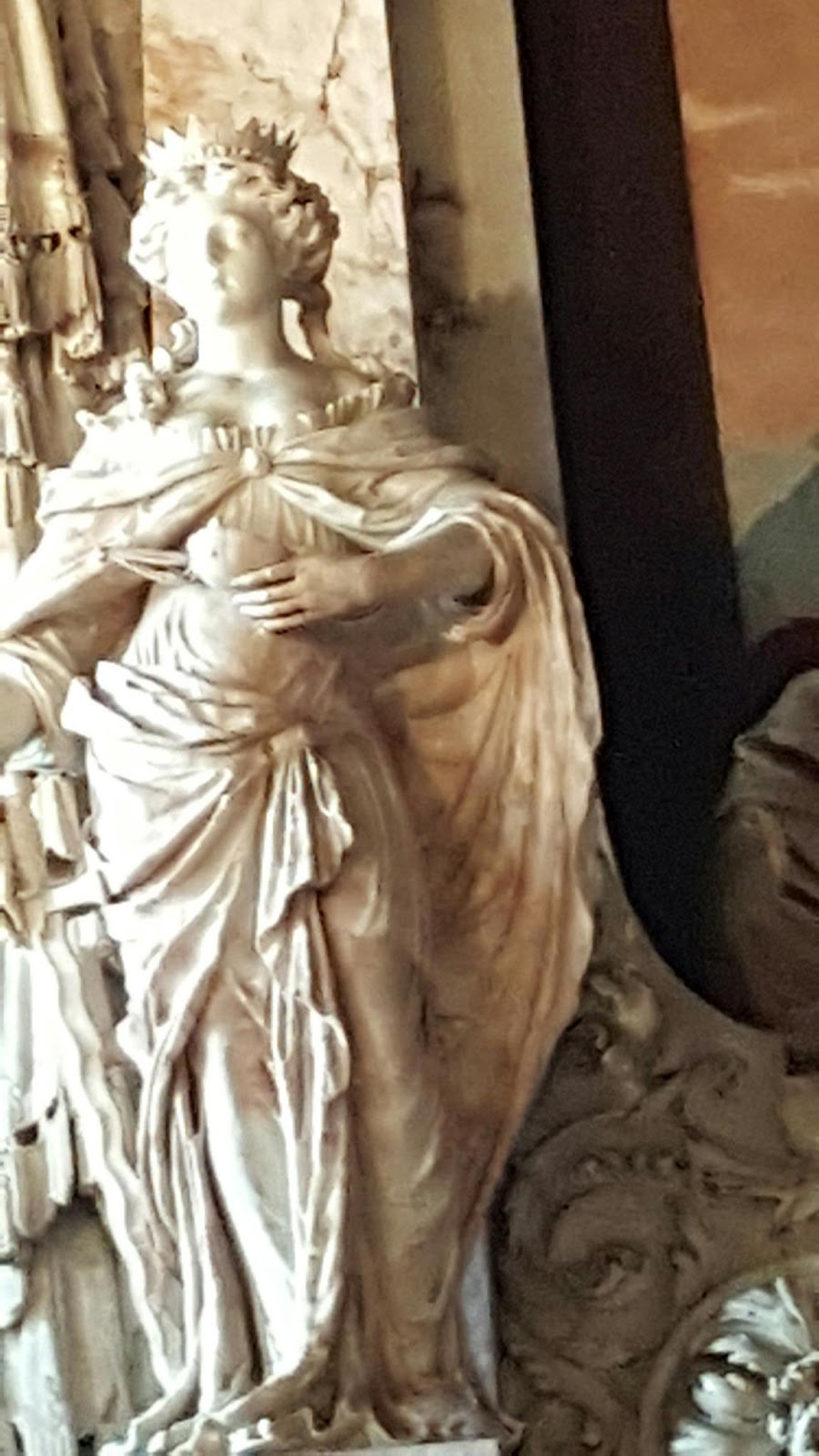
CHATSWORTH HOUSE – THE MARBLES

The famous lion sculptures at Chatsworth were originally made for the Rezzonico Monument in St. Peters, Rome. In 1823 the sixth Duke of Devonshire commissioned the same lions for Chatsworth House. The the sleeping lion, above, was made by Rinaldo Rinaldi. The Crouching Lion was made by Francesco Benaglia.
In 1839 the 6th Duke of Devonshire acquired this colossal marble foot, and he recorded its provenance: “The great ancient Greek foot was sold to me by Carlo Finelli, the sculptor in Rome: it belonged to the Quirigi family at Lucca and was long in their palace.”
The foot is wearing an ancient form of a flip-flop and research has shown that this sandal is indicative of fashion in the 5th Century BC and was almost certainly worn by women. It is assumed therefore, that the feet were part of a colossal statue of a Greek goddess which may have stood approximately 11m high.
In May 1819 the 6th Duke of Devonshire, on his first trip to Rome, paid a visit to the studio of the most celebrated sculptor of the time, Antonio Canova. He marvelled at what he saw and commissioned a marble statue from Canova, leaving both its size and subject to the sculptor to decide, and paying a deposit in advance. The marble was roughed out by 1822, when Canova asked for a further £1,500. It was completed before his death later that year. It arrived in London the following year and caused a stir when first displayed at Devonshire House. The 6th Duke, who regarded it as his greatest sculptural treasure, also commissioned a large bronze copy of it from the sculptor Francis Chantrey, which can be seen on the South Lawn.


This colossal bust of the conqueror of Europe remained in Canova’s bedroom in his Rome house until his death in 1822. Afterwards it was purchased by the 6th Duke of Devonshire’s friend, Anne, Marchioness of Abercorn (d. 1827), who left it in her will to the Duke.
The Duke considered that this bust was the only authentic one of Napoleon carved by Canova himself. It was made from his model for the colossal full-length nude statue of Napoleon as Mars the Peacemaker (1803 – 1806) commissioned, but later rejected, by Napoleon. The statue is now in Apsley House, the London home of the Duke of Wellington. The 6th Duke placed this bust in the centre of the Sculpture Gallery at Chatsworth, facing a bust of the great conqueror from Antiquity, Alexander the Great.


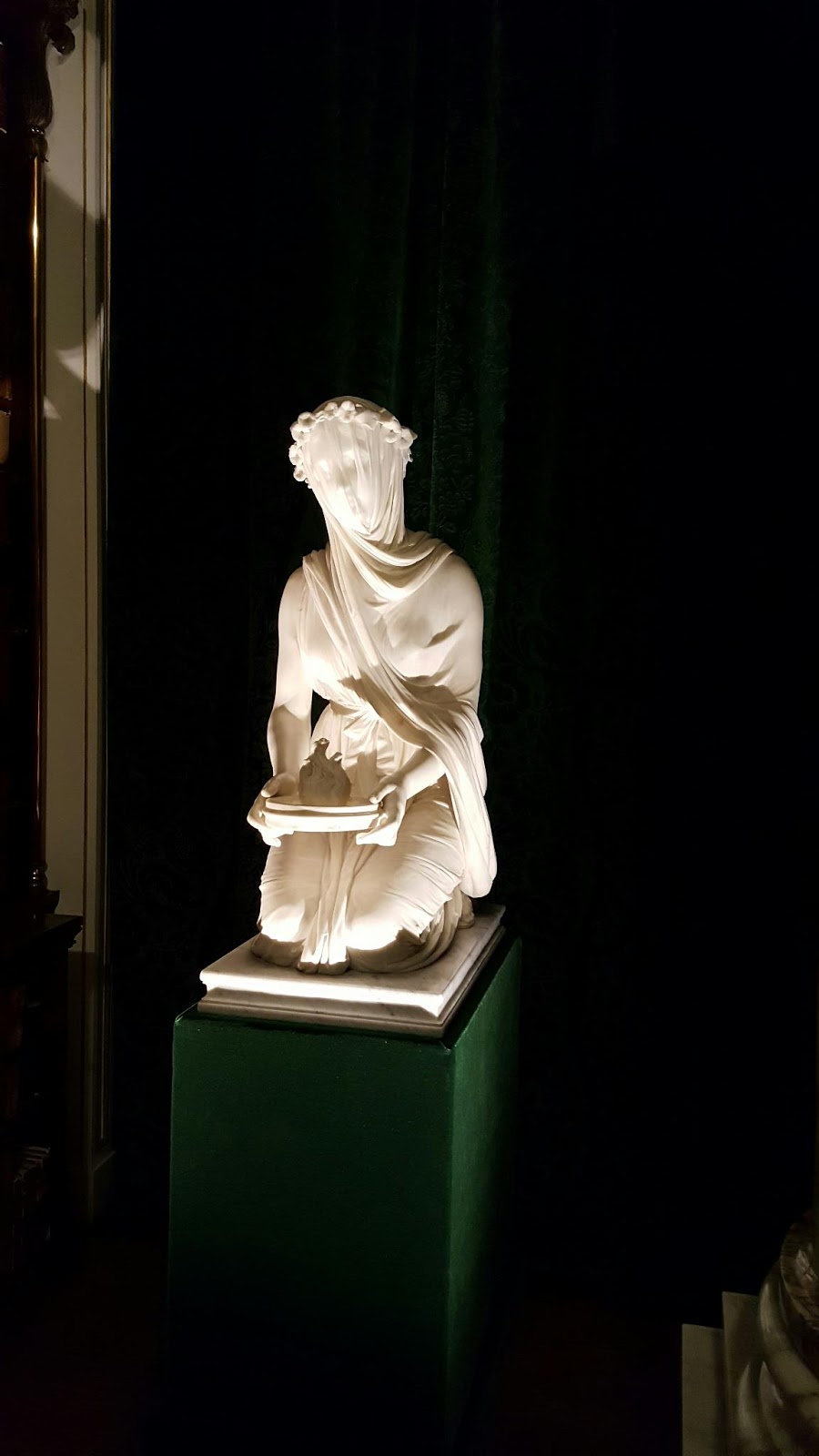
The 6th Duke of Devonshire visited sculptor Raffaelle Monti’s studio in Milan, Italy, on 12th October 1846 on his way to Naples. He ordered the marble sculpture on 18th October, placing a £60 deposit on the following day. The sculpture was ready to be dispatched to England in April 1847, and the Duke appears to have displayed it in Chiswick House, west of London. It first came to Chatsworth in 1999 and was shown in the Sculpture Gallery where it appeared in the 2005 film ‘Pride and Prejudice’, starring Kiera Knightly and Matthew Macfadyen.


And spotted in the Chatsworth gift shop . . . . . 
We will be seeing the Marbles above when we spend two days at Chatsworth House as part of Number One London Tours 2017 Country House Tour. 

THE SUPERSIZERS GO REGENCY

Sue Perkins (Great British Baking Show) and restaurant critic Giles Coren spend a week eating a diet that would have been familiar to the wealthy in Regency England. Using contemporary recipe books, our hosts sample everything from tea to jugged hare, potted venison, cheese on toast, sweetbreads (num!), trifle (original recipe, heavy on butter and cream), shrimp bisque, hare cake in jelly (nyet) brandy and claret punch, stuffed boars head (no thanks), pies and Wow Wow Sauce. Other subjects include Game Laws, port, the divide between rich and poor, the Corn Laws, the Duke of Wellington (yay!), the Prince Regent (boo!), gout, laudanum, Bath waters, Jane Austen, Italian ice creams (tea flavoured?!), battledore, the London marriage market, phaetons, cheese mites (yech!), the Beefsteak Club, 800 pound oxen (left overs!), cheese on toast (again), anti French songs, Dandies, corsets, Beau Brummell, cravats, sedan chairs, French cookery, spun sugar, testicles (no thanks), duels, Byron’s tea with egg diet (blech), Harris’s List (Huzzah!), Emma Hamilton, the Language of the Fan, gambling, sandwiches, debtor’s prison, George IV’s Coronation, the beauty recipes from the Mirror of Graces, the Royal Horse Artillery (yes, please!), dancing (good and bad), syllabub (never mind the calories), and the dangers of uric acid.

With special Guest Star Ian Kelly!

WARNING: Decidedly tongue in cheek!

Watch the full episode here.

HAPPY 241st BIRTHDAY, JANE AUSTEN

HAPPY 241st BIRTHDAY, JANE AUSTEN

Here we are, almost entering the year 2017, two hundred years on July 18 since Jane Austen died at the terribly premature age of 41. Hard to believe the woman who wrote such celebrated literature lived only a smidgen above four decades. Her legacy will live forever.

I am fortunate to attend two Jane Austen Society of North America Birthday events each year, one in Chicago and one in Milwaukee. Both are joyous occasions in beautiful venues with excellent programs, fine food, and rooms full of delightful companion Austen-lovers. Since JA’s birthday falls in mid-December, we always celebrate amidst seasonal decorations adding to the festivities.

The Great Chicago Region held our Birthday Tea on Saturday, December 3, at The Fortnightly, just north of the Magnificent Mile.

One of The Fortnightly’s many Christmas trees.

This year, Dr. Diane Capitani presented a talk on Emma and Motherhood, exploring the many aspects of maternal activity — or lack of it — in the last novel Austen published in her lifetime.  As always, Dr. Capitani drew us deep into her subject with provocative interpretations inspiring lively discussion. Four leading characters in the novel are “motherless” – Emma, Frank Churchill, Jane Fairfax, and Harriet Smith. Other characters give us a variety of potential (or actual) maternal behavior: Emma herself in regard to her father, Miss Taylor/Mrs. Weston, and the deliciously offensive Mrs. Elton, for example. The resulting conversation was only stopped by the temptations of The Fortnightly’s sumptuous tea.

Diane Capitani
Dr. Capitani is a professor at the Garrett Theological Seminary of Northwestern University, and the Education Outreach Director of JASNA-GCR.

On Saturday, December 10, the Wisconsin Club in Milwaukee was the scene of JASNA-WI’s Birthday luncheon. The bright sunlight outdoors almost stole the sparkle from their huge dining room tree.

JASNA-WI Regional Coordinator Judith Beine (left) concluded her two terms as RC, turning the reins over to Kim Wilson (right) as the newly elected RC.

Following the delicious luncheon, we shared birthday cake, a timely reminder of the real source of our celebration.

After quite a few years as JASNA-WI Recording Secretary, I was delighted to turn over my records to incoming RS, Sara Bowen,  Thanks Sara!  And many thanks also to Judy Beine for presenting me with these charming reminders of Wellington’s great victory in 1815’s Battle of Waterloo: antique statues of Napoleon and his Josephine.

A large crowd enjoyed fellowship and the best of all events: a delightful presentation on Jane Austen’s life and times.

Speaker of the day was the always-popular Professor Jeffrey Nigro of the Art Institute of Chicago and Newberry Library, in addition to his recent terms as JASNA-GCR’s Regional Coordinator and presently as the Program Director.
Jeff Nigro
Jeff presented Divas in the Drawing Room, or Italian Opera Comes to Highbury.  The popularity of Italian Opera in the London Society of Jane Austen’s era, augmented by the well-publicized competitions among the prima donnas, was reflected in Austen’s Emma.  
Madame Catalani

 Emma admires the abilities of Jane Fairfax, her replacement as the leading performer in Highbury (it’s prima donna?), but Emma is also very envious.  Less important, but amusingly noted, are the continual claims of Mrs. Elton to performance excellence, even though she deftly deflects invitations to illustrate her ability.  Including some soaringly-lovely examples of Italian vocal technique , this lecture brought everyone a new appreciation of Emma — and of Jeffrey Nigro! 
 One reminder for the upcoming new year.  You need to order your 2017 Jane Austen Calendar!