A Gathering of Graces – Part Three

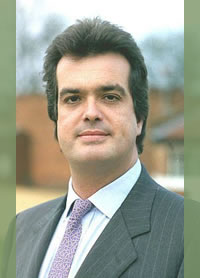
Torquhil Campbell, 13th Duke of Argyll – title created 1701. Additional titles: Marquess of Kintyre and Lorne, Viscount Lochow and Glenilla and Lord Morvern, Chief of Clan Campbell.

Family Pile: Inveraray Castle, Argyllshire.

History: The dukedom brings with it the the hereditary posts of Master of HM’s Household in Scotland and Keeper of the Great Seal of Scotland.

The family suffered serious scandal in the Sixties, when the divorce proceedings of the 11th duke unearthed a famous photograph of his soon-to-be former wife with a mysterious naked man. Also introduced to the court was a list of eighty-eight men the Duke believed had enjoyed his wife’s favours; the list is said to include two government ministers and three royals. The judge commented that the Duchess had indulged in “disgusting sexual activities”.

The present duke, when not working in the whisky trade, is captain of the Scottish elephant polo team.

Holdings: Family owns 60,000 acres of Scotland, valued at £12.5m in 2001.
Copyright byAlexander Liptak

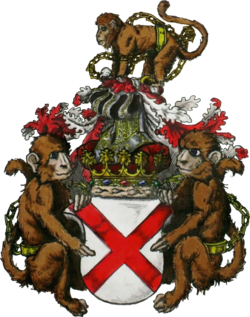
Maurice FitzGerald, 9th Duke of Leinster – title created 1766. Additional titles: Marquess of Kildare and Earl of Offaly. Family Pile: Formerly Carton House, Co. Kildare. Now a farmhouse in Oxfordshire.

History: The FitzGeralds assisted Edward I in his battles against the Scots. The family fortunes declined in the 20th century after the 7th Duke sold his interests in the family estates and was then declared bankrupt. His fourth wife, with whom he opened a teashop in Rye in 1965, was the caretaker of the block of flats in which he lived. Educated at Millfield, the present Duke is president of the Oxfordshire Dyslexia Association and is  the highest ranking member of the Peerage of Ireland.

Holdings: None of note – the Duke works as a landscape gardener.

Murray Beauclerk, 14th Duke of St Albans Age: 70. Title created: 1684. Other titles include Earl of Burford, and Baron Heddington. Family Pile: Seat: A terrace house in Knightsbridge, London.

History: The first Duke was the illegitimate son of Charles II and Nell Gwyn. Though the present Duke is a Tonbridge-educated chartered accountant, an eccentric strain still runs through family. His heir, the Earl of Burford, has long campaigned to prove his ancestor, Edward de Vere, 17th Earl of Oxford, was the true author of the works of Shakespeare. In 1999, the young Earl was forcibly expelled from the House of Lords for jumping on the Woolsack and accusing the Government of treason in its expulsion of hereditary peers.

Holdings: Never a great landowning family, the Beauclerks were said to own 4,000 acres, worth £12m, in 2001.

Arthur Wellesley, 8th Duke of Wellington – title created 1814. Additional titles: Prince of Waterloo, Duke of Vittoria and Earl of Mornington.
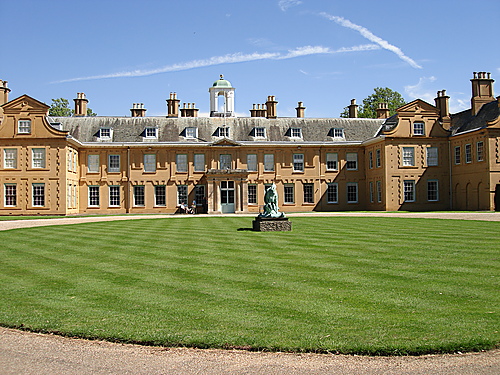
Family Pile: Stratfield Saye House, Hampshire

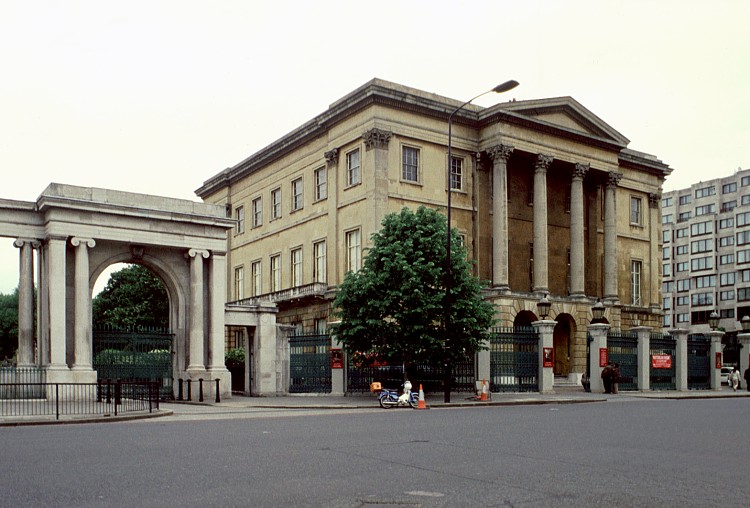
Second Family Pile: Apsley House, London.

History: Like the original Iron Duke, the present Duke had a long Army career, winning the Military Cross and reaching the rank of Brigadier. In later life, he has devoted himself to his estates and charities, coming top in Country Life’s ‘Good Duke Guide’ in 1991. The Duchess of Wellington died on November 1 of this year. His heir, the Marquess of Douro, is a former Tory MEP and his grandson. Arthur, Lord Mornington, is married to Jemma Kidd (Lady Mornington), the make-up artist, seen below.
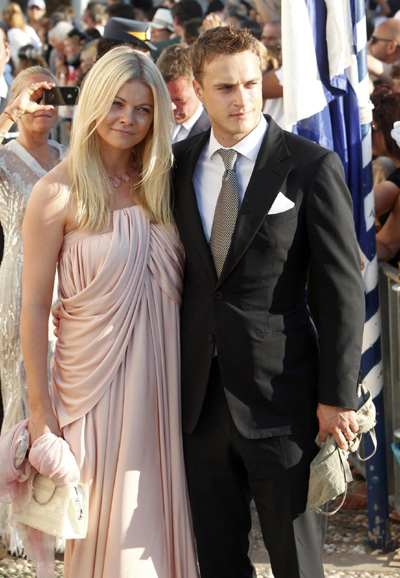
Holdings: 7,000-acre Hampshire estate, 20,000 acres of Belgium and Spain. Thought to be worth £50m in 2001. For all you want to know – and probably more – about the 1st Duke of Wellington, check the 40-something posts to be found under “Labels” in the left sidebar of this blog.
A Gathering of Graces – Part Two

Ralph Percy, 12th Duke of Northumberland – title created 1766. Additional titles include: Earl Percy, Earl of Beverley, Baron Warkworth.

Family Pile: Alnwick Castle, Northumberland.

Family Pile #2 – Syon Park, London


History: Part of the original Norman Conquest set, the Percy family have been dominant in their part of the country for centuries. The family pile, Alnwick Castle, has been featured in Blackadder and  stand in as the Hogwarts School in the Harry Potter films. The present Duke recently sold a Raphael painting to the nation for £22 million, a deal which attracted controversy because of the use of Lottery funds. But he’s also been buying treasures, as well. Or, rather, returning treasures to their proper homes. On the telephone during a recent Sotheby’s sale, the Duke of Northumberland acquired a piece of ancestral porcelain – a Meissen plate painted with a seated wolf surrounded by flowers, which finally sold for £36,000 against a pre-sale estimate of £15,000-20,000. This follows on from his acquisition of another plate from the service in Part I of the sale last November. Both of the rare Meissen plates are from the ‘Hanbury Williams/Duke of Northumberland’ service dated 1748-1750 which had been a gift from Augustus III, King of Poland and Elector of Saxony to Sir Charles Hanbury Williams in 1748, and probably passed to the then Earl of Northumberland in 1756. Today, all but a few pieces from the service remain on display at Alnwick Castle, and now these two items will be reunited with them.

The newly-refurbished Alnwick Garden has become a major tourist attraction and in 2009 the Duchess was  appointed the new Lord Lieutenant of Northumberland.

Holdings: With 132,000 acres, Syon Park in West London and a substantial art collection, he is valued at £300 million and ranked No. 178 on the latest Rich List.


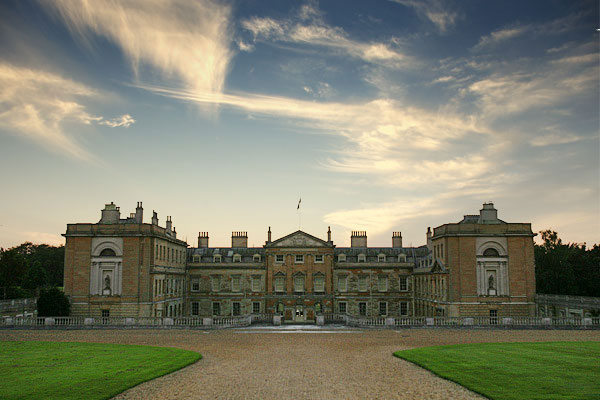
Andrew Russell, 15th Duke of Bedford – Additional titles: Marquess of Tavistock and Baron Howland.

Family Pile: Woburn Abbey, Bedfordshire

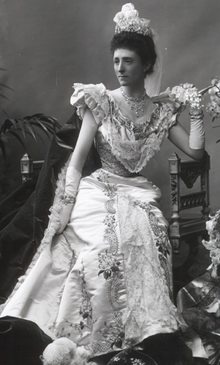
History: The first Duke fought on both sides in the Civil War and was ennobled after the Glorious Revolution of 1688. In 1552, the duke received Covent Garden and seven acres of land in London. The 14th duke  gave up most of his holdings in Bloomsbury to the University of London in 1953, but the present duke still has the power to raise the rents in Fizrovia and owns 23,000 acres of land and prime central London real estate. The family has made Woburn Abbey a major tourist attraction and the present duke is busy refurbishing much of the London estate.

For a look at the fascinating life of Mary, Duchess of Bedford, above, click here.

Holdings: Valued at £489million. Owns 23,000 acres and prime central London real estate.

Edward Fizalan-Howard, 18th Duke of Norfolk – date of creation 1483. Additional titles: Earl of Surrey and Baron Maltravers.

Family Pile: Arundel Castle, West Sussex.

History: As England’s senior duke, Norfolk carries the hereditary title of Earl Marshal. As such, he plays an important role in running state occasions. The family’s royal links stretch back centuries and theirs is the only Catholic dukedom. The present Duke’s wife, Georgina, stands in for the Queen at rehearsals of the State Opening of Parliament. The new formal garden at Arundel was conceived ain 2008 as a light-hearted tribute to Thomas Howard, 14th Earl of Arundel (1585-1646), known as ‘The Collector,’ who died in exile in Padua during the English Civil War. Lord Arundel was the first of the great English art collectors, whose antique marbles are now at Oxford, and the library at the Royal Society; but the magnificent Van Dyck and Mytens portraits and some other objects commissioned or collected by him form the basis of the collection now at Arundel Castle, while his retrieval of lost family estates, titles and honours after the disasters of his ancestors’ executions and attainders in the previous century were instrumental in the revival of the Norfolk family.  The present Duke’s eldest son and heir, Henry, the Earl of Arundel, 22, is a promising Formula Three driver. You can watch a 1937 Pathe film of the previous Duke and Duchess of Norfolk returning to Arundel after their honeymoon here.

Holdings: Half his 30,000 acres are in leafy West Sussex, while the family also owns a ten-acre parcel of Lon
don valued at £100 million in 2001.

Part Three Coming Soon!

A Gathering of Graces – Part One

The Dukes: (from left to right) 1. James Graham, 8th Duke of Montrose; 2. David Manners, 11th Duke of Rutland; 3. John Seymour, 19th Duke of Somerset; 4. Ralph Percy, 12th Duke of Northumberland; 5. Andrew Russell, 15th Duke of Bedford; 6. Edward Fizalan-Howard, 18th Duke of Norfolk; 7. Torquhil Campbell, 18th Duke of Argyll; 8. Maurice FitzGerald, 9th Duke of Leinster; 9. Murray Beauclerk, 14th Duke of St Albans; 10. Arthur Wellesey, 8th Duke of Wellington.

In celebration of its 300th birthday last year, Tatler magazine rounded up some of the UK’s twenty-four surviving Dukes to a lunch in St. James’s, and ten accepted the invitation. Some of the remaining twenty-four Graces were either living abroad or too frail to make the journey. The group who attended was still the largest gathering of dukes since the Coronation of 1953 and until 1975 a quarter of the dukes were all related to each other, through either bloodlines or marriage. They are apparently still thick as thieves – the water served at the luncheon was bottled at the Duke of Marlborough’s estate, Blenheim.

Here is an introduction to those ducal guests and a bit on their family history.

James Graham, 8th Duke of Montrose – date of creation 1707. Other titles include Viscount Dundaff and Lord Aberuthven, Mugdock and Fintrie. The current Duke is also Chief of the Graham clan.

Family Pile: Auchmar, near Loch Lomond.

A look at an 1871 issue of The Academy is enough to sum up the family’s historical importance. It reads in part – Mr. Frascr reports on the highly important muniments belonging to the Duke of Montrose. They include charters from King William the Lion, and subsequent Scottish sovereigns to successive representatives of the family of Graham. The papers relating to the first Marquis of Montrose embrace the correspondence with him of Charles I. and II., Queen Henrietta Maria, Elizabeth Queen of Bohemia, James Duke of York, Prince Rupert, Prince William of Orange, and others. The letters of Charles I., which are nearly all holograph, were written from various places during the Civil War, and show the great difficulties in which the king often found himself. The correspondence of his sister, Elizabeth of Bohemia, is marked by her characteristic wit and vivacity. The papers connected with the trial of Montrose and his companions, the depositions of witnesses concerning his invasion of Scotland, and the battle of Tippermuir in Perthshire; the petitions of the Ecclesiastical Courts for the execution of his imprisoned adherents; the acts and proceedings of the Privy Council and the Committee of Estates to enforce subscription to the Covenant, all throw strong light on the condition of Scotland in those stormy times. There is also an extensive correspondence of the first Duke of Montrose, who was greatly instrumental in accomplishing the Union between Scotland and England. In addition to the Montrose Papers proper, the present duke possesses the Lennox and the Menteith collections, which are scarcely of less historical importance.

Holdings – 8,800 acres valued at around £1 million in 2001.

.

David Manners, 11th Duke of Rutland – date of creation 1703. Additional titles: Marquess of Granby and Baron Roos of Belvoir.

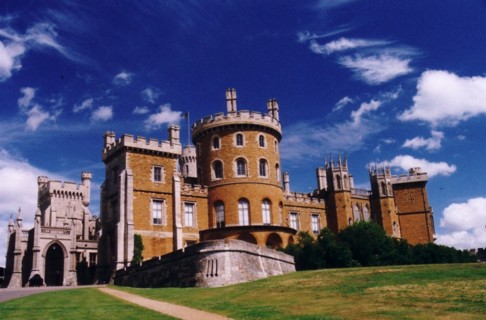
Family pile: Belvoir Castle, Leicestershire

History: While the main seat, Belvoir, is a magnificent 365-room pile with an underground railway and £100 million of art, the family also owns Haddon Hall in Derbyshire, widely recognised as one of Britain’s finest medieval and Tudor manor houses. A previous Marquess of Granby (later the third duke) was a popular soldier and helped many of his men with their retirement, hence the number of pubs called the Marquess of Granby. The present castle is the third incarnation of the property. In 1799 the Fifth Duke of Rutland, then aged 21, married 20 year old Elizabeth Howard from Castle Howard in Yorkshire. She said that she would prefer to have a more traditional castle with towers, turrets and battlements, and so in the following thirty years the previous castle was rebuilt to the very fine Gothic Revival Castle that stands there today, complete with a great deal of fine Regency furniture, and a fabulous collection of fine art.

The Humours of Belvoir Castle — or the Morning After”, a March 1st 1799 English caricature depicting the  debauchery that took place to celebrate the 5th Duke’s 21st birthday appears above. Blackwood’s Magazine ran the following piece which tells at that Beau Brumnmell attended – “At Belvoir he was (like one of the family) and at Chevelcy, another seat of the Duke of Rutland’s, his rooms were as sacred as the Duke of York’s, who was a frequent visitor there. On the Duke of Rutland’s coming of age, in 1799, great rejoicings took place at Belvoir, and Brummell was one of the distinguished party there, among whom were the Prince of Wales, the late Duke of Argyll, the Marquis of Lorn, and the other chief fashionable people of the day.” At another time, Brummell, who w
as then in the army, was more than an hour late for a military review. When at last he did arrive, he was dressed not in military dress, but rather in the colors of the Belvoir Hunt. He apologized profusely for any inconvenience caused and explained that he’d been thrown by his horse and had lain, senseless, on the ground for well above an hour. No one was fooled as to where the Beau had been – riding with the Duke of Rutland – but the general in charge of the review was somewhat mollified about this indiscretion when Brummell invited him to Belvoir Castle for dinner that evening. If you’d like to don your pinks and join the duke’s Belvoir Hunt, click here.

Holdings: Ranked 474th in the latest Rich List, he is valued at £115 million. Estates across Leicestershire (12,000 acres), Derbyshire (10,000 acres), Cambridgeshire (4,000 acres) and Lincolnshire (2,000 acres).


John Seymour, 19th Duke of Somerset – date of creation 1547. The family pile is located in Maiden Bradley, Somerset, but is being rented out at £50,000 a year. The Duke runs the estate from a smaller house in Devon.

History: He is a descendant of Jane Seymour, Henry VIII’s third wife. The first Duke of Somerset, Edward Seymour, was Jane’s brother. The family owns the fourposter oak bed in which Edward VI is said to have been conceived. To read about the life – and execution – of the first duke, click here.

Holdings: Around 5,000 acres of Somerset, including several villages.

Part Two Coming Soon!

Leading Up to Jane Austen's Birthday…

Jane Austen’s 235th Birthday Celebration at JASNA GCR

Victoria here. On Saturday, December 4, 2010, a packed house of Jane Austen aficionados met at Chicago’s Fortnightly to celebrate her birth on December 16, 1775.

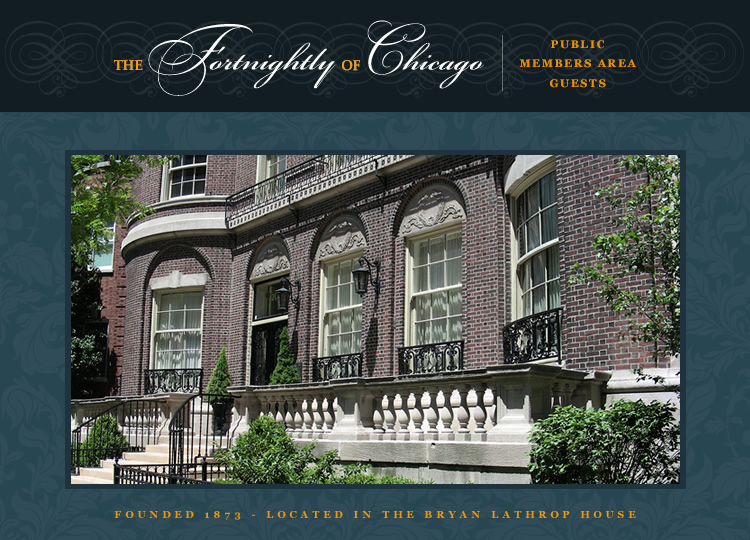
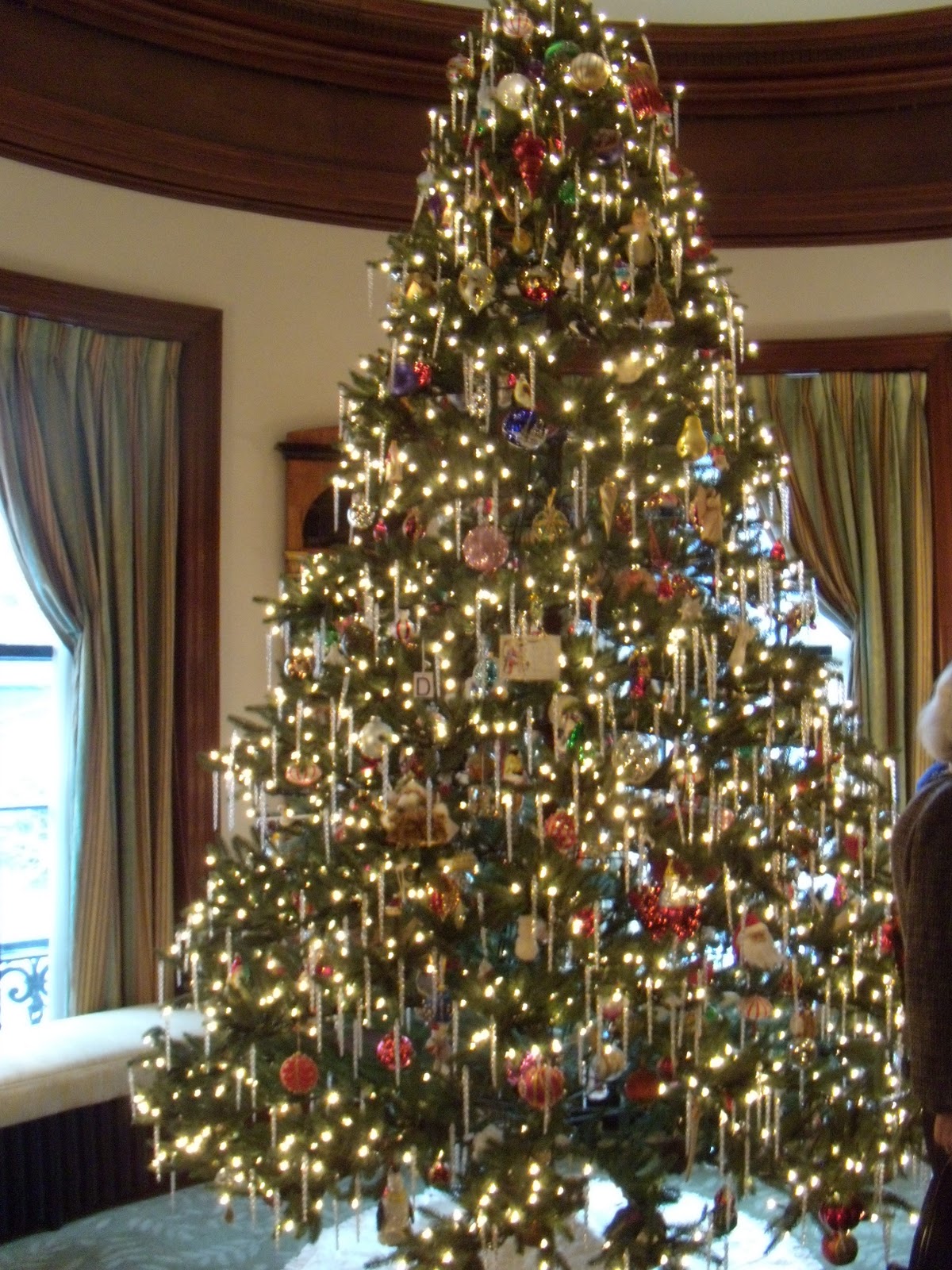
The Fortnightly, a woman’s club founded in 1873, was decorated for the holidays in a splendid array of tasteful sparkle.


Jane Hunt

The eager celebrants enjoyed a program begun by JASNA CGR Area coordinator Jeffrey Nigro of the Chicago Art Institute and Elisabeth Lenckos, of the University of Chicago. Jane Hunt, a member of the club and the JA society gave us a brief history of the organization, on E. Bellevue Place in the historic landmark Bryan Lathrop House in downtown Chicago.


Cathy Feldman introduced the afternoon’s speaker, Michaelangelo Allocca, also of the University of Chicago, who discussed: Are you Sure They Are All Horrid? Austen’s Degrees of Disagreeability.”

Mr. Allocca cited a number of uses of the word HORRID in Northanger Abbey, having at least three distinct definitions. When speaking of the gothic novels to which they were addicted, Catherine and Isabella use HORRID to mean wonderful, full of horror, awesome and meeting all their expectations. Later in the novel HORRID is used to mean bad in the sense of naughty or ungentlemanly behavior, and thirdly, to mean morally reprehensible and blameworthy.

Karla Benton, William Phillips

Mr. Allocca, later joined by questioners from the audience, then dissected various unsavory characters in Austen’s Sense & Sensibility, Pride & Prejudice, and Northanger Abbey, defining to which version of HORRID each one belongs. It was a lively and entertaining talk.

Little did we know what richness still awaited us, as we passed through the tea buffet with its delicious finger food – both savory and sweet. I was a particularly fan of the chicken salad with cranberries, something I doubt that Jane Austen ever tasted. And as for the chocolate dipped strawberries, not even Mrs. Elton could have surpassed the luscious fruits.

Now I await a second birthday celebration on December 11m at the North Hills Country Club when JASNA-WI has a luncheon in honor of our beloved author. Aren’t I lucky to belong to TWO JASNA chapters????

A Hunting We Will Go

Modern day controversy aside, there’s still no more iconic image of the English Gentleman than those like the one shown above – dressed in “pinks” and ready to join the fox hunt or to go riding to hounds. The Duke of Wellington did it, though he wore a light blue jacket, and the present Duke of Rutland is known for his Belvoir Hunt. But what, in this day and age, is the actual cost of kitting oneself out for the hunt?

 Plain cream silk stock – £35.00

Frock style hungting coat  £430.00

Bespoke moleskin breeches £165.00

Bespoke hunting cap £275.00

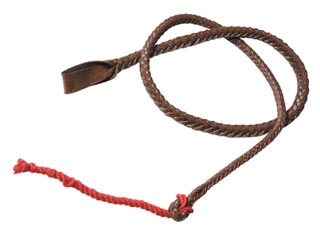
Hunting whip £45.00

Silver hunting horn £698.00      

Hunting boots approximately £450.00

               Saddle approximately £1,000.00


A decent mount approximately £5,000.00


Total approximate cost – £8,098.00
Or $12,944.37, excluding shirt, gloves, socks, bridle, spurs, hounds, rifle or flask