London – Day 2

Unlike Mr. White (see post below) Greg and I haven’t yet run into any shady characters, though we’ve been covering alot of ground. We did the bus tour again today, Blue Route this time, walked Regent Street, went to Liberty’s (thought of you, Vicky!) took a boat cruise on the River Thames then went to Ye Olde Cheshire Cheese in Fleet Street for dinner. It was closed until the 29th – and the cab had left. Fleet Street after business hours is desolate, to say the least. What to do? Well, I thought, I’ll just carry on as if I know what the Hell I’m doing. “This way,” I told Greg as I walked purposefully towards the Strand. Please God, I prayed, let there be somewhere’s nice to eat. We passed The George pub – very old, very atmospheric, very closed. Xmas and the Bank Holiday are playing havoc with opening times. Right then, I told myself, keep marching. We fell upon Somerset House and went inside to watch the ice skaters. Then we walked another three blocks up the Strand when, off on the far right corner I saw something promising – lights were on, people were inside and it looked like a pub. It was a pub . . . The Duke of Wellington in Wellington Street. NO, I’m not kidding . . . saved by the Duke. Again. We had a pint in the bar and then went upstairs to the dining room, where we had a fantastic meal (lamb shank pie for me, steak for Greg) and warmed ourselves by the gas fire. The Duke of Wellington – I ask you, what were the odds!? Then we went off on the Ripper Walk and back to the hotel for Part 2 of Upstairs, Downstairs – yes, it’s still delicious.

Watching the news afterwards, we saw that the NY/NJ metro airports have cancelled flights due to snow and now resemble Heathrow. Thank God we timed our flight just right, another day we might have been grounded. Of course, if it snows here now and we can’t get out of Heathrow, I could care less. Yippeee says I. In the meantime, we have Eaton Place, the Tower, Madame Tussaud’s, National Portrait Gallery, Cecil Court and who knows what else in store. Will keep posting . . . . . . Needless to say, having a wonderful time, wish you all were here.

A Lesson for American Tourists in London

The following account was taken from Letters on England, written by Joshua E. White (1816). The book contains a series of descriptive views of the areas he visited and his general observations. White was an American merchant who traveled to England in connection with business and left Savannah, Georgia bound for Liverpool in May of 1810. Eventually, Mr. White arrived in London, as do most visitors to England. Here is his account of his run-in with a disreputable hackney-coachman. And two prostitutes. And the law.

At Chiswick, on the bank of the Thames, I sometimes sought an asylum from the noise and confusion of London. My letters introduced me to the acquaintance of Mrs. Levett, (who resided here,) the young and beautiful widow of a gentleman who died in Georgia, in 1808. He had left his widow and two infant daughters in London; and after the melancholy tidings reached her, she sought a retreat with her respectable mother, Mrs. Wright, and her amiable sister, Miss Charlotte Wright, at the little village just mentioned. In this charming company I embraced every opportunity of spending a few hours. When tired of the noise of the city, I would visit this agreeable family, and I always met with a cordial and a kind reception. It will be for a long time to me a source of pleasure to reflect on the means which introduced me to the acquaintance of those females; and no period of my stay in England will be remembered with more fond delight than those hours I spent at Chiswick.

I cannot avoid noting an occurrence that took place after I had passed the day at Chiswick. Miss Wright had accompanied me with one of the little daughters of Mrs. Levett, up Chiswick lane into the main road from Windsor to London. Here I intended to take the first empty hackney coach I saw; but being engaged in conversation I permitted them to pass one after another, until night came, and I found myself on the high road, eight miles from my lodgings. It was very dark, but I did not apprehend any danger; for in my various walks through the city at almost all hours of the night, I was in no instance molested or insulted. I felt as much security as if I were in the midst of a hamlet. I walked on slowly, and having reached Leicester square a sudden and violent shower compelled me to increase my speed, and having reached the Strand, I saw a hackney-coach. I made a momentary stop, when I was addressed by a voice from within it, “do you want a coach?” I replied “yes;” and a man jumped from behind it, opened the door, and I took my seat.

There were two women and a young man seated in it. The former I very soon discovered to be common prostitutes, who were going to the Hay Market Theatre, and were desirous I should accompany them. I bade the coachman drive to my lodging in Aldersgate street, after he had put them down. They alighted at the Theatre, and I proceeded to the inn. Having arrived within a hundred yards of it, the coach was obliged to stop from having met with another, and there was no room to pass. I got out and proposed walking home.

Upon tendering the legal fare to the coachman, which was two shillings, he refused it, and demanded four shillings. This I positively objected to give him; and upon expostulating on the unreasonableness of his demand, he told me I “must pay for the ladies who were in the coach,” and observed one of them told him
“the gentleman in the coach will pay for us.” Irritated at this remark, and believing he intended a fraud, I determined to reject the fellow’s demand; and after again offering to pay the fare for myself, I was about to proceed on, when he stopped me. I raised my cane to strike him, but at that moment I recollected that personal revenge in this way would be immediately cognizable by the law, and prudence bade me forbear.

The noise had collected the people from the neighbourhood, and among them the constable of the ward; demanding the cause of the noise, I told him; and he advised me to make the coachman drive me to the inn door, or otherwise he would say I intended to leave him without paying his fare; when there he directed me to take the number of his coach. This advice I followed, and I related to the master of the inn the whole of the circumstances, and what I deemed an imposition. He pushed the coachman from the door, and advised me not to pay him any thing. Believing him entitled by law to two shillings, I paid him that sum.

This adventure was of service to me: first, it reminded me that I had no right to get into a coach that was previously occupied: secondly, by remaining in the coach after the other passengers were discharged, I. became liable for the whole amount of the fare: thirdly, it convinced me that the police of London is as well regulated as any city perhaps can be, which has within its limits nearly a million of people. Personal injuries dare not be inflicted with impunity; and unlike what was the state of the people in France before the late revolution, individual rights, so far at least as they regard exemption from violence and assault, are most carefully preserved and protected.

Upstairs, Downstairs a Triumph

Well, they’ve done it. They’ve brought back the beloved BBC series and managed to achieve just the right measure of nostalgia and new, delicious storylines that run both upstairs and down. I won’t give away any good bits nor run spoilers for those in the U.S. who won’t see the series until April. I must tell you, however, that Rose’s return to 165 Eaton Place is a tear-jerker thanks in parts to strains of the old theme song being played at appropriately poignant moments, whilst new grand dame Dame Eileen Atkins as Maud, Lady Holland, above, provides sly comedic overtones and spars deliciously with her daughter-in-law, Lady Agnes. UK reviewers are saying there’s too much comedy in this version, that it’s not as deep as the original, but really, they could never remake the original to anyone’s satisfaction, so why try? It’s every bit as good, IMHO, its got me hooked and how much soul searching/character development can you do in three episodes? You can read an article from the Telegraph about the new series here – it includes no spoilers. In short, the new Upstairs, Downstairs is, um, delicious and the only problem I can foresee is how they’re going to wrap everything up in three episodes. No doubt the downside to this new version is that it will leave us all wanting more. I’ve only to wait till tomorrow night for Espisode 2 and shall dutifully report on it here.

Did anyone else in the UK watch Upstairs, Downstairs tonight? Please leave your comments and let me know what you thought of it.

Heaven, I'm In Heaven . . .

We made it, we’re in London! Woo Hoo! No problems with the flight, arrived at our hotel around 11:30 a.m. and the room was ready. Unpacked and went to Victoria Station to get some money from the ATM, then on board the Hop On, Hop Off tour bus for a whirlwind trip round London. We crossed the Thames four times!? Wow, was Oxford Circus and Regent Street packed with people. Hamley’s was jammed. Harrod’s closed today – jinormous sale starts tomorrow. You can bet we won’t be there. We plan to do the alternate bus tour tomorrow, then the river cruise, then the Tower, then dinner at Ye Olde Cheshire Cheese, then the Ripper Walk with Donald Rumbleow. It’s cold here, but no worse than New Jersey.

Had dinner in the carvery here in the hotel – roast beef, Yorkshire pudd, gravy, veg and dessert – straight down the road to Gouts-ville, but who cares? Met a wonderful couple at the next table, got to talking about how I love UK telly, they love US telly, neither of us can access the other and so we’ve made a Devil’s Bargain to email each other links to our favorite shows. We’ll get around these restrictions or die trying. Speaking of which, Upstairs, Downstairs debuts here tonight, Antiques Roadshow is also on and they told me how to access the Royle Family Xmas special here (BBC Iplay, which you can’t access from the States, hence the Devils’ Pact). After dinner, Greg and I walked down the street to Buckingham Palace to see it lit up at night yes, Vicky, I did yell “Chuck!” even though I know he’s not there. One day . . .

There are gobs of William and Kate tat in the stores here already (yipppeee!) and I’m on the verge of tears every time I see a pub or currency exchange bureau. I know, crazy. Oh, btw, we were on the bus tour and I was telling Greg (or so I thought) about the In and Out Club in Piccadilly and the tour guide overheard me and asked, “How do you know about the In and Out Club/Melbourne House?” and so he turned off his mike and we started talking about the Melbournes and Palmerstons, about Artie’s having been at England’s first railroad fatality, about the Marble Arch, Lady Caro Lamb, etc etc etc . . . . . God, it’s good to be home. As you can see, the laptop is functioning fine, so I’ll be posting more about our trip tomorrow. Off to shower and watch Upstairs, Downstairs. I know I shouldn’t rub it in, but I promise to tell you all tomorrow. I can’t wait to see Rose . . . .

Basildon Park Rebirths

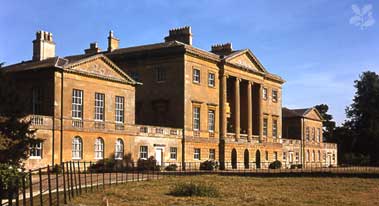
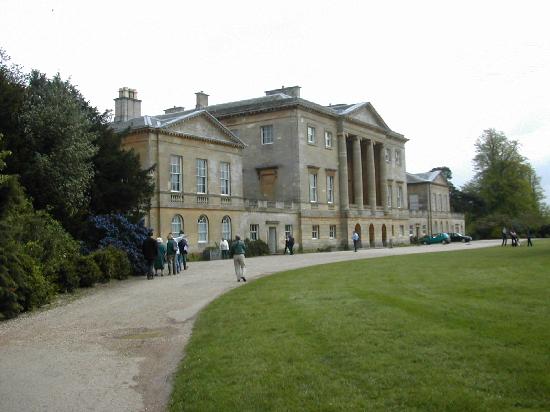
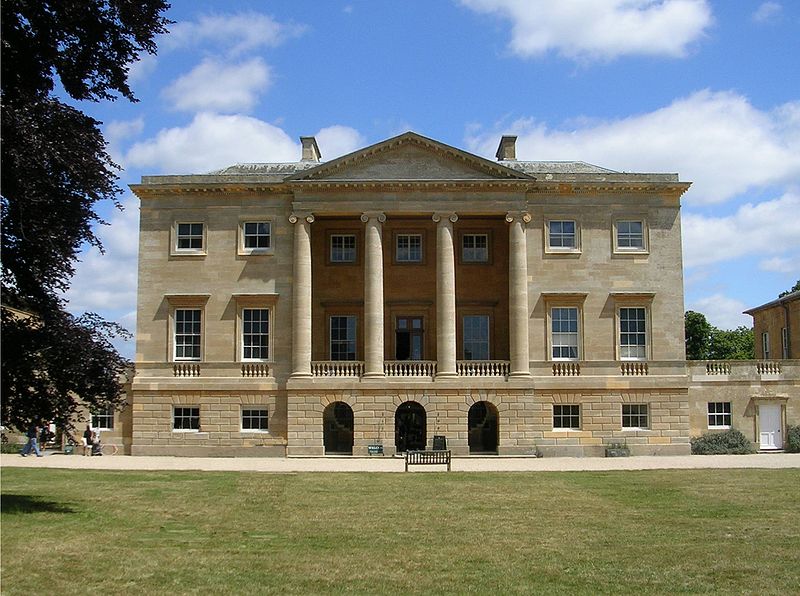
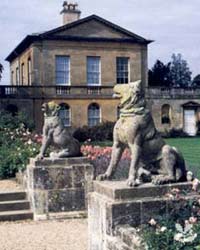
Basildon Park is in Berkshire overlooking the lovely Thames Valley, built in the 1770’s in the strict Palladian style by architect John Carr of York.

Basildon Park was abandoned about 1910 and stripped of its furnishings even including flooring, fireplace surrounds and woodwork. It was used to house troops or prisoners in both world wars. Some rooms were removed and reconstructed in the Waldorf Astoria Hotel in New York City (ballroom, below).

Basildon Park stood mostly empty and deteriorating until 1952 when Lord and Lady Iliffe, a newspaper tycoon and his wife, rescued the house. Lady Iliffe writes, “To say it was derelict is hardly good enough: no window was left intact, and most were repaired with cardboard or plywood; there was a large puddle on the Library floor, coming from the bedroom above, where a fire had just been stopped in time; walls were covered with signatures and graffiti from various occupants….It was appallingly cold and damp. And yet, there was still an atmosphere of former elegance, and a feeling of great solidity. Carr’s house was still there, damaged but basically unchanged.”

Views of the outside show the Bath stone construction. The Palladian window in the Garden Front  is in the Octagon Room.

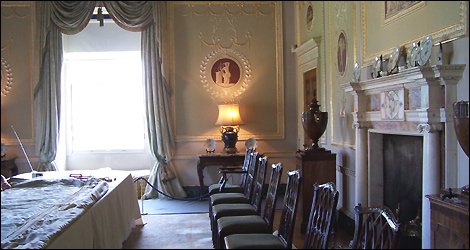
The Iliffes were fortunate enough to find genuine Carr fireplaces and woodwork removed from other houses, mostly in Yorkshire. Carr employed meticulous craftsmen and used standard measurements so that the pieces were virtually interchangeable.

Again, Lady Iliffe: “Carr was such a precise architect that his mahogany doors from Panton (in Lincolnshire) fitted exactly in the sockets of the missing Basildon ones.” Thus Basildon is both authentic and a recreation in one.

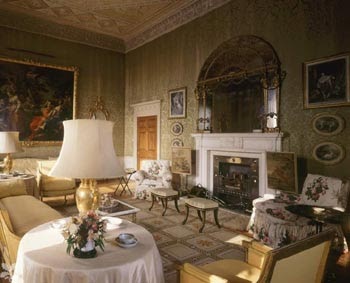
Lady Iliffe collaborated with leading designers of the English Country House style of decorating to fit out the house with a combination of antiques and

contemporary pieces, including the inevitable floral chintzes that simply drip with that country house charm. Right, the Octagon Room interior.

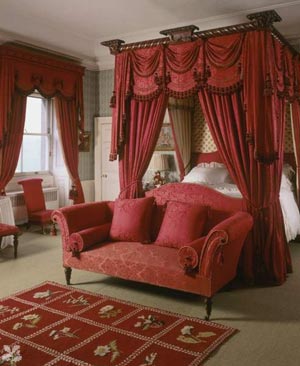
Upstairs the generously sized rooms were adapted to alternating bedrooms and huge bathrooms. It is a bit of a shock to see one of the perfectly proportioned rooms with its decorative plaster ceiling and elaborate woodwork and marble fireplace decked out with nothing more than the finest 1950’s plumbing fixtures.

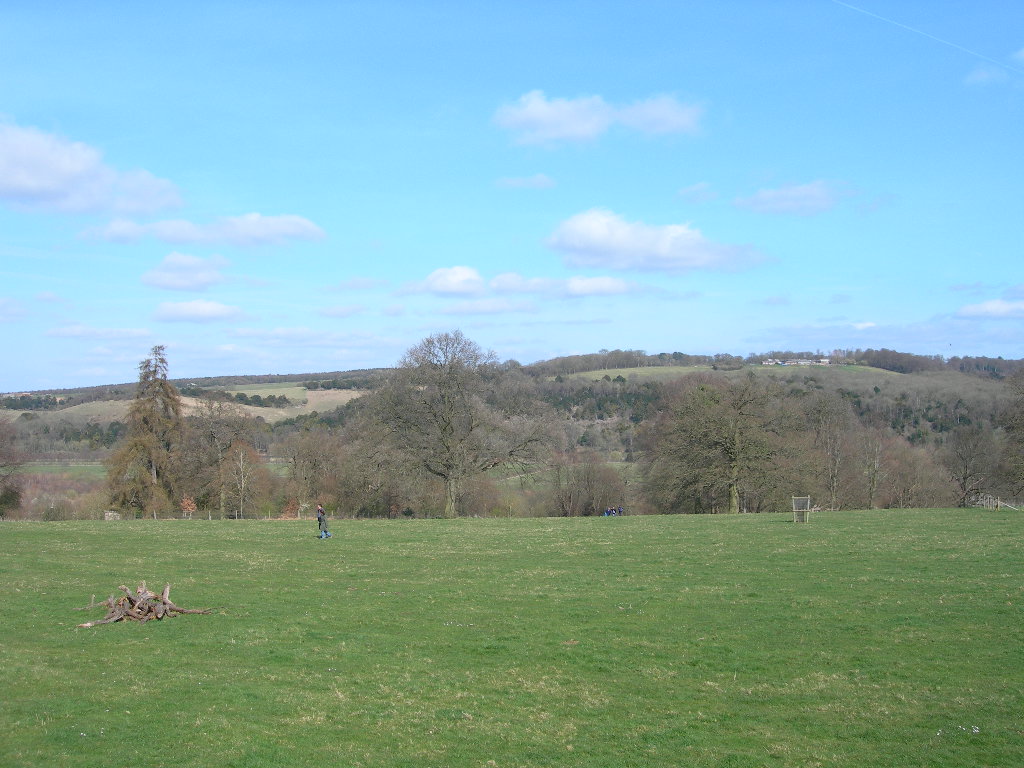
Basildon Park was built between 1776 and 1782 by Sir Francis Sykes, created a baronet in 1781. His roots were in Yorkshire and he chose Carr of York to build his house, a classical Palladian villa with a main block of rooms joined to pavilions on either side. The Sykes fortune was made during his service in India. Right is the view of the countryside.

In 1838, the Sykes family sold the house to James Morrison (d. 1857), a Liberal MP who had turned his London haberdashery business into an international concern. By the way, when he was a shopman at Todd and Co., he married his employer’s daughter, and eventually took over the firm. Morrison engaged architect John Papworth to design handkerchiefs for his company and later to remodel Basildon. Morrison had acquired a fine collection of paintings and was one of the founding fathers of the National Gallery in London. Papworth worked at Basildon from 1837 to 1842, making some changes to the Octagon Room and other interior designs, all in keeping with the original spirit of Carr’s house. Morrison’s daughter Miss
Ellen Morrison was the last resident before Basildon Park fell into disuse.

Basildon Park was used to house soldiers during World War II, as were many country houses, and certainly suffered occasional, if not constant, abuse.
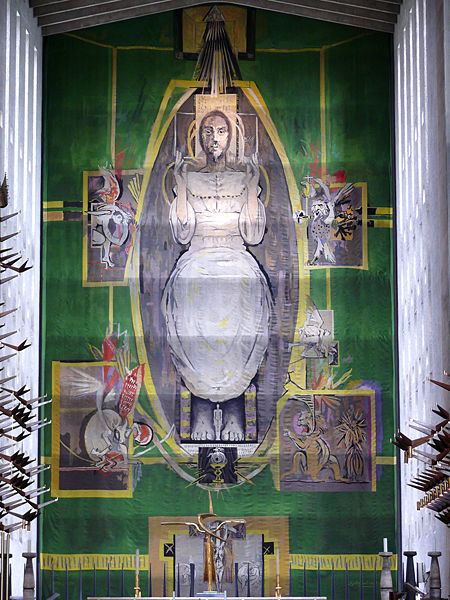
The Iliffes were collectors of the work of the distinguished English artist Graham Sutherland, whose gigantic tapestry adorns the modernist reconstruction of the Coventry Cathedral. (The 14th century cathedral was destroyed in 1940 by German bombs; a modern cathedral was built and filled

with works of contemporary art.) A number of Sutherland’s paintings and many studies for the tapestry he designed hang at Basildon. The Iliffe family  presented the house to the National Trust in 1978.

Basildon Park has often served as a set for costume dramas for the BBC and other producers. Here is a scene from the 2005 Pride and Prejudice, where Basildon enacted the role of Netherfield Park.
This picture shows how carefully designed temporary baseboards can hide 21th century electrical outlets or cable connections.

To Basildon Park in Berkshire now in the capable hands of the National Trust, we wish as many more rebirths as necessary to keep out the damp and bring in the tourists.