The Brothers Moore

You may recall that we were first introduced to the Moore brothers in a post called Early Rumblings of a Regency that ran on March 7.

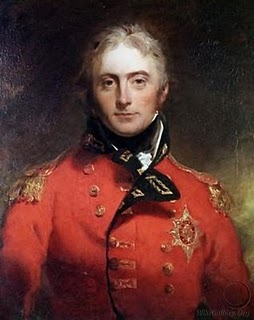
General Sir John Moore
(1761-1809)
After reading the pithy letters of General Sir John Moore and his brother, Captain Graham Moore, I was prompted to do more research into the lives of these men and, perhaps unsurprisingly, things were once again brought round to the Duke of Wellington, to whom all roads seem to inevitably lead.
Commissioned at the age of 15, Sir John Moore served in the American War of Independence and within eight years was a member of parliament. In 1794 he was involved with the British backing of Paoli’s conquest of Corsica and then served in West Indies. He became a major general in 1798 and took part in operations in Holland and Egypt, where he was a leading player in defeating the French at the second battle of Aboukir.
Perhaps his most important military role came when he assumed command of the British forces in the Iberian peninsula following the recall of Harry Burrard of Lymington, Hew Dalrymple and Arthur Wellesley, who were all at that time facing an inquiry over the Convention of Cintra on the French troops’ evacuation from Portugal.
Wellington returned to London and met with Castlereagh, informing him both as to the feelings of Sir John Moore and the estimation in which that officer was held by the army in Portugal. The following letter from Wellington to Sir John sufficiently explains the result of the interview:—
To Lieut.-General Sir John Moore, E.B.
 London, 8th Oct., 1808.
 My Dear General,
” I arrived in London on Thursday, and I yesterday took an opportunity of mentioning to Lord Castlereagh what I told you I should, notwithstanding that I found, upon my arrival in England, that the object I had in view in conversing with you upon this subject at all had been accomplished by your appointment to command the army. I told Lord Castlereagh that you thought that Government had not treated you well, and that you had considered it incumbent upon you to express your sentiments upon that treatment; but that after you had done so, you had thought no more of the matter, and that it would be found that you would serve as cordially and as zealously in any situation in which you might be employed as if nothing of the kind had ever passed.
” Lord Castlereagh said that he had never entertained any doubt upon this subject; and that after he had communicated to you the sentiments of the King’s Government upon what had passed, his only wish respecting you had been to employ you in the manner in which you were most likely to be useful to the country.
” I find that by the distribution I am placed under your command, than which nothing can be more satisfactory to me. I will go to Coruna immediately, where I hope to find you.
” You’ll have seen by the newspapers that the late transactions in Portugal have made a stronger sensation here than it was imagined they would, and I have had what I think more than my share of the blame. I suppose that there must be an inquiry into the transactions; and till that takes place, I shall leave the public to find out the truth in the best way they can, and shall not adopt any illegitimate mode of setting them right. In the mean time the abuse of the news-writers of London will not deprive me of my temper or my spirits, or of the zeal with which I will forward every wish of yours.
Ever, etc.,
Arthur Wellesley
” Since writing the above I find that it will be necessary that I should wait in England till Sir Hugh Dalrymple will return, and it will be known at what time the inquiry will be made into the late transactions in Portugal on which I am to be examined. I will join you, however, the moment I am set at liberty, for which I long most anxiously.  I send a duplicate of this letter to Coruna.”

Wellington’s hoped for reunion with Moore was not to be. Sir Arthur departed for Ireland, where, indifferent to the wrong which was done him by the English people, he resumed the course of his civil duties. There he remained till the beginning of November, when the assembling at Chelsea Hospital of the Court to inquire into the circumstances of the late campaign, and of the convention in which it resulted, recalled him to London. In common with Sir Hugh Dalrymple and Sir Harry Burrard, he appeared before the Court, where each gave his own statement, and supported it by his own line of argument. There is no reason now to conceal or disguise the fact, that the conclusions at which the Court arrived were all pretty well arranged beforehand. Sir Arthur, still treating with the utmost possible delicacy officers who were not by any means so delicate towards him, proved his own case. The Court listened with partial ears to the statements of Sir Hugh and Sir Harry; and the final issue was a declaration, that nobody was to blame; that all which could have been reasonably expected under the circumstances, had been done, so that further proceedings in the case were not necessary. Absurd as the decision was, Sir Arthur made no protest against it; but returned to Ireland and busied himself as before in such affairs as came usually under the cognizance of chief secretaries.
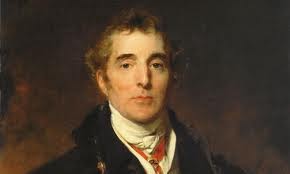
Time passed, and early in January, 1809, Parliament met. One of the first acts of both Houses was to pass a vote of thanks to Sir Arthur Wellesley and the army which had served under him; a measure which pleased him, not alone because his own good name was thereby vindicated, but because the impediments were removed which had heretofore stood between his friend General Spencer and the honours for which he had recommended him.
It was natural enough that the British Government should make Spain, rather than Portugal, the first object of their care. Spain was the larger and more populous country of the two, and it had been impressed upon their minds by Sir John Moore, and indeed by all whom they had heret
ofore consulted, that to defend Portugal after Spain should have been overrun was impossible. Lord Castlereagh therefore proposed to the Junta of Seville, which had by this time assumed the functions of Supreme Government, that Cadiz should become the base of operations for a British army; and then, and not till then, he bethought him of consulting Sir Arthur Wellesley. On the 7th of March he received in reply a memorandum, which not only answered every question proposed, but took a view of the case so masterly and comprehensive as to leave no single point connected with it untouched.
Sir Arthur begins that remarkable paper in these words – ” I have always been of opinion that Portugal might be defended, whatever might have been the result of the contest in Spain, and that in the mean time the measures adopted for the defence of Portugal would lie highly useful to the Spaniards in their contest with the French.” He then goes on to justify this assertion, and to explain that in Portugal, with its feeble Government and docile population, a native army could be officered by Englishmen, which being intermixed with English troops, would soon be rendered capable of facing the best of the Continental armies. It was thus that at every new stage in his career the Great Duke was accustomed to turn to account the experience which the past had given him.
Wellington described Napoleon’s political system as one of terror, which must crumble to pieces if once effectually checked; and he expressed a belief that in Portugal, if wisely dealt with, the first decided check would be given to that system. Sir Arthur’s minute was read in Cabinet, and produced a strong effect, and the refusal of the Spaniards to receive a British garrison into Cadiz arriving not long afterwards, Sir Arthur’s views were unanimously adopted. There remained then but one course for the Government to follow. Sir Arthur was requested to assume the command of the army, which it was determined to employ in the Peninsula, and he did so without a moment’s hesitation.
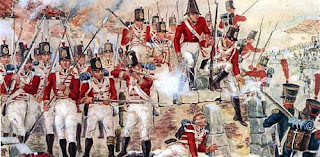
When Napoleon arrived in Spain with 200,000 men, Moore drew the French northwards while retreating to his embarkation ports of A Coruña and Vigo. Moore established a defensive position on hills outside the town, while being guarded by the 15th Hussars, and was fatally wounded at the Battle of Corunna, being “struck in his left breast and shoulder by a cannon shot, which broke his ribs, his arm, lacerated his shoulder and the whole of his left side and lungs.” He remained conscious, and composed, throughout the several hours of his dying, amongst his final words being “Remember me to your sister, Stanhope,” referring to his friend, the intrepid Near East Asia traveler Lady Hester Stanhope, to whom it was rumoured he hoped to be wed. Moore lived long enough to learn of his victory. He said to his old friend Colonel Anderson “You know I always wished to die this way.”  His last words were “I hope the people of England will be satisfied! I hope my country will do me justice!” He was buried wrapped in a military cloak in the ramparts of the town.
Moore’s military tactics were so brilliant that Moore’s French rival, Marshall Soult, erected a memorial in his honour at Corunna. The Duke of Wellington declared that his victory at Waterloo would have been impossible without his predecessor, who had ensured the survival of a credible British fighting force. Moore’s memory was honoured by Charles Wolfe’s poem, The Burial of Sir John Moore after Corunna, which ensured that generations of schoolchildren would learn of his heroism.
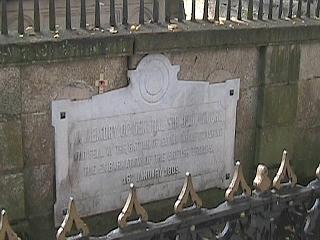
The commemorative plaque on Moore’s stone tomb in the
Jardin de San Carlos, in the old town of A Coruna

Moore had died on  16th January 1809 and Wellington did not reach Lisbon until April 1809, only to find that the French had again pressed south into Portugal, against dwindling Portuguese and Spanish opposition, and captured Oporto. Whilst he and Moore had not met again, Wellington did not forget his fallen commrade in arms, as the following letter shows.
To F. Moore, Esq.
Vera, 24th October, 1813.
Sir,
‘I have received your letter of the 30th September, and you do me justice in believing that I feel every inclination to forward, as far as may be in my power, the views of your son * in the service, on account of his late uncle, and, what perhaps may be more satisfactory to you, on account of his own merits.
‘He is now attached to the staff of Sir J. Hope, but as soon as he is sufficiently high in rank to be employed on the General Staff of the army, you may depend on my taking the earliest opportunity which may offer of so employing him if he should prefer it to being attached as aide de camp to any General officer.
I have the honor to be, etc.
Wellington
*Lieut. Colonel W. Moore, nephew to the late Lieut. General Sir John Moore, K.B.
You can read the Diary of Sir John Moore here.
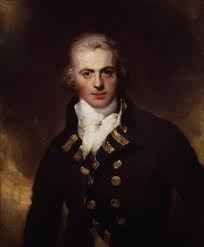
Captain Graham Moore
The younger Moore brother, Graham, joined the navy, rather than the army, and was made Post-Captain soon after the start of the Revolutionary War, commanding the 36 gun frigate HMS Melampus from 1800, before being appointed to HMS Indefatigable in 1803. Moore later commanded the squadron of four Royal Nav
y frigates – Indefatigable, Medusa, Lively and Amphion – that captured a Spanish treasure fleet of four frigates carrying bullion from the Caribbean back to Spain off Cadiz in the Action of 5 October 1804.
Moore was then attached to Sir Robert Calder’s squadron blockading Ferrol. In 1808, he served as Commodore, flying his broad pendant in the new ship HMS Marlborough assisting Admiral Sir Sidney Smith with the Portuguese royal family’s escape to Brazil. He later served as part of the North Sea fleet for several years. He was promoted to Rear-Admiral in 1812, and became Second-in-Command, Mediterranean Fleet in 1815 and served on the Board of Admiralty between 1816 and 1820, being promoted to Vice-Admiral in 1819. He was Commander-in-Chief, Mediterranean Fleet between 1820 and 1823. He was Commander-in-Chief, Plymouth from 1839 to 1842 and flew his flag in HMS Impregnable.
Moore kept a detailed diary from 1784 until 1806, later published in thirty-seven volumes, which provides a unique account of his service as Lieutenant, Commander and Captain. Canada’s Sir Graham Moore Islands, Cape Graham Moore, and Graham Moore Bay are named in his honor.
Though Graham’s life reads rather like the Wikipedia entry from which it was shamelessly lifted, I’m happy to report that he retained the sense of humour we first met in the letters included in a previous post. Of Lord Nelson Graham wrote that Nelson’s be-medalled and be-ribboned dress at the Sicilian Court made a ‘pitiful impression … more like a Prince of an Opera than the Conqueror of the Nile.’
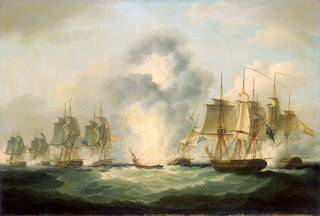
Four frigates capturing Spanish treasure ships, 5 October 1804
 copyright The National Maritime Museum

From The National Maritime Museum Website: Four Spanish frigates with a rich shipment from Montevideo headed for Cadiz. The cargo was ultimately destined for France and therefore potentially for use against the British. Four British frigates lay in wait to capture them and the two squadrons met on 5 October. The senior British commander Captain Graham Moore asked the Spanish Admiral to surrender. When he refused, action commenced, and within ten minutes the Spanish ‘Mercedes’ had blown up with the loss of all but one officer and 45 men. Half an hour later the Spanish ships ‘Medea’ and ‘Clara’ both surrendered. The Spanish ‘Fama’ tried to escape but also surrendered after she was chased by the British ‘Lively’. Sartorius has arranged the eight ships of the two opposing squadrons across the canvas in pairs. In the right foreground the ‘Lively fires into the ‘Clara’. Ahead of them is the exploding ‘Mercedes’ with the stern of the British ‘Amphion’ beyond her. To the left and ahead the British ‘Indefatigable’ and Spanish ‘Medea’ on the right are in close action. Beyond them the British ‘Medusa’ and Spanish ‘Fama’ are also firing at each other. The painting is signed and dated ‘F. Sartorius 1807.’

For Sale: Alton Manor Nr. Wirksworth, Derbyshire

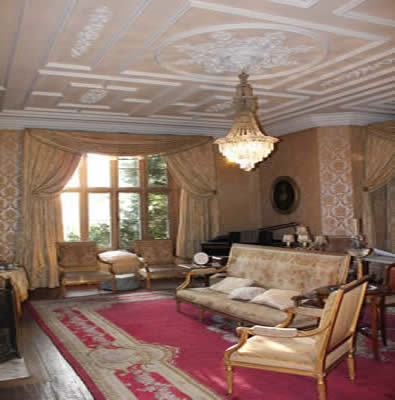
On May 12th, Graham Penny Auctions will be selling Alton Manor, a Grade II Listed, 14 bedroom manor house situated on 26 acres in Derbyshire. The estate boasts a tree lined drive with gate house, walled garden, icehouse, brew house, kennels, a lake (trout stocked) and boat house, a stone courtyard with 4 coach houses and stabling and a separate lodge house complete with two bedrooms, two reception rooms and its own garden. Bidding will start at one million pounds.

Lady Winifred Hilton lived in the house for more than 50 years and sadly passed away last year at age 91. She was the widow of the former Lord Lieutenant of Derbyshire, Sir Peter Hilton, and she was born Winifred Smith at Tansley, near Matlock, in 1919. Lady Hilton served in the Women’s Auxiliary Air Force in the Second World War, when she was posted to Liverpool and then Northern Ireland, working in special operations on radar, decoding and cyphers. In 1942, she married Sir Peter, whom she met two years earlier when he was billeted in Matlock after being evacuated from Dunkirk. For a truly amazing story regarding Sir Peter and his father, Richard, and their similar war injuries and the doctor who operated on them both, in two separate wars, click here.


Lady Winifred Hilton


Lady Hilton at her 90th birthday party at The Spot, in Secheveral Street, Derby

The Manor originally contained 480 acres. It was held by the Byrons for three or four centuries, and afterwards belonged successively to the Blackwalls, Iretons, and Mellors. From the latter it was purchased by the Hon. Anchetil Grey, whose relative, the Earl of Stamford, sold it in 1747 to the Wilmots, from whom it was purchased by the late James Milnes, Esq. It then passed to that gentleman’s eldest son, who assumed the name of Walthall in lieu of Milnes under the will of his maternal grandfather. A handsome mansion, in the Elizabethan style, was built in 1846-7 by the late Mr. Milnes. The History, Topography and Directory for Derbyshire (1895) adds: “Alton Manor, which forms part of the township, contains 480 acres. It was held by the Byrons for three or four centuries, and afterwards belonged successively to the Blackwalls, Iretons, and Mellors. From the latter it was purchased by the Hon. Anchetil Grey, whose relative, the Earl of Stamford, sold it in 1747 to the Wilmots, from whom it was purchased by the late James Milnes, Esq. The present owner is that gentleman’s eldest son, who assumed the name of Walthall in lieu of Milnes under the will of his maternal grandfather. A handsome mansion, in the Elizabethan style, was built in 1846-7 by the late Mr. Milnes.”  Noted architect Sir Gilbert Scott built Alton Manor to a Jacobean style in an attractive mellow ashlar stone.

Today, Alton Manor still boasts such original features as twin oak entrance doors, oak panelled hallways, Hopton stone floors and fireplaces, mullioned and transomed windows, turret, butler’s pantry, intact servant’s bells and pantry, housekeeper’s sitting room and gun room. Who says a million pounds won’t buy much these days?

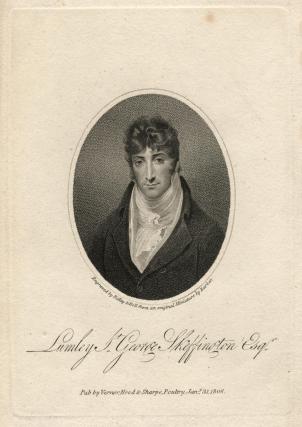
Sir Lumley Skeffington


Sir Lumley St George Skeffington,  2nd Baronet
(23 March 1771 – 10 November 1850)
Copyright National Portrait Gallery

 From the Letter Bag of Lady Elizabeth Stanhope
Sir Lumley Skeffington, of Skeffington Hall, Leicestershire, was a celebrated votary of fashion. Descended from “Awly O’Farrell, King of Conereene,” and from innumerable Kings and Princes of Ireland, his ancient lineage, as well as his pronounced dandyism, gave him a claim upon the attentions of society, which was further augmented by his literary pretensions. Nevertheless, he subsequently experienced a reverse of fortune, typical of the days in which he lived; and of his rise and fall John Stanhope gives a brief account.
“`Poor Skeffington,’ he relates, `was the Dandy of the day, par excellence. Remarkable for his ugliness, his dress was so exaggerated as to render his lack of beauty the more marked. He was a very goodnatured man, and had nothing of the impertinence of manner of the fops who succeeded him. Moreover, he was a bel-esprit, writing epilogues and prologues, and was at one time the observed of all observers. I have seen him at an assembly literally surrounded by a group of admiring ladies.'”
“Skeffington, in short, in 1805, wrote a play entitled The Sleeping Beauty, which, produced at great expense at Drury Lane, gained for him much fame among his contemporaries and caused him for a time to be looked upon as a lion in the fashionable world. Enjoying to the full his reputation as a literary celebrity, he elected to ape certain mannerisms and eccentricities which he considered in keeping with this character. `He,’ Gronow mentions, ‘used to paint his face like a French toy. He dressed d la Robespierre and practised other follies, although the consummate old fop was a man of literary attainments, remarkable for his politeness and courtly manners, in fact, he was invited everywhere. You always knew of his approach by an avant courier (sic) of sweet smells, and as he advanced a little nearer, you might suppose yourself in the atmosphere of a barber’s shop.'”

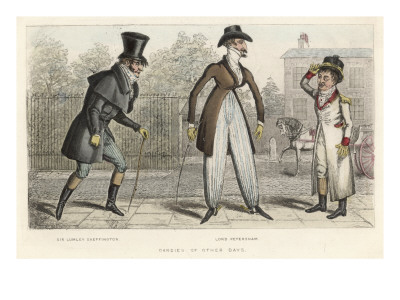
 Sir Lumley Skeffington and Lord Petersham


“Skeffington, after the publication of his play, was known by the nickname of `The Sleeping Beauty,’ and a representation of him in that role John Stanhope describes as `the best caricature I ever saw.’ Tall, thin, and a complete slave to his toilet, Sir Lumley not only indulged in an abnormal use of perfumes and cosmetics, but was incessantly to be seen combing his scented tresses by the aid of a hand mirror, till it was suggested that one of his Royal ancestors must have formed a mesalliance with the mermaid who most appropriately figured in his armorial bearings, similarly employed. The extreme slimness of his figure was accentuated by a coat which he made as famous as Lord Petersham did the garment called after his name; and Byron added to the fame of the beau by mentioning him in the satire English Bards and Scotch Reviewers.


Sir Lumley St George Skeffington
(‘ – “so Skiffy-skipt on, with his wonted grace” – ‘)
Copyright NPG


“Unfortunately, however, the harmless foibles of Sir Lumley were combined with an unbounded extravagance which finally involved the luckless dandy in a ruin as complete as it was pathetic. He disappeared from fashionable life to undergo a dreary imprisonment, and when he at last issued thence, the world which had showered blandishments upon him in his prosperity, would have no more of him. In vain did he dress exquisitely, enunciate witticisms and assume a gaiety of manner which he was far from feeling. The friends who had courted his society before his downfall now shunned his acquaintance, and a bon-mot uttered at his expense elicited the applause which his most happily-conceived jests failed to evoke. On some stranger pointing out Skeffington to Lord Alvanley, and inquiring who was that smart-looking individual, Alvanley responded with a wit more keen than kind— `It is a second edition of ‘The Sleeping Beauty,’ bound in calf, richly gilt and illustrated by many cuts.’


“Half Natural”
copyright NPG

“For long did the luckless beau continue, with a pathetic persistence, to haunt the scenes of his former triumph. At theatres, at picture auctions, in the Park, and in all fashionable thoroughfares, he was a familiar sight, still with the passing of years the butt of the contemporaries who had once fawned upon him, and, as they gradually diminished, the standard jest of a younger generation. With the flight of Time, the blackness of his false ringlets never varied, the brilliant rouge of his cheeks, or the strange costume which he had worn during the heyday of his existence, and to which he clung after it had been obsolete for half a century. And with each year his slim figure became yet thinner, his back more bent, and his spindle legs more bowed, till at length the man who had been born early in the reign of George III. witness
ed the dawning of the year 1850; after which the quaint figure of the once-famous Sir Lumley Skeffington was seen no more.”
But for some good news regarding Skeffington we turn now to Personal Reminiscences by Henry Fothergill Chorley, James Robinson Planché, Julian Charles Young (1874) –

“There was another habitui with whom I became acquainted at the same period; one of the last of that peculiar style of fop whose dress and manners were unsparingly caricatured in the print-shops, and became conventional on the stage. But with all his extravagance of attire, his various-colored under waistcoats, his rouged cheeks, and coal-black wig, with portentous toupie, poor old Sir Lumley Skeffington was a perfect gentleman, a most agreeable companion, and bore `the stings and arrows of outrageous fortune’ with Spartan courage and Christian resignation. Though his fair-weather friends had deserted him, no complaint or reproach ever passed his lips. But once only, during the many years we were acquainted, did I hear him allude to the misery of his position. We were the only two guests at the dinner-table of a mutual friend, and Sir Lumley had been particularly lively and entertaining. Our host being called out of the room to speak to some one on business, I congratulated the old baronet on his excellent spirits. `Ah! my dear Mr. Planche’, he replied, `it’s all very well while I am in society; but I give you my honor, I should heartily rejoice if I felt certain that after leaving this house to-night I should be found dead on my own doorstep.’ I shall never forget the deep but quiet pathos of these sad words. I am happy to add that he lived to inherit a small property, and ended his days in peace and comfort.”

The Wellington Connection: Traffic Court

From The Life of the Duke of Wellington by Joachim Hayward Stocqueler, Volume 2 1853
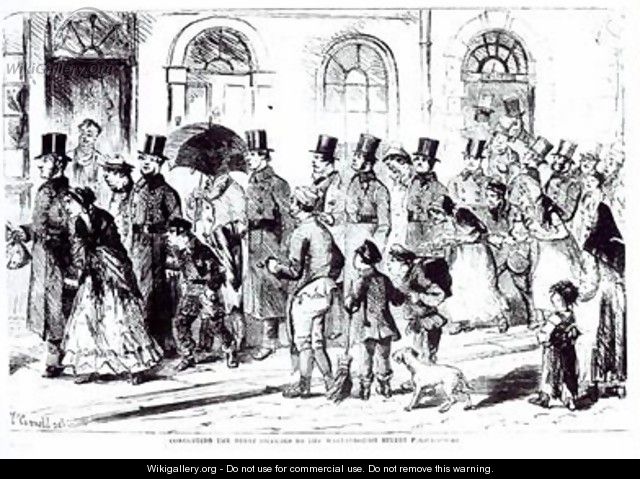
The Duke of Wellington attended on Saturday (4th May, 1845) at the Marlborough Street Police Court, for the purpose of preferring a charge of furious driving, whereby his life was endangered, against Henry Woods, driver of one of the carriers’ carts. To prevent inconvenience to his Grace from the crowd which his appearance would attract to this court, the summons was so arranged as to take precedence of the night charges. At half-past eleven o’clock his Grace, accompanied by Lord Charles Fitzroy Somerset and Mr. Mayne, entered the court. His Grace having been sworn, said—I was walking, on Tuesday last, between two and three o’clock, in Park Lane, on the left-hand side, going out of Piccadilly, and when near the Duchess of Gloucester’s house, a very heavy four-wheeled cart passed me. I endeavoured to cross the lane, to get to the pavement on the other side, under the protection of this heavy cart; I got as far as the right-hand wheel of the cart, keeping the cart at my left hand, when I found myself struck on the shoulder, and knocked forward. It was a severe blow, and I found it had been given by another cart, the driver of which did not attempt to give me warning by calling out, until he had struck me. I did not fall; if I had, I must have been under the wheels of both carts. Now, I have no further complaint to make against the man at the bar who drove the cart, than that he was going at such a monstrous pace that he had no control over his horse; indeed, he came along so fast, that he got the whole length of Park Lane without my having perceived him; and the pace he was going at was such, that it was impossible he could stop his horse. This is my complaint; and I bring it forward on public grounds, because I think it is not right that carriages should go along in the public streets at this great rate. The cart by which I was struck was a heavy, tilted cart; the driver was under the tilt. My groom was behind with my horses, and I called him and desired him to follow the cart. My groom trotted as hard as he could, but was unable to overtake the cart until he got as far as South Strand. This will prove the rapid pace at which the driver of the cart was going.


copyright The Canal Museum
The defendant said he was truly sorry at what had occurred, but he declared the whole circumstance was accidental. He saw a gentleman about to cross the road, and he called out to warn him; but be was not aware that he had touched any one. He was not going at very great speed, for his horse was an old one, and could not accomplish more than seven miles an hour; and at the time when he passed his Grace, he was going up hill. His attention was directed to the vehicles in the carriage-road, and this prevented his noticing what was doing on the foot-path.
Mr. Hardwick: Had you kept your eyes directed as you ought, not only to avoid carriages but foot passengers, the circumstance would not have occurred. The reason you have given for not seeing his Grace is no excuse for your conduct.
The Duke of Wellington: There was plenty of room to have passed, without running against me.
Mr. Hall, No. 12, Park Lane, said he saw his Grace attempting to cross the lane at the time that a carrier’s cart, which was going at the rate of seven or eight miles an hour, was coming down the lane. Thinking, from the way the man was driving, that his Grace would be knocked down, he ran to the door, and saw the cart strike his Grace on the shoulder. Had his Grace but turned round sharply, the cart must have been over his feet. The pace the man was driving at was not more than seven miles an hour. He was driving negligently rather than furiously.
Mr. Hardwick: Had he kept a proper look-out, he must have seen his Grace?
Witness: Certainly. He was going up hill, and could have stopped the horse easier than if he was going down hill.
Mr. Hardwick: Did you hear the man call out? Witness: No, I did not.

In defence, the man repeated that he was exceedingly sorry for what had occurred.


Conducting the Night Charges to the Marlborough Street Police Court
copyright wikigallery


Mr. Hardwick: It appears from the evidence that you were driving, if not at a furious, still at a rapid rate; but as you were going up hill at the time, had you used the ordinary precautions in driving along the public street, and if you had proper command over your horse, this accident could not have occurred. A witness has described your careless mode of driving at the time, by saying you were neither looking to the right hand nor to the left; and the whole evidence goes to prove that your mode of driving was reckless and careless, exhibiting a perfect indifference to the life and limbs of foot-passengers. This case I shall deal with as a case of assault. You have committed several serious offences: first, furious driving; next, endangering life and limb; and, lastly, committing an assault, for running against the person and striking that person with the cart, is as much an assault as if the blow were given by hand. For the assault, which is clearly proved, you will pay a fine
of 4l. or one month’s imprisonment.
The defendant was then locked up.

Mrs. Montagu and the Chimney Sweeps

Mrs. Elizabeth Montagu

From The Days Before Yesterday by Lord Frederic Hamilton (1856)
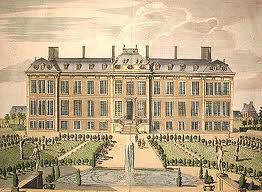
“The story of Mrs. Montagu is well known. The large house standing in a garden at the corner of Portman Square and Gloucester Place was built for Mrs. Montagu by James Wyatt at the end of the eighteenth century, and the adjoining Montague Street and Montagu Square derive their names from her. Somehow Mrs. Montagu’s only son got kidnapped, and all attempts to recover the child failed. Time went on, and he was regarded as dead. On a certain 1st of May the sweeps arrived to clean Mrs. Montagu’s chimneys, and a climbing-boy was sent up to his horrible task. . . he lost his way in the network of flues and emerged in a different room to the one he had started from. Something in the aspect of the room struck a half-familiar, half-forgotten chord in his brain. He turned the handle of the door to the next room and found a lady seated there. Then he remembered. Filthy and soot-stained as he was, the little sweep flung himself into the arms of the beautiful lady with a cry of “Mother!” Mrs. Montagu had found her lost son.
“In gratitude for the recovery of her son, Mrs. Montagu entertained every climbing-boy in London at dinner on the anniversary of her son’s return and arranged that they should have a holiday on that day. At her death she left a legacy to continue the treat. Such, at least, is the story as I have always heard it.”
Montagu House
Edwin Beresford Chancellor must have heard almost the same tale, for he writes in The History of the Squares of London: Topographical and Historical
“Mrs. Montagu was one whose amiable character was almost better pleased in making happy those who were not invariably happy; and the feast to the chimney sweeps which she annually, on the 1st May, gave in the grounds of Montagu House, is an xemplification of this pleasant characteristic. That the sweeps — at that time, if not a dirtier, chimney-sweeping was a very much more terrifying, and often dangerous calling to its younger members — might enjoy one day of pure happiness in the year, she regaled them with beef and plum-pudding and gave them the run of her fine garden at Montagu House. There is a tradition that the origin of the idea was the kidnapping of a young Montagu — some say the son of Lady Mary Wortley — by chimney sweeps and his accidental return to his family, by a sweep employed to clean the chimneys of the house from which the child had many years before been stolen. If this be correct, the fraternity, had it been composed of logical minds, might well have deduced from such a return for such an act, almost an incentive to fresh depredations on the youthful offspring of their patrons.”

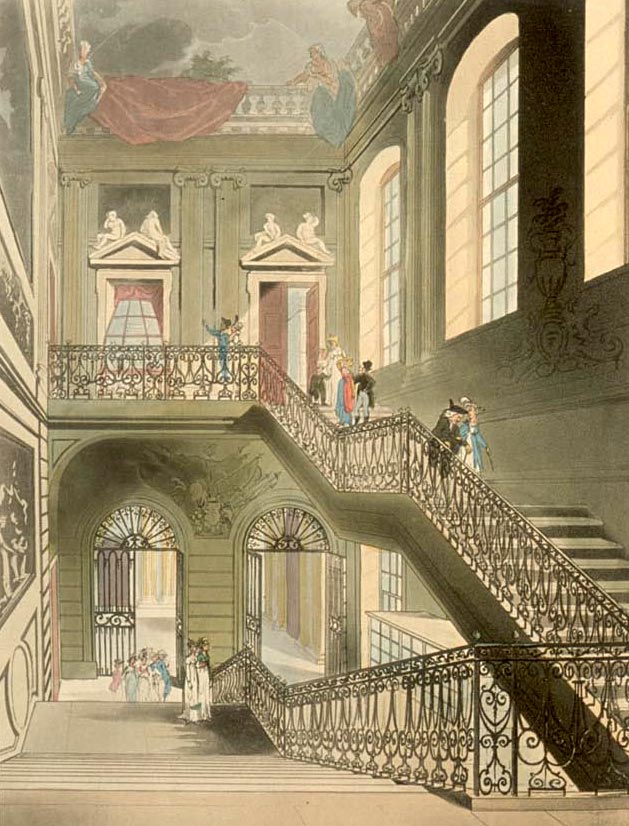
The staircase at Montagu House
Beresford’s take on the story is closer to the truth in the tale – if any truth there be – since Elizabeth’s own son, John, born in 1743, died suddenly when he was about a year old and therefore could not have been later either lost or kidnapped. She had no other children. A leader of English society, Elizabeth Robinson was born at York on the 2nd of October 1720. In 1742 she married Charles Montagu, cousin of Edward Wortley Montagu and son of the Earl of Sandwich — a wealthy man, considerably her senior. Thanks to her, his Mayfair house became the social center of intellectual society in London, and her breakfast parties and evening conversationes gained for her from her admirers the title of “The Madame du Deffand of the English capital.” When her husband died in 1775, Mrs. Montagu inherited a considerable fortune and large estates, in the management of which she proved shrewd. In 1781 she built Sandleford Priory, near Newbury. Elizabeth Montagu died on the 25th of August 1800.