Trembleuse Cups and Saucers

Copyright Worthopedia

Recently, I was watching the British version of Antiques Roadshow and saw an example of a Trembleuse cup and saucer being appraised. I had never heard of these items and it fascinated me. Which prompted me to think that they would, perhaps, fascinate you, too, so I decided to share a few of these gorgeous pieces.
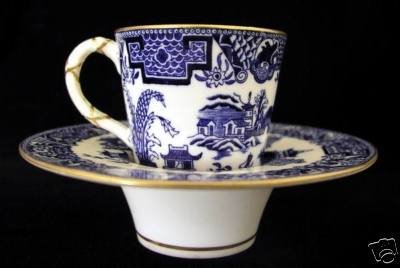
Trembleuse cups and saucers were specifically designed for a person who suffered from the trembles and were virtually “spillproof.” The example above was made by Royal Worcester and is marked with a date symbol for the year 1882. It is printed under the glaze in a beautiful rich blue and decorated with gold trim. The cup has a molded handle. Note both the deep inset of the saucer in which the cup firmly rests and the saucer’s very wide border, all of which was designed to avoid spilling of the hot liquid by a trembling hand.


Copyright J. Paul Getty Museum

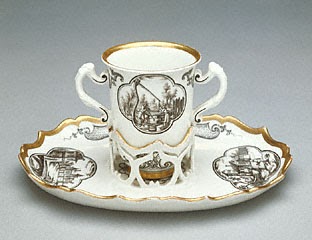
In the 1700s, this double-handled cup pictured above would probably have been used to serve coffee or hot chocolate. Following the Chinese and Japanese custom, Europeans in the 1700s usually drank tea from small handless bowls.

Cups made at the Du Paquier porcelain manufactory were tall, higher than they were wide, and could be unstable. For this reason, the factory developed a trembleuse (literally “trembling”) form, in which a raised ring or basket on the saucer held the cup in place and prevented spillage caused by a shaky hand.

Porcelain painters often imitated engravings with black enamel decoration known as schwarzlot; this decoration was typical of the Du Paquier factory.

Copyright the Victoria and Albert Collection


Circa 1775 Copyright The Lessing Photo Archive


Royal Worcester 1878 – Copyright Trocadero.com


19th century cranberry glass copyright Miller’s Antiques

It seems to me that a Trembleuse is exactly what poor Liz needed whenever she went for coffee at her neighbor, Hyacinth Bucket’s house! (That’s Bouquet) By the bye, the pair of cups and saucers on Antiques Roadshow were valued at five thousand pounds.

For Sale: Period Perfection in Bath


It is time once again to share with you yet another period property of perfection. Read on and weep. I know I’m sobbing as I write this. Sigh.
Set amid an idyllic valley just minutes from the heart of Bath, Widcombe Manor is an enchanting and historic residence. It is also a comfortable and peaceful family home. Constructed of Bath stone, it is a Grade I listed building, and regarded as one of the finest examples of Georgian architecture in the South West. The estate and house are immersed in history. Early records have it built on the site of a grange for the abbots of Bath. On the dissolution of the monasteries, the estate was owned by Richard Chapman, a rich clothier and Mayor of Bath. The original house was built in 1656, and was most likely to have been designed by Inigo Jones(sob). It was remodelled in 1727 for Chapman’s grandson, Philip Bennet, and the crest of the Bennet family still sits atop two pedestals at the magnificent entrance gates. Famous visitors include Henry Fielding, who wrote his classic novel Tom Jones while staying here, and, in more recent times, A-list celebrities and party-goers such as Cecil Beaton, Princess Margaret and Lord Snowdon. Today, it’s a comfortable retreat in a fascinating and historic city. (Aaarrgghhhh!)

Period Features

Widcombe Manor is the finest Georgian home in Bath, and the attention to detail is second to none. The Georgian facade, with its elaborate and highly decorative stonework, is a breathtaking sight and is complemented perfectly by a bronze 15th Century Venetian-style fountain. The interior has been sensitively refurbished in recent years and retains historical features, such as an Elizabethan mahogany staircase and ornate cornices (sniff, snuffle, sniff). Panelling, oak flooring and elegant statuary are featured through the house to create the feel of an elegant yet welcoming country home that is ideal for entertaining, as well as family life. Modern touches, such as an internal water garden, create a delightful design statement.

Spacious Living – The Ground Floor

This unique residence offers the flexibility to combine family life with business enterprise. The beautiful and spacious panelled hallway leads to a number of rooms including a library with leather flooring (be still my heart!) and a spacious study/office. The large, comfortable family sitting room has a bay window which offers superb views over the landscaped gardens and woodland of surrounding Lyncombe Vale. The kitchen and breakfast room are ideal for informal entertaining and large French windows open to the sun terrace and outdoor dining area. For more formal occasions, the dining room is an intimate and atmospheric space to welcome guests. The basement has been sensitively renovated to provide a large open games room as well as a wine cellar. A further play area overlooks a courtyard which was added by the current owners and built in Bath stone with an elegant fountain. There is parking for three cars in the garage, and a utility room and plant room complete the ground floor. A staff cottage is situated close to the house and has a living room, kitchen, bedroom and bathroom. (I’m completely out of Kleenex!)

Beautiful Views – The Upper Floors

Widcombe Manor has been designed so that owners can enjoy views of its exquisite grounds from all the main reception rooms. The views are particularly superb from the magnificent drawing room, situated on the first floor, which overlooks the lakes and cascade. Decorated in tones that echo the Georgian elegance of Bath’s Assembly Rooms, the room also features elegant touches such as gilt cornicing, bay windows and a painted ceiling. South-facing, it offers views over all nine acres of the estate and the vale beyond. It is the perfect place to enjoy the everchanging colours of the seasons in the surrounding mature woodland and formal terraces. Most of the main reception rooms are south-facing over the estate and the Bath stone is particularly beautiful when bathed in gentle sunlight at dawn and dusk. The panelled landing is an elegant feature and affords views over the Venetian fountain, as does the second floor office, which has a beautiful oval window. (Howl!)

Comfort and Style – The Bedroom Suites

Widcombe Manor is a home that represents the perfect marriage of grandeur and comfort, and nowhere is that more evident than in its three exquisite bedroom suites. These spacious and beautifully designed rooms are ideal for guests or family living. The master bedroom is a light, airy room which offers beautiful views over the woodland and gardens. This leads on to a dressing area and Grecian-themed marble bathroom. A further delightful guest suite overlooks the courtyard and fountain to the front of the house, and has a large en suite bathroom with roll-top bath. Decorated in subtle tones, with delightful dressings, furnishing and cream panelling, this is a relaxing retreat.

The manor has a further guest bedroom on the first floor which overlooks the gardens and has a stylish en suite bathroom. On the second floor there are three more bedrooms and two bathrooms, which are ideal family rooms. (You can all come to stay!). Tucked away in the eaves of the house, they are characterful and intimate, yet offer the spaciousness required for family living.

Modern Luxury – The Pavilion

Amid the Georgian splendour of this residence, the modernist garden Pavilion provides an exciting departure in terms of design, and was influenced by the Mies van der Rohe-designed Barcelona Pavilion. Situated to the east of the residence, it is a large, light-filled space with kitchen and dining area, and an informal living room. Its huge glass doors slide back to reveal breathtaking views of the woodland and lakes, creating a sense of being at one with the natural world. A large heated infinity pool reflects the tones of woodland surrounding the Pavilion and offers fabulous views over the vale and gardens. A grass ‘staircase’ leads down from this perfect suntrap to the terraces and more formal areas (stop! You’re killing me!). In perfect contrast is the Georgian Summerhouse, a delightful and spacious garden room built in Bath stone. Situated along a long walk, with wellstocked herbaceous borders, it provides a formal and elegant focal point amid the terraces close to the house. It is also spacious enough to be
the ideal place to serve tea on a hot, sunny day. (Can this pile posssibly be more appealing?!)

Exquisite landscapes – Garden and Grounds

Widcombe Manor’s nine-acre gardens are a central attraction in this enchanting retreat. Terraced and landscaped in the 18th Century they were developed into their current form in the 1930s, with some further redevelopment in the 1990s, and include lakes, a cascade (wanted: one hermit for live in position), formal gardens, a croquet lawn and tennis court. The Italianate gardens near the house provide a suitably formal and architectural extension of the Georgian splendour of the house. Elegant topiary, statues, fountains and immaculate lawns are complemented by architectural plants as well as well-established perennials. The formality gives way to a vale which leads down to the lakes and cascade. Mature woodland provides perfect privacy and an everchanging panoply of colour and interest throughout the seasons. A children’s play area and a bountiful cutting garden are other features that enhance the estate’s attraction, and a boules court is another delightful addition from the current owners.

The soothing sounds of natural, flowing water from the waterfall enhance the sense of rural tranquillity in a residence that is just minutes from the many cultural attractions of Bath. (Oh, the humanity!)

Offered for sale by Savills Bath  – offers in excess of £10,000,000

Reader, I am spent.

The Wellington Connection – Walmer Castle


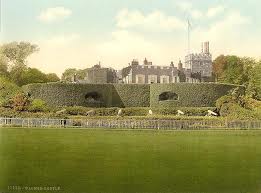
Walmer Castle, Kent


 From The History of Walmer and Walmer Castle By Charles Robert Stebbing Elvin (1894)
The quiet unostentations life which the Duke of Wellington led at Walmer, has been familiarized to us by Earl Stanhope in his “Conversations.” But one trait must be briefly alluded to, namely, the Duke’s love for children, which was evinced in a characteristic manner. We are told by Lord Stanhope that, in the autumn of 1837, Wellington had staying with him at Walmer Castle, two little children of Lord and Lady Robert Grosvenor, a boy and girl, and these chicks having expressed a desire to receive letters through the post—it was before the days of the penny post—the Duke used to write to them every morning a letter containing good advice for the day, which was regularly delivered when the post came in. He used also constantly to play fooball with the little boy upon the ramparts.
It was in the October of this year that poor Haydon spent some days at the castle, having come down at the Duke’s request, to paint his portrait for certain gentlemen at Liverpool. Haydon relates in his Diary, how charmed he was with the Duke’s playfulness with “six dear healthy noisy children,” no less than with his unostentatious reverence at the parish church on Sunday.  . . . . It is further related of the Duke of Wellington, that he sometimes took out with him, in his walks, a number of sovereigns and half-sovereigns, each suspended from a red or blue ribbon, and that when he came upon a group of children, he would present them with one of these, either red or blue, according as they declared themselves when interrogated, to be for the army or navy. The Duke’s early habits are well known, and an old gentlemen still living, tells me that when he was a boy at Walmer, he and his school-fellows used frequently in the summer, to be taken down to the sea near Walmer Castle, at six o’clock in the morning, to bathe, and the Duke would often come on the beach and converse with them.
In addition to children, the Duke also entertained more mature guests at the Castle
The Duke of Wellington was repeatedly honoured with visits from Royalty, during his occupancy of Walmer Castle. Thus Earl Stanhope mentions in his Conversations his meeting Prince George of Cambridge (the present Duke) at dinner at Walmer Castle, on October 14th, 1833; and on October 17th, 1837, records a luncheon at the Castle to meet the Princess Augusta of Saxony.
From the same source, also, we learn that two years later the Duke of Cambridge (father of Prince George above-mentioned), and first Duke of Cambridge with the Duchess and Princess Augusta, spent five days at Walmer Castle, namely, from October 3rd to October 8th. And how they were entertained we are also informed. On the evening after their arrival, there was a dinner party of eighteen persons, followed by a concert, for which the Duke of Wellington had engaged several vocalists from London, and to which he invited most of the neighbours: another dinner given on the 6th Oct., was followed by a larger party still, and a concert in the evening: while on the last day of their sojourn, October 7th, a great public breakfast given by the Duke in their honour, at 2 p.m., was attended by from a hundred to a hundred and twenty persons, many of whom came from Ramsgate and Dover; and in the evening there was another concert and large party.
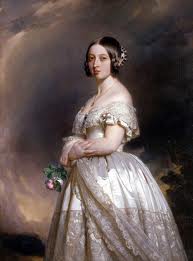
But the chief interest centres in the visits of our present beloved Queen, who first became acquainted with Walmer in 1835 ; in the autumn of which year, she being then the Princess Victoria and a girl of sixteen, paid a visit to the Duke of Wellington and lunched at the castle, with her mother, the Duchess of Kent, and the King and Queen of the Belgians.
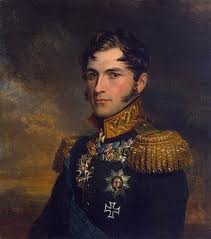
Leopold, King of the Belgians
The following account of this visit has been preserved in a letter by the then Lady Burghersh to her husband :—” The King and Queen of the Belgians arrived exactly at 2 in the same carriage with the Dnchess of Kent and Princess Victoria. The Duke of Wellington and I went to meet them on the drawbridge, and brought them up the outside staircase to the ramparts (where nearly all the company were already assembled), the lower battery firing a salute. The scene was beautiful; the whole of the beach in front of the castle and the roads leading to Deal and to the village, were filled with people; all the colours hoisted at the different places along the coast and on the ships, of which, fortunately, there were quantities in the Downs. The only drawback was that we were disappointed of getting a band from Canterbury, so there was no music. After walking about the ramparts and speaking with the company, the King and Queen went with the Duke round the garden, but the Princess Victoria had a little cold; so I staid in the drawing room with her and the Duchess of Kent, and baby was brought in and behaved like a little angel, and was much admired. She was sent for again afterwards to see the Queen. As the crowd outside were eager to see Princess Victoria, I asked the Duchess of Kent if she thought she might come out for a moment to shew herself, and I fetched my ermine tippet for her, which she put on, and came out on the ramparts and was very much cheered.”
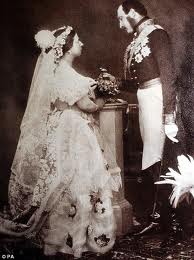
Seven years later we find her Majesty again at Walmer Castle; being no longer a girl, but a Queen and a mother. It was on the morning of Thursday, November 10th, 1842, that the Royal party, consisting of the Queen, Prince Albert, and th
eir two children, the Prince of Wales and the Princess Royal, left Windsor Castle, accompanied by a distinguished suite, en route for Walmer Castle; where they arrived the same day escorted by a troop of the 7th Hussars, then quartered at Canterbury, and with a guard of honour furnished by the 51st Infantry. With the exception of the journey from Slough to Paddington, the whole distance was accomplished by road; Her Majesty being everywhere greeted with the most enthusiastic demonstrations of loyalty and esteem. On the outskirts of Upper Deal, the Royal Party were met by the Duke of Wellington, who afterwards rode on to receive Her Majesty and the Prince at Walmer Castle, which was then placed entirely at their disposal; the Duke proceeding to Dover to take up his quarters during the royal visit.
Although the accommodation at the castle was somewhat restricted, being much less in those days than at present, no effort was spared to ensure the comfort of the royal guests and their suite. Two of the principal rooms in the castle had been thrown into one, for the sleeping apartment of Her Majesty and the Prince; while the portion of the fortress appropriated for the royal nursery, consisted of four rooms in “the outworks or north tower,” with the windows facing in a northerly direction. Viscount Sydney, as the Lord in Waiting, and Lady Portman as the Lady in Waiting, as well as the Honble. C. A. Murray, Master of the Household, and others, occupied some other rooms; while the rest of the guests were accommodated in a large house about three quarters of a mile away.


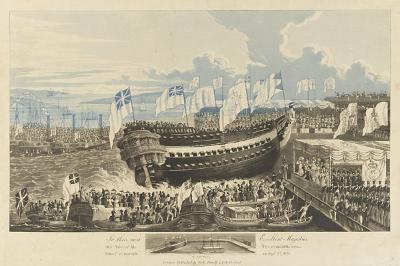
The Launch of The Thunderer, 1831
Copyright Port Cities London


The inhabitants of the whole district seem to have vied with each other in their efforts to do honour to the royal visitors; the illuminations throughout the neighbourhood being most brilliant. And on the following morning, when the royal standard was hoisted on Walmer Castle, the Thunderer manned yards, and saluted Her Majesty with twenty-one guns. The royal party remained at the castle nearly a month; and it was while here that the Queen received by special messenger from Downing Street, the news of the recapture of Ghuznee and Cabul, and the rescue of the prisoners.

An incident took place during this visit, which displays, in a remarkable degree, the natural goodness of heart and kindliness of disposition, which have always been shewn by her Majesty in her intercourse with her people. The Queen and Prince Consort were one day walking on the shore in the direction of Kingsdown, when they were driven by a sudden shower to take refuge in an old boat-house, which, besides being a place for storing boat’s gear, served also as a dwelling for an aged boatman—Thomas Erridge—and his wife; who, although they failed to recognize their visitors, readily offered them such mean accommodation as the place afforded. The royal pair were soon provided with a seat, consisting of some spars placed upon empty water-casks and covered with a spare sail; and there they sat and conversed with their simple-minded hosts, until the shower ceased ; and the latter were afterwards rewarded for their rude, but kindly hospitality, with a pension, with which the Queen provided them for the rest of their days.
The last meeting between Prince Albert and the Duke of Wellington, took place at Walmer Castle, on a similar occasion to the last, and only two years later. It was on August 17th, 1852, a month before the Duke’s death: the royal squadron having anchored in the Downs for one night, with the Queen and the Prince Consort en route for Belgium, His Royal Highness landed in a small boat from the Victoria and Albert, and paid a visit to the castle, where he had a long conversation with the aged warrior and statesman.
Whilst the Duke took excellent care of his many guests, he seems to have been rather more lenient in his care of the Castle gardens –
The next considerable improvement to the (Castle) grounds was made by the Earl of Liverpool (Warden before Wellington), who added the two meadows— since thrown into one—with the express proviso that, in the event of the office of Lord Warden being ever abolished, they should revert to the representatives of his own family.
The Duke of Wellington did not improve the grounds: on the contrary, he seems to have allowed them to fall into a state that would very much shock the professional gardener. But then the Duke’s gardener was not a professional, but a veteran sergeant of the Peninsular Army, and a Waterloo man, named Townsend, who received his appointment to the post of gardener at Walmer Castle under the following peculiar circumstances. The story goes, that shortly after the Duke became Lord Warden, he received a letter from Sergeant Townsend, complaining that he had been discharged from the service without a pension: that thereupon he immediately replied, “Field Marshall the Duke of Wellington would be happy to see Sergeant Townsend at Apsley House -on Friday at noon “: that on the interview taking place, his Grace inquired, “Do you know anything about gardening?” and, on receiving a negative reply, added, “Then learn, learn, and come here this day fortnight at the same hour.” The sergeant withdrew, and when, in obedience to orders, he appeared the second time at Apsley House, was greeted with—”Take the place of gardener at Walmer Castle; and on replying, “But I know nothing about gardening,” was cut short by the Duke with “Nor do I, nor do I, take your place at once.”
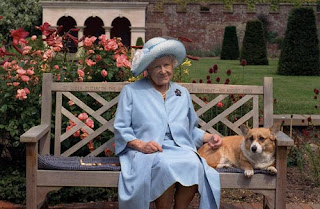
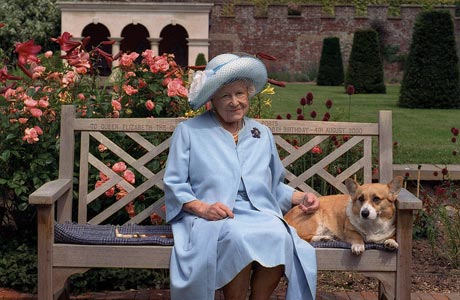
HM Queen Elizabeth the Queen Mother was Lord Warden for 24 years
 and spent many summers in residence at Walmer Castle.

Miss Marple in The Pale Horse Sunday

Julia McKenzie is back as Agatha Christie’s detective with a gentle smile and probing mind in the all-new episode The Pale Horse (July 10). Miss Marple’s old friend is found murdered, and when she receives a list of names sent by the victim before his death, Miss Marple seeks justice.

From the Masterpiece website: “Fair is foul and foul is fair in the hamlet of Much Deeping, where the Pale Horse Inn is run by a trio of entrepreneurial witches, and the annual celebration of the town’s witch trials of 1664 is about to commence. Arriving just in time is Miss Marple (Julia McKenzie, Cranford), who has set her knitting aside to pursue the murderer of her old friend, Father Gorman. Armed with a cryptic list of names sent to her by the good clergyman just prior to his death, Miss Marple follows clues as she joins the assemblage of eccentric guests and infiltrates the witches’ sanctum santorum. But when a fellow guest at the Pale Horse Inn is found dead, the tidily tailored and unassuming sleuth must determine whether black magic or something even more sinister is at work.”

What do you think – are you getting used to Julia McKenzie in the role of Miss Marple? For a review of actresses who have owned the role in the past, take a look at a past post on the subject here and then let us know who you’re favorite Miss Marple is/was.

Mrs. Sage, The First Englishwoman Aeronaut

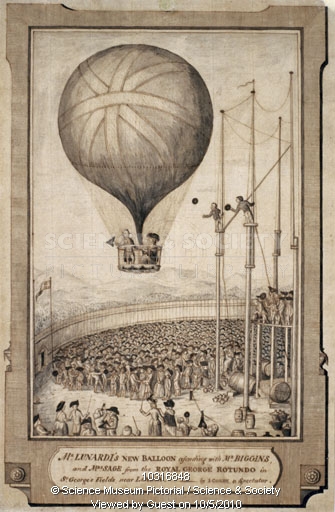
Mrs Laetitia Sage became the first English woman to fly in a hydrogen balloon in Vincent Lunardi’s ascent of 29 June 1785. Vincent (or Vincenzo) Lunardi (1759-1806), was Italian secretary to the Neapolitan ambassador in London and had made the first ascent in a hydrogen balloon in Britain on 15 September 1784 from Moorfields in London. Unfortunately, the combined weight of Mrs Sage and the other two passengers, George Biggin and Colonel Hastings, was too much for the balloon. Lunardi and Hastings agreed to stay behind, allowing Mrs Sage and Biggin, a wealthy Etonian, to continue alone. Together they flew in a red, white and blue balloon from St. George’s Fields in London, over St James’s Park and Piccadilly, before landing over two hours later in fields near Harrow.

Mrs Sage was described as Junoesque, and apparently weighed in at over 200 pounds. In a later account, Mrs. Sage blamed herself for the balloon going over the weight limit, as she hadn’t volunteered her exact weight to Mr. Lunardi and he’d been too polite to ask it of her. The gondola was draped in swags, but the gate had a neat arrangement of lacing so that the watchers on the ground could see the people up in the air. Upon exiting the gondola,  Lunardi failed to do up the lacings of the gondola door. As the balloon sailed away over Picadilly The beautiful Mrs Sage was on all fours re-threading the lacings to close the door.


Watercolour sketch by Cordy, a spectator, showing Lunardi’s
second balloon carrying George Biggin and Mrs Sage

 
The flight followed the line of the Thames westwards finally landing heavily in Harrow on the Hill where the balloon damaged a hedge and gouged a strip through the middle of an uncut hayfield, leaving the farmer ranting abuse and threats. The honour of the first female aeronaut was saved by the young gentlemen from Harrow school who had a whip-round to pay off the farmer and then carried Mrs Sage bodily, in triumph, to the local pub. Mrs. Sage later published her experience as Britain’s first female aeronaut, an account which realized two printings.