Originally published April 2008

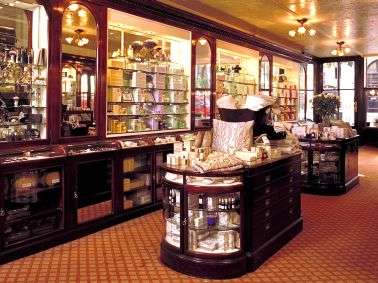
One of the delights of living in England is discovering how much survives from the Regency period (and in some cases before). I first came across Floris after reading an article about the men’s clothing shop Hackett. Floris is a perfumery on JermynStreet and has occupied no 89 for about 250 years at least. It remains family run and the current head, John Bodenham is an 8th generation descendant of the founder Juan Famenias Floris. Floris was founded in 1730 and the shop has a small museum full of scent bottles and combs that I go and look at every time I am in London. The shop is lovely — all glass and mirrors with wonderful scents. The Spanish mahogany cases were acquired in 1851 from the Great Exhibition. However, I was never that sure when a particular scent was created. I simply knew that I liked them. Stephanotis is beautiful and I fell in love with Malmaison earlier this year. Their Lily of the Valley is heavenly. And my dd adores Edwardian Bouquet. And to the wearer of particular scent, that is all that matters.
But when were the scents developed? And can I use them in my books? What were people in the Regency period actually wearing. Recently the Floris catalogue has been giving details about its scents and when they were developed.
Lily of the Valley was developed about 250 years ago. So say around 1758 — making it a Georgian scent. Its top notes are green and lemon with heart notes of jasmine, lily of the valley,rose and tuberose. The base note is musk. Another Georgian scent Floris does is Limes and that was developed in the late 1700s to combat the awful smells and heat of the London summer.

Stephanotis was developed in 1796 by the son of the founder — James Floris. It combines the scents of the traditional bridal bouquet and was made because James Floris noticed how many brides were getting in and around St James. So what the Regency society bride might have worn. And it is truly lovely — top note orange blossom, heart notes of carnation, coriander, lily of the valley, stenphanotis, jasmine with base notes of musk, powdery notes and sandalwood. In the flower language that was popular at the time, stephanotis means good luck. Another Regency fragrance is the Night Jasmine scent that was inspired by the jasmine scent that John Floris created in 1806. The floral design imprinted on their soaps dates from the early 19th century.
Malmaison is late 19th century by the way and is based on the Malmaison carnation, one of the more fashionable flowers of the late Victorian period. Apparently Oscar Wilde used to wear Malmaison carnations. The Malmaison scent is far heavier than the Stephanotis or Lily of the Valley. Top notes of cinnamon, cloves and lemon with heart notes of malmaison carnation, rose ,ylang and base notes of cedarwood, musk, patchoui, and vanilla. The Floris catalogue lists Malmaison under its classicfragrances — suitable for either men or women. My dad’s favourite Edwardian Bouquet dates from 1901 and was a celebration of the new era. It is a lovely floral scent.

Anyway, it goes to show that a good scent can stand the test of time. And with its wide range of scents (Ian Fleming had James Bond wear no 89 for example) , there is a good reason why Floris is thriving today. But I thought I would toss out a few of the more historic scents in case people were interested. Floris does ship worldwide, but a visit to its shop in Jermyn Street should be a must for any one interested in the Georgian or Regency periods.
Please visit Michelle Styles’s author blog here.




.JPG)
.JPG)



.JPG)