THOMAS CREEVEY AND LIFE AT THE ROYAL PAVILION – Part Two

Originally published April 2011

“I suppose the Courts or houses of Princes are all alike in one thing, viz., that in attending them you lose your liberty. After one month was gone by, you fell naturally and of course into the ranks, and had to reserve your observations till you were asked for them. These royal invitations are by no means calculated to reconcile one to a Court. To be sent for half an hour before dinner, or perhaps in the middle of one’s own, was a little too humiliating to be very agreeable.

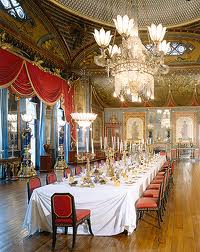
“. . . Lord Hutchinson* was a great feature at the Pavilion. He lived in the house, or rather the one adjoining it, and within the grounds. … As a military man he was a great resource at that time, as we were in the midst of expectations about the Austrians and Buonaparte, and the battle which we all knew would so soon take place between them. It was a funny thing to hear the Prince, when the battle had taken place, express the same opinion as was given in the London Government newspapers, that it was all over with the French—that they were all sent to the devil, and the Lord knows what. Maps were got out to satisfy everybody as to the precise ground where the battle had been fought and the route by which the French had retreated. While these operations were going on in one window of the Pavilion, Lord Hutchinson took me privately to another, when he put into my hand his own private dispatch from Gordon, then Secretary to the Commander-in-Chief, giving him the true account of the battle of Austerlitz, with the complete victory of the French. This news, unaccountable as it may appear, was repeated day after day at the Pavilion for nearly a week; and when the truth began at last to make its appearance in the newspapers, the Prince puts them all in his pockets, so that no paper was forthcoming at the Pavilion, instead of half-a-dozen, the usual number. . . . We used to dine pretty punctually at six, the average number being about sixteen. . . . Mrs. Fitzherbert always dined there, and mostly one other lady—Lady Downshire very often, sometimes Lady Clare or Lady Berkeley or Mrs. Creevey. Mrs. Fitzherbert was a great card-player, and played every night. The Prince never touched a card, but was occupied in talking to his guests, and very much in listening to and giving directions to the band. At 12 o’clock punctually the band stopped, and sandwiches and wine and water handed about, and shortly after the Prince made a bow and we all dispersed.

“I had heard a great deal of the Prince’s drinking, but, during the time that I speak of, I never saw him the least drunk but once, and I was myself pretty much the occasion of it. We were dining at the Pavilion, and poor Fonblanque, a dolorous fop of a lawyer, and a member of Parliament too, was one of the guests. After drinking some wine, I could not resist having some jokes at Fonblanque’s expense, which the Prince encouraged greatly. I went on and invented stories about speeches Fonblanque had made in Parliament, which were so pathetic as to have affected his audience to tears, all of which inventions of mine Fonblanque denied to be true with such overpowering gravity that the Prince said he should die of it if I did not stop. … In the evening, at about ten or eleven o’clock, he said he would go to the ball at the Castle, and said I should go with him. So I went in his coach, and he entered the room with his arm through mine, everybody standing and getting upon benches to see him. He was certainly tipsey, and so, of course, was I, but not much, for I well remember his taking me up to Mrs. Creevey and her daughters, and telling them he had never spent a pleasanter day in his life, and that ‘ Creevey had been very great.’ He used to drink a great quantity of wine at dinner, and was very fond of making any newcomer drunk by drinking wine with him very frequently, always recommending his strongest wines, and at last some remarkably strong old brandy which he called Diabolino.
The 11th Duke of Norfolk


“It used to be the Duke of Norfolk’s custom to come over every year from Arundel to pay his respects to the Prince and to stay two days at Brighton, both of which he always dined at the Pavilion. In the year 1804, upon this annual visit, the Prince had drunk so much as to be made very seriously ill by it, so that in 1805 (the year that I was there) when the Duke came, Mrs. Fitzherbert, who was always the Prince’s best friend, was very much afraid of his being again made ill, and she persuaded the Prince to adopt different stratagems to avoid drinking with the Duke. I dined there on both days, and letters were brought in each day after dinner to the Prince, which he affected to consider of great importance, and so went out to answer them, while the Duke of Clarence went on drinking with the Duke of Norfolk. But on the second day this joke was carried too far, and in the evening the Duke of Norfolk showed he was affronted. The Prince took me aside and said—’ Stay after everyone is gone tonight. The Jockey’s got sulky, and I must give him a broiled bone to get him in good humour again.’ So of course I stayed, and about one o’clock the Prince of Wales and Duke of Clarence, the Duke of Norfolk sat down a dinner of broiled bones.

* Brother of the 1st Earl of Donoughmore; a general officer, succeeded Sir Ralph Abercromby in command of the army in Egypt, and was raised to the peerage in 1801, with a pension of £2000. Died in 1832.

Part Three Coming Soon!

Number One London’s 2019 Queen Victoria Tour will be visiting the Brighton Pavilion – find details here.
THOMAS CREEVEY AND LIFE AT THE ROYAL PAVILION – Part One

Originally published April 2011

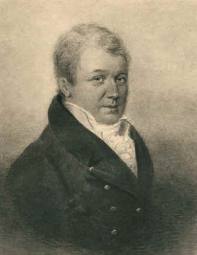
Thomas Creevey


“It was in 1804 when I first began to take a part in the House of Commons, at which time the Prince of Wales was a most warm and active partizan of Mr. Fox and the Opposition. It was then that the Prince began first to notice me, and to stop his horse and talk with me when he met me in the streets; but I recollect only one occasion, in that or the succeeding year, that I dined at Carlton House, and that was with a party of the Opposition, to whom he gave various dinners during that spring. On that occasion Lord Dundas and Calcraft sat at the top and bottom of the table, the Prince in the middle at one side, with the Duke of Clarence next to him; Fox, Sheridan and about 30 opposition members of both Houses making the whole party. We walked about the garden before dinner without our hats.

“The only thing that made an impression upon me in favour of the Prince that day (always excepting his excellent manners and appearance of good humour) was his receiving a note during dinner which he flung across the table to Fox and asked if he must not answer it, which Fox assented to; and then, without the slightest fuss, the Prince left his place, went into another room and wrote an answer, which he brought to Fox for his approval, and when the latter said it was quite right, tne Prince seemed delighted, which I thought very pretty in him, and a striking proof of Fox’s influence over him.

George IV as Prince of Wales by Reynolds

“During dinner he was very gracious, funny and agreeable, but after dinner he took to making speeches, and was very prosy as well as highly injudicious. He made a long harangue in favour of the Catholics and took occasion to tell us that his brother William and himself were the only two of his family who were not Germans—this too in a company which was, most of them, barely known to him. Likewise I remember his halloaing to Sir Charles Bamfyld at the other end of the table, and asking him if he had seen Mother Windsor lately. I brought Lord Howick  and George Walpole home at night in my coach, and so ended that day.

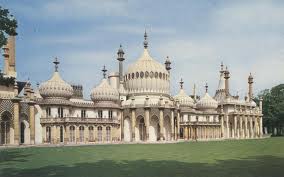
The Royal Pavilion, Brighton
“At the beginning of September,1805, Mrs. Creevey and myself with her daughters went to Brighton to spend the autumn there, the Prince then living at the Pavilion. I think it was the first, or at furthest the second, day after our arrival, when my two eldest daughters and myself were walking on the Steyne, and the Prince, who was sitting talking to old Lady Clermont, having perceived me, left her and came up to speak to me, when I presented my daughters to him. He was very gracious to us all and hoped he should see me shortly at dinner. In two or three days from this time I received an invitation to dine at the Pavilion. . . . Mrs. Fitzherbert, whom I had never been in a room with before, sat on one side of the Prince, and the Duke of Clarence on the other. … In the course of the evening the Prince took me up to the card table where Mrs. Fitzherbert was playing, and said—’ Mrs. Fitzherbert, I wish you would call upon Mrs. Creevey, and say from me I shall be happy to see her here.’ Mrs. Fitzherbert did call accordingly, and altho’ she and Mrs. Creevey had never seen each other before, an acquaintance began that soon grew into a very sincere and agreeable friendship, which lasted the remainder of Mrs. Creevey’s life. . . .
Mrs. Fitzherbert by Cosway

“. . . Immediately after this first visit from Mrs. Fitzherbert, Mrs. Creevey and her daughters became invited with myself to the Prince’s parties at the Pavilion, and till the first week in January—a space of about four months—except a few days when the Prince went to see the King at Weymouth, and a short time that I was in London in November, there was not a day we were not at the Pavilion, I dining there always once or twice a week, Mrs. Creevey frequently dining with me likewise, but in the evening we were always there.

“During these four months the Prince behaved with the greatest good humour as well as kindness to us all. He was always merry and full of his jokes, and any one would have said he was really a very happy man. Indeed I have heard him say repeatedly during that time that he never should be so happy, when King, as he was then.

Part Two Coming Soon!

Number One London’s 2019 Queen Victoria Tour will be visiting the Brighton Pavilion – find details here.
THE DARKER SIDE OF 19TH CENTURY LONDON – THE GREAT STINK

by Kristine Hughes Patrone

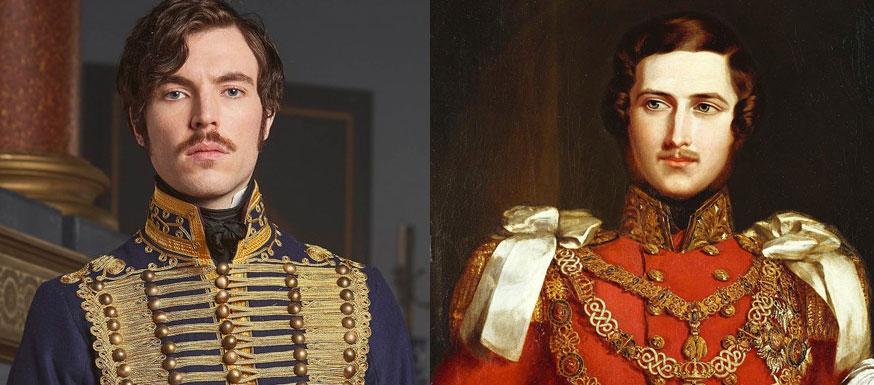
If you’d been watching Season 2, Episode 4 of the PBS Masterpiece series Victoria, you would have seen Prince Albert addressing the problem of the outdated, and stinking, drains at Buckingham Palace. In reality, the problem of outdated and overburdened drains extended far beyond the Palace and permeated through the entire city of London. So prevalent was the problem that it came to be known as The Great Stink, a condition once so grave that it’s remediation has gone down in history as one of the greatest engineering feats of its day.

 The Great Stink actually took place in 1858, but of course London had been stinking for centuries prior. In the first half of the 19th Century, London’s population was 2.5 million, all of whom ultimately discharged their waste directly onto the streets or into the Thames.  Besides people, there were hundreds of thousands of horses, cows, dogs, cats, sheep, etc. adding their daily contributions to the waste problem. John Cadbury, social reformer and candy company founder, wrote:  “Foul odors emanated from more than 200,000 cesspools across London, in alleyways, yards, even the basements of houses. It was not a smell that could be easily washed away.”

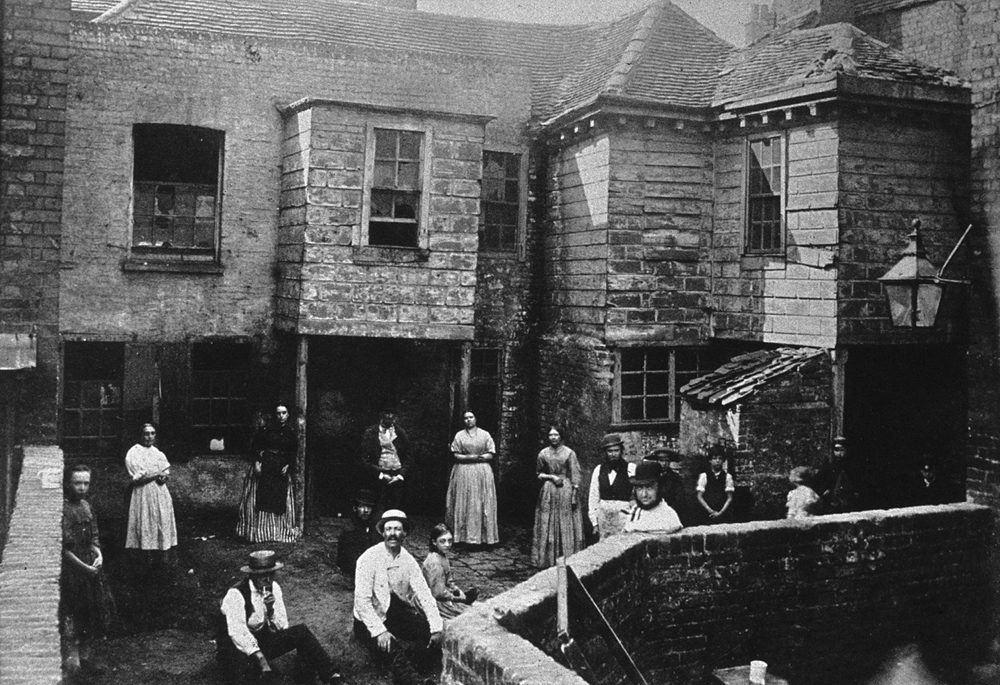
Most homes and businesses were built above cesspits, designed to drain to the street by means of a crudely built culvert to a partially open sewer trench in the center of the street. The design was faulty, to say the least. Cesspits often overflowed and waste soaked foundations, walls and floors of living quarters. Culverts typically became blocked and caused sewage to spread under buildings and contaminate shallow wells, cisterns and water ways from which drinking water was drawn. In October 1660, Samuel Pepys recorded in his diary: “Going down to my cellar…I put my feet into a great heap of turds, by which I find that Mr. Turner’s house of office is full and comes into my cellar.

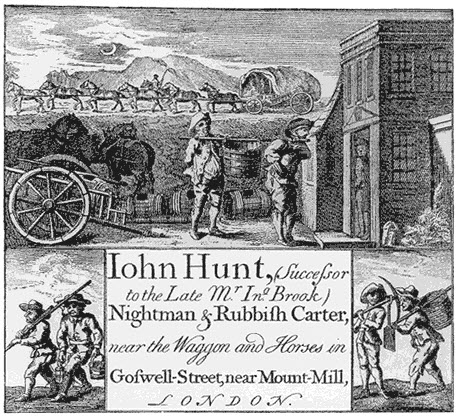
While causing disgust in Pepys and thousands of other Londoners, cesspits gave work to a portion of the population who included night soil men and saltpetre men. Saltpetre is another name for potassium nitrate, an essential ingredient in the manufacture of gunpowder. It was typically generated by collecting vegetable and animal waste into heaps and mixing it with limestone, mortar, earth and ashes. These heaps were kept moist from time to time with urine or other waste from stables. Digging for ingredients in outbuildings such as dovecotes and stables provided adequate supplies of gunpowder for the navy. Beginning during the reign of Elizabeth I, official saltpetre men were given powers to requisition any suitable deposits they came across. In 1621 James I appointed Lords of the Admiralty as Commissioners for Saltpetre and Gunpowder. They divided the country into districts for collection, and specialised saltpetre men were appointed and given weekly quotas to meet. They were also awarded powers with the right to enter premises to dig for nitrogenous earth.

In addition to saltpetre men, night soil men removed human waste that they then sold as fertilizer for crops. It was filthy job that involved crawling through cesspits and sewers or descending into them from ladders. Henry Mayhew describes them in his London Labour and the London Poor. You can read it here.

By 1810, the city’s one million inhabitants had to be content with 200,000 cesspits. The pressure on these and the haphazard sewer system caused the pits to overflow into street drains designed originally to cope with rainwater, but now also used to carry waste from factories, slaughterhouses and other activities, contaminating the city before emptying into the River Thames, or into the old London streams – the Fleet, the Wandle, the West Bourne, the Ravensbourne, the New, the Holbourne and many others that had been partially covered. WC’s discharged human waste directly into these streams and as most of those on the south side were tide-locked and drained into the Thames only at low tide, the results were catastrophic – much of London’s drinking water was still being extracted from the Thames, often downstream from the sewage discharge points.


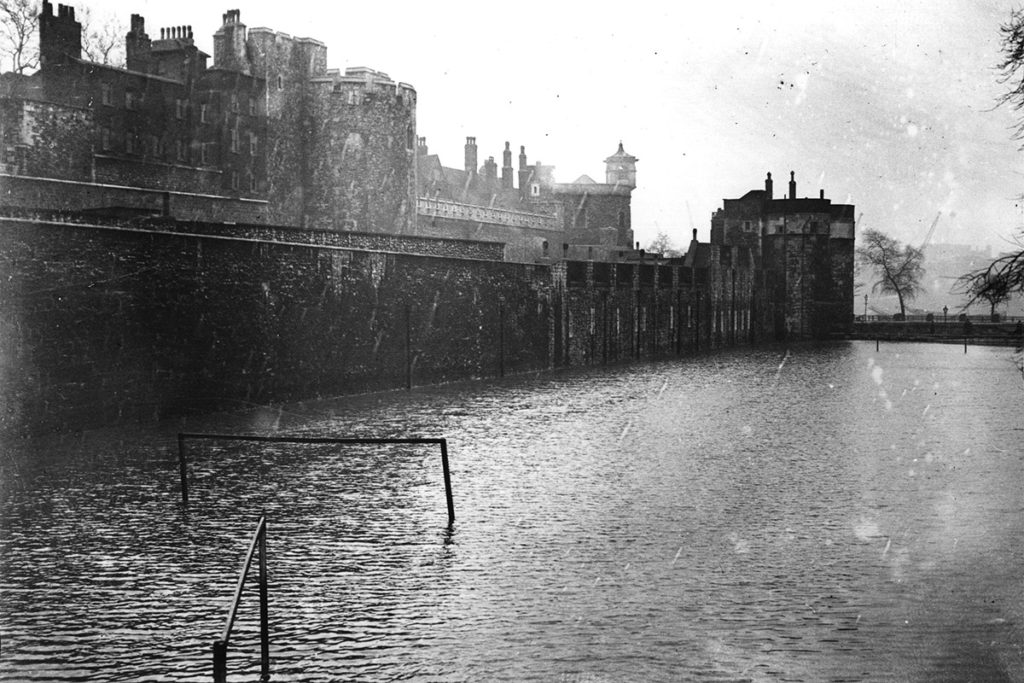
Whilst the government and various commissioners and officials put forth plans for cleaning up London’s cesspits and sewers, the Duke of Wellington forged ahead with action of his own at the Tower of London – he was Constable of the Tower for 26 years. Centuries before, latrines and been built and desgined to empty directly into the moat set into the outer wall of Edward I’s Brass Mount in the north-eastern corner of the Tower. In addition, the moat connected to the River Thames, which washed its foul and putrid self about the Tower at both high and low tide.  In 1830, the Duke of Wellington ordered the silt from the moat be taken to fertilize market gardens at Battersea, but this was not enough to prevent complaints in 1841 that the banks exposed at low tide were ‘impregnated with putrid animal and excrementitious matter … emitting a most prejudicial smell,’ resulting in 80 men from the garrison being taken to hospital. Wellington ordered the moat to be completely drained and covered over, the work being completed in 1845.

Dire problems with London’s water supply inevitably took their toll on the City’s inhabitants – cholera first struck London in 1832 and again in 1840. In 1854 London physician Dr John Snow discovered that the disease was transmitted by drinking water contaminated by sewage after an epidemic broke out in Soho, but this idea was not widely accepted even by that late date.

The lawyer Edwin Chadwick, secretary to the Poor Law Commision, was one of many to draw attention to London’s unsanitary living conditions. In 1842, he produced an uncompromising and influential paper, ‘The Report on the Sanitary Condition of the Labouring Population of Great Britain.’ Shocked by the squalor of the slums, he cited ‘atmospheric impurities produced by decomposing animal and vegetable substances,’ ‘damp and filth,’ and ‘close and overcrowded dwellings” as leading inevitably to disease and epidemics. Chadwick enlisted the aid of Charles Dickens, who personally recorded graphic accounts of the terrible state of reeking graveyards from his brother-in-law, Henry Austin, a leading sanitary reformer.

However, attempts at sanitary clean up were slow, as this letter to the editor of The Times – written in 1849 – shows –

TO THE EDITUR OF THE TIMES PAPER

Sur, -May we beg and beeseech your proteckshion and power. We are Sur, as it may be, livin in a Wilderniss, so far as the rest of London knows anything of us, or as the rich and great people care about. We live in muck and filthe. We aint got no privies, no dust bins, no drains, no water splies, and no drain or suer in the hole place. The Suer Company in Greek Street, Soho Square, all great rich and powerful men, take no notice watsotnedever of our complaints. The Stenche of a Gully-hole is disgustin. We all of us suffur, and numbers are ill, and if the Colera comes Lord help us… Teusday, Juley 3, 1849″.

Nearly a decade later, the situation had hardly improved. The year 1858 saw an exceptionally hot summer, over the course of which the Thames and many of its urban tributaries continued to overflow with sewage. Bacteria grew and the miasma of noxious smells increased until even the members of the House of Commons couldn’t ignore it, being driven out of the House by the foul odours. A House of Commons select committee was appointed to report on the Stink and recommend solutions and within 18 days a bill was passed into law that provided the funds necessary for a comprehensive sewer scheme for London, and to build the Embankment along the Thames in order to improve both the flow of water and of traffic.


In 1855 the Metropolitan Board of Works which, after rejecting many schemes for “merciful abatement of the epidemic that ravaged the Metropolis”, accepted a scheme to implement sewers proposed in 1859 by its chief engineer, Joseph Bazalgette. The intention of this very expensive scheme was to resolve the epidemic of cholera by eliminating the stench which was believed to cause it.


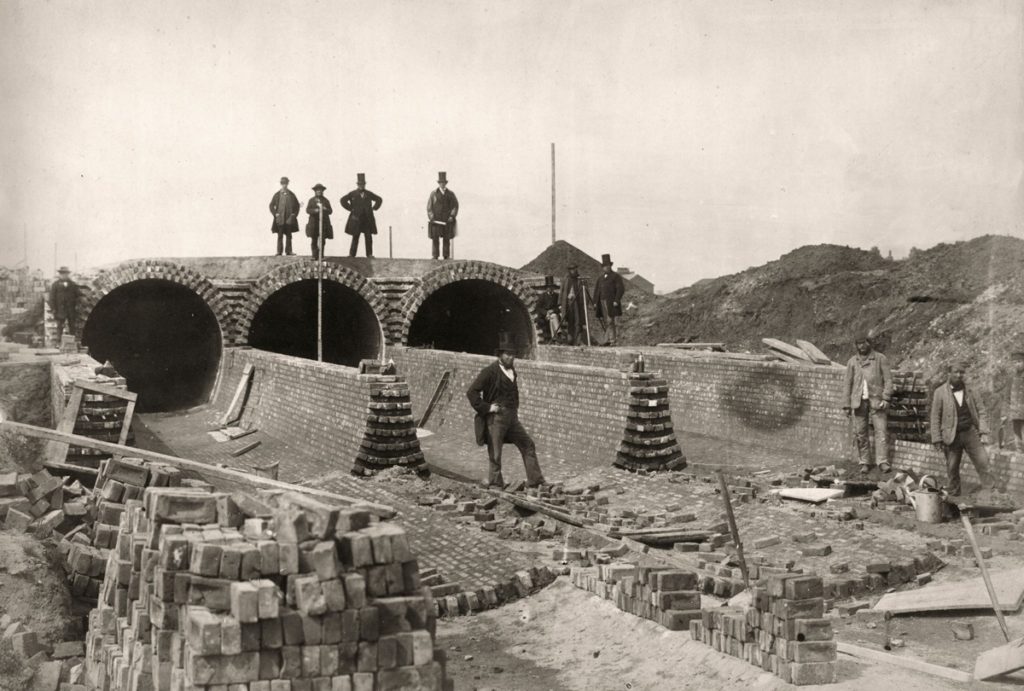
Massive sewers were built running along the north and south banks of the river Thames. These captured the waste that would otherwise pour into the river. The sewers gently inclined downwards to the east, resulting in the waste flowing towards the sea. In areas such as Victoria, the muddy foreshore was reclaimed, and sewers and the new underground railway were installed. On the surface, a 30 metre width of landscaped road and pavement was established, providing a modern and elegant
boulevard now known as the Embankment, which also served to guard against flooding. These new sewers terminated at pumping stations east of London in Kent and Essex, where the waste was carried out to sea on the outgoing tide. The Prince of Wales opened the pumping station at Crossness in Kent in 1865.

Work on London’s massive new sewer system continued over the next six years and, eventually the “Great Stink” became but a thing of memory, as did cholera.

Thames Water has produced a film about the construction of the sewer, which you can watch here.

MR. JONES, I BELIEVE?

George Jones, R.A.

George Jones was a Keeper of the Royal Academy and a British painter who specialized in military subjects, himself having been a military man who served with the army of occupation in Paris after the Battle of Waterloo. Afterwards, Jones went on to exhibit five paintings of the Battle at the Royal Academy and six more at the British Institution, thus earning himself the nickname of “Waterloo Jones.” However, the thing he was most proud of was his resemblance to the Duke of Wellington.

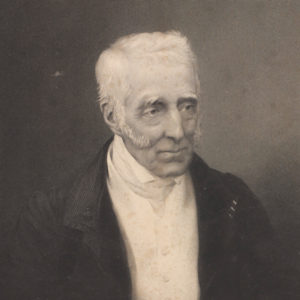
The Duke of Wellington


Jones used to tell anyone who’d listen that he was often mistaken for Wellington and word of this made it’s way to the man himself. “That’s funny,” Wellington was to have replied, “no one ever mistakes me for Mr. Jones!” But there is anecdotal evidence that this did, in fact, occur on at least one occasion when a man approached the Duke and said, “Mr. Jones, I believe?” In true Wellington fashion, the Duke was purported to have shot back, “If you believe that, you’ll believe anything!”