You may recall that we were first introduced to the Moore brothers in a post called Early Rumblings of a Regency that ran on March 7.
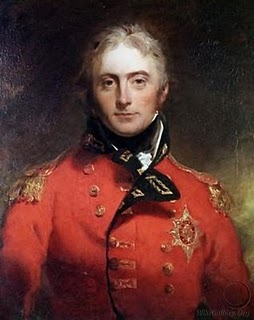
General Sir John Moore
(1761-1809)
After reading the pithy letters of General Sir John Moore and his brother, Captain Graham Moore, I was prompted to do more research into the lives of these men and, perhaps unsurprisingly, things were once again brought round to the Duke of Wellington, to whom all roads seem to inevitably lead.
Commissioned at the age of 15, Sir John Moore served in the American War of Independence and within eight years was a member of parliament. In 1794 he was involved with the British backing of Paoli’s conquest of Corsica and then served in West Indies. He became a major general in 1798 and took part in operations in Holland and Egypt, where he was a leading player in defeating the French at the second battle of Aboukir.
Perhaps his most important military role came when he assumed command of the British forces in the Iberian peninsula following the recall of Harry Burrard of Lymington, Hew Dalrymple and Arthur Wellesley, who were all at that time facing an inquiry over the Convention of Cintra on the French troops’ evacuation from Portugal.
Wellington returned to London and met with Castlereagh, informing him both as to the feelings of Sir John Moore and the estimation in which that officer was held by the army in Portugal. The following letter from Wellington to Sir John sufficiently explains the result of the interview:—
To Lieut.-General Sir John Moore, E.B.
London, 8th Oct., 1808.
My Dear General,
” I arrived in London on Thursday, and I yesterday took an opportunity of mentioning to Lord Castlereagh what I told you I should, notwithstanding that I found, upon my arrival in England, that the object I had in view in conversing with you upon this subject at all had been accomplished by your appointment to command the army. I told Lord Castlereagh that you thought that Government had not treated you well, and that you had considered it incumbent upon you to express your sentiments upon that treatment; but that after you had done so, you had thought no more of the matter, and that it would be found that you would serve as cordially and as zealously in any situation in which you might be employed as if nothing of the kind had ever passed.
” Lord Castlereagh said that he had never entertained any doubt upon this subject; and that after he had communicated to you the sentiments of the King’s Government upon what had passed, his only wish respecting you had been to employ you in the manner in which you were most likely to be useful to the country.
” I find that by the distribution I am placed under your command, than which nothing can be more satisfactory to me. I will go to Coruna immediately, where I hope to find you.
” You’ll have seen by the newspapers that the late transactions in Portugal have made a stronger sensation here than it was imagined they would, and I have had what I think more than my share of the blame. I suppose that there must be an inquiry into the transactions; and till that takes place, I shall leave the public to find out the truth in the best way they can, and shall not adopt any illegitimate mode of setting them right. In the mean time the abuse of the news-writers of London will not deprive me of my temper or my spirits, or of the zeal with which I will forward every wish of yours.
Ever, etc.,
Arthur Wellesley
” Since writing the above I find that it will be necessary that I should wait in England till Sir Hugh Dalrymple will return, and it will be known at what time the inquiry will be made into the late transactions in Portugal on which I am to be examined. I will join you, however, the moment I am set at liberty, for which I long most anxiously. I send a duplicate of this letter to Coruna.”
Wellington’s hoped for reunion with Moore was not to be. Sir Arthur departed for Ireland, where, indifferent to the wrong which was done him by the English people, he resumed the course of his civil duties. There he remained till the beginning of November, when the assembling at Chelsea Hospital of the Court to inquire into the circumstances of the late campaign, and of the convention in which it resulted, recalled him to London. In common with Sir Hugh Dalrymple and Sir Harry Burrard, he appeared before the Court, where each gave his own statement, and supported it by his own line of argument. There is no reason now to conceal or disguise the fact, that the conclusions at which the Court arrived were all pretty well arranged beforehand. Sir Arthur, still treating with the utmost possible delicacy officers who were not by any means so delicate towards him, proved his own case. The Court listened with partial ears to the statements of Sir Hugh and Sir Harry; and the final issue was a declaration, that nobody was to blame; that all which could have been reasonably expected under the circumstances, had been done, so that further proceedings in the case were not necessary. Absurd as the decision was, Sir Arthur made no protest against it; but returned to Ireland and busied himself as before in such affairs as came usually under the cognizance of chief secretaries.
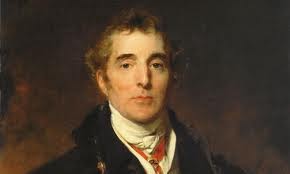
Time passed, and early in January, 1809, Parliament met. One of the first acts of both Houses was to pass a vote of thanks to Sir Arthur Wellesley and the army which had served under him; a measure which pleased him, not alone because his own good name was thereby vindicated, but because the impediments were removed which had heretofore stood between his friend General Spencer and the honours for which he had recommended him.
It was natural enough that the British Government should make Spain, rather than Portugal, the first object of their care. Spain was the larger and more populous country of the two, and it had been impressed upon their minds by Sir John Moore, and indeed by all whom they had heret
ofore consulted, that to defend Portugal after Spain should have been overrun was impossible. Lord Castlereagh therefore proposed to the Junta of Seville, which had by this time assumed the functions of Supreme Government, that Cadiz should become the base of operations for a British army; and then, and not till then, he bethought him of consulting Sir Arthur Wellesley. On the 7th of March he received in reply a memorandum, which not only answered every question proposed, but took a view of the case so masterly and comprehensive as to leave no single point connected with it untouched.
Sir Arthur begins that remarkable paper in these words – ” I have always been of opinion that Portugal might be defended, whatever might have been the result of the contest in Spain, and that in the mean time the measures adopted for the defence of Portugal would lie highly useful to the Spaniards in their contest with the French.” He then goes on to justify this assertion, and to explain that in Portugal, with its feeble Government and docile population, a native army could be officered by Englishmen, which being intermixed with English troops, would soon be rendered capable of facing the best of the Continental armies. It was thus that at every new stage in his career the Great Duke was accustomed to turn to account the experience which the past had given him.
Wellington described Napoleon’s political system as one of terror, which must crumble to pieces if once effectually checked; and he expressed a belief that in Portugal, if wisely dealt with, the first decided check would be given to that system. Sir Arthur’s minute was read in Cabinet, and produced a strong effect, and the refusal of the Spaniards to receive a British garrison into Cadiz arriving not long afterwards, Sir Arthur’s views were unanimously adopted. There remained then but one course for the Government to follow. Sir Arthur was requested to assume the command of the army, which it was determined to employ in the Peninsula, and he did so without a moment’s hesitation.
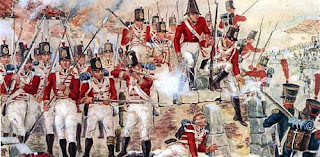
When Napoleon arrived in Spain with 200,000 men, Moore drew the French northwards while retreating to his embarkation ports of A Coruña and Vigo. Moore established a defensive position on hills outside the town, while being guarded by the 15th Hussars, and was fatally wounded at the
Battle of Corunna, being “struck in his left breast and shoulder by a cannon shot, which broke his ribs, his arm, lacerated his shoulder and the whole of his left side and lungs.” He remained conscious, and composed, throughout the several hours of his dying, amongst his final words being “Remember me to your sister, Stanhope,” referring to his friend, the intrepid Near East Asia traveler
Lady Hester Stanhope, to whom it was rumoured he hoped to be wed. Moore lived long enough to learn of his victory. He said to his old friend Colonel Anderson “You know I always wished to die this way.” His last words were “I hope the people of England will be satisfied! I hope my country will do me justice!” He was buried wrapped in a military cloak in the ramparts of the town.
Moore’s military tactics were so brilliant that Moore’s French rival, Marshall Soult, erected a memorial in his honour at Corunna. The Duke of Wellington declared that his victory at Waterloo would have been impossible without his predecessor, who had ensured the survival of a credible British fighting force. Moore’s memory was honoured by Charles Wolfe’s poem,
The Burial of Sir John Moore after Corunna, which ensured that generations of schoolchildren would learn of his heroism.
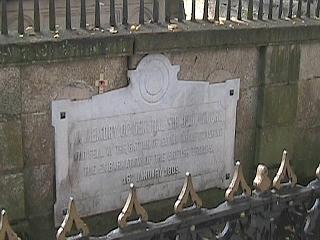
The commemorative plaque on Moore’s stone tomb in the
Jardin de San Carlos, in the old town of A Coruna
Moore had died on 16th January 1809 and Wellington did not reach Lisbon until April 1809, only to find that the French had again pressed south into Portugal, against dwindling Portuguese and Spanish opposition, and captured Oporto. Whilst he and Moore had not met again, Wellington did not forget his fallen commrade in arms, as the following letter shows.
To F. Moore, Esq.
Vera, 24th October, 1813.
Sir,
‘I have received your letter of the 30th September, and you do me justice in believing that I feel every inclination to forward, as far as may be in my power, the views of your son * in the service, on account of his late uncle, and, what perhaps may be more satisfactory to you, on account of his own merits.
‘He is now attached to the staff of Sir J. Hope, but as soon as he is sufficiently high in rank to be employed on the General Staff of the army, you may depend on my taking the earliest opportunity which may offer of so employing him if he should prefer it to being attached as aide de camp to any General officer.
I have the honor to be, etc.
Wellington
*Lieut. Colonel W. Moore, nephew to the late Lieut. General Sir John Moore, K.B.
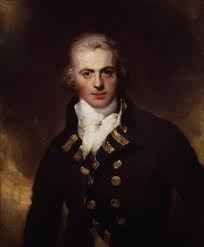
Captain Graham Moore
The younger Moore brother, Graham, joined the navy, rather than the army, and was made Post-Captain soon after the start of the Revolutionary War, commanding the 36 gun frigate HMS Melampus from 1800, before being appointed to HMS Indefatigable in 1803. Moore later commanded the squadron of four Royal Nav
y frigates – Indefatigable, Medusa, Lively and Amphion – that captured a Spanish treasure fleet of four frigates carrying bullion from the Caribbean back to Spain off Cadiz in the Action of 5 October 1804.
Moore was then attached to Sir Robert Calder’s squadron blockading Ferrol. In 1808, he served as Commodore, flying his broad pendant in the new ship HMS Marlborough assisting Admiral Sir Sidney Smith with the Portuguese royal family’s escape to Brazil. He later served as part of the North Sea fleet for several years. He was promoted to Rear-Admiral in 1812, and became Second-in-Command, Mediterranean Fleet in 1815 and served on the Board of Admiralty between 1816 and 1820, being promoted to Vice-Admiral in 1819. He was Commander-in-Chief, Mediterranean Fleet between 1820 and 1823. He was Commander-in-Chief, Plymouth from 1839 to 1842 and flew his flag in HMS Impregnable.
Moore kept a detailed diary from 1784 until 1806, later published in thirty-seven volumes, which provides a unique account of his service as Lieutenant, Commander and Captain. Canada’s Sir Graham Moore Islands, Cape Graham Moore, and Graham Moore Bay are named in his honor.
Though Graham’s life reads rather like the Wikipedia entry from which it was shamelessly lifted, I’m happy to report that he retained the sense of humour we first met in the letters included in a previous post. Of
Lord Nelson Graham wrote that Nelson’s be-medalled and be-ribboned dress at the Sicilian Court made a ‘pitiful impression … more like a Prince of an Opera than the Conqueror of the Nile.’
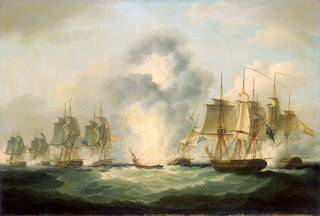 |
Four frigates capturing Spanish treasure ships, 5 October 1804
copyright The National Maritime Museum
From The National Maritime Museum Website: Four Spanish frigates with a rich shipment from Montevideo headed for Cadiz. The cargo was ultimately destined for France and therefore potentially for use against the British. Four British frigates lay in wait to capture them and the two squadrons met on 5 October. The senior British commander Captain Graham Moore asked the Spanish Admiral to surrender. When he refused, action commenced, and within ten minutes the Spanish ‘Mercedes’ had blown up with the loss of all but one officer and 45 men. Half an hour later the Spanish ships ‘Medea’ and ‘Clara’ both surrendered. The Spanish ‘Fama’ tried to escape but also surrendered after she was chased by the British ‘Lively’. Sartorius has arranged the eight ships of the two opposing squadrons across the canvas in pairs. In the right foreground the ‘Lively fires into the ‘Clara’. Ahead of them is the exploding ‘Mercedes’ with the stern of the British ‘Amphion’ beyond her. To the left and ahead the British ‘Indefatigable’ and Spanish ‘Medea’ on the right are in close action. Beyond them the British ‘Medusa’ and Spanish ‘Fama’ are also firing at each other. The painting is signed and dated ‘F. Sartorius 1807.’
|