The Wellington Tour: Masterpiece Theatre

The Wellington Tour is still nine months away and so I do not dwell on it. Much. It would be folly for me to think on the prospect of seeing England again this far ahead of our departure. So I’ve decided that the best thing to do is to put the Tour as far from my mind as possible. You would think it would be relatively easy to accomplish this state of enforced amnesia, but it is not. Reminders seem to be round every bend. Rory Muir’s new biography of the Duke of Wellington was just published in December and so I’ve been reading reviews of it whilst awaiting the arrival of my own copy (oh, Joy!). And then there are the gossip items one can’t help reading lately regarding the engagement of the present Duke of Wellington’s granddaughter, Sofia Wellesley, to ex-guardsman and current crooner James Blunt, pictured below. Lately, one can hardly turn around without encountering the Duke of Wellington. And there was the diorama of the Duke of Wellington’s funeral procession, with rolls of handcoloured pictures of all the dignitaries and their carriages, which I found recently on eBay. It looked something like a thicker Etch-A-Sketch, the pictures moved along rollers that were controlled by the two knobs beneath the glass window. Alas, I was forced to stop bidding when the price flew above four hundred dollars, more’s the pity. It would have been a grand addition to my future Wellington Museum.

And then there’s Masterpiece Theatre, which seems to be on a mission to remind me of the Wellington Tour on a regular basis. I watch a lot of PBS, and thus have been treated to the spate of commercials and programs running up to the premiere of the new season of Downtown Abbey. PBS has been running Season Three episodes of Downton Abbey almost non-stop. Hubby has even gotten into the spirit of things, though unwittingly.

“Hey, Hon!”
“Yeah?”
“You watching your PBS?” (Hubby watches his shows in the living room – I in the bedroom).
“No. Why?”
“That woman’s on again. You know, the one who’s in every British program ever made.”

I switched over to our PBS channel, where I saw the Dowager Countess of Grantham on the screen. “Maggie Smith,” I yelled.”It’s Downton Abbey. I’m going there.”
“Riiight.”
“Downton is really Highclere Castle and we’re going there on the Wellington Tour.”
“Better you than me. My good man,” answered Hubby.

In fact, I’m watching The Secrets of Highclere Castle – again – as I write this.  Once more I hear that Highclere Castle costs roughly a million pounds a year to maintain. And that within it’s walls is the priceless Van Dyck of Charles I, visible in the photo below.

I wonder if the family will be at breakfast when we arrive . . . . . . Once more, I’m told that in 1839 Highclere House was remodeled in the Gothic style. And that Capability Brown redesigned the landscape, which features a ruin-like folly and various temples, including the Temple of Diana, below.
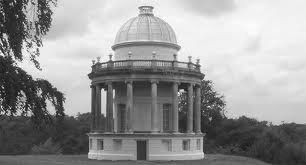
In fact, the more I think on it, the more I realize that what I want to see most at Highclere are the grounds.
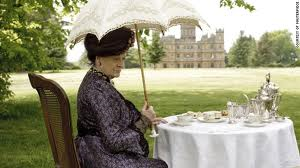
In the photo above, we see one of the fifty-six Cedars of Lebanon planted by the first Earl. I’m glad that Victoria and I have blocked out an entire day for our visit to Highclere, so that we’ll all have the time to take it in at our leisure. You can click this think for a map of the grounds.

This will also leave us plenty of time to visit the Tea Rooms


Highclere Castle Afternoon Tea Menu
Tea and Coffee
A glass of Sparkling Elderflower/Champagne
Selection of sandwiches that may include;
Roasted Chicken and Stuffing
Smoked Salmon and Horseradish
Honey Baked Ham
Egg and Cress
Freshly Baked Scones
Clotted Cream and Homemade Jam
A selection of cakes: Victoria Sponge, Carrot Cake or a Coffee and Cream Cake
&nbsp
;

and, naturally, the Gift Shop. But returning to the house . . . .

I do want to see Lady Mary’s bedroom . . . . . . .
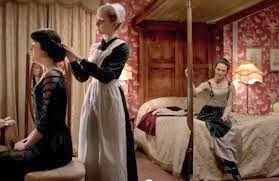
where Mr. Pamuk died. 

It’s part of the tour, as is the gallery along which the ladies of the house carried the body.

I know, I know – with all that’s happened on Downton Abbey, why do I keep going back to that episode? Could it be because it was strangely comedic?

Of course, I’ll be tuning into Downton Abbey this Sunday since I can’t wait to find out what Thomas the Footman has up his sneaky sleeve this season. That should keep me from thinking about The Wellington Tour. Much.

Why not consider joining Victoria and me on our Tour?  We’d love to have you with us as we experience all the fun of Highclere Castle, as well as the exciting feast of additional sites we have planned.

Video Wednesday: Debutantes of 1939

The Duke and Duchess of Devonshire, the Duke of Wellington, Viscountess Macmillan, Lady Bowman, Diana Tennant, Sir Martyn Beckett, Betty Morton, Peggy Cripps and the Duchess of Northumberland reminisce about the debutante season, Nazis, the Coldstream Guards, the Big Apple, the Kennedy Family, the Ritz Bar and all manner of things that recall a vanished way of life. Fascinating stuff. 48 minutes.

A Pinterest Post: Juana Galán

This is one of my favorite Pinterest posts because Juana Galán (1787–1812), above, was fierce, feisty and would no doubt have been a favorite of the Duke of Wellington. During the Peninsular War, twenty year old Juana worked in a tavern in her home town of Valdepeñas, Spain, when she gathered the intelligence that the French were preparing to invade the town. As most of the men were away from the town already fighting in the war against Napoleon, Juana took matters into her own hands and rallied the townswomen in order to form a battle plan of their own.

On June 6, 1808, Napoleon’s troops entered the town, whereupon the women, strategically placed in windows about the square, poured boiling water and oil over the heads of the soldiers who rode past. Juana, armed with either a baton or a cast iron stew pot (depending on which version you believe) then went into the street and beat the soldiers about their heads like there was no tomorrow. No doubt Juana had help in the pummeling, as a single person, man or woman, could not have taken on an entire regiment of French cavalry by themselves, however history credits Juana alone for the deed. The French fled and subsequently abandoned their aim of conquering the region of La Mancha altogether. Soon afterwards, the Spanish army were victorious at the Battle of Bailen against the French.

On May 2, 1810, Juana married Bartolomé Ruiz de Lerma,  with whom she had two daughters. She died during the birth of her second daughter on September 24, 1812.

 
You can find all my Pinterest boards here.

The Wellington Tour – Devonshire House

No matter how many times I visit London, I always find new nuggets of historic trivia that are hugely interesting. I thought I’d do a bit of investigation recently in preparation for the St. James’s Walk Victoria and I will be leading during The Wellington Tour in September, when I discovered some interesting facts.

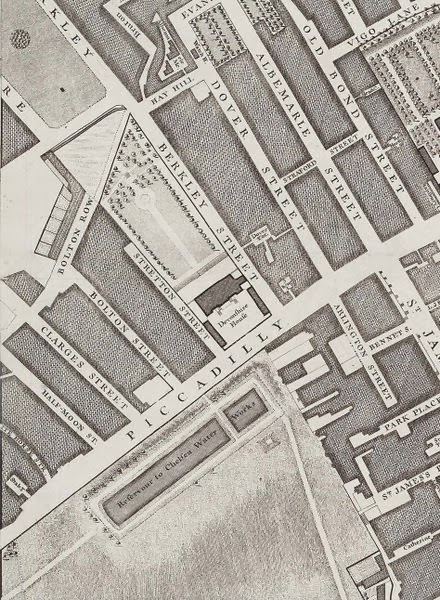
Firstly, I did some research into Devonshire House, London home to the Dukes of Devonshire since 1697, when the 1st Duke purchased the home, then known as Berkeley House, from Lord Berkeley. You can get an idea of it’s prime location on Piccadilly from Roque’s map below.

The house burned down in 1733 whilst undergoing renovations, allowing the Duke to rebuild in a contemporary style better suited to entertaining on a grand scale. The prime example of such an entertainment came over a hundred years on at The Duchess of Devonshire’s Ball, a fancy dress entertainment held in order to celebrate Queen Victoria’s Diamond Jubilee on 2 July in 1897. The Duchess encouraged guests to take their inspiration for fancy dress from history, literature and mythology. Thankfully, the Duchess hired photographer James Lauder of the Lafayette Company to be on hand to photograph the 200 costumed guests in front of different backdrops over the course of the evening.

The Duchess of Devonshire as Zenobia, Queen of Palmyra

The Ladies Churchill as Watteau shepherdesses.

Princess Henry of Pless as the Queen of Sheba

Unfortunately, Devonshire House (below in 1905) was demolished in 1920, when it was sold by the 9th Duke of Devonshire in order to pay death duties. Today, an office building stands on the site.

The new bit of trivia I learned is that the gates from Devonshire House were saved and moved to the entrance of Green Park off Piccadilly. I can’t tell you how many times I’ve walked past, and through, these gates, never realizing their history.


Another piece of London history I’ve walked past numerous times is the Porter’s Rest above, located just down the street from the Green Park Gates as you walk towards Apsley House. As E. Beresford Chancellor tells us, there is a plaque on the object that reads “At The Suggestion Of R.A. Slaney Esq. Who For 20 Years Represented Shrewsbury In Parliament This Porter’s Rest Was Erected In 1861 By The Vestry Of St. George Hanover Square For The Benefit Of Porters And Others Carrying Burdens.” You can be sure we’ll be pointing this piece of street furniture out to everyone on the Wellington Tour – who knew?


Americans and Stately Homes: A Fascinating Book

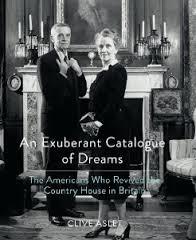
An Exuberant Catalogue of Dreams: The Americans Who Revived the Country House in Britain is the title of a glossy new book by author Clive Aslet.

Clive Aslet in Chicago

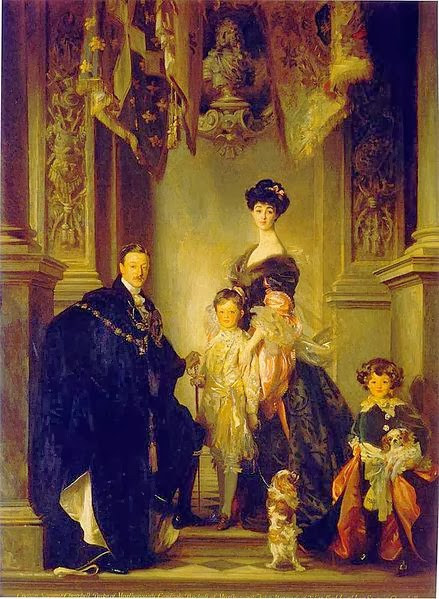
Victoria here, reporting on a recent dinner sponsored by the Royal Oak Foundation and the Woman’s Athletic Club of Chicago.  As part of the US-wide lecture series made possible by the Drue Heinz Trust, Mr. Aslet told us many stories about the wealthy characters who “rescued” so many British houses, even some castles.  There were many familiar names among the Americans, such as Consuelo Vanderbilt (1877-1964), perhaps the most famous of the heiresses who gained a title (Duchess of Marlborough) while her father’s fortune helped to renovate a great estate (Blenheim Palace).

9th Duke of Marlborough, the Duchess and their two sons
by John Singer Sargent, Blenheim

I was surprised — both at the talk and reading the book — at the number of men who also restored, revived, or outright built stately houses.  For example, Andrew Carnegie (1835-1919) was born in Scotland and came to the U.S. as a young teen.  He made the equivalent of billions in steel, oil, and railroads.  He rebuilt the 12th century ruins of the Castle in the Highlands, while contributing much of his fortune to libraries, universities, and other philanthropies in both the U.S. and Scotland.

Skibo Castle, Sunderland, Scotland, now a private club

Exuberant Catalogue of Dreams is a compendium of amazing stories and pictures, many from Country Life magazine. I love everything about English country houses and stately homes, so I relished every word.  It begins with a quote from P. G. Wodehouse: “Damme, they all seem millionaires in America,” from the Earl of Emsworth in Something Fresh, 1915.

Jacket Front: William Waldorf Astor and
Nancy Astor at Cliveden (Getty Images)
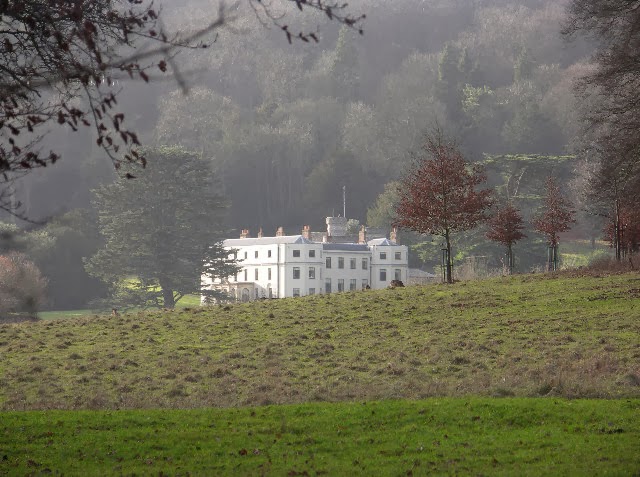
The individuals covered start with San Franciscan Miss Flora Sharon (1858-1924) who married Sir Thomas George Fermor-Hesketh  (in 1880) and took over Easton Neston on Northamptonshire. It ends with Sir Paul Getty  (1932-2003) at Wormsley Park in Buckinghamshire, now the home of his son and family, a famous cricket grounds, and a summer opera venue. 

Wormsley Park

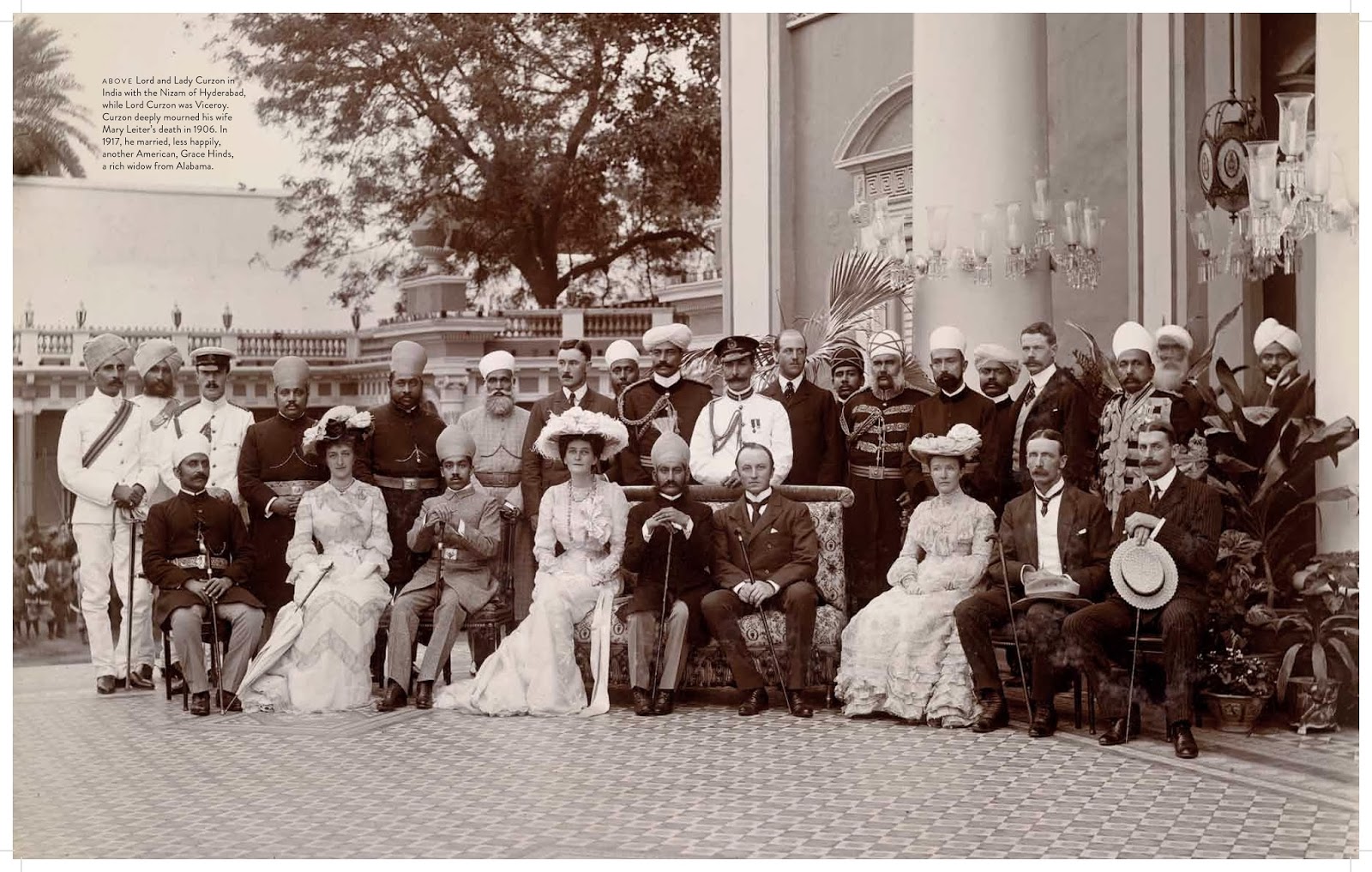
A number of the individuals covered have Chicago connections.  A member of Chicago’s Woman’s Athletic Club pointed out to Mr. Aslet that Mrs. Gordon Selfridge was once a member of the very club in which we all sat.  Selfridge (1858-1947), gaining renewed fame from the Television Series Mr. Selfridge, was associated with the famous Chicago firm Marshall Field and Company before he moved to London and founded the department store that bears his name.  A co-founder of Field’s was Levi Leiter (1834-1904), whose daughter Mary Victoria Leiter (1870-1906) married Lord Curzon, and became Vicereine of India and chatelaine of Kedleston in Derbyshire. .

Lord and Lady Curzon in India

This is just a tiny fraction of the engrossing stories you will find in Clive Aslet’s An Exuberant Catalogue of Dreams. I hope you still have time to put this on your list for Santa!!