THE BRITISH BURN WASHINGTON

THE BRITISH BURN WASHINGTON CITY (WAR OF 1812)

Victoria here. After about two years of fighting here and there, nothing about the War of 1812 had been settled. 
For our post on the beginning of that war, click here.

“Capture of the City of Washington”,
Based on an engraving from Rapin’s History of England,
published by J. and J. Gundee, Albion Press, London, 1815.
After April 1814, when Napoleon had abdicated the first time (see our post here), many of the battle-hardened British troops were sent to North America. Great Britain planned to finish the War with the United States, which had so far been fought in a variety of places, including the high seas, in Canada, in U.S. territories, the disputed west where many Native Americans allied themselves with the British, and in the Gulf of Mexico. None of the battles, whether skirmishes or out and out facing off of warships, was decisive.
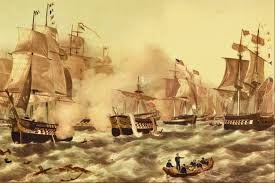
Battle of Lake Erie, Sept. 10, 1813

Once the British troops reached North America, one group landed in Canada and set out to defend and attack from the north, they were effective in limiting any U.S. victories there.  A second group sailed into Chesapeake Bay with the objective of capturing Washington City, the fledgling capital of the young U.S.A., and Baltimore, a busy port and commercial center just about 40 miles north of Washington.

 The British troops routed the Americans at the Battle of Bladensburg, just outside Washington, on August 24, 1814. The capital was expecting an invasion, and as the fleeing U. S. militia men fled through the streets, most residents evacuated.
 
Dolley Madison, by Gilbert Stuart
 
 
One cannot tell the story about the burning of the White House without including the wife of President James Madison, Dolley Payne Madison (1768-1849).  In the absence of her husband who was elsewhere conferring with generals, she was left alone at the White House. She had been working with the architects to furnish the building, only finished a few years previously.  Though continually urged to flee, Dolley would not leave without the monumental painting of first President, George Washington which had to be removed from its frame and the canvas rolled up for its survival. 
 
George Washington by Gilbert Stuart
Both of the above paintings are in the White House Collection
 
 
For a detailed account “How Dolley Madison Saved the Day” from the Smithsonian Institution, click here.  One of the ironies of the story is that the full-length portrait of Washington was a copy, probably by Stuart himself, of the painting commissioned in 1796 as a gift for the Marquess of Lansdowne, the British Prime Minister (known then as Earl of Shelburne) who helped to conclude the Revolutionary War with the independence of the U.S.A.  It now hangs in the  National Portrait
Gallery, Washington, D. C. while the version saved by Mrs. Madison is in the White House. For the whole story of the Lansdowne Portrait, click here


During August 24 and 25, the British burned many of Washington’s government buildings, including the Capitol and the Treasury. When an arsenal exploded prematurely and killed several dozen of the British troops and a freak thunderstorm broke out bringing high winds and heavy rain, the British troops withdrew.  Though many of little Washington City’s buildings were in ruins, most of the residences and many businesses were intact.  When the Madisons returned, they took up residence in the Octagon House, still standing just a block or two from the White House.
 
 
The Octagon House Museum
1799 New York Avenue NW, Washington, D.C.


The unfinished United States Capitol Building was set aflame and only parts of it survived. 
 
U. S. Capitol in August 1814 after the fire
 
For all the details of the fire and the rebuilding, click here.
&
nbsp;
Many historians say the British burned Washington in retaliation for the burning and sacking of the Canadian city of York (now Toronto, Ontario) by the Americans in 1813.  Accounts can be found showing that many buildings were saved in Washington because the troops were well disciplined and had been ordered by their commanders, Admiral Cockburn and Major General Ross, to spare civilian lives and structures.
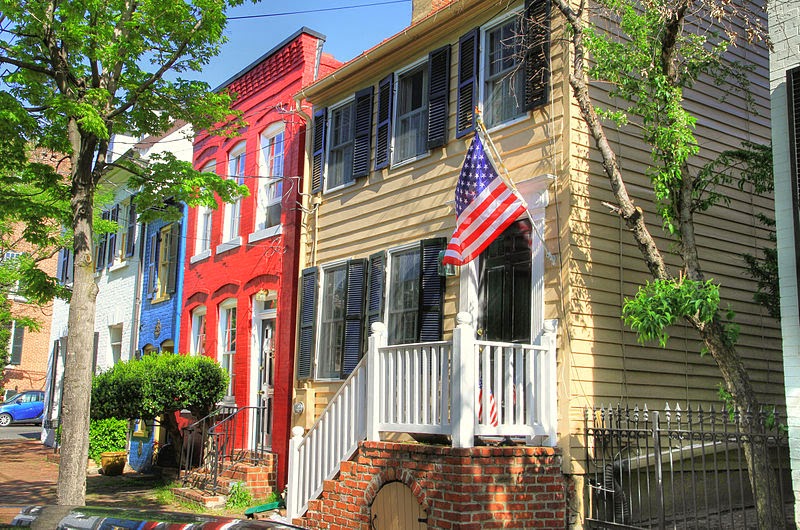
 
 Queen Street, Alexandria, Virginia
 
 
In late August, British ships laid siege to Alexandria, a thriving commercial city on the Virginia side of the Potomac River just south of Washington. The city, which had no defenses, surrendered and the British took large stores of flour, tobacco, wine, and sugar from the warehouses.  After several days of occupation, the British withdrew on September 2, 1814, leaving all buildings intact.
 
After the British troops left the immediate Washington vicinity, they turned their attention to taking Baltimore, to the north,  We will report on that battle in a few days

TEA AT FORTNUM & MASON

Recently, we ran a post containing an essay written by film critic Roger Ebert about his memories of London during the 1960’s. Soon after, we came across this piece written by M.E. Foley that first appeared on the Anglo-American Experience Blog on February 1, 2010about her first experience of having tea at Fortnum and Mason. We enjoyed it so much that we thought we’d share it with you – enjoy!

About ten years ago, a friend invited me to Fortnum and Mason for tea. Last week, I finally got there.
Fortnum and Mason has been a London institution for more than 300 years, since Mr Fortnum, a shopkeeper, and Mr Mason, a royal retainer with a sideline in selling off the unused lengths of candles from the palace, joined forces in the earliest 18th century. Whenever Queen Anne needed light, only a new candle would do, so Mr Mason had access to a lot of excess royal wax.
Fortnum and Mason is famous for its groceries, though the shop has other departments. But these are not run-of-the-mill groceries. The store used to have a whole department just for outfitting expeditions—by which I mean serious attempts to climb Everest, and the opening of King Tut’s tomb. Queen Victoria bought supplies for Florence Nightingale from Fortnum & Mason, and had them dispatched to Nightingale’s hospital in the Crimea.
Today it’s the kind of grocery in which you find oranges and lemons steeping in ornately curved bottles of Muscadet vinegar, or find stacks of gift hampers packed with Stilton or port. The store’s own line of marmalades includes seventeen flavours, some of which can be had in your choice of ordinary jars, ceramic crocks, or “glass amphorae”. For a mere £85 you can get 3 pounds of chocolate Easter eggs that nest, seven-deep, matryoshka-doll style. To call the marzipan fruits miniature works of art leaves me without a superlative left to describe the even-more-beautiful glacé fruits —slices of kiwi and pineapple saturated with sugar syrup, which leaves them looking as if they are about to burst with juice at the same time as they seem to be set into crystal.
And then there are the teas—too many varieties to count. Okay, a Safeway or Sainsburys will stock a lot of teas, but I don’t think they carry Jin Shang Tian Hua, sold with the leaves sewn into the shape of chrysanthemum buds that unfurl in hot water so as to make it seem that the flowers bloom. The buyer is advised that the effect is seen to best advantage in a tall glass cup. At £175 per 125 grams (so a little over $1000 per pound, then), you won’t want to miss any of the unfurling.
The store offers three restaurants, an ice cream parlour, and a wine bar, and two of the restaurants serve afternoon tea. As I’d spent the day mooching around the stacks at the London Library, I wasn’t dressed for the more formal restaurant (the St James), nor did I necessarily need the full tea with finger sandwiches, cakes, scones, and biscuits, nor did I want to spend £32. So I decided on the Fountain Restaurant and settled at a table by the window. I’ve had lunch there a few times, but never tea, so opened the menu to see the choices, but the waiter was with me in a flash.
I couldn’t place his accent, but thought he might be Italian. I was served by four other waiters in the course of my visit—well, one was a waitress—and not one of the five was English, but that’s not unusual in London. Like all the staff, the fellow who took my order wore a white shirt, gray waistcoat, and pink tie, with an old-fashioned long white apron to protect his trousers.
He pointed across the room to the cakes—chocolate, Victoria sponge, and something that I couldn’t understand given his accent, but among the words I identified “like caramel”. Scones, I thought, would suit the occasion better, so I ordered tea and scones.
“What kind of tea?” he asked.
“Assam, please.” That’s my usual.
He looked concerned, and asked me a question I couldn’t understand.
“Excuse me?”
He pointed to the menu. “This one?”
I glanced down; I hadn’t noticed the list of teas. It said Assam, though, and seemed to have a bunch of adjectives around it, the way some restaurant menus do. I told him that would be fine.
The tea duly arrived in a silver pot, with a silver strainer and a small silver vessel to set the strainer in when I was finished straining. And the scones came, two of them. They were…well, to put the best face on it, I’ll say they were petite. I had expected small scones; Fortnum & Mason is traditional, so I didn’t think they’d serve the gigantic scones and behemoth muffins you find in the US, but these scones were practically microscopic. The blobs of butter and strawberry jam also on the plate were about the same size as the scones. And where was the milk for the tea?
I asked this new waiter for some milk.
“You want milk?” he asked, as if he’d never heard of such a thing.
Of course I wanted milk. This is England! Almost everybody has milk in their tea. And I also asked to see the menu again, to read about the different teas, because the first waiter appeared so fast I didn’t get a good look. Another server came with milk in a small silver jug, and yet another one provided a menu. And there I found my mistake.
The menu offered the microscopic scones for £7, but that was with ordinary tea. The only Assam tea on the menu was a single estate tea: Assam Mohokutie Second Flush, from “one of the oldest tea estates located in the Doom Dooma district, south of the Great Brahmaputra River.” I read that Mohokutie means “the buffalo camp”, and that “the leaf is wiry and tippy, producing a malty golden liquor.”
And I also read, rather too late, that it cost an extra £10. Oops. That’s just for the tea, on top of the charge for the scones. I was out £17 (30 bucks) already, and definitely out of my league.
But since I was going to have to pay for it, I decided to sit back and enjoy every bit of it. The waiter had advised me to let the tea steep a minute before pouring, so I read about the other single-estate teas. It could have been worse. I could have accidentally ordered the Tregothan Black from Cornwall—yes! Truly English tea, actually grown here, but at £34 per pot (not far shy of $60), I won’t be trying it any time soon. Doubtless each tea bush is watered by a platinum irrigation system, and is warmed on cold evenings by the breath of local horticulturists, chosen for the task personally by Prince Charles, as Cornwall is his Duchy.
In the same price range as my Mohokutie, however, I might have chosen Yunnan Golden Needles or Pi Lo Chun. The former, according to the menu notes, is of such a calibre that you can tell it was picked with “fine plucking standards”, and it is called needles because the leaves have been rolled into thin, pointy shapes—presumably by the delicate hands of select maidens whose families have been rolling tea into needles for millennia, carefully guarding their secret technique. The latter is said to have an especially fruity flavour which it “absorbs” from the “aroma” of peach blossoms on trees grown nearby. I’m not at all sure that it’s scientifically possible for leaves to soak up the aromas of their neighborhoods—but what do I know? Until I read that menu, I hadn’t know there was tea grown in Cornwall, or tea with hand-rolled leaves, or tea that cost 60 bucks per pot. Maybe that’s why there are few teas grown in urban areas; nobody would want tea tasting of car exhaust, litter, and graffiti.
My Mohokutie Second Flush did have a gorgeous golden colour, somewhere between clover honey and the butterscotch candies we used to have when I was a kid. (I’m sure that real tea connoisseurs have a more sophisticated vocabulary for shades of tea.) I’m not sure I identified any malty flavours, and I didn’t think the taste so special that milk should be forbidden, so I tried a cup that way. Big mistake. With milk, the colour was more pavement-puddle brown than golden. The taste wasn’t anything to write home about, either. I decided to have the next cup milkless, but by the time I was ready for it, the tea in the pot had stewed, as they say here: over-steeped, yielding a colour you might call mahogany brown.
The tiny scones, by the way, were fabulous. So flaky you couldn’t spread anything on them, but the butter and jam were redundant, anyway. The scones were so rich and so sweet that adding anything would only detract.
So I enjoyed my solitary tea at Fortnum and Mason, and lifted a cup to the friend who had invited me so long before. Through the years, we never had found a convenient time for that much-discussed tea. It came to be a joke, that someday we’d have tea at Fortnum and Mason, but we never made it a priority because Fortnum and Mason would always be there, and we had all the ti
me in the world.
Alas, we didn’t. The last time she mentioned it, it was in a wistful way because by then we knew it would never happen, and she’s no longer with us.
So I’ve resolved to go ahead and do some of the things I’ve always wanted to do. I highly recommend it. If you’re British and you want to see the USA, get your tickets. If you’re American and you’ve always wanted to visit the United Kingdom, come on over. Maybe we’ll have tea at Fortnum  and Mason. But perhaps not from the single estate tea portion of the menu.

VIDEO WEDNESDAY: LIVE UK WEBCAMS

Today we bring you links to some webcams in use in the UK in order to share interesting sites throughout Britain. Sit back, pour yourself a cuppa and enjoy a varied tour through the lens of  these cameras.

Trafalgar Square

Tower Bridge

Sussex Gardens, Paddington

Abbey Road (lots of silly beggars recreating the Beatles walk)

The Cobb, Lyme Regis, Dorset

Interior of barn, Donkey Sanctuary, Sidmouth, Devon

Ordsall Hall Ghost Cam

The beach at Bognor Regis

Market Square, Petersfield, Hampshire

Three webcams in Oxford

Inside the Arnside Chip Shop

Edinburgh Zoo panda cam

Whitby Harbour – 3 views

Wookey Hole Caves

The Peregrines at Norwich Cathedral

Lake District National Park webcams

Dublin Zoo webcams

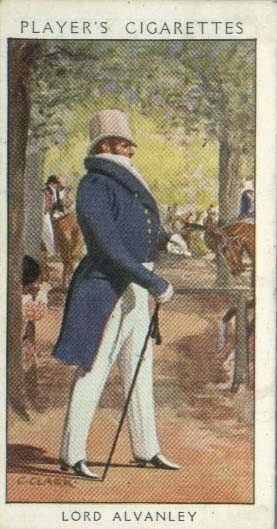
LORD ALVANLEY REVISITED

From The Letter-bag of Lady Elizabeth Spencer-Stanhope, Volume 1


Marianne Spencer-Stanhope writing to John Spencer-Stanhope.


Paris, March1818.
“I hear nothing of the man taken up for shooting at the Duke, if it is true that one has been secured. Poor Bacon was taken up by 5 Gens d’Arms at nine in the morning and after a secret examination sent to the Conciergerie. It was conjectured he was concerned with a Banker who went off—but instead of that being true, the Banker absconded with all his money! Sir C. Stuart means to make a fuss about it, for no one is safe if taken up and confined only on suspicion.
“The King on one of the most stormy days we have had took three people out to prevent their voting for the Recruiting Bill. However, they contrived to get back in time, by which means it was carried by four. He was angry—they said they did it as a point of duty to him.
“Lady Mansfield’s Ball was fine—but too many women in proportion to the men, and many of the latter old. A great many French. I only saw oneLady out of each family. Many, many young ladies sat out. All the ton French ladies danced the whole night. Lady M. hoped she should see you, tho’ she forgot to invite you.
“Lord Alvanley came to Paris a few days ago with his mistress. They refused him admittance at the Hotel de Londres, saying they had English families there, among others “the great Mrs Beaumont,” He coolly replied that they need not mind her, for her fortune had been made by keeping a house of bad character; and so he got in! Did you ever hear of such scandalous impudence!”

On behalf of Lord Alvanley, however, it may be added that about this date another story got abroad respecting him which redounds more to his credit . He and Lord Kinnaird were playing whist one evening, when, owing to some mistaken move in the game on the part of Lord Alvanley, Lord Kinnaird completely lost his self-control and abused his friend in the most violent manner. Lord Alvanley listened in silence to the torrent of denunciation, then, rising from the card table, observed very quietly, “Not being blessed with your Lordship’s angelic temper, I shall retire for fear of losing mine!”
Moreover, Marianne Stanhope, about the same time, makes mention of an instance of Lord Alvanley’s good-nature which came under her notice. It appears that one of his greatest friends was an Irish dandy who, for long, went by the nickname of “King Allen” on account of his having achieved a unique position in the world of fashion. This monarch of the beau monde spent his days, as did others of his class, exhibiting his faultless clothes in fashionable resorts; and so wedded was he to this existence that he could seldom be persuaded to quit London even for the benefit of his health.

Once, however, Lord Alvanley found his friend moping at the sea-side, a prey to profound depression, and spending sleepless nights tossing on his couch, unable to account to his own satisfaction either for his insomnia or his melancholia. With the intuition of a kindred soul Lord Alvanley at once probed the root of the dandy’s complaint. He recognised that it was impossible for such a man to exist apart from the bustle and noise of the great city to which he was accustomed, and faute de mieux, Lord Alvanley invented a remedy. At his own expense, he engaged a hackney coachman who undertook to rattle his vehicle up and down past King Allen’s lodgings till the early dawn, and another man who agreed to shout the hours throughout the night in the strident tones of a London watchman. The ruse was successful. Whether other persons living in the neighbourhood were equally pleased, history does not relate, but the melancholy dandy, deluded into a belief that he was back once more in his favourite haunts, slumbered peacefully, and was in time restored in perfect health to the scenes of his former triumph.
Indeed, “Lord Alvanley,” wrote Lady Granville at a later date, “was quite charming which does not mean homme, but I cannot persuade myself that he is much altered and that he will end by being a very good, as he is a most captivating, person. Such cleverness, without one grain of effort. What a receipt for being, as he is, quite charming.”

THE DUKE OF WELLINGTON TOUR: SLOANE SQUARE

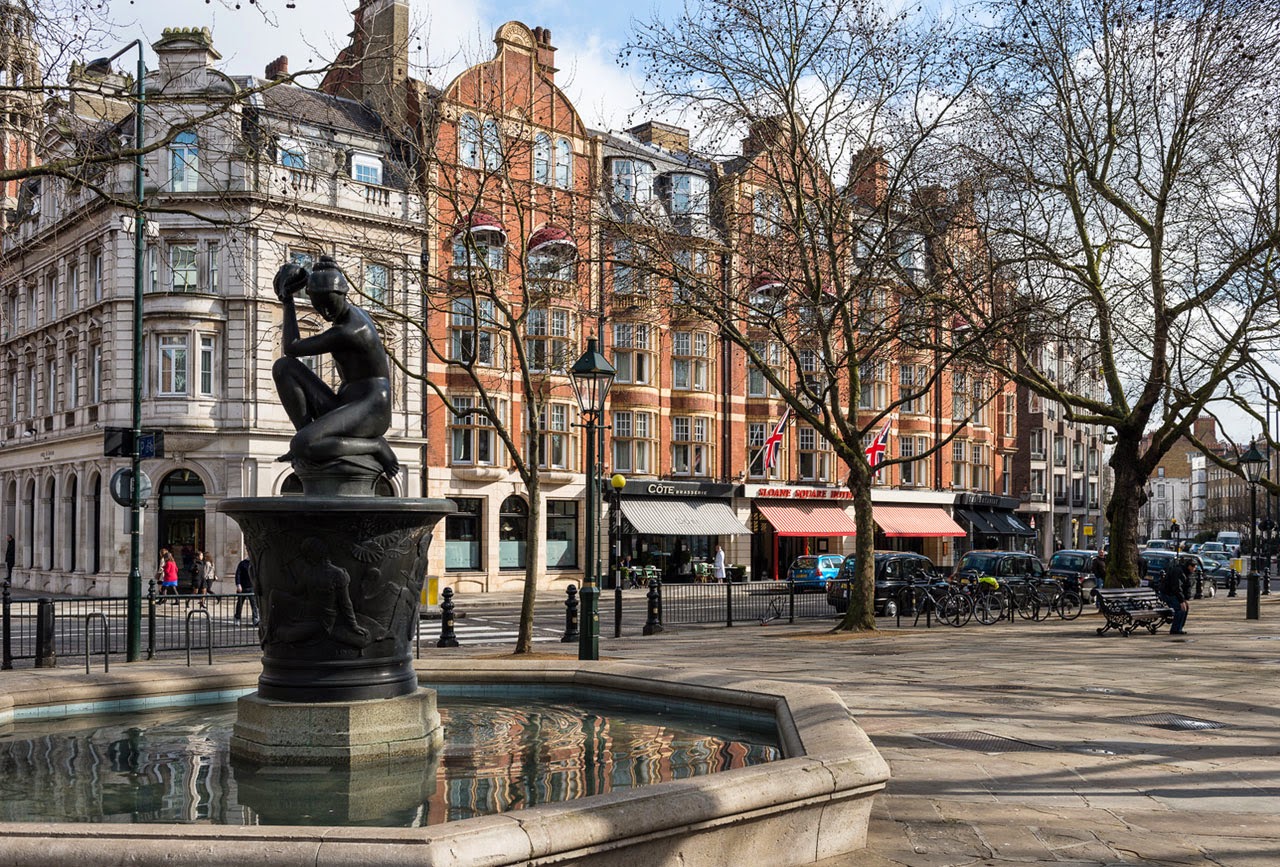
During our upcoming sojourn in England, one of the neighborhoods Victoria and I will be staying near is Sloane Square, in Kensington. It’s not an area I’ve stayed in before, so I’m looking forward to exploring the area more fully this time over. While I’ll be arriving in London at 6 a.m., Victoria won’t be landing at Heathrow until 6 p.m., so I’ll be on my own for the better part of the day. 
I think I’ll first stroll down the King’s Road and browse the shops on my way to Caffe Nero for that cup of coffee I’ve been anticipating for so long. Perhaps I’ll stop into the nearby Waterstone’s Books for a browse before retracing my steps to Royal Avenue, with it’s 19th century terraced houses, one of which was home to Bond, James Bond. This Avenue will bring me directly into Burton Court, a 14 acre green space that holds ancient trees and the Brigade of Guards cricket ground and backs directly onto Chelsea’s Royal Hospital. 
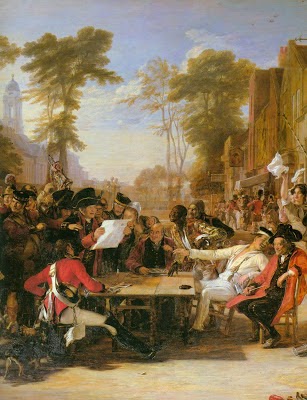
The Royal Hospital is yet another of those places I’ve always meant to visit, but have never gotten around to seeing. And it’s yet another place with connections to the Duke of Wellington – will Victoria and I ever run out of people, places and things connected to the Duke of Wellington? More on that soon . . . . but for now we begin the Wellington connections to the Royal Hospital with his commission of that famous painting, The Chelsea Pensioners Reading the Waterloo Despatch, by artist David Wilke. You can read a prior post about the painting here

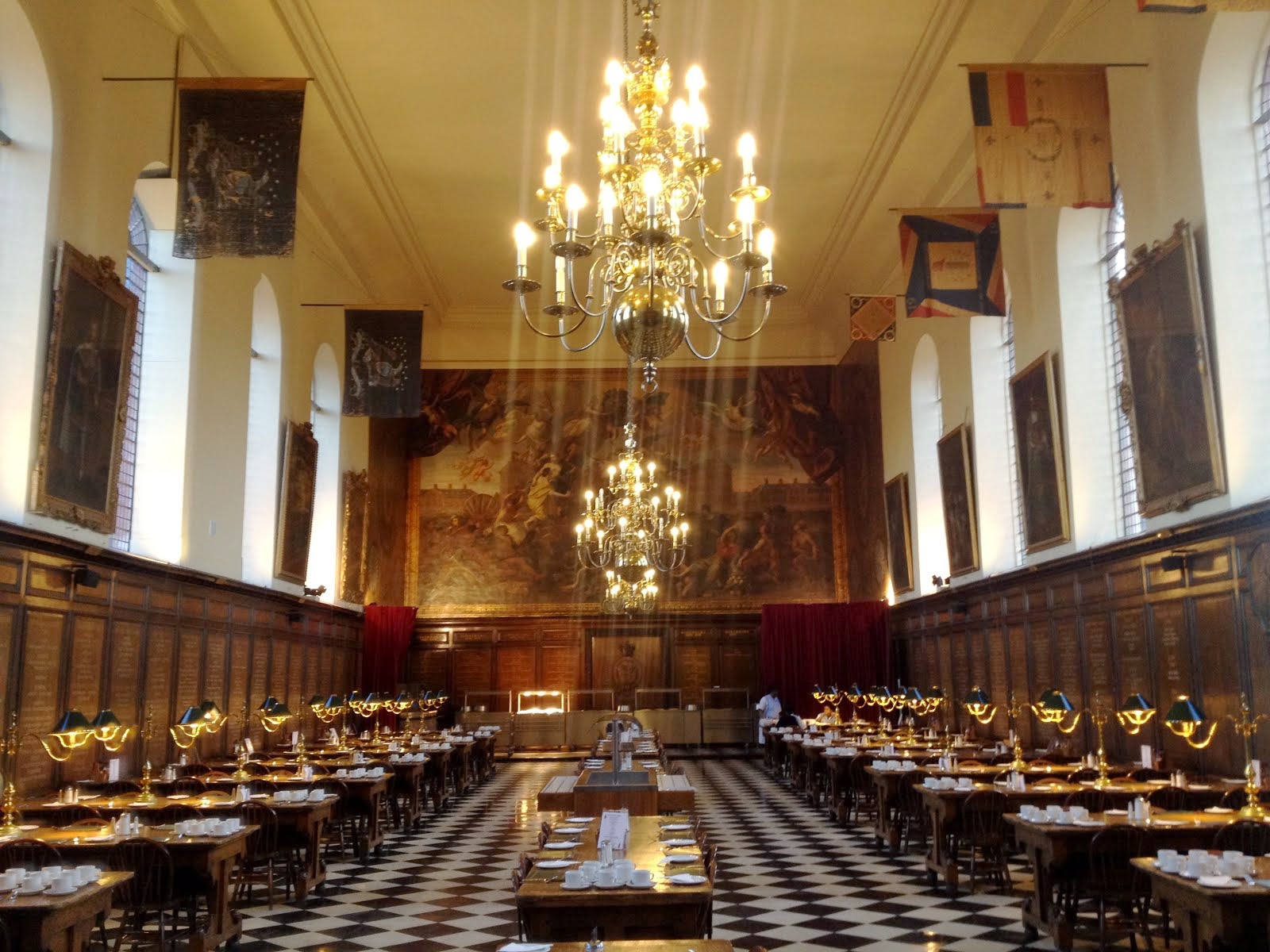
A second Wellington connection is the Hospital’s Great Hall, designed by Sir Christopher Wren, where Wellington’s body lay in State in 1852. In addition, there’s a Museum that features military artifacts, including items associated with the Duke, as well as other uniforms, weapons, models, etc. 
After the Royal Hospital Museum, I may just mosey down to nearby Ranelagh Gardens, another site I’ve been meaning to visit. It’s the site of the present day Chelsea Garden Shows and has been incorporated onto the Hospital’s estate. 


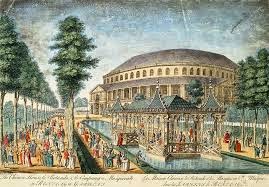
Of course, the Ranelagh Gardens of the 18th and 19th century is long gone and the Rotunda, Chinese Pavillion and lantern lit lanes are no more, but how glorious would it be to tread on the same ground where dandies, powdered ladies and the haute ton once paraded on summer evenings? 
Remember, by this time of day I’ll still have about six hours to fill before Victoria arrives at our hotel, so I may just head up to Piccadilly and take a London Walk. The Old Palace Quarter walk sounds like fun. Strange, is it not, that someone who leads tours and walks themselves should want to take someone else’s tour? I suppose we all like to be led round London and entertained with historic tales.
Afterwards, I plan to visit Hatchard’s bookshop. I reckon it will be about 4 p.m. by now and I’ll have a couple of hours to browse the books before returning to our hotel in order to meet Victoria. A quick wash and brush up for her before we toddle out for out first of many dinners together in England. And where, you ask, will we be dining? At the Duke of Wellington pub, of course. Or, as it’s more cheekily referred to – The Duke of Boots.