JOHN SINGER SARGENT AT THE METROPOLITAN MUSEUM OF ART

JOHN SINGER SARGENT AT THE METROPOLITAN MUSEUM OF ART

Victoria here reporting on my recent visit to the wonderful exhibition at the Met, which was shown at the National Portrait Gallery in London last winter and spring..

detail of Villa Torloni

From the introduction by the Met:
Throughout his career, the celebrated American painter John Singer Sargent (1856–1925) created portraits of artists, writers, actors, and musicians, many of whom were his close friends. Because these works were rarely commissioned, he was free to create images that were more radical than those he made for paying clients. He often posed these sitters informally—in the act of painting, singing, or performing, for example. Together, the portraits constitute a group of experimental paintings and drawings—some of them highly charged, others sensual, and some of them intimate, witty, or idiosyncratic. The exhibition Sargent: Portraits of Artists and Friends, which opened at The Metropolitan Museum of Art on June 30, brings together about 90 of these distinctive portraits, including numerous loans from private collections. It will also explore in depth the friendships between Sargent and those who posed for him as well as the significance of these relationships to his life and art.

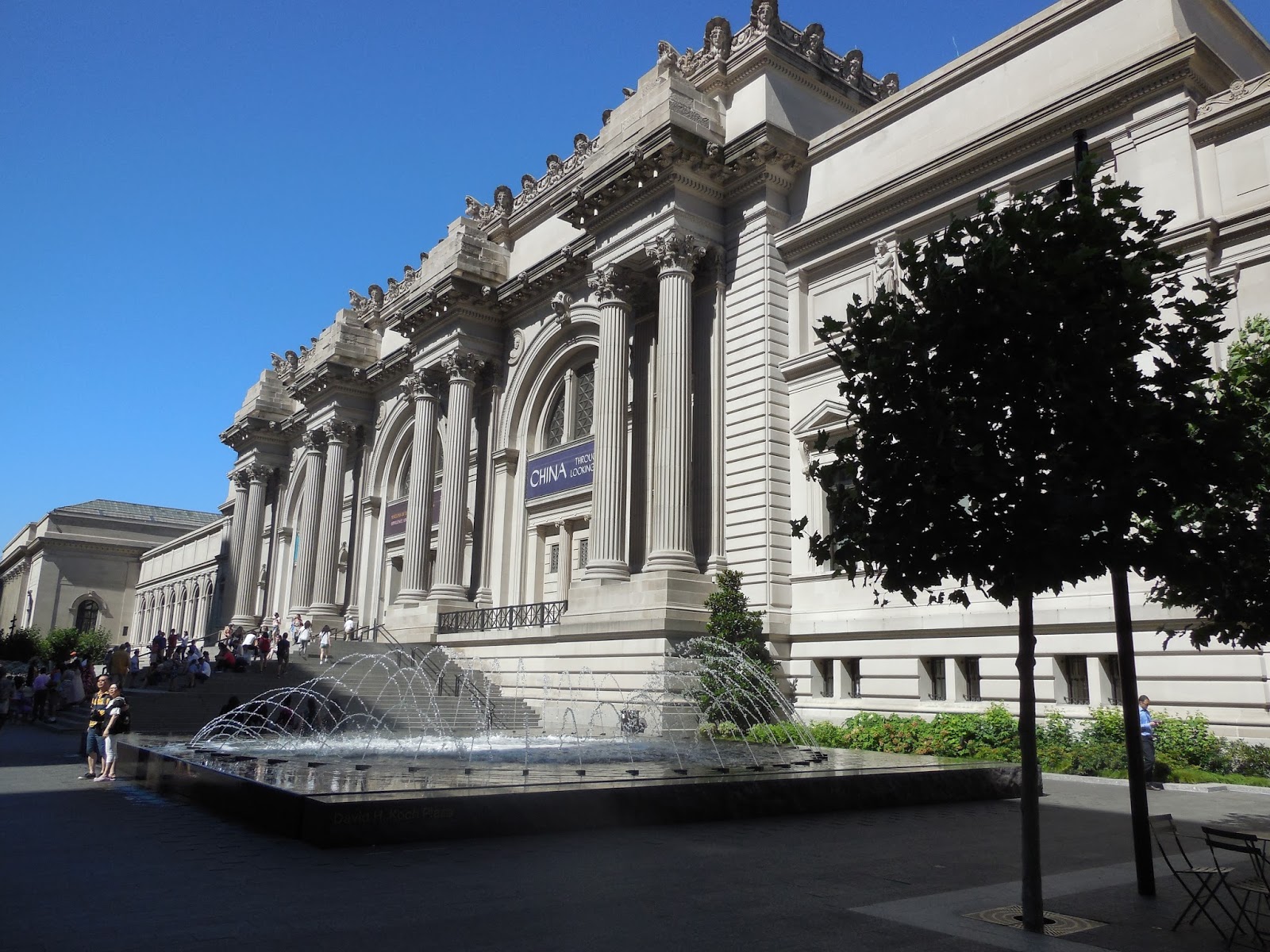
Metropolitan Museum of Art, Fifth Avenue

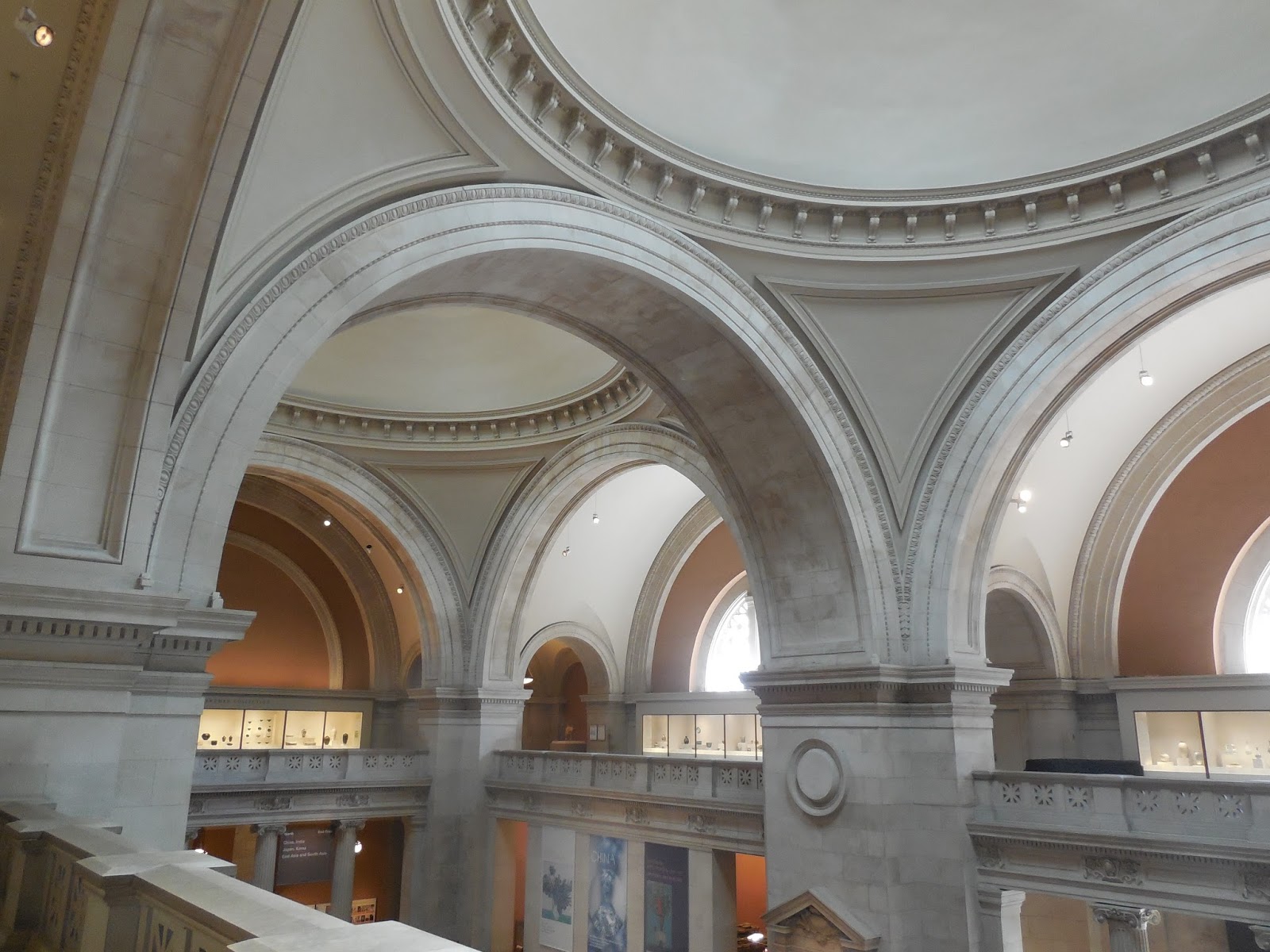
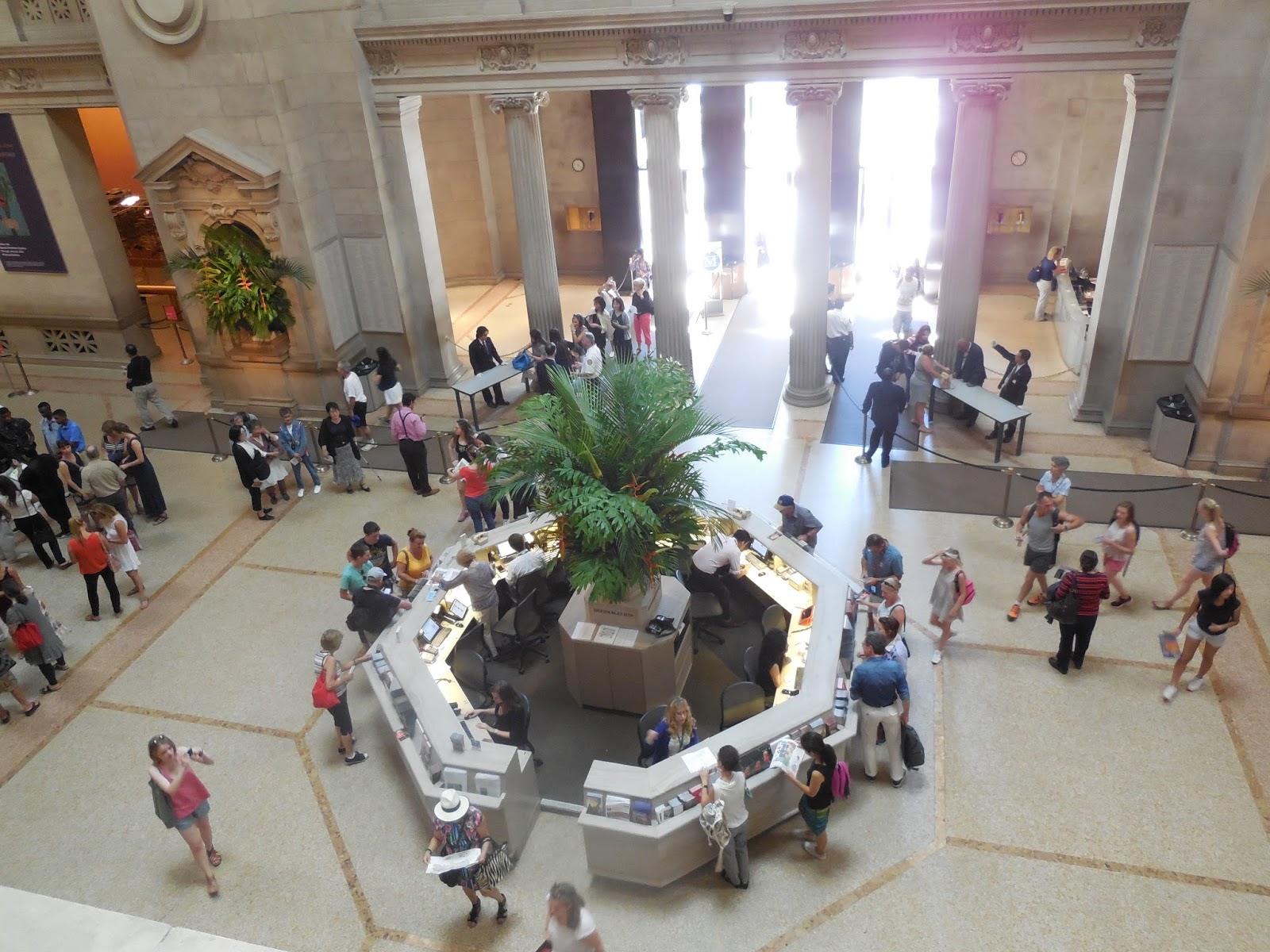
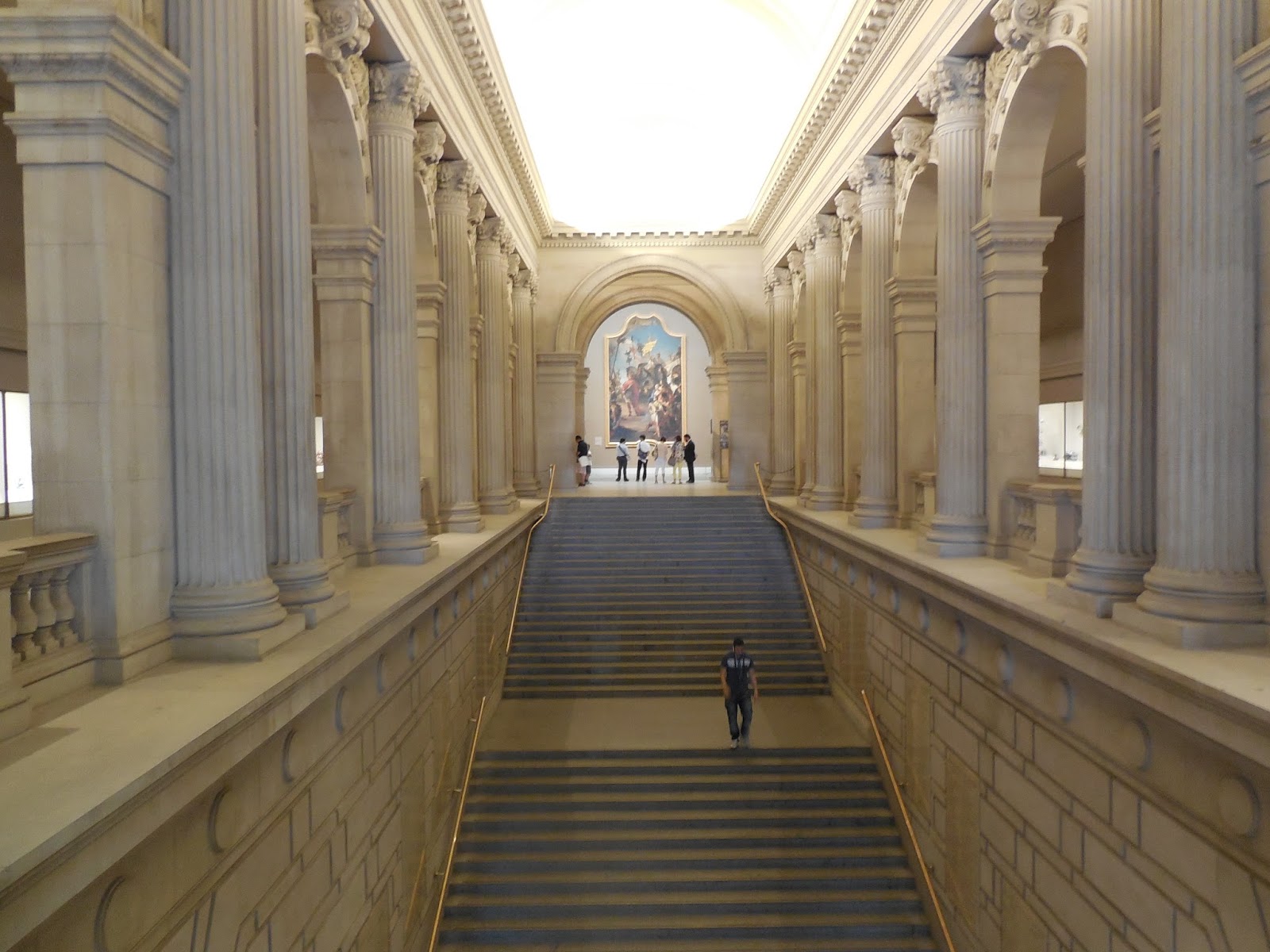
I never tire of re-visiting the Met, and it is alwlays fun to snap new angles of the building.

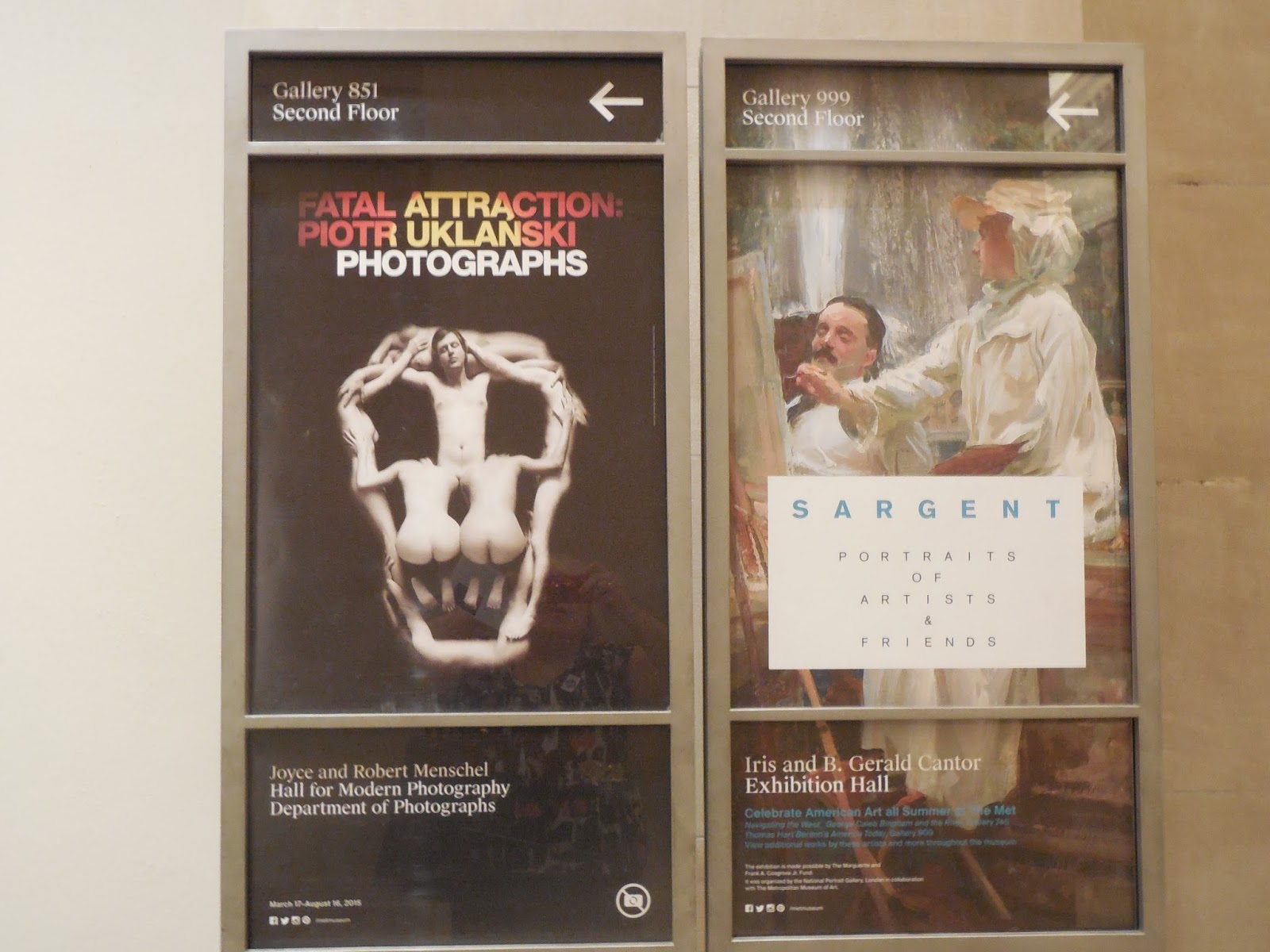
On my way to the special exhibition, I encountered several posters, including a weirdly striking image from a photography exhibition.


Sargent was born of American parents in Florence, Italy, in 1856.  He is best known for his portraits, in the grand traditions of Van Dyke, Reynolds, Gainsborough, and Lawrence.  Like their work, his vivid portrayals of the rich and privileged, including their jewels, sumptuously painted fabrics, and noble backgrounds,were perfect for royalty. But these pictures are somewhat different, more experimental, even intimate. The people he painted in these works are his friends and colleagues, fellow members of the intellectual, theatrical, and artistic elite.

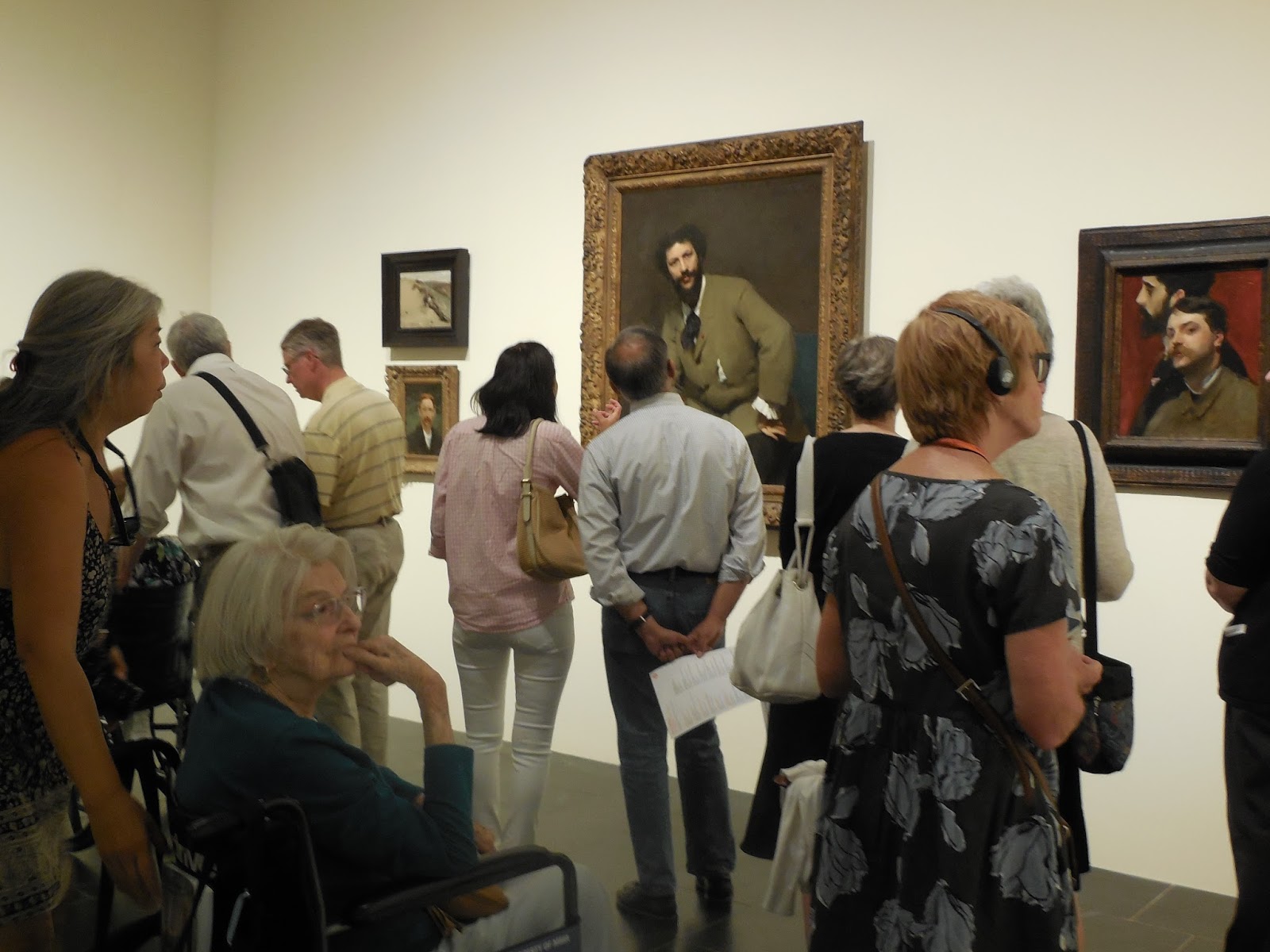
Eager viewers around Sargent’s portrait of Carolus-Durand, .
Early in the show is the portrait of Charles-Emile-Auguste Durand (1837-1917). with whom Sargent studied painting, beginning in 1874. According to the text panel, when this portrait of Durand by Sargent was exhibited at the Paris Salon in 1879, some remarked, “the student had surpassed the master.”  
Carolus-Durand, 1879

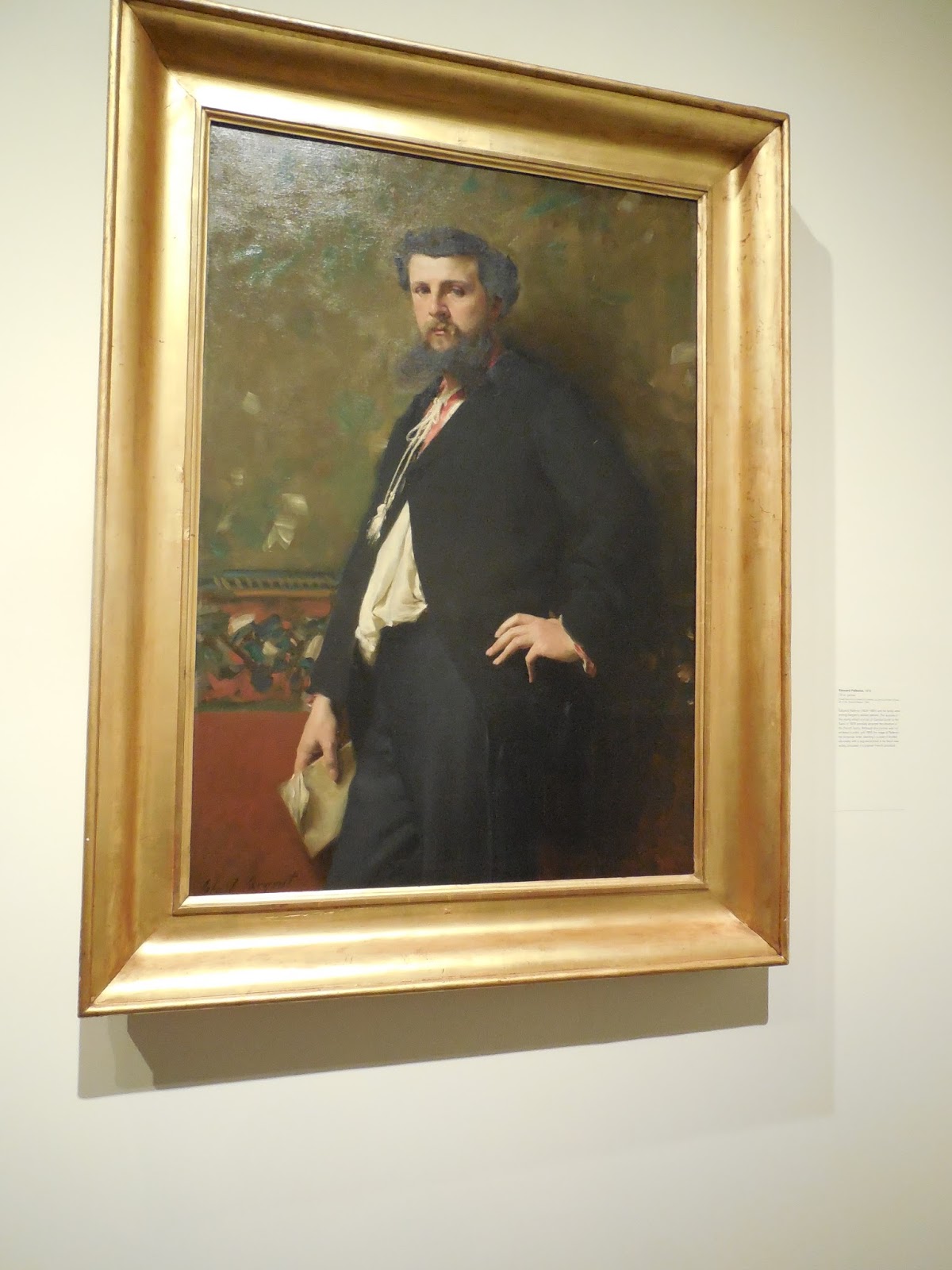
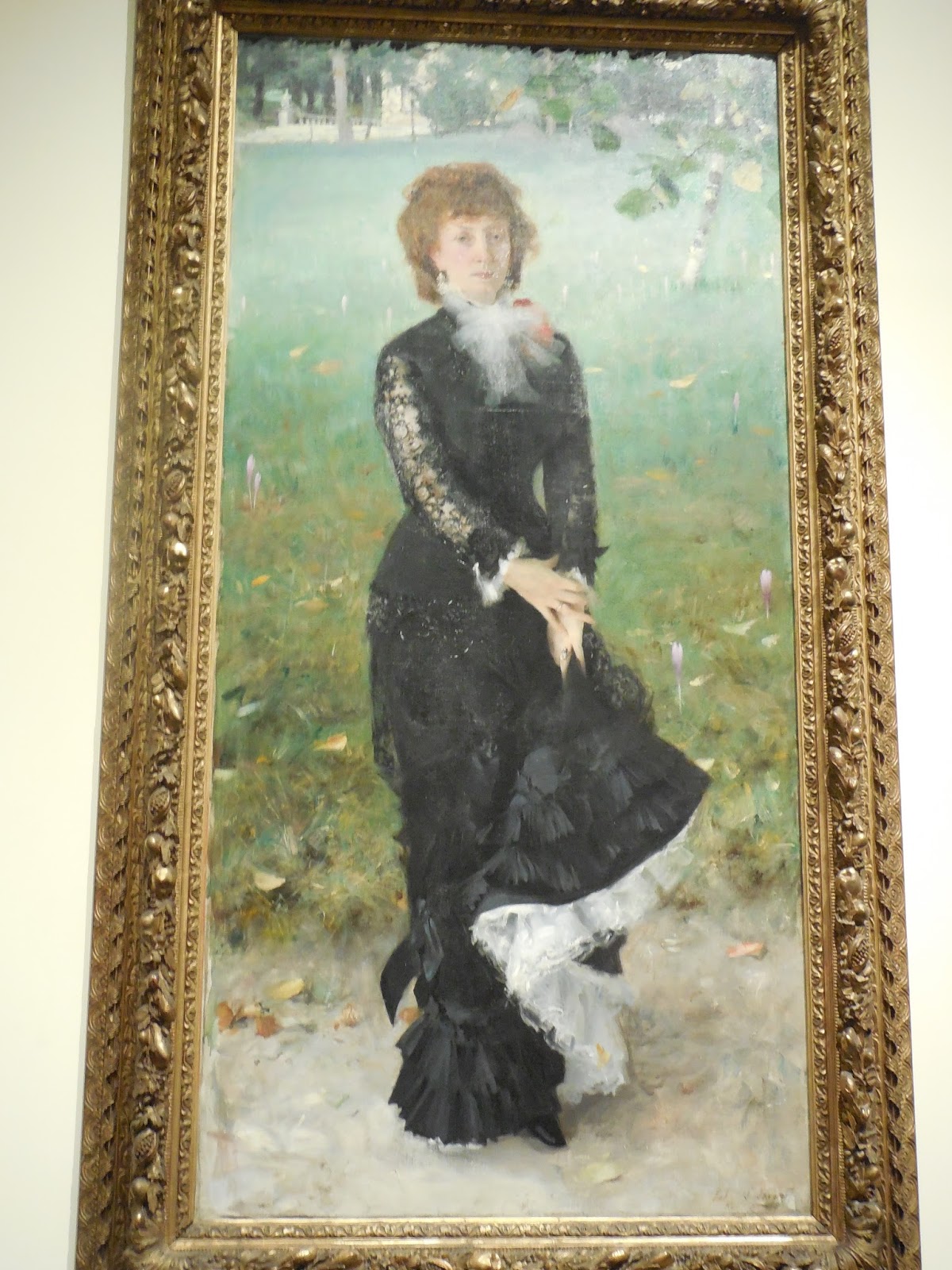
Sargent painted the Pailleron family soon thereafter. The father was a playwright, the mother from an influential cultural family in France, and the daughter a literary figure much later.

Edouard Pailleron, 1879

Madame Edouard Pailleron, 1879
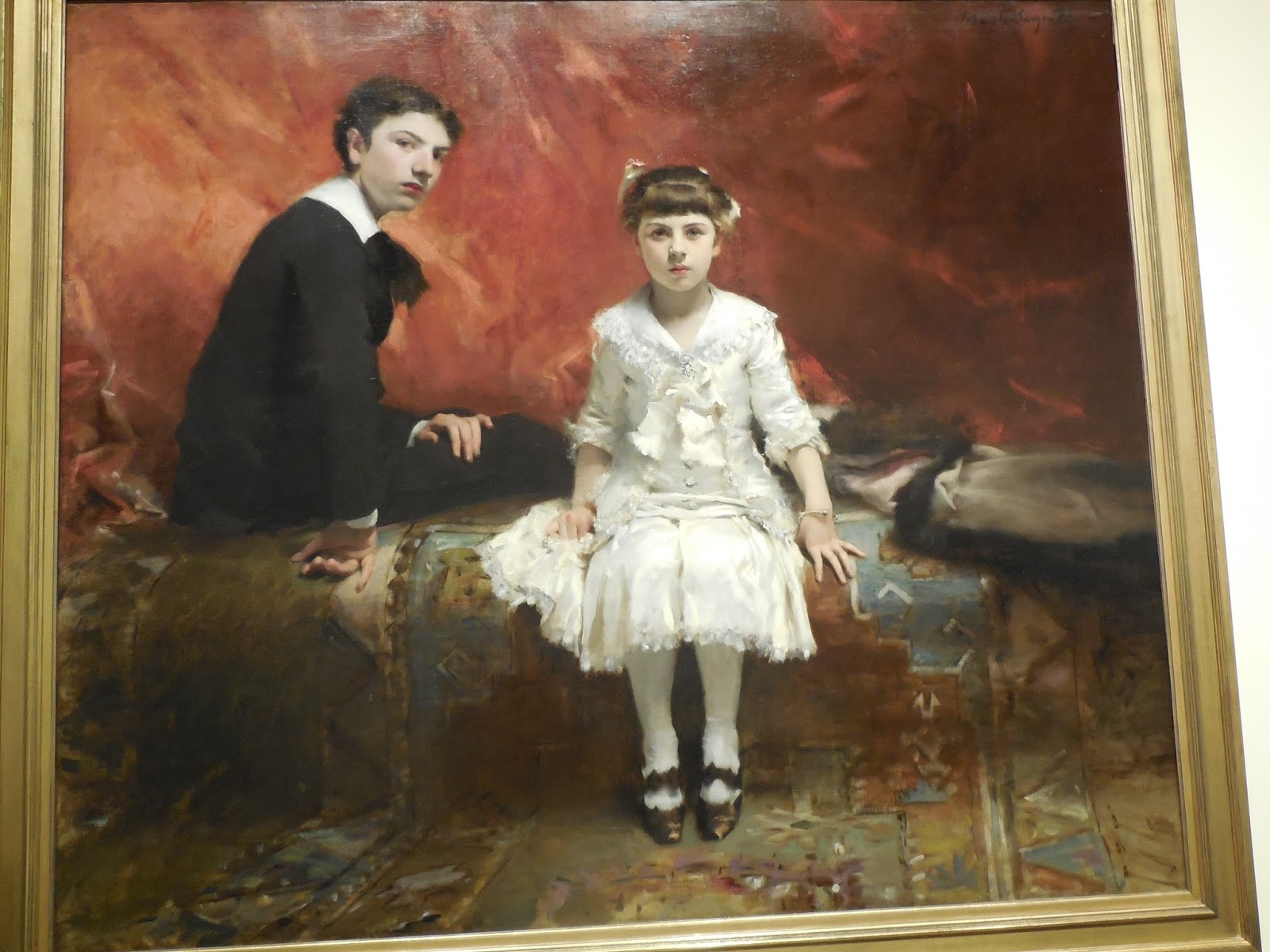
Edouard and Marie-Louise Pailleron, 1881
This is an unusual double portrait, According to the text panel, “Sargent captures the young girl’s disquieting intensity in an image that departs from the conventional Victorian  representation of children, Her brother, seated at an angle on the far side of the settee, seems a secondary presence.” 
< br />
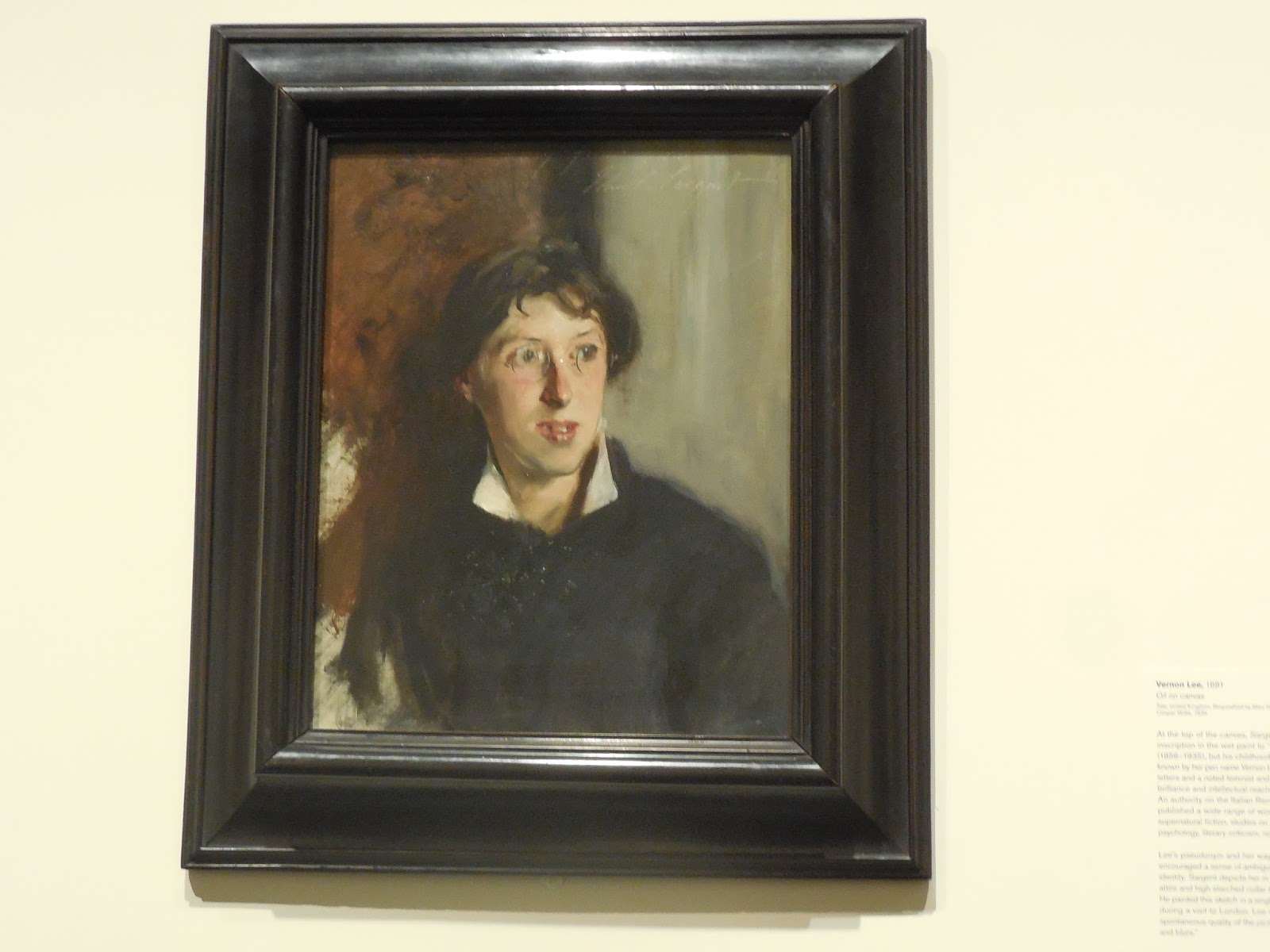
Vernon Lee, 1881
Using a pen name, Sargent’s friend Violet Paget, was a “noted feminist and pacifist” as well a a woman of letters.publishing on aesthetics and psychology as well as authoring plays and novels.
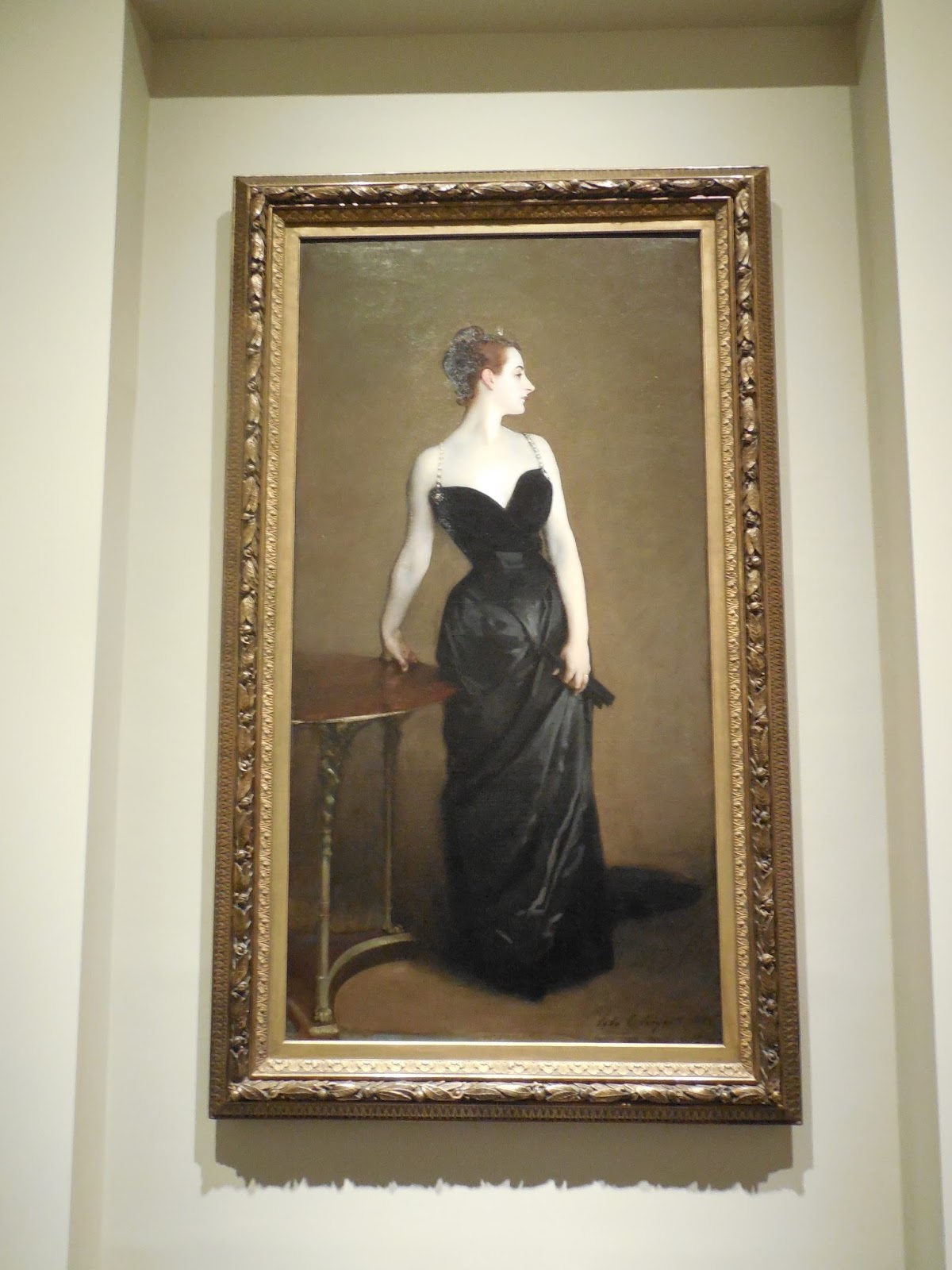
Madame X   (Madame Pierre Gautreau) 1883-84
Virginie Avegno Gautreau (1859-1915) from Louisiana was well-known in Parisian society for her daring appearance; Sargent emphasized her glamour in this portrait, which was first exhibited with one shoulder strap slipping down.  The Paris Salon of 1884 was scandalized and Sargent re-painted the strap in its ‘proper’ place. A photograph of the original painting is shown with it.
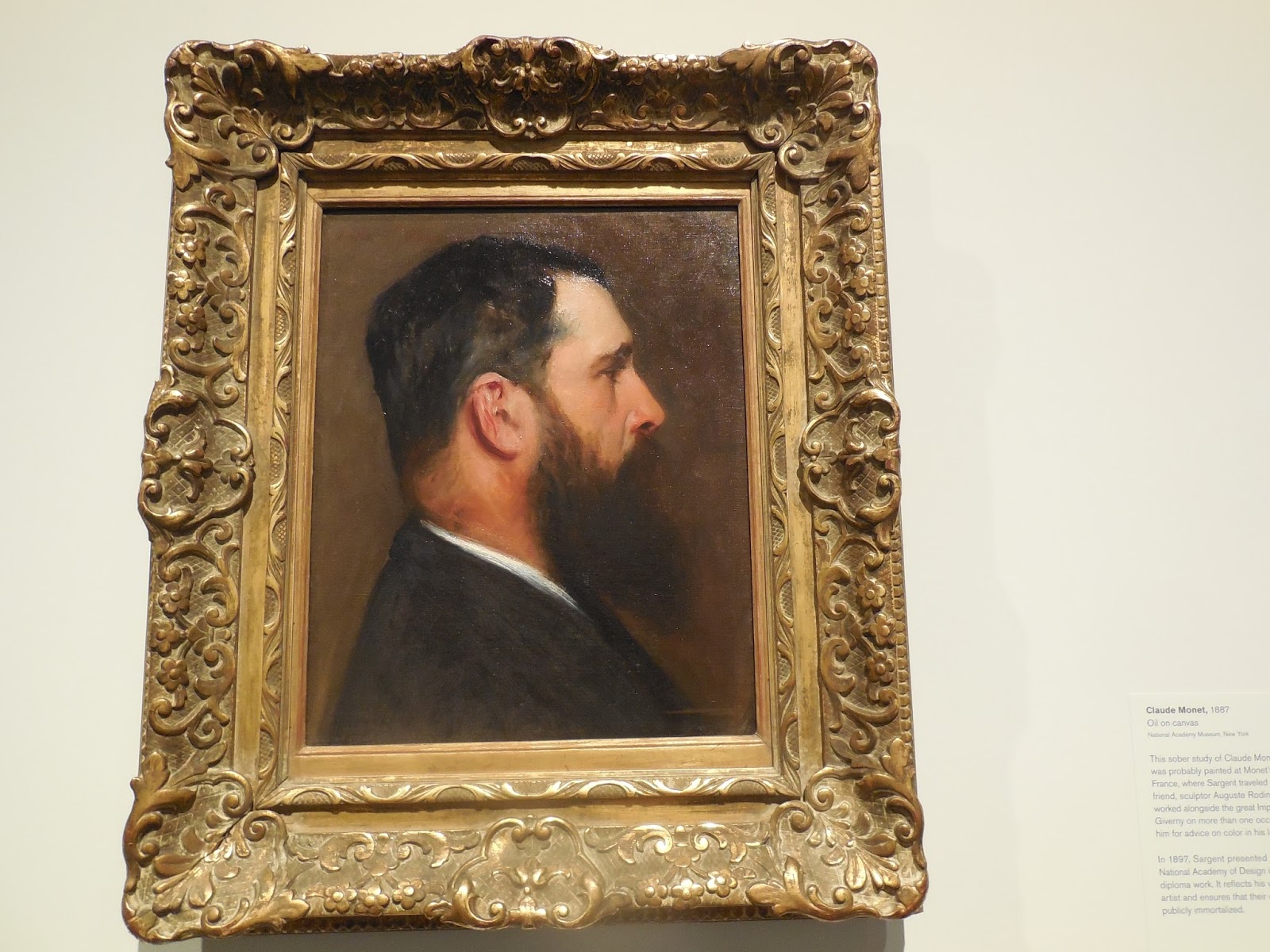
Claude Monet 1887
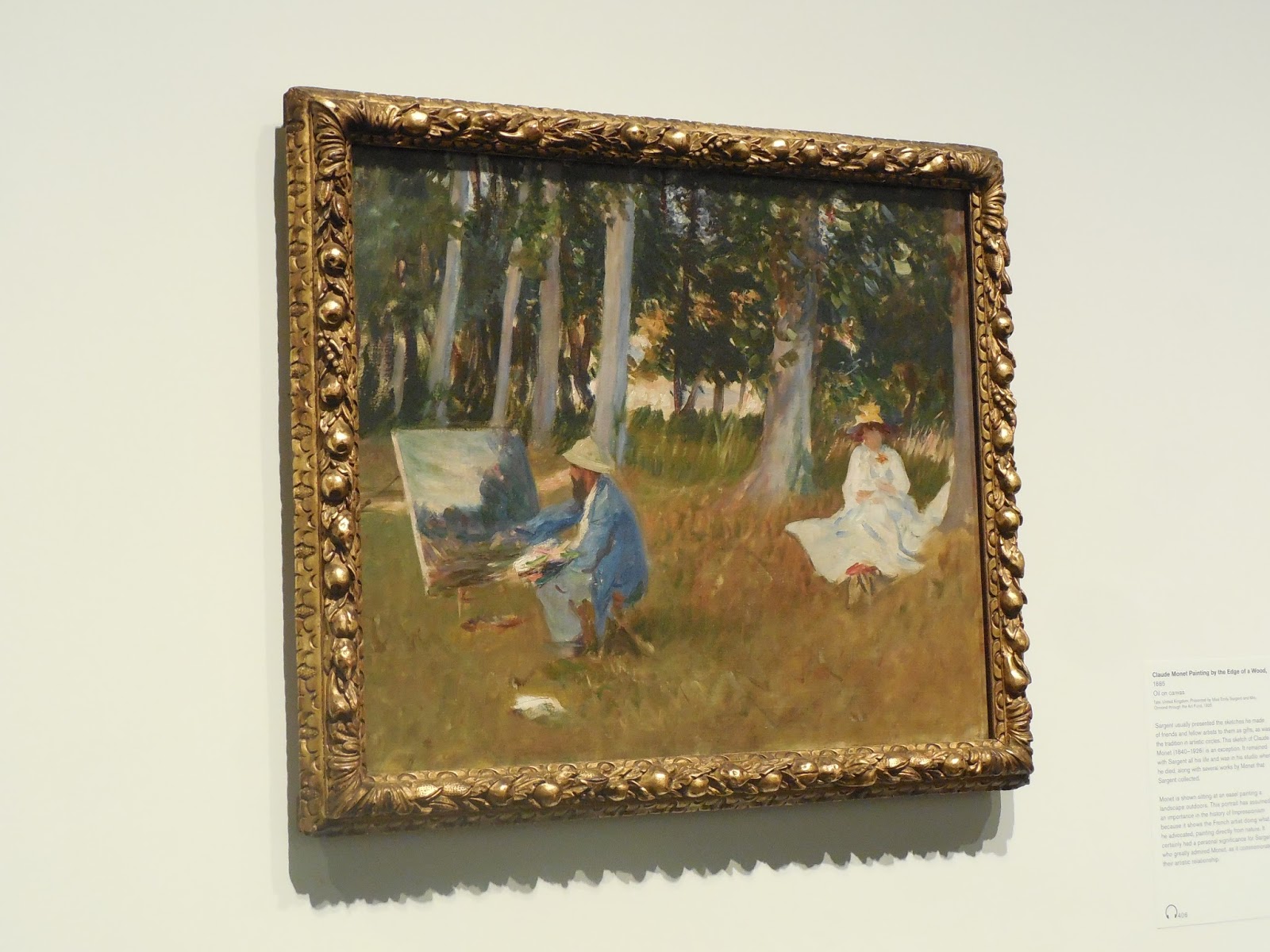
Sargent and Monet (1840-1926) were friends and worked together sometimes. After Sargent moved to England in 1885, he followed Monet’s example and began to paint outside, often portraying artist friends in a casual setting.
Claude Monet Painting by the Edge of a Wood 1885
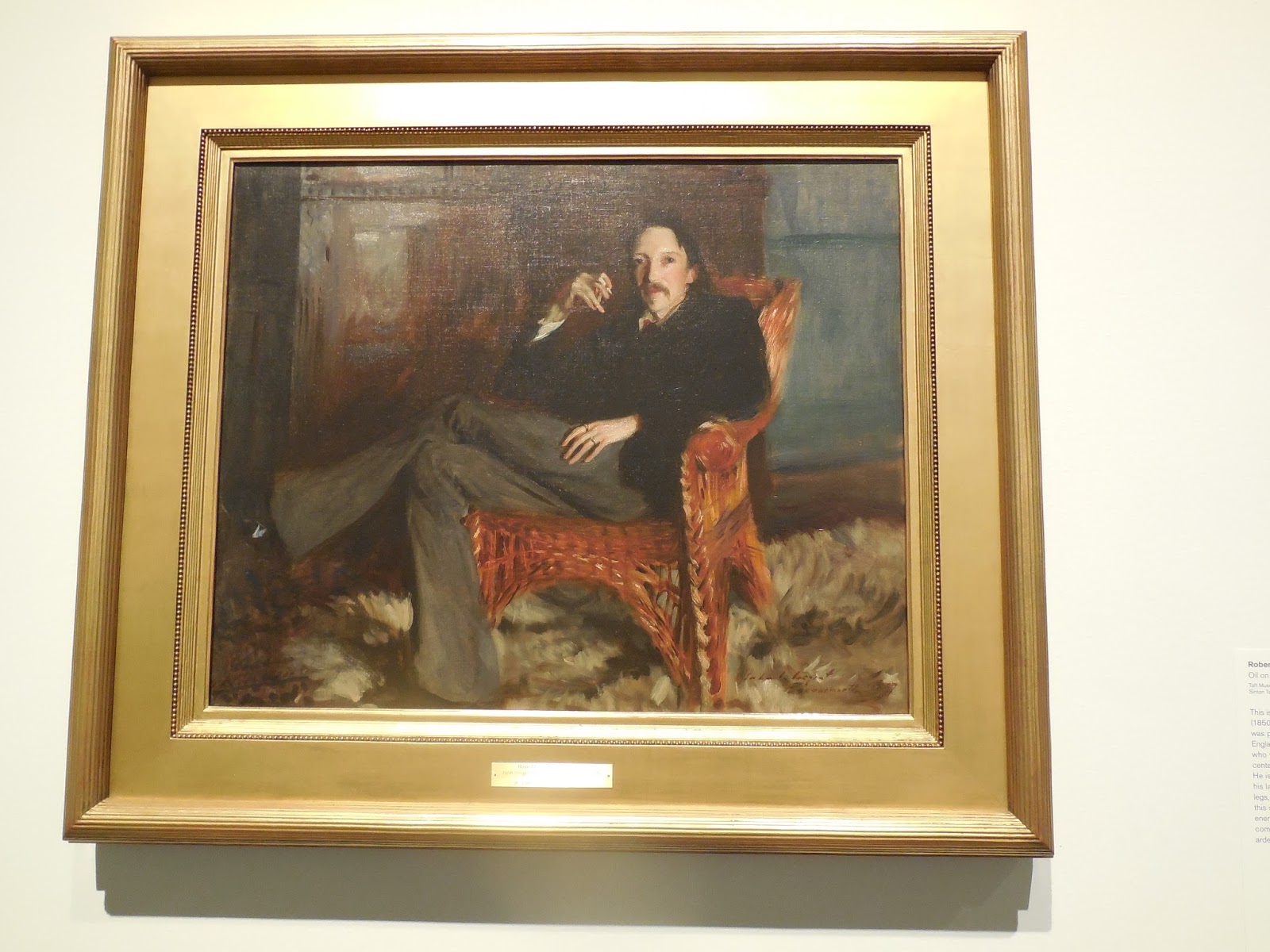
Robert Louis Stevenson, 1887
Robert Louis Stevenson ad His Wife, 1885
Stevenson (1850-1894) and Sargent were friends from early Paris days, and Sargent painted him three times.  Of this view, Stevenson wrote it had “that witty touch of Sargent’s, but of course it looks damn queer as a whole.”
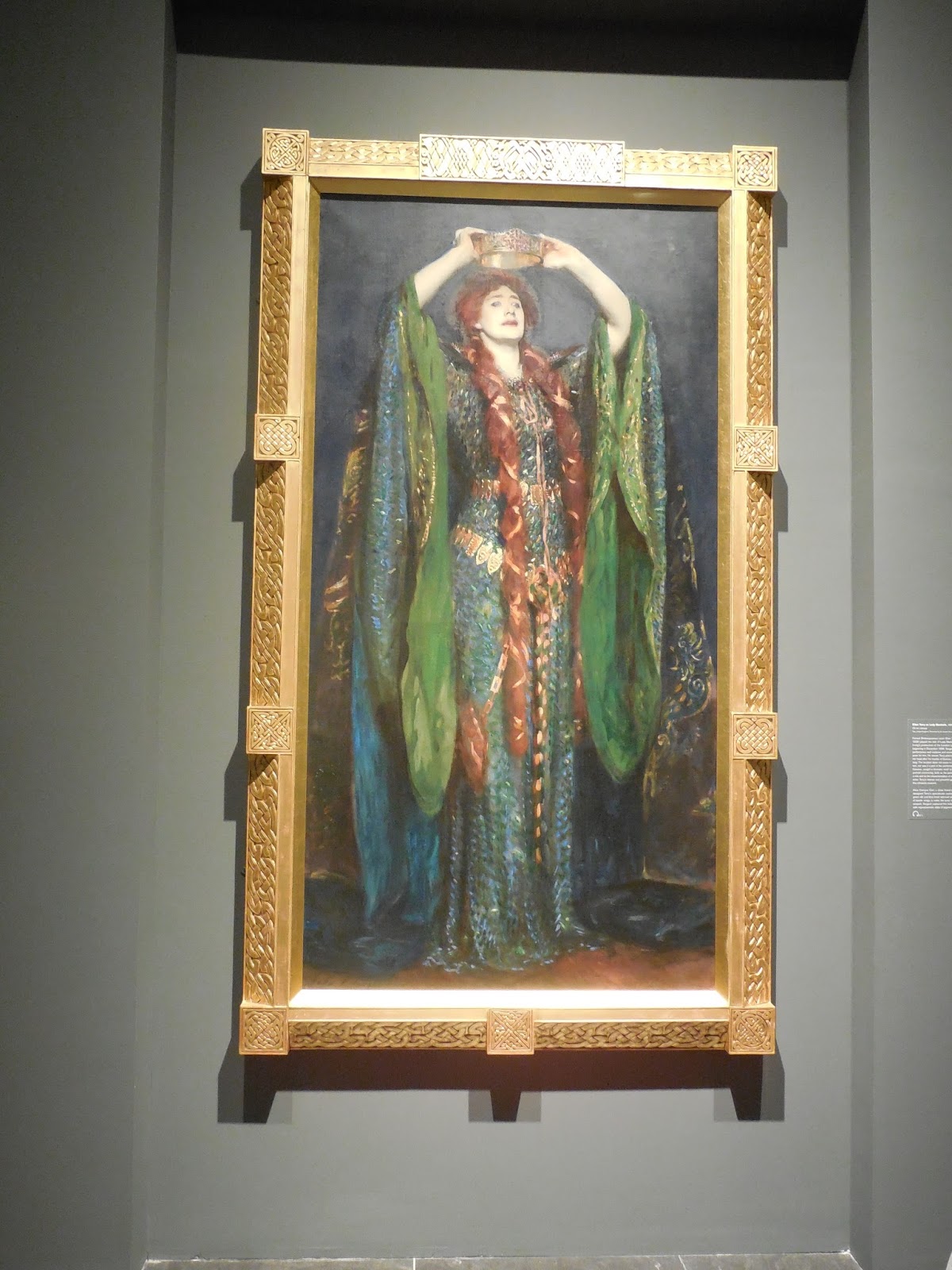
Ellen Terry as Lady Macbeth, 1889
Sargent was impressed with famed Shakespearean actress Terry on the London stage in 1888 and convinced her to pose for him. She is pictured placing a crown on her own head after the murder of Duncan, the Scottish king. From the text panel: “This incident does not occur in Shakespeare’s text, nor as it a part of the performance. Sargent, however, sought a dramatic motif to make his portrait convincing, both as the personification of a role,and as a characterization of an individual actor. Terry’s intense and powerful gaze enhances the climactic moment.”
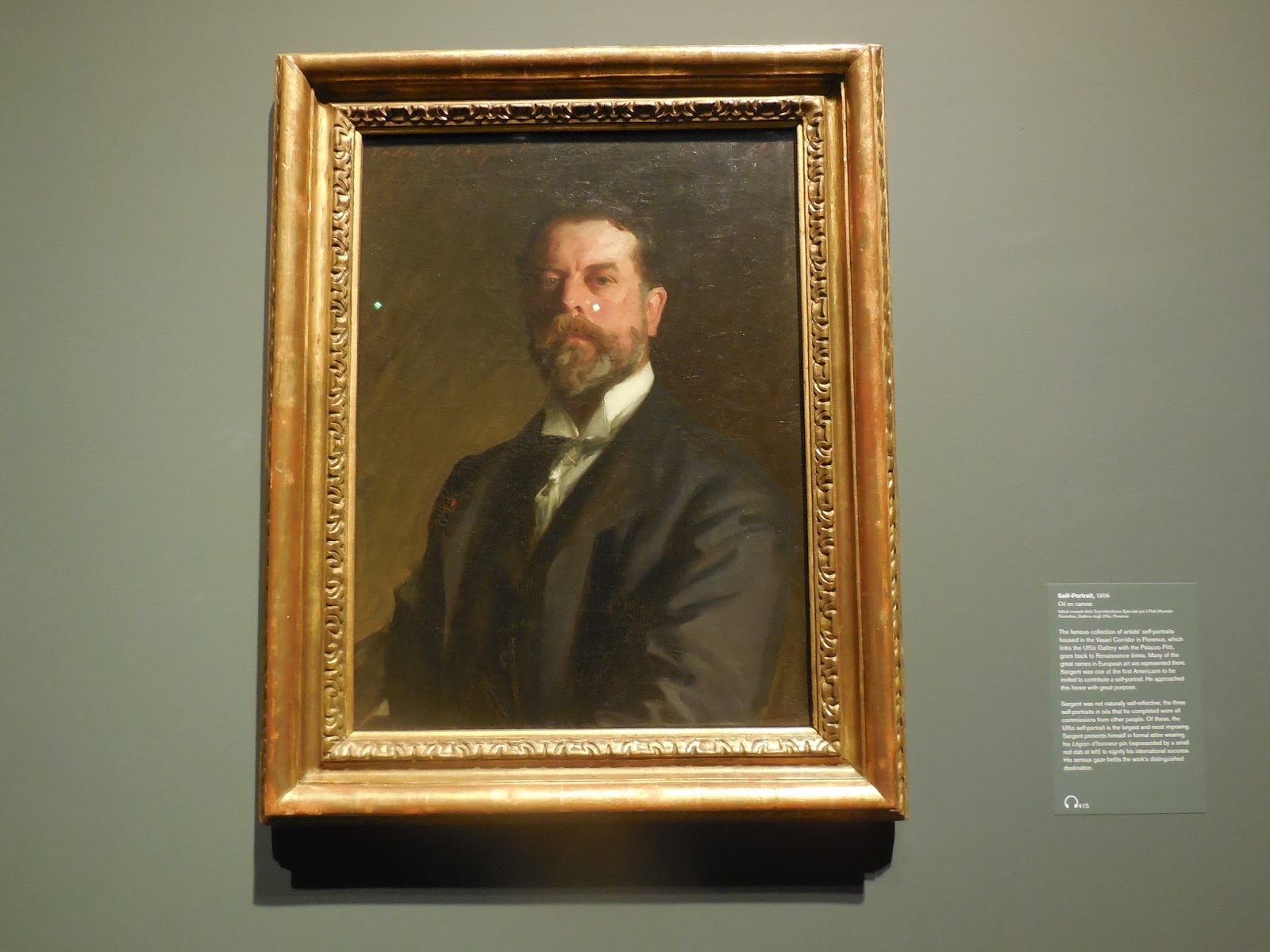
Self-portrait, 1906
Sargent was one of the first Americans to be invited to contribute a self-portrait to the collection of the prestigious Uffizi Gallery in Florence.”His serious gaze befits the work’s distinguished destination.”
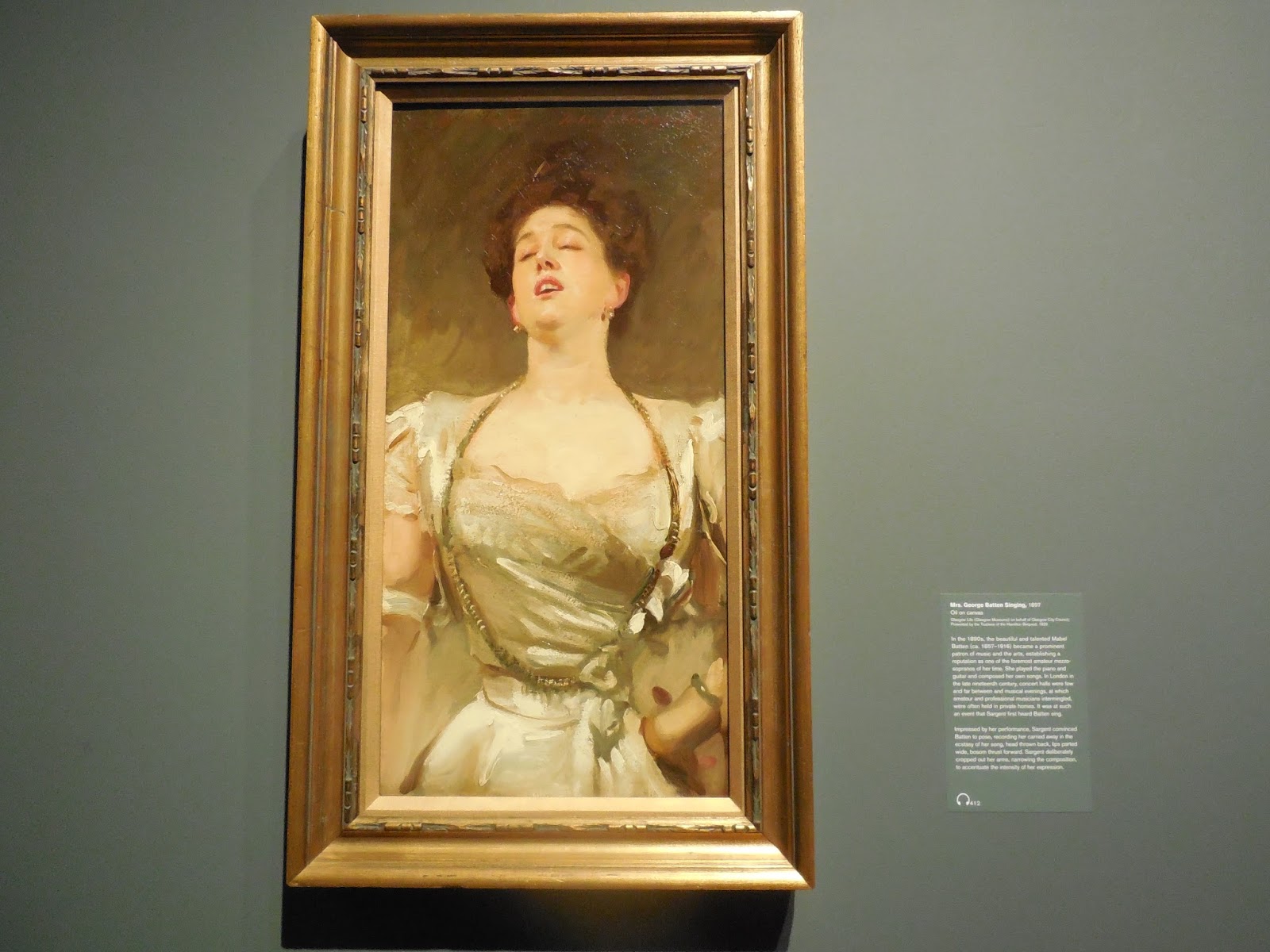
Mrs. George Batten Singing, 1897
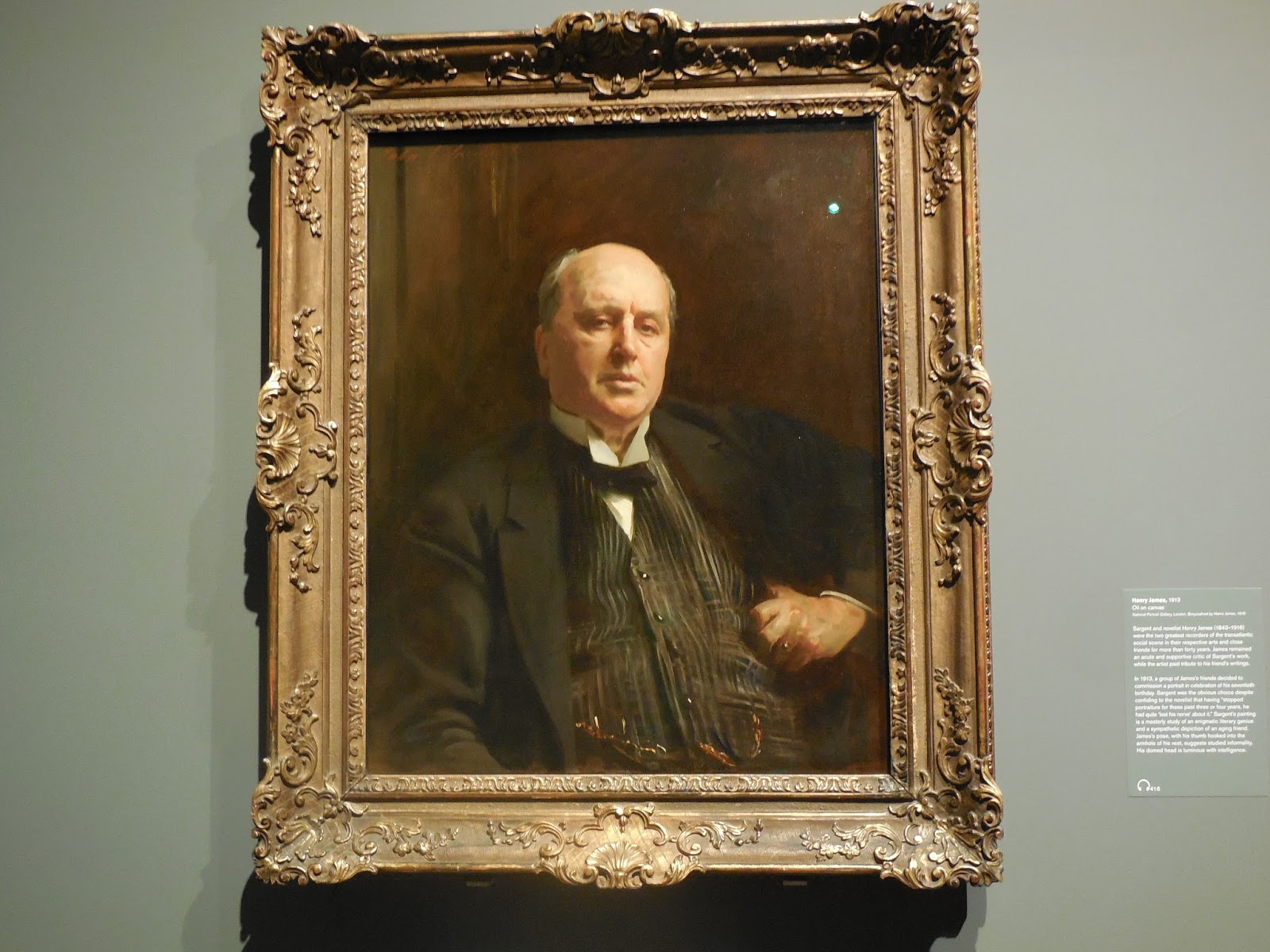
Henry James, 1913
For his own self-portrait and that of Henry James, Sargent chose as sober straight-forward masterful method.  When portraying Mrs. Batten singing, he is more creative, emphasizing her rapturous style.
Ada Rehan, 1894-95
Another renowned Shakespearean actress, Sargent portrays her in high style. As the text points out, “That Sargent shows her in the grand manner and scale typical of paintings of royalty, points to changing ideas of celebrity in the late nineteenth century.”
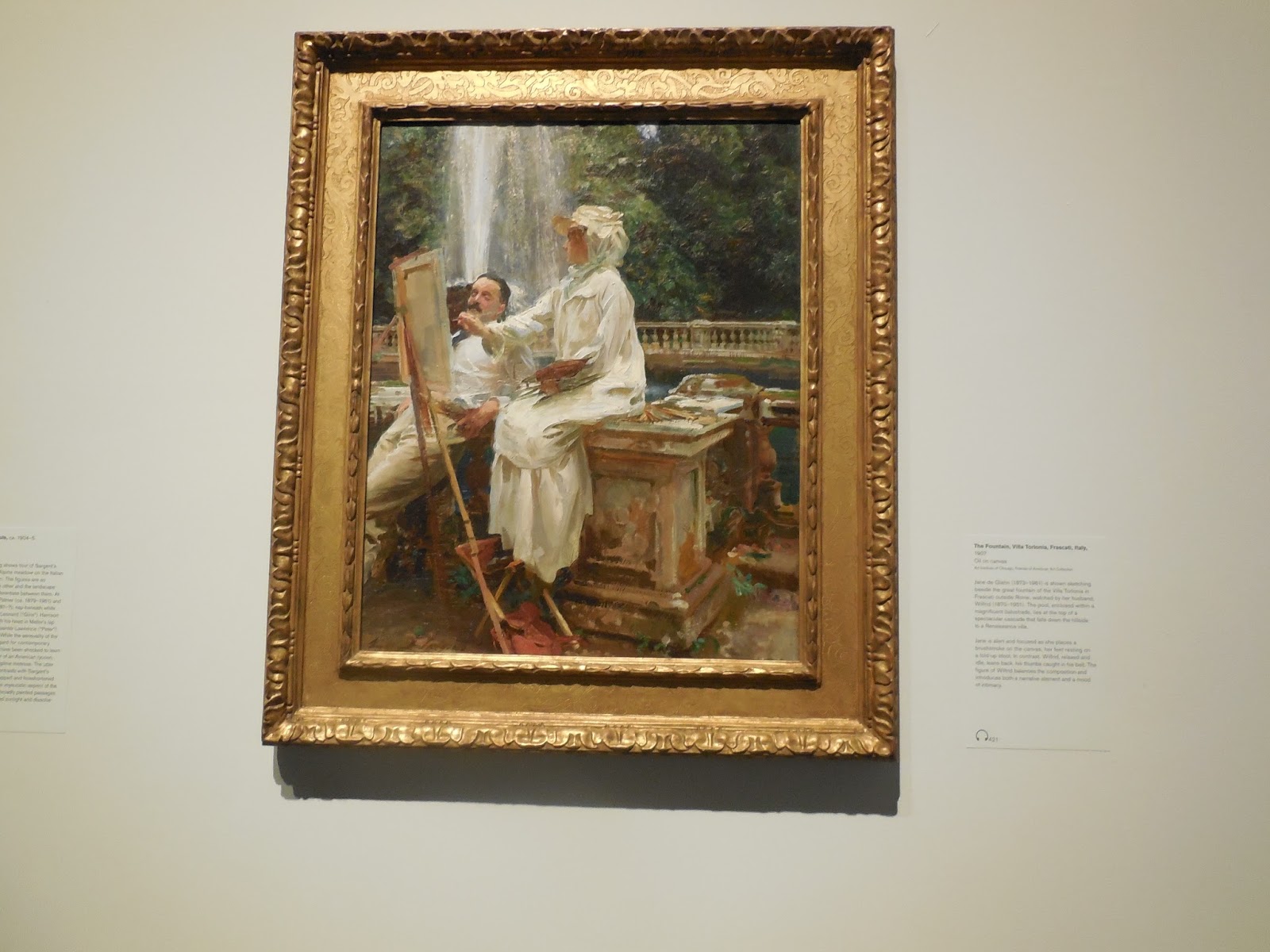
The Fountain, Villa Torlonia, Frascati, Italy, 1907
Jane de Glehn (1873-1961) is shown sketching outside Rome watched by her husband, Wilfred.
Further information on the Sargent Exhibition is here

Following my visit to the exhibition, I went upstairs to the roof garden. It was a lovely day and the views were stunning across Central Park’s lush greenery to the distant skyline.

150 YEARS OF ALICE IN WONDERLAND AT THE MORGAN LIBRARY

Victoria here. One of the highlights of my recent trip to New York City was the Morgan Library, the first time I had been there since the Renzo Piano addition. My photos, unless otherwise indicated.

The Morgan Library with the House at left and glass Piano addition in the middle and
the Library on the far right, above the traffic

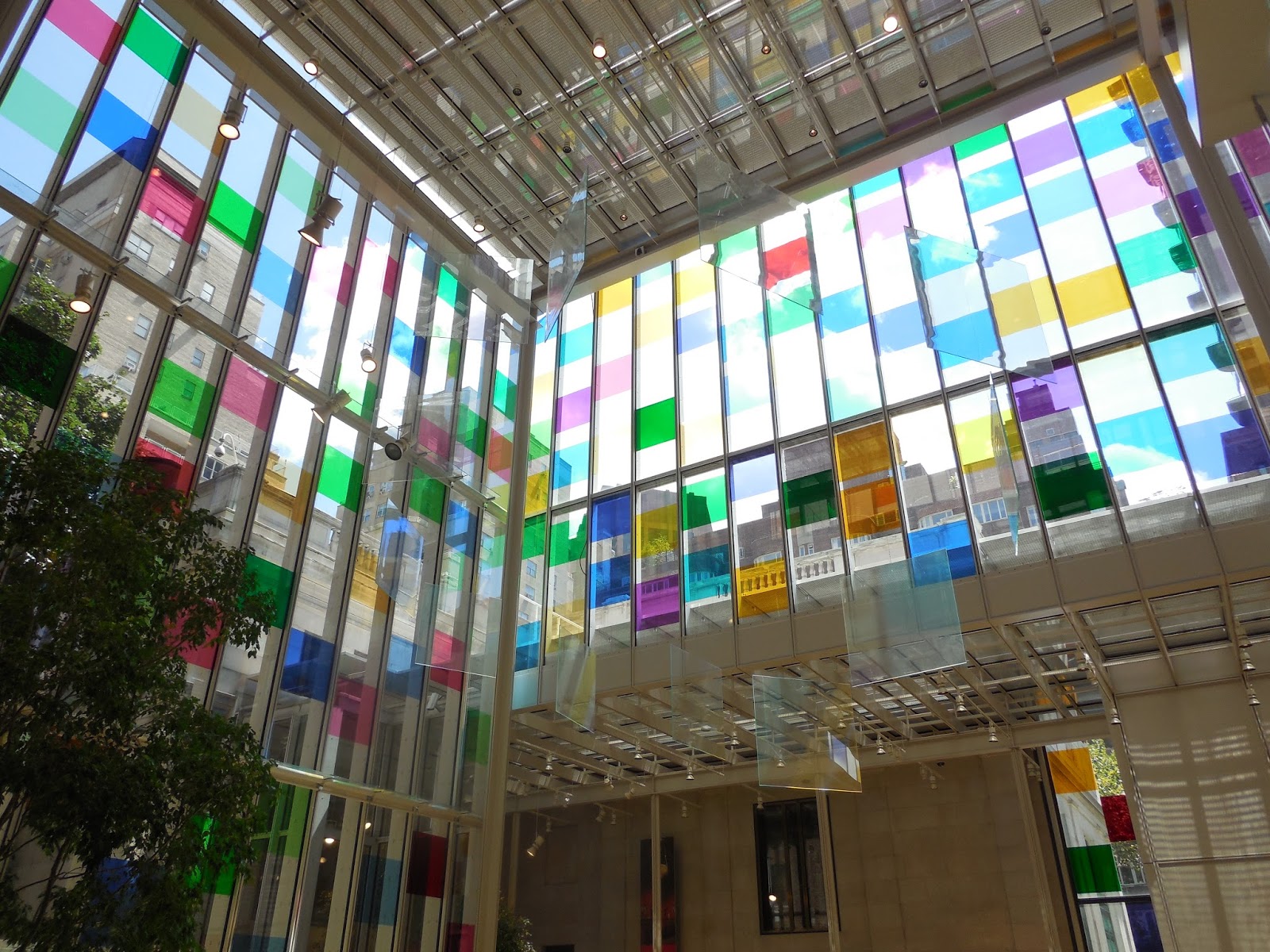
Above and below: the Renzo Piano Pavilion that unites the house, the library and the annex into an integrated whole. Adding to the effect of the brilliant light is the colorful display by artist Spencer Finch entitled A Certain Slant of Light, through August 23.

John Pierpont Morgan (1837-1913) was a banker, financier, and collector, and the descendant of several distinguished colonial and New England families. After his death, his son, J. P. Morgan Jr.(1867-1943), endowed a foundation to house and maintain his father’s collections of manuscripts, books, and artwork. Today the oft-expanded library presents lectures, exhibitions, concerts, research facilities, and other programs for the public.

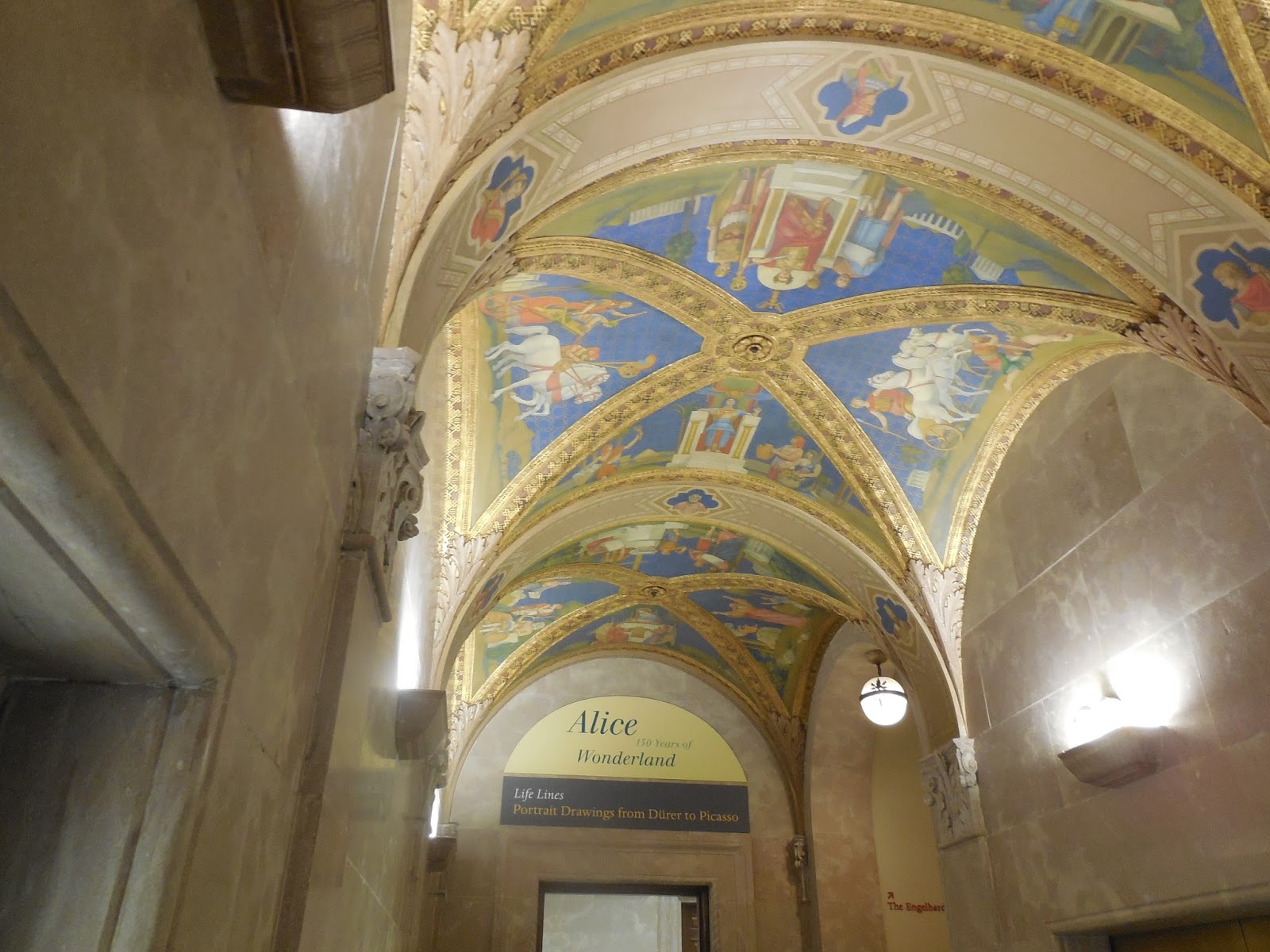
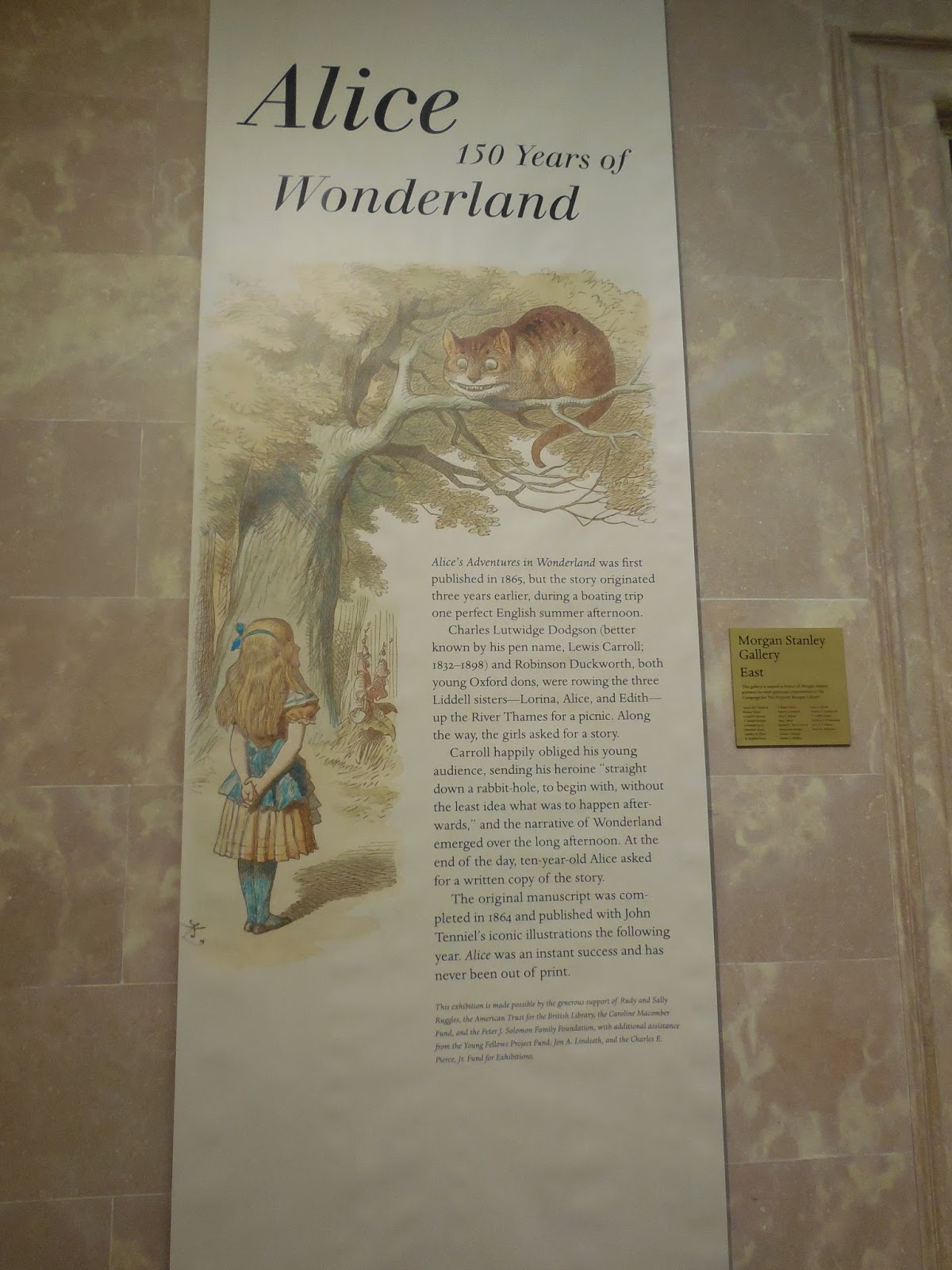
I was eager to see the exhibition Alice: 150 Years of Wonderland. The Exhibition website is here.

On display at the Morgan Library through October 11, 2015

In the exhibit
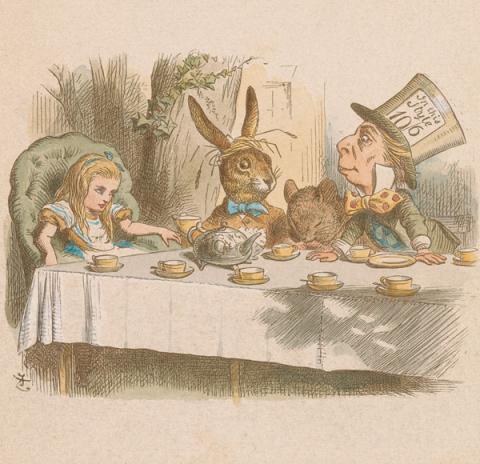
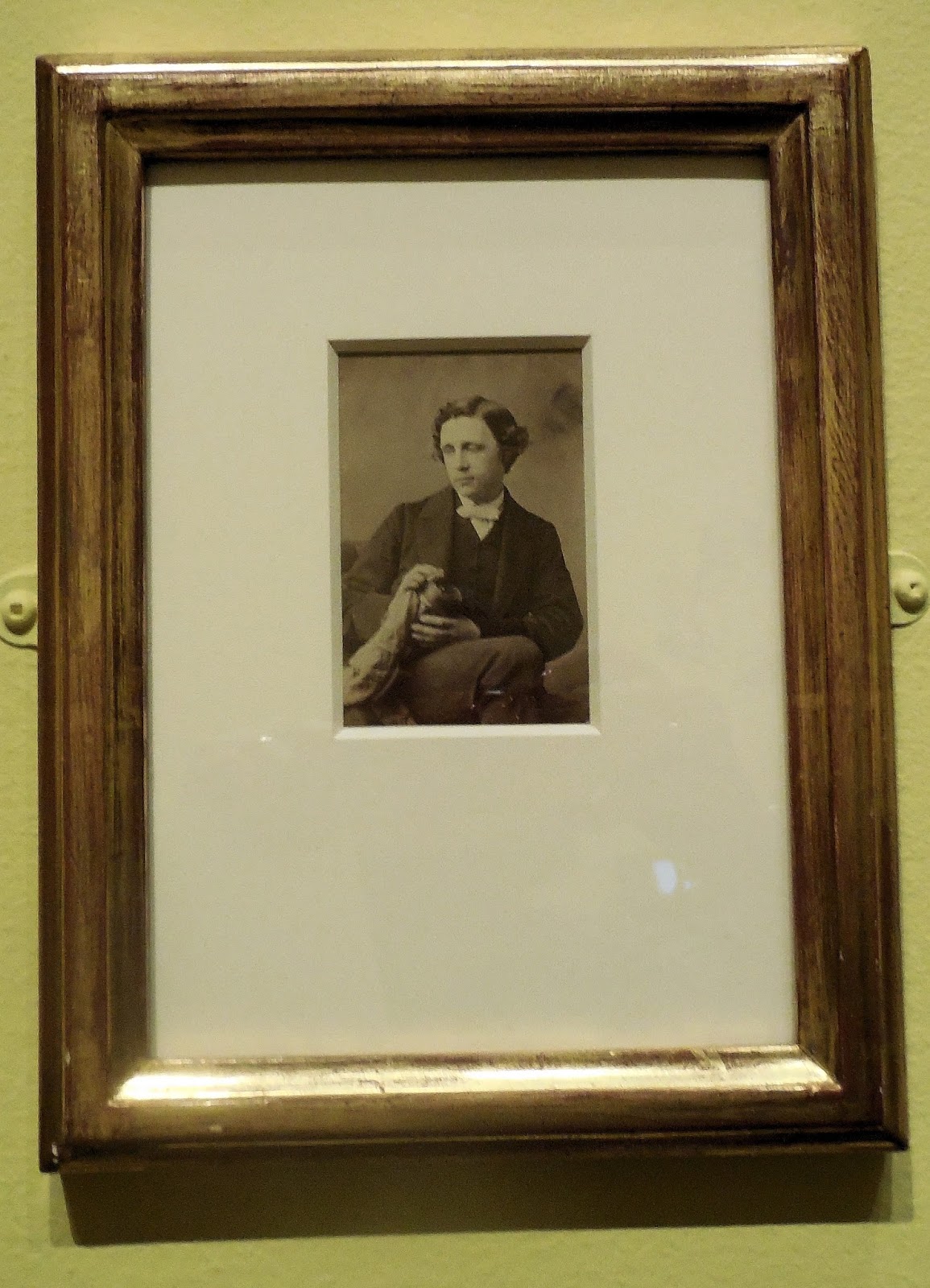
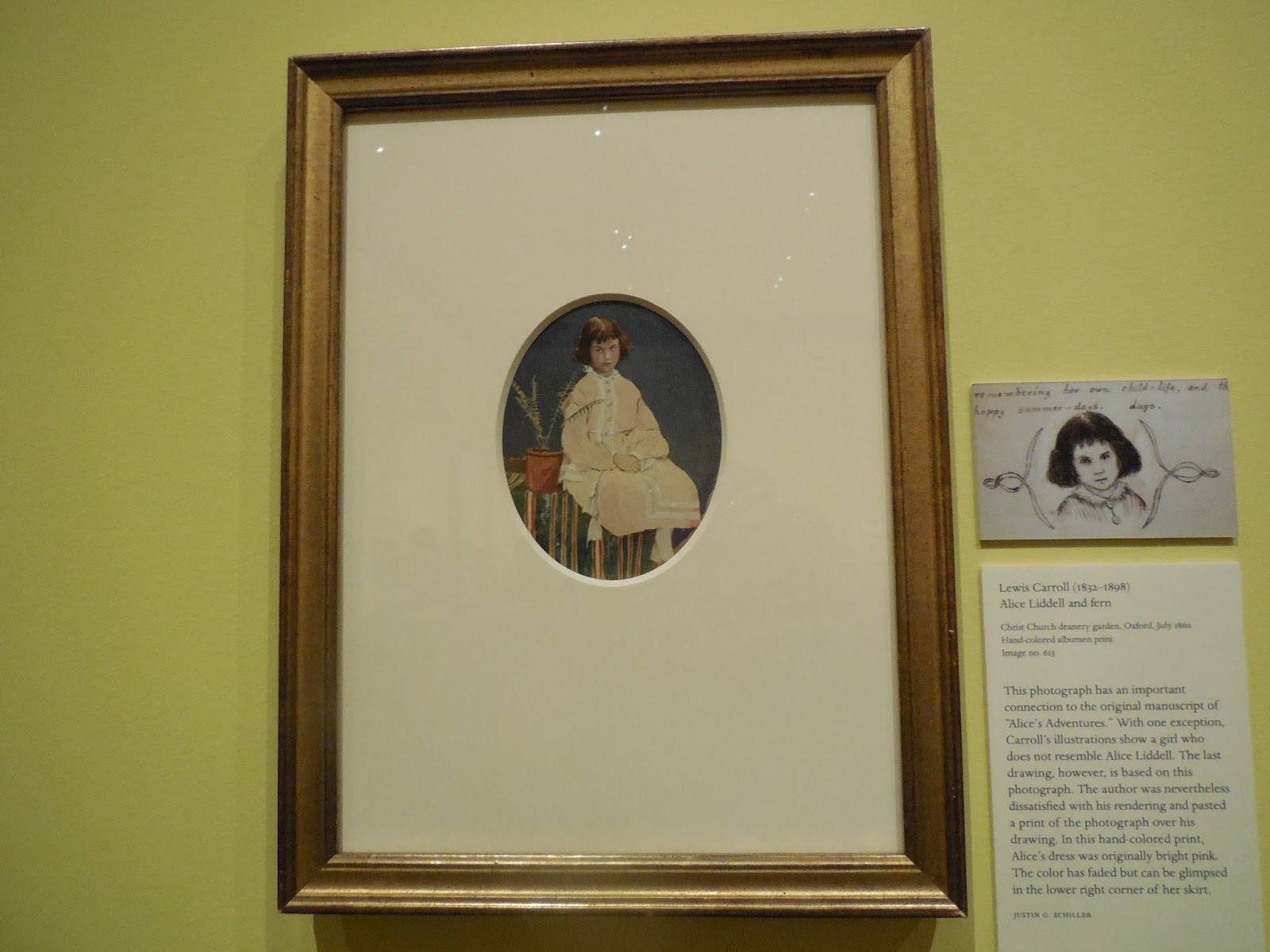
As the text panels tell us, Alice in Wonderland was first published in 1865 by Lewis Carroll, pen name of Charles Lutwidge Dodgson, three years after he told the story to Alice Liddell on a summer boating trip from Oxford. Alice asked him to write out the story of Alice’s odd adventures, and after three years of writing and expanding the story, he had it self-published with illustrations by Sir John Tenniel.  It was temporarily withdrawn because the pictures were poorly reproduced, but after re-publication, it has never been out of print.
John Tenniel (1820–1914) “Why is a raven like a writing-desk?”
Hand-colored proof, 1885 The Morgan Library and Museum, New York. 
gift of Arthur A. Houghton, Jr., Photography by Steven H. Crossot, 2014.
John Tenniel (1820–1914), Nothing but a pack of cards! 1885,
 Hand-colored proof. Gift of Arthur A. Houghton, Jr., The Morgan Library and Museum,
 Photography by Steven H. Crossot, 2014.
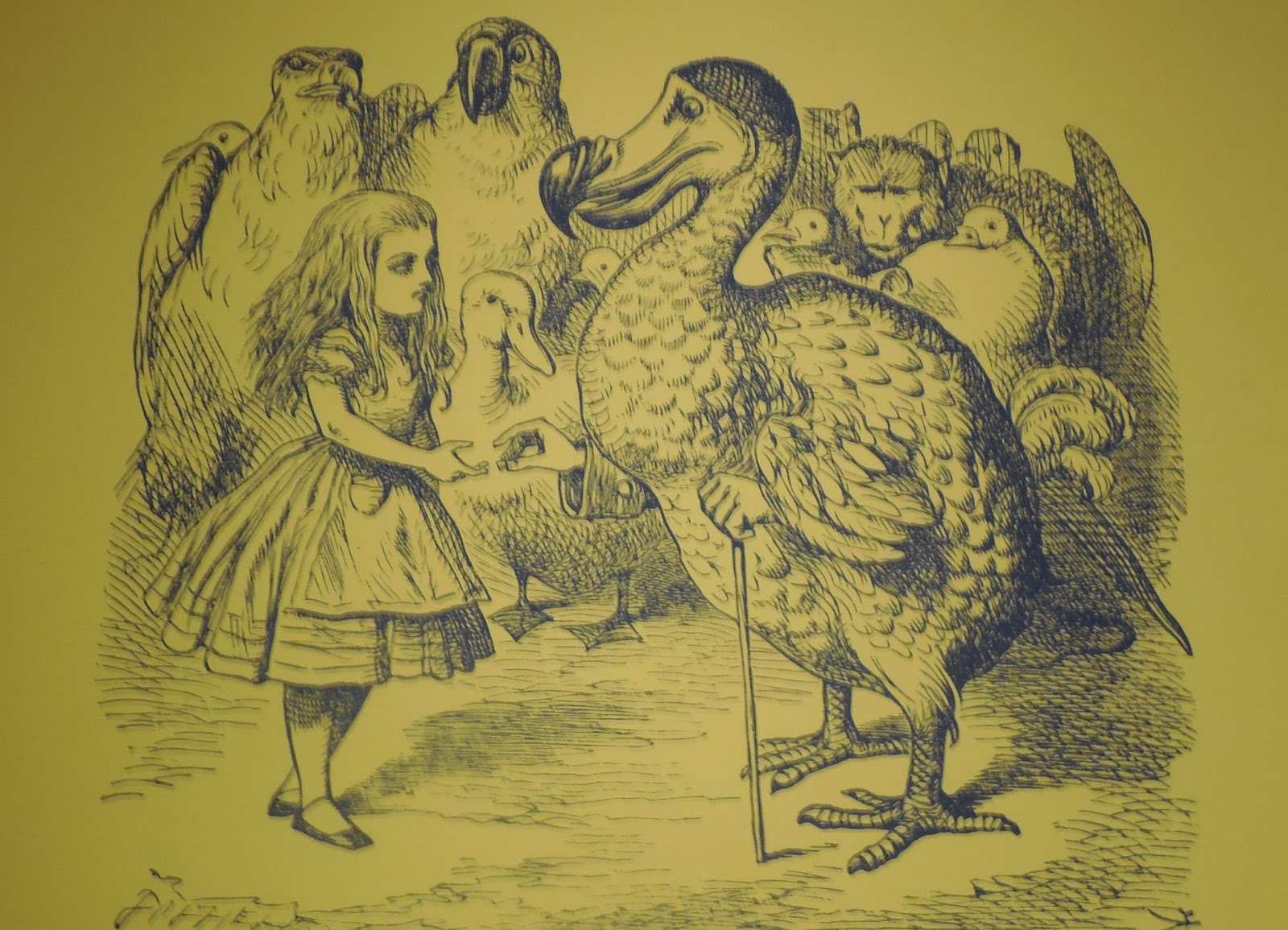
Illustrations are reproduced on the walls; Alice and the Dodo
Charles Dodgson 
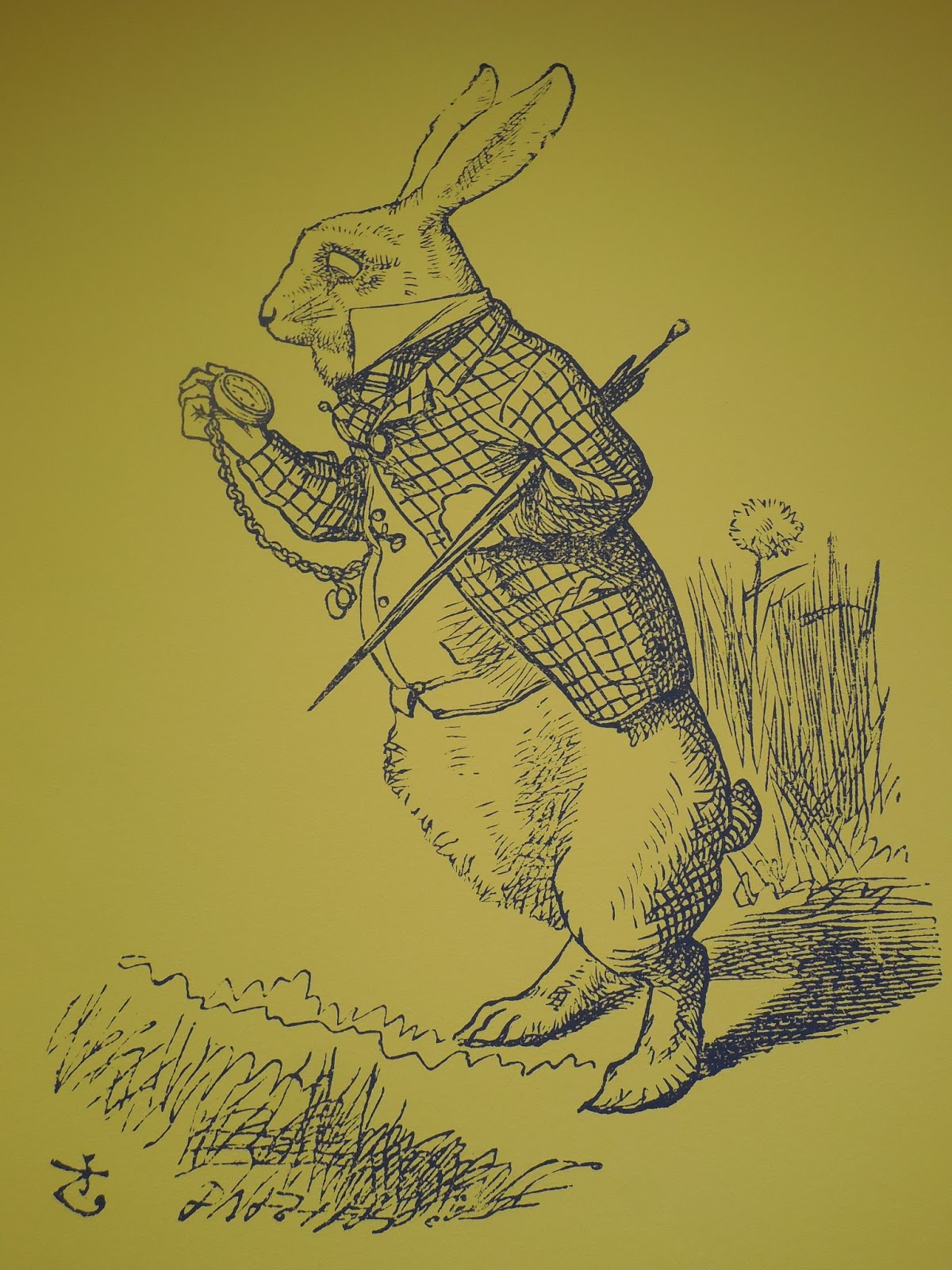
Preparatory drawing and published version of the White Rabbit by Tenniel in the first edition
The White Rabbit

Alice Liddell in a photo and in Dodgson’s drawing at right

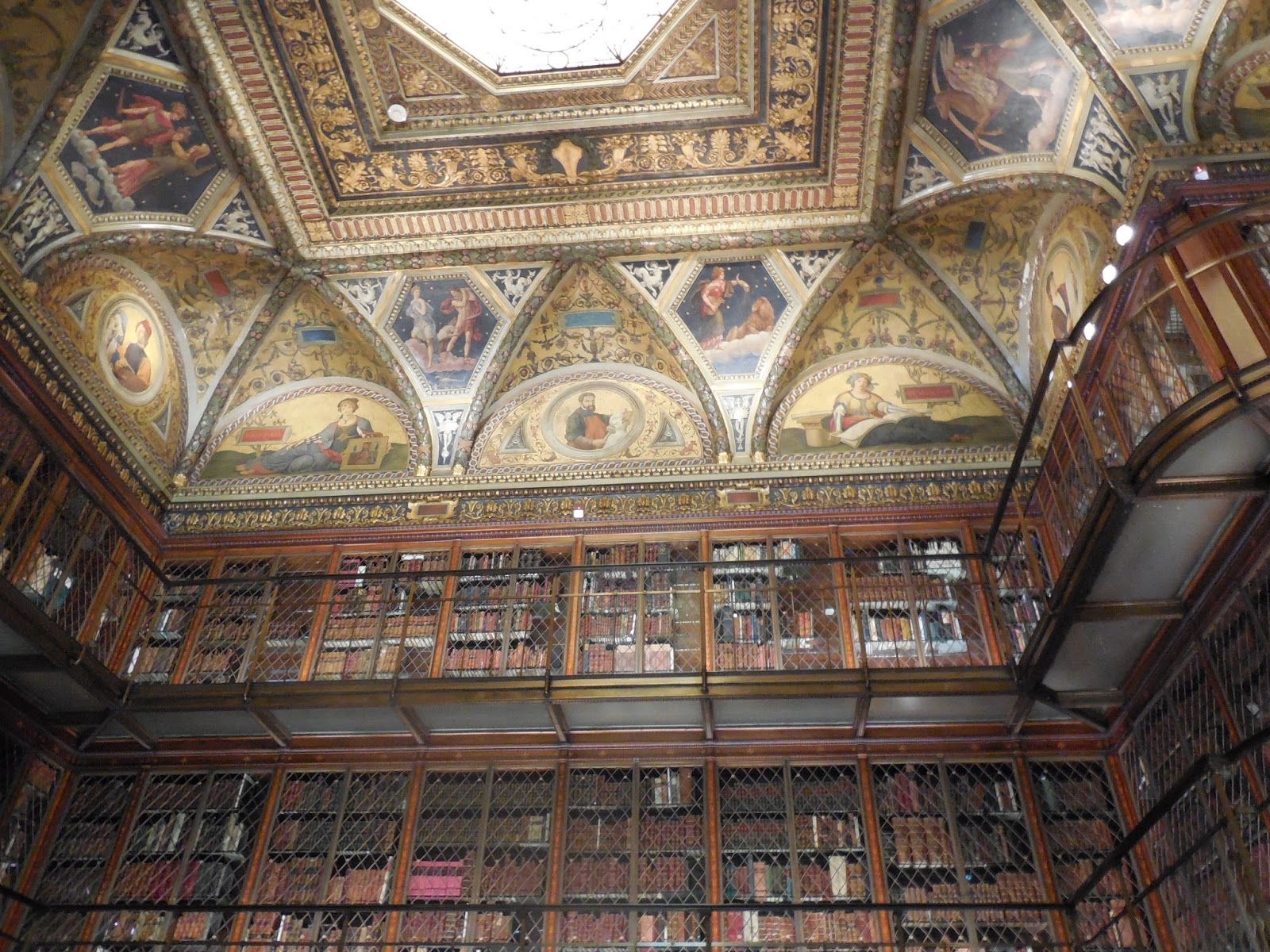
I couldn’t resist walking around in the historic library where Pierpont Morgan collected his manuscripts, books, and art.

Drawing of the front elevation of the Library 
built by Charles McKim (1847-1909), completed in 1906 
The magnificent library (East Room)
Rotunda
The Study, where children were getting a briefing on the library
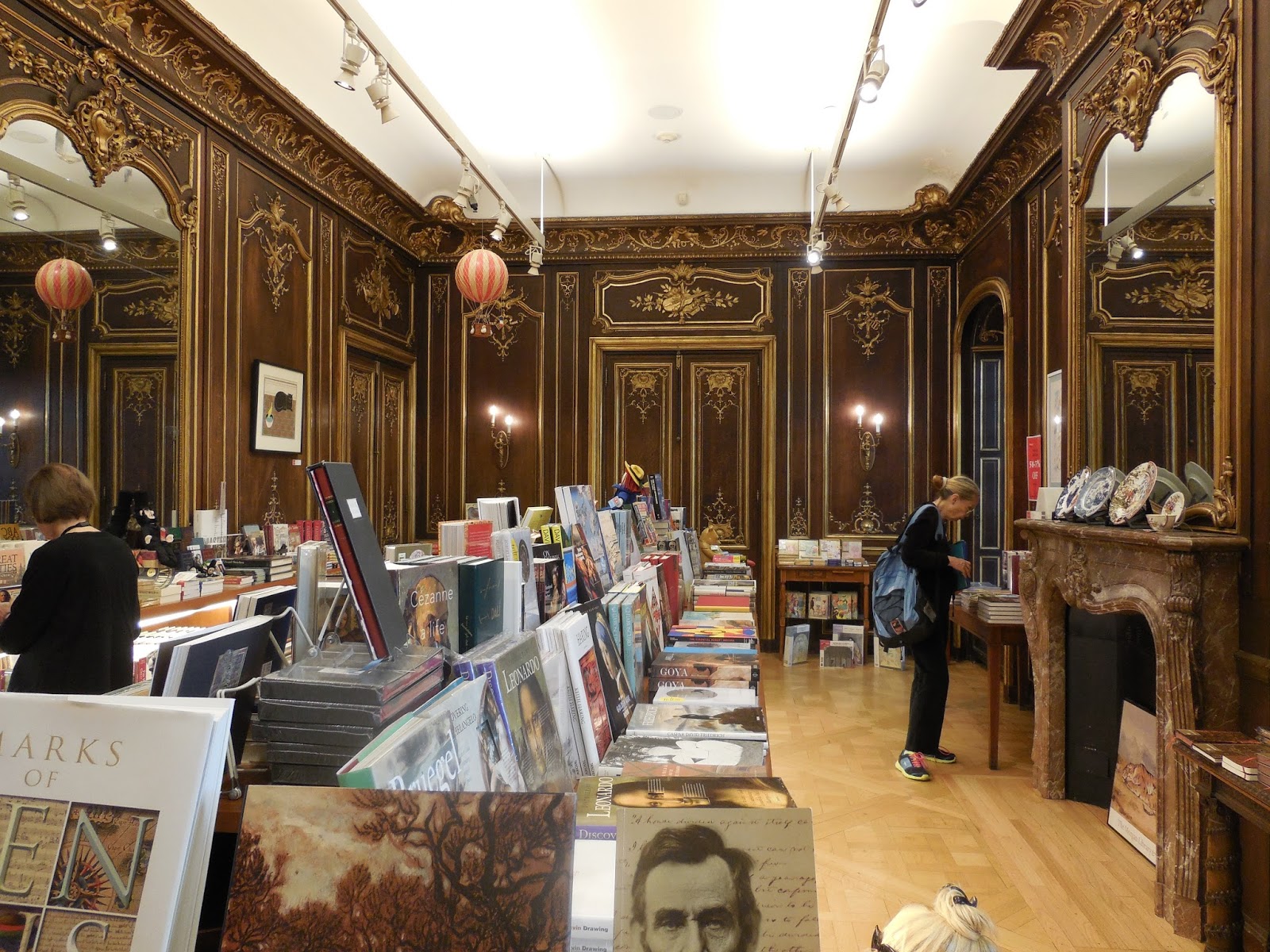
part of the well-stocked gift and book shop (in the old house)
To shop on line, click here

DUKE OF WELLINGTON TOUR REPORTS….BACK SOON.

We’ll return shortly with lots more posts re-living our Duke of Wellington Tour….just a short break at the tale end of another summer. Last year at this time we were preparing to start the tour…now it is memory- and picture-time,

“Mounting Guard, St. James’s Park” (Horse Guards Parade) 1809
from Microcosm of London

Thanks for your patience,,,Kristine and Victoria

JESS RUSSELL AND THE DRESSMAKER'S DUKE

Victoria here, bringing you the delightful story of Jess Russell, who opted for historical accuracy to the extent that she fashioned her own regency gown, sometimes working by candlelight, to know what a regency dressmaker would have experienced.

DRESSMAKER JESS RUSSELL
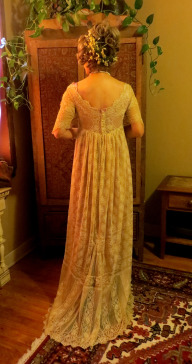
I met Jess at the Beau Monde’s 2015 Regency Writers Conference and Soiree, where she appeared (above) in her lovely creation.  All of us were wowed in the best 21st century tradition!
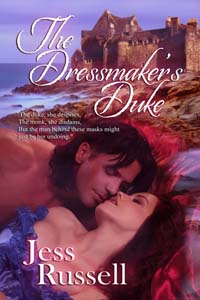
Jess is the author of the best-selling novel The Dressmaker’s  Duke.  To Read more about Jess and her novel, click here.


Jess agreed to tell the story of her novel and her gown for this blog.  She writes:

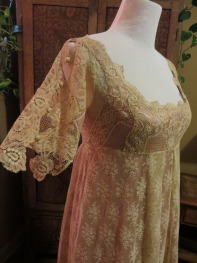
In The Dressmaker’s Duke, my Heroine, Olivia Weston, is (surprise) a dressmaker. To help launch the book I decided to create a Regency gown from scratch, just as Olivia would have done.

Imagine sewing everything by hand, in poor light, without even a dress form. And then, after working your fingers to the bone creating this stunning gown, you can’t even get your rich client to pay up. Well, my poor heroine goes through such a trial. The good news is her money troubles throw her smack up against my monkish, but oh-so-sexy Duke.

So, I thought it only fitting that as Olivia’s creator, I should have to step into her slippers.

Below is the finished gown~


And now me modeling~


Things I learned making this gown~
1.       Hand sewing a simple straight seam takes about 7 x’s longer than using a machine.
2.      Use a thimble if you can master it. Your fingertips will thank you. (I ended up using the finger
         tip of an old leather glove.)
3.      Approximately 29 hours spent sewing.
4.      Approximately the same number of threaded needles used.
5.      Back stitch! If you have to cut the fabric and have used a back stitch you won’t lose all your
        stitches.
6.      Run your thread through bees wax. This helps the thread from snarling.
7.      It is EXTREMELY hard to rip out when sewing lace. All the threads look alike.
8.     It is surprisingly hard to sew in a straight line.
9.      My best running stitch was 14 stitches per inch.
10.   I now have arthritis in my pinkie finger.
11.    Good lighting is paramount! Not easy when you are trying to sew by candlelight. Seamstresses 
         must have had very tired eyes.


Things I learned wearing this gown at the Beau Monde Soiree~
1.       It is surprisingly comfortable.
2.      These light gowns must have been lovely in the summer, but brutal in winter in a chilly castle.
3.      You have to be aware of the blasted train at all times! I would think it’s much like driving; 
        you have to watch out for not only you, but the other drivers as well. (I can’t imagine 
        negotiating a crowded ball room. No wonder there was always a maid installed in the “ladies 
        retiring room” to m
end ripped hems.)
4.      Country dances are exhausting but great FUN!
5.      You cannot do a darned thing when wearing gloves. And taking them on and off can be a 
        painstaking task.

At the Beau Monde Soiree, L to R: Ann, Sir Reggie, Jess

I made the over-dress out of an old bed canopy. Re-purposing this piece of lace inspired my blog called “Trash to Treasure.” Each month I transform a thrift store find into something new and exciting! You can find me at://jessrussellromance.com/

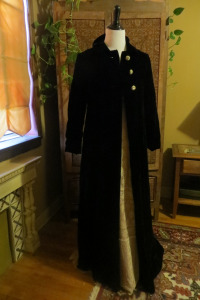
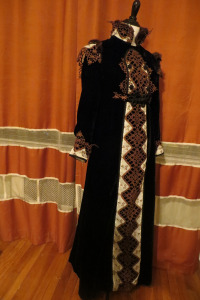
For a sneak peak here is my Mid-century evening coat re-made into a 19th century Redingote!


The Dressmaker’s Duke was a double finalist in the National Readers Choice Awards for Best First Book and Best Historical and is available at Amazon, iTunes, and BandN.


Thanks so much for having me share my love of sewing! Jess Russell

Victoria again. Thanks so much for sharing your experiences, Jess.  And just to remind readers of this blog and not incidentally myself (!) — all us us who thinks this might be easy — Jess adds:

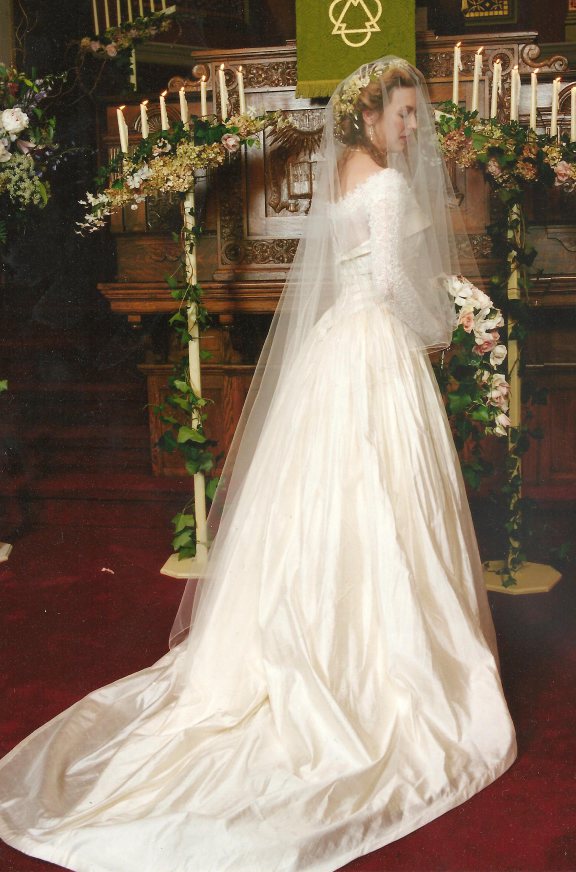
I have been sewing since I was very young. So when I embarked on my first novel the phrase “write what you know” came to mind. Well, I know sewing. Here is my wedding gown. The pattern I made out of newspaper and the rest I made up as I went along.


Jess in her bridal gown


Again, all I  can say is wow!!  Even if I were an experienced stitcher, I could not begin to imagine creating such a fabulous dress!!  Brava, Jess.